Douglas Davis

Meet the new boss

From our UK edition

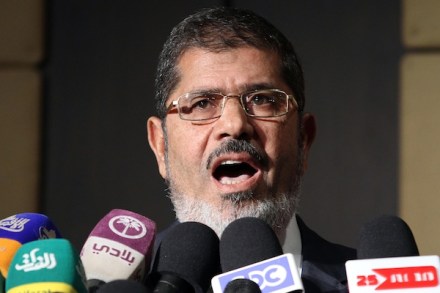
On my first visit to Egypt, soon after Hosni Mubarak succeeded the assassinated Anwar Sadat as president, a cruel joke was circulating among Cairo’s cognoscenti. ‘When Nasser came to power, he looked around for the most stupid member of his party and appointed Sadat as vice president. When Sadat came to power, he looked around for the most stupid party member and chose Mubarak. But when Mubarak came to power, he looked around… and couldn’t find a successor.’ On this point, at least, Mubarak was prescient: there would be no successors from his clapped-out party. Instead, when the Egyptian people had the first chance to express their democratic will, they elected a parliament dominated by Muslim fundamentalists.
Out of the east

From our UK edition

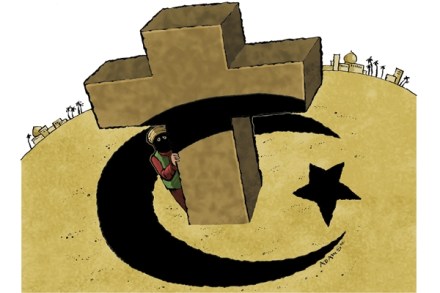
If the test of the Arab Spring was its treatment of minorities, it has failed. Hopes that the region was poised to make the transition to liberal democracy have proved to be premature, trampled under the boots of the ethno-religious cleansers. The old-style corrupt despots have metastasised into even older-style Islamist xenophobes. The Arab world, already judenrein, now seems determined to slough off its Christian minority. A few weeks ago, Sheikh Abdul Aziz bin Amdullah, Grand Mufti of Saudi Arabia, responded to a question posed by a visiting Kuwaiti delegation. Would sharia permit churches to exist in their emirate? The sheikh’s response was categorical.

Syria’s family business

From our UK edition

In the absence of free speech, a free media and other political mod-cons in Syria, Hafez al-Assad and then his son Bashar cultivated the convenient habit of transacting business in the shadows, advancing and protecting — brutally, when necessary — the interests of the family and their fellow Alawites. But Damascus has always remained alive with intrigue and speculation. To process and disseminate that mix of conjecture and fact, a highly developed rumour mill sprang up. And for those interested in Middle East affairs — particularly Syrian affairs — London became the hub of the Syrian information exchange. Take the unlikely succession of Bashar following the death of his father in June 2000. It wasn’t meant to be like that.

Who is Goldstone to judge?

From our UK edition

When Israeli tanks and troops rolled into Gaza in December 2007, there was no doubt about the outcome of the conflict. Nor was there any doubt about who would be held responsible for using disproportionate force and deliberately harming civilians. Never mind that Israel was responding to years of rocket bombardments from Gaza on its civilian population; that it had long since pulled all its troops and settlers out of Gaza; that the ruling Hamas movement refused to recognise the Jewish state and was pledged to its destruction; and that Hamas was using its own population as human shields. The United Nations Human Rights Council, which had remained steadfastly silent about the human rights of Israelis suffering rocket attacks, quickly swung into action.

The terrible warning of a Holocaust survivor

From our UK edition

At my dinner table on Friday night, a holocaust survivor admits that she is trying to persuade her son to take his family out of Europe to America, Canada, Australia, Canada, Australia, Israel...’They say they can’t leave me, but I tell them: “Go, get out. My parents left my grandparents behind in Berlin and brought me to safety in England. Now I want you to leave so that my grandchildren will be safe.”’ There is an unbearable desperation in her plea. But she has a point. As tens of thousands of demonstrators march through the streets of Europe, the chants are modified but the message remains substantially intact: ‘Hamas, Hamas, Hamas — Jews to the Gas’. Or, more simply: ‘Death to the Jews’.

Moderate Arab states need Israel to succeed

From our UK edition

Pity the international diplomats. Hardly back from their Christmas break, they were plunged into yet another dizzying round of declamations and démarches over a fresh bout of Israeli misbehaviour, this time in Gaza. By midweek, diplomacy had achieved a partial success when Israel agreed to a daily pause for the distribution of humanitarian supplies. But it was not yet ready to end the war-fighting. Crocodiles apart, few would have shed tears for Hamas. All the parties understand that the outcome of the conflict could reverberate far beyond Gaza, with implications for the stability of the entire region.

We came so close to World War Three that day

From our UK edition

A meticulously planned, brilliantly executed surgical strike by Israeli jets on a nuclear installation in Syria on 6 September may have saved the world from a devastating threat. The only problem is that no one outside a tight-lipped knot of top Israeli and American officials knows precisely what that threat involved. Even more curious is that far from pushing the Syrians and Israelis to war, both seem determined to put a lid on the affair. One month after the event, the absence of hard information leads inexorably to the conclusion that the implications must have been enormous. That was confirmed to The Spectator by a very senior British ministerial source: ‘If people had known how close we came to world war three that day there’d have been mass panic.

Bush’s exit strategy: cut and run – but not too far

From our UK edition

More than four years after the American-led invasion of Iraq, there are signs that George W. Bush is preparing to call it quits. When the Americans disbanded the Iraqi army in 2003 and left the borders wide open they sowed the seeds of disaster. Neither the ‘coalition of the willing’ nor even the recent ‘surge’ could put Humpty together again. That, at least, is the conclusion I have reached after intensive interviews with senior Iraqi politicians and Western experts for a book that I am writing on the imbroglio. Whatever gloss General Petraeus applies to his report to Washington next month, he is unlikely to be the bearer of good news.

Israel will do whatever it takes

From our UK edition

Douglas Davis says that the Israelis are considering the nuclear option in response to President Ahmadinejad’s threat to ‘wipe Israel off the map’. An attack could be launched early this year Within the next 12 months, the Americans or the Israelis, possibly both, are likely to launch military strikes aimed at crippling Iran’s nuclear ambitions. Those strikes may come sooner rather than later. And they will probably be nuclear. Israeli military analysts say intervention is essential before Iran’s scientists are able to complete the nuclear cycle — some time during 2007 — and start producing weapons-grade uranium.

This is only time out

From our UK edition

During the recent conflict between Israel and Hezbollah, Jews were enjoined to recite Psalm 83. ‘Your foes are in uproar, and those who hate you have raised their head. They say, “Come let us cut them off from nationhood so Israel’s name will not be remembered anymore.” For they take counsel together unanimously ... the tents of Edom and Ishmaelites, of Moab and Hagrites, Geval and Ammon, and Amalek, Philistia and the inhabitants of Tyre.’ No change there, then. As the guns fell silent in south Lebanon this week, there were claims of victory from both sides. Israel’s military brass claimed to have destroyed the infrastructure of Hezbollah, while Hezbollah, supported by Iran and Syria, trumpeted a historic victory over the Zionist enemy.

Will Jordan be the new Palestine?

From our UK edition

Douglas Davis says that George W. Bush’s drive for global democracy may hand the Hashemite kingdom over to Hamas If unintended consequences are the progeny of political activism, then the fate of King Abdullah of Jordan is a lesson to us all. The West’s best friend in the Arab world is now the region’s most vulnerable monarch. It was, after all, America’s war against Saddam Hussein that produced Abu Musab al-Zarkawi, al-Qa’eda’s main man in Iraq and a sworn enemy of the Hashemite throne in his native Jordan. And it was America’s drive to bring democracy to the Middle East that propelled the Palestinians to the polls and produced the Hamas victory.

Lawless in Gaza

From our UK edition

Douglas Davis says that Ariel Sharon’s wisest decision was his last one — to pull out of the anarchic terrorist hothouse of Gaza As the dominating presence of Ariel Sharon recedes from the public stage, his lasting legacy is likely to be not his military exploits but his final major political act: unilateral withdrawal from Gaza. Israel had tried engagement, and when that did not work it opted for disengagement. If the Oslo accords promised a marriage between Palestinians and Israelis, Sharon’s unilateral withdrawal signalled a divorce. Reconciliation could be generations away.

Diary – 14 October 2005

From our UK edition

If you’re thinking of moving to Sydney, forget it. That slice of unsolicited advice was offered when I made my third visit in little more than a year. The idea of actually settling in Sydney has never crossed my mind, but for those who are contemplating such a move the advice is sage stuff. Sydney is a city in crisis: house prices are sky high, on a par with those in London; the urban sprawl has reached its limits; the roads are clogged, and the reservoirs are running dry. I suggest to a city shopkeeper that the airport authorities should hang a ‘No Vacancies’ sign under the ‘Welcome to Sydney’ banner. He responds with a laconic smile and offers to sell me a chain of ‘No Worry Beads’. Nice try.

United in hate

From our UK edition

Politics makes strange bedfellows. Stranger still when the odd couple are fundamentalist Islam and the secular Left. The evolving Black–Red alliance is growing in France, Germany and Belgium. But, based on the successful British model, it is now going global to declare war on the war on terror. No fewer than three international conferences have been convened in Cairo, presided over by the former president of Algeria, Ahmed Ben Bella, under the auspices of the International Campaign Against US and Zionist Occupations. One outcome is ‘The Cairo Declaration Against US Hegemony, War on Iraq and Solidarity with Palestine.

Prince of peace

From our UK edition

Prince Hassan bin Talal is the almost-man. After 34 years as heir-apparent to Jordan’s Hashemite throne, the crown was snatched away in 1999 by his dying brother, King Hussein, and handed to his son, the present King Abdullah II. Never mind; Hassan has other fish to fry. And so I visit the direct descendant of the Prophet Mohammed (separated by a 42-generation blip) to discuss the terrorist attacks on London. In an elegant reception room at his West London home, the desert prince is wearing a pinstripe suit (his tailor would call him ‘portly’).

Anti-Semitic studies

From our UK edition

Pay attention, Professor. If you support the proposed academic boycott of Israel — and if you are to remain intellectually honest — prepare for a radical lifestyle change. Firstly, unplug your computer. Good. Now switch off your interactive digital television set. Well done. And now throw away your mobile phone. Excellent. You see, Professor, these machines are not only the engine of the globalised, capitalist world but they also depend on technologies that have been produced by Israeli academics in the Zionist entity. Stop playing with your detached mouse, Professor, and concentrate. I’m afraid you may not use the British Library because it has been computerised by Ex Libris, a Zionist company that was spawned by the odious Hebrew University of Jerusalem.

The deadly threat of a nuclear Iran

From our UK edition

Douglas Davis reveals new evidence that Tehran intends to use nuclear weapons against Israel, and argues that the mullahs’ nuclear facilities must be destroyed The Middle East is on the brink of going nuclear, and the rest of the world is fiddling or looking the other way. The United States is draining its energies in Iraq, the Europeans are fussing over ‘soft power’ diplomacy, and the UN monitoring agencies are dithering. ‘We are not asking the tough questions,’ a senior official in the Vienna-based UN nuclear-monitoring industry told me this week. ‘We are not being persistent. We are too afraid to offend. We are failing.’ One of the problems is that the Americans have lost credibility over Saddam’s supposed weapons of mass destruction.

Biological warfare

From our UK edition

The moment has come for the long queue of diplomatic high-wire artists to bite the bullet: there is no immediate prospect of peace between Israel and the Palestinians. No matter how much Tony Blair huffs and Jack Straw puffs, the painful reality is that the Middle East 'road-map' is destined to join the slew of failed peace plans in the garbage can marked 'Diplomatic Good Intentions'. True, both Israeli and Palestinian Prime Ministers have embraced the 'road-map', which provides a choreographed procession towards an independent Palestinian state. But their apparent accord ignores the reality on the ground.

Tony Blair’s Syrian connection

From our UK edition

Tony Blair has staked much of his personal and political prestige on attempting to tame the young Syrian President, Bashar Assad. His hard work has been rewarded with embarrassment and humiliation. When the Prime Minister visited Damascus in October 2001, preaching a message of sweet reason and an end to violence, he was forced to listen in silence as Assad defended Palestinian suicide bombers and compared them to the French Resistance fighters against the Nazis: 'Resistance to liberate land is an international right that no one can deny.' Then, when Bashar visited London in December, he made Blair squirm again as he described the plethora of Palestinian terror headquarters in Damascus as 'press offices'.