Peter Lampl

Sir Peter Lampl is founder of the Sutton Trust.

Why does Oxford not Cambridge dominate British politics?

From our UK edition

Given Oxford’s well-known reputation as the nursery for Britain’s political elite, it’s no surprise to find two governmental grandees currently battling it out to become the university’s next chancellor. Frankly, though, with due respect to their accomplishments in public office, Peter Mandelson and William Hague probably wouldn’t even make it into the Premier League of Oxford’s political alumni as things stand. Being a former Labour Business Secretary or an erstwhile Leader of the Opposition is all very impressive, but there’s an awful lot of retired top dogs above them in the pecking order. All this Oxford-educated political ball-fumbling must eventually be bad for the brand The extraordinary fact is, 14 of the last 19 prime ministers have graduated from Oxford.

Education has all but disappeared from the election debate

From our UK edition

More than 25 years ago, when I was setting up the Sutton Trust, the leader of the opposition, a fresh-faced Tony Blair, was touring the TV studios with a simple message, ‘Education, Education, Education’. And sure enough, during the 1997 election, Labour promised to cut class sizes on their famous pledge card. Fast forward quarter of a century, and we’re about to go into an election which many are comparing to 1997. But what has happened to education? It’s almost disappeared from the political agenda. Indeed, it has fallen off a cliff in terms of its political saliency.

Bright, poor students are being badly failed by Britain’s schools

From our UK edition

Britain’s flagging productivity is commonly thought to be the root of the country’s present economic struggles. And as successive governments have painfully discovered – not least Liz Truss’s – there is no quick fix for it. Looking longer-term and investing in the skills of the future workforce satisfies nobody’s desire for instant results. Yet it’s actually the best lever ministers can employ to reverse the slide.  A strong, internationally competitive economy requires a flourishing pipeline of home-grown talent coming through schools, colleges and universities and into employment or entrepreneurship. Yet many of the future scientists, mathematicians, engineers and start-up gurus that this country needs to produce simply don’t make it through.

Let’s end the lottery of predicted grades

From our UK edition

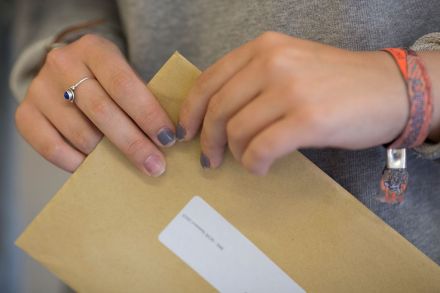
Try explaining the British university admissions system to a foreigner. They look at you as if you’re mad. 'What you do is, you apply to university in January on the basis of what your teacher thinks you will get in a series of cliff-edge exams you sit in May/June called A-levels. Only once you get your results in mid-August – which is to say, about a month before you’re due to start – is your place at university confirmed. But that’s only if you’ve actually achieved your predicted grades. If you haven’t, you go into this thing called 'clearing' where you scrabble around trying to pick up places that might have fallen free…' Perhaps the kindest way to describe our universities admissions system is 'archaic'.

The impact of Covid school closures is now painfully clear

From our UK edition

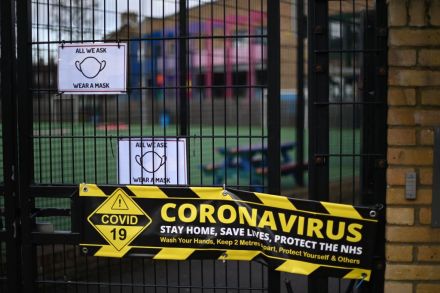
If the UK government retains any doubts about the scale of the educational challenge it faces after Covid-19, they can now be swiftly swept aside. The challenge is mountainous. New evidence published today by the Education Endowment Foundation, which I chair, starkly reveals the size of it. The study conducted by the National Foundation for Educational Research contrasts the performance of 10,000 Year 1 and Year 2 students (six and seven-year-olds) at the end of the most recent lockdown with the performance of those year groups over the same period in 2019. The findings ought to concentrate minds. Year 1 pupils made on average three months’ less progress for both reading and mathematics this year, compared with the cohort of spring 2019.

Britain’s class of Covid is in a race against time

From our UK edition

Winning the war is one thing, winning the peace is quite another. Time and again through history, national governments have thrown everything into a wartime effort, only to forget that there will be a country – or countries – to rebuild once victory has been secured.  This is why the Prime Minister is so keen to talk about Building Back Better and the Green Skills Revolution that he promises will follow just as soon as the vaccine has worked its magic. We are, we are told, going to create a better Britain once we’ve seen the back of Coronavirus. And of course much of Johnson’s blue sky ambition is admirable, and his famous optimism could prove important in the months and years ahead.

Our education system is failing when it comes to science

From our UK edition

Has there ever been a time when scientists have been held in higher esteem? Compared to the political class, scientists have seemed sober, sensible and our best hope of escaping the coronavirus crisis. Dr Anthony Fauci, the lead immunologist on the White House Coronavirus Taskforce, is just one scientist who has become a hugely respected voice in America and beyond – in spite of repeated attacks from Trump, who told campaign staff in October that ‘people are tired of hearing Fauci and all these idiots’. In the end Fauci will continue to serve in the White House long after Trump has headed back to Mar-a-Lago for good.

Lessons in democracy

From our UK edition

How to make our private schools open to all To look at David Cameron’s Cabinet is to see that Britain has a deep problem with social mobility. As in the Cabinet, the privately-educated are disproportionately represented in every sphere of British life, from politics to pop music. Almost three-quarters of high court judges, more than half of leading news journalists and a third of our MPs were educated at independent schools, which educated just 7 per cent of pupils. What is relatively new to Britain is that these elite independent schools should be the preserve of the rich. A sprinkling of bursaries and scholarships (not means tested) exist to these schools but they make very little difference.