John Simpson

Hong Kong fury

From our UK edition

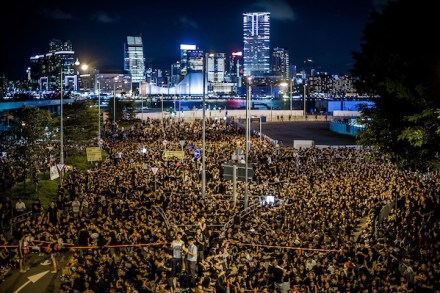
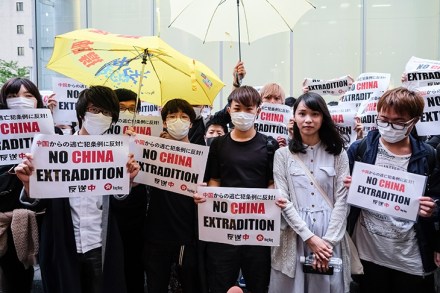
Whatever the authorities in Beijing say, the anger on the streets of Hong Kong isn’t synthetic, nor is it stirred up by ‘foreign forces’. The serious, dedicated atmosphere of 2014’s umbrella protest, which lasted 79 days, is back, only this time with more violence. Of course, the vast majority of Hong Kongers won’t be personally threatened by the passing of the extradition law — which allows Beijing to try suspects who, as matters stand, cannot be rendered across the border — but legal changes like this eat away at everyone’s security. At first, no doubt, those extradited to the mainland will be rapists and murderers. But later the prime candidates for extradition will be people who have infuriated Beijing by their public statements.
What Cuba was really like under Fidel Castro

From our UK edition

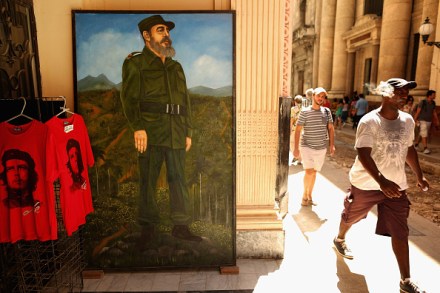
Havana 27 February 1993 `Que undo est el, how beautiful he is,' sighed a stately woman beside me in the crowd, showing a remarkable lack of teeth and a prodigious amount of bosom. I thought about the portly figure in the green uniform who had just driven off in his unmarked Mercedes. A living monument, certainly; charismatic, no doubt; romantic, if you like that kind of thing; a survivor, unquestionably. But beautiful? Perhaps I was not a proper judge of that. Yet even as she put her hand on the impressive bosom and looked in the direction he had gone, I felt instinctively that all those gleeful articles in the American press I had been reading about the imminent downfall of Fidel Castro must be wrong.

Roll up for the Bo Xilai show

From our UK edition

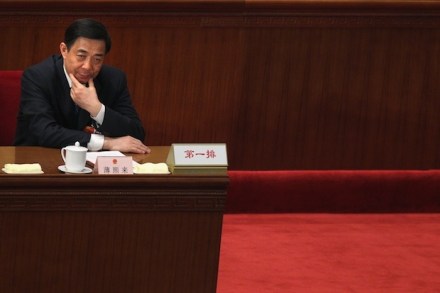
In a stuffy courtroom in Jinan, the capital of Shandong province, a major political triumph is being celebrated. Bo Xilai, the Communist princeling, challenged the system and lost, and the system is having its revenge. Under Marxism-Leninism a trial isn’t an exploration of truth, it’s a balletic demonstration of the rightness of the political system. Accused, witnesses, judges all join in the choreographed display, to prove to everyone’s satisfaction that justice, Chinese-style, is objectively correct. Until recently, the onlookers were expected to burst into delighted applause.

Why is Nelson Mandela’s health a state secret?

From our UK edition

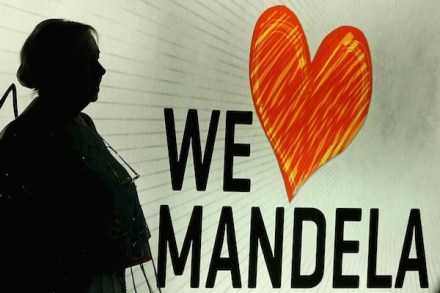
When President Jacob Zuma reassures a journalist, as he did last week, that Nelson Mandela’s condition is improving slightly, the entire world sighs with relief. Yet it has become hard to get trustworthy information about the man the world most admires. Mandela’s wife Graça doesn’t seem to be so involved in the key decisions about him any more. Instead, the occasional morsels of information which the world eagerly seizes on come largely from politicians. More strangely still, the South African government hasn’t let anyone know which hospital is treating him.

End of the Party?

From our UK edition

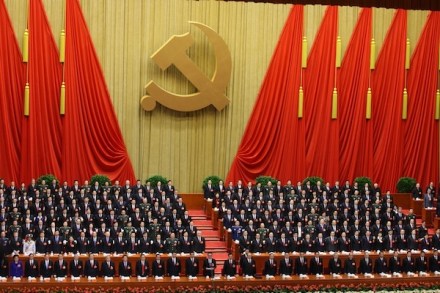
The 18th Congress of the Chinese Communist Party had begun, and President Hu Jintao was droning his way through his last big speech before stepping down for good. Irritatingly, he raised his voice to a low shout every time he reached the end of a significant sentence. That was when the assembled delegates were expected to applaud, and of course they did. They’d all been issued with copies of his speech telling them precisely where to start clapping. I’d had as much of this as I could take, so I walked out of the grand theatre in the Great Hall of the People into the equally grand lobby outside. It was about the size of a Buckingham Palace reception room. I sat down on the marble staircase and starting writing my report.

What should happen now?

From our UK edition

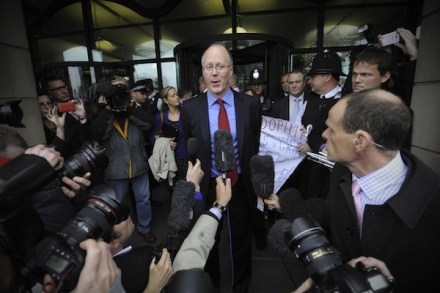
If you work for the BBC, you dislike seeing the outfit’s name in the headlines. It usually means the BBC is in trouble. No good complaining that much of the British press (to the bewilderment of people outside the country) have it in for the BBC, big time. Nor is it any good pointing out that there are a few politicians with an intense longing to dismantle the BBC altogether. These are facts of corporation life, and always have been. Its top executives have to ensure it doesn’t provide its existential critics, tiny in number but always noisy and weirdly angry, with ammunition. This time the BBC has handed them a veritable ammunition dump.

Rebel island

From our UK edition

Hong Kong isn’t what it was. Under British rule it was meek and mild, careful not to rock the boat, forever nervous about its future under China. The rich bought property in Chelsea and Vancouver, put their children into good schools and universities in Britain and America, and did whatever it took to get another passport. Nowadays Hong Kong fizzes with political radicalism. Last week mass student protests obliged the Chief Executive, C.Y. Leung, to cancel the introduction of mandatory ‘patriotism’ classes in schools — that is, lessons for children about the superior nature of Chinese Communism. And the following day, at the Legislative Council elections, the democratic groups won enough seats to make life a lot harder for poor old C.Y.

The office of last resort

From our UK edition

Beijing There is no mistaking the place. It isn’t just the crowd of men and women sitting on the steps of the small official building; it’s the way they look as individuals. Once you’ve come across a group of petitioners in China, you can always spot them again. They are usually middle-aged or elderly and poor. Their clothes are worn and dusty. They look discouraged, sad, beaten down by life. And yet there’s something else about them — something which says a great deal for the human spirit. They’re defiant. They’ve crossed the intangible barrier which divides the weak of purpose from those who are determined to see their project through, no matter what it costs.

Dear boss…

From our UK edition

Dear Director General Many congratulations on getting the best job in world broadcasting. Enjoy it as much as you can, while you can; in my 46 years at the Beeb, few directors-general have left as they would have chosen. Several were forced out before their time was up — usually as the result of bad behaviour by governments, Conservative and Labour. Mark Thompson made it through to the end, but I imagine he’s glad to go. His last two years have been overshadowed by a licence-fee agreement which has turned out to be harsher than anything the BBC has ever previously experienced. The shock of it all has become a part of the lives of every one of us. Making good programmes costs money; cut the money, and the quality visibly suffers.

Bias, Boris and the Beeb

From our UK edition

The Today programme ended, and John Humphrys walked out of the studio yawning and stretching. The phone was ringing in the empty programme office, and he picked it up. A spin-doctor’s foul-mouthed rant about how rotten and biased and stupid the programme had been came pouring out of it. Humphrys asked after a couple of minutes, ‘Can I just make a point?’ ‘Yes?’ said the spin-doctor warily. ‘Fuck off,’ said Humphrys, and slammed the phone down. Lord Reith wouldn’t have liked the language, but he would have approved of the instinct.

Savile Row revolutionary

From our UK edition

 ‘You can’t imagine how insecure it makes our politicians when they consider that they haven’t been elected.’ The man in the Savile Row suit and the hand-made shirt gave me a shrewd grin. Even the price of his haircut would have kept a ­Chinese farmer going for a year. ‘What’s the answer?’ I had to whisper, because Tony Blair was at the lectern, going on about how important China was. The man beside me shrugged and spread his hands. His name was — is, of course, but since his arrest people talk about him in the past tense — Bo Xilai, and I’d just bumped into him again after meeting him some years earlier. He was China’s minister of trade, and seemed to be heading for the very top.

A new Argy-bargy | 2 April 2012

From our UK edition

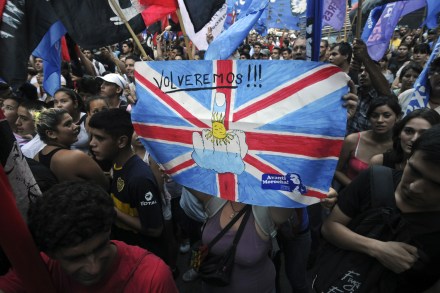
Another article to mark the 30th anniversary of the Falklands War — this one from the current issue of the magazine. It’s by John Simpson and analyses the current tensions between Britain and Argentina. Buenos Aires Buenos Aires is as exhilarating, as unpredictable, as stylish as ever. But the economic boom is over. Times are hard once again, more shops in Calle Florida are boarded up, the sales are pretty frantic. And so, as Jorge Luis Borges, the blind sage of Calle Maipu, just off the superb Plaza San Martin, once remarked: ‘When Argentina’s economy goes bad, you can be sure that nationalism will soon be beating its wings.

A new Argy-bargy

From our UK edition

Buenos Aires Buenos Aires is as exhilarating, as unpredictable, as stylish as ever. But the economic boom is over. Times are hard once again, more shops in Calle Florida are boarded up, the sales are pretty frantic. And so, as Jorge Luis Borges, the blind sage of Calle Maipu, just off the superb Plaza San Martin, once remarked: ‘When Argentina’s economy goes bad, you can be sure that nationalism will soon be beating its wings.’ Argentina’s President, Cristina Fernandez de Kirchner, beautiful, combative and ruthless, was already pretty nationalistic when the economy was doing well.

Putin power

From our UK edition

Sunday will be Russia’s Coronation Day. The emperor is back from his constitutionally imposed four-year break, Dmitri Medvedev, the fill-in, finds his coach turning back into a prime ministerial pumpkin, and Vladimir Putin will be president for another term: only this time it’s been extended to six years. President of Russia till 2018, and he’ll still only be 65. But for the first time it’s possible to ask ourselves whether the long-running Putin project will carry on working as smoothly as it has so far. There’s no doubt about Sunday: Putin will walk it in the first round.