Features

Travel – Sweden: Ice pick

Now is the time to skate Stockholm’s archipelago, says Fraser Nelson There are two times to visit Sweden: the height of summer or the depths of winter. If you have to choose, go now. Diving into the waters of Stockholm’s archipelago is a joy you can more or less imagine: skating across them, and having a snow barbecue afterwards, is something that has to be done to be believed. Every year, British lovers of winter sports do head off to the slopes in Italy, France, Austria or Switzerland — it doesn’t really matter what country, because the set-up is the same. But Sweden is unique. The Stockholm archipelago boasts something like 30,000 different islands and at this time of year you can skate between a lot of them.

Sarkozy’s last stand

The man who promised to reform France looks set to become a martyr to the euro – and his own abrasive personality Paris Nicolas Sarkozy chose an unpropitious week to tell the French public he wanted to be their president for another five years. As Sarko was granting a semi-official interview to Le Figaro, addressing the nation on television and planning his campaign’s first rally for the weekend in Marseille, the bad news kept rolling in. Qantas found cracks in the wings of an Airbus 380 superjumbo jet, and European aviation officials ordered them to be recalled for tests, dampening the spirits of French jet engineers. Corbusier’s Cité Radieuse, a landmark of French modern architecture (albeit one that no one would wish to live in), caught fire in Marseilles.

The people’s primate

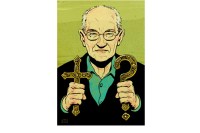
Lord Carey of Clifton isn’t the retiring sort. He stood down as Archbishop of Canterbury ten years ago, but he wasn’t ready to end his days in quiet contemplation. At 76, he is still a public figure — more so, perhaps, than ever. He used to be dismissed as a plodding liberal; a typically ineffectual Anglican primate. Today, he is recognised as perhaps the leading British voice of Christian conservatism. He speaks out against mass immigration, multiculturalism, gay marriage and militant secularists. He makes headlines. He’s recently fulminated against a High Court ban on prayers at council meetings, and attacked his fellow bishops in the House of Lords for their opposition to the government’s benefits cap.

Me for DG

A manifesto for the BBC’s top job Messrs Egon Zehnder, ­headhunters, are helping the BBC find its next director general. The involvement of these swanky international executive search agents is depressing. Their ­American-‘flavored’ website brags about helping companies seek ‘competitive advantage’ and identify ‘talented business leaders’. If the BBC is to have a future, it must raise its vision above such mercenary concepts. But at least Egon Zehnder may ensure that favourites for this influential position are drawn not simply from the upper, left-­facing slopes of BBC management. That danger was evident when the Guardian (whose editor may also be a contender) ran an early list of possible runners.

Big charity

The aid business has grown fat. It’s time there was proper scrutiny Such a simple question: should Oxfam spend a couple of hundred pounds a month opening up the swimming pool at its guesthouse in one of the nicer parts of Nairobi? It was posed by Duncan Green, the group’s head of research, on his blog, and provoked a revealing bout of navel-gazing in the aid industry. The pool was shut, Mr Green disclosed, on the orders of the charity’s head office, which feared a scandal after an advert for a pool attendant appeared on its website. The post went viral, sparking a far bigger response than Mr Green’s usual musings on poverty. Some comments were satirical, such as the suggestion Oxfam open a golf course for staff in Kenya.

Kiss off

Do you xxxx? Sorry to be impertinent. Perhaps you simply xx or x? I’m not a natural x’er, but it’s hard to resist when everyone else is x’ing all over the place. Besides, if someone x’s you, it would be rude not to x back, right? Truly, in this age of emotional incontinence, the etiquette of text and email signoffs is becoming a minefield. In the ever-intensifying arms race to display more and more emotion, even if it is entirely bogus, we are sending little figurative snogs to perfect strangers. We are ending the most businesslike emails with a valedictory expression of love and longing when a ‘Kind regards’ would do.

Flight of the black swan

Nassim Taleb is banging a glass against a table to demonstrate his notion of ‘anti-fragility’. ‘This glass is fragile,’ he says. ‘Vulnerable to nasty surprises.’ The glass survives his test. ‘Now, what’s the opposite of fragile? Not “robust”, because robust things don’t respond to any surprise, nasty or pleasant. To survive shocks and be adaptable means being “anti-fragile”.’ He believes that David Cameron should remake the British economy with this idea in mind. Economists come up with such theories and soundbites all the time, but with Taleb there is a crucial difference. When he speaks, the Prime Minister listens.

Enemies within | 11 February 2012

The Americans have 1776, the French have 1789 and we have 1940. The date is not official for us the way it is for them; it marks no formal founding of a nation or republic. But the events of that year — specifically, Britain’s lonely stand against the Nazi menace — have acquired the status of a creation myth, the heroic and finest hour in which modern Britain was born. Our children study the second world war in school and when we vote for our Greatest Briton we choose the hero of 1940, Winston Churchill. When David Cameron deployed his quasi-veto in Brussels in December, the headline-writers and cartoonists instantly reached for 1940 and the image of the solitary Tommy: ‘Very well, alone.

Be careful who you depose

Is the Syrian regime hellbent on political suicide? There can be no doubt that he is determined to crush any resistance, but if President Bashar al-Assad had really started a massacre in the city of Homs (as was reported by most of the western media) it would have been an act of complete madness. And though he may be ruthless, Assad is no madman. So what’s really going on? Well, the truth about the situation in Syria is that, as in Libya, there is much more to it than the simple narrative we’re all fed: pro-democracy activists fighting a hated tyrant. The Russians, at least, understand that much.

A churchwarden’s lament

When I take the dogs into the garden last thing at night, a dark shape looms up just beyond the garden wall. It is a 12th-century stone building, with a square tower, leaded and stone-tiled roofs, and large plain windows. It looms even larger in my imagination, since I am one of the two churchwardens (Bishop’s or People’s Warden, I never can remember which), so this building is in my charge. I feel as if I have a second home — with all the anxieties of owning an Umbrian farmhouse or Alpine chalet but none of the amenities — since I involve myself with the minutiae of its upkeep quite as much as I do with my own house. I worry all the time about the church’s fabric, graveyard and congregation, and the parish which supports it.

The race to Lambeth Palace

Rowan Williams’s would-be successors have begun jostling for position. One stands out Who shall be the next Archbishop of Canterbury, do you suppose? They are jockeying for position at the moment, suffused with godliness and the distinct suspicion that old beardie has had more than enough and may wish to shuffle off to a warm university sinecure some time soon. The more cynical among you might not give a monkey’s and, indeed, suggest that jockeying for position to inherit Rowan’s mantle is akin to jockeying within the Romanov family to inherit Nicholas II’s mantle in about 1915. As with most artefacts of western civilisation — manufacturing, education, the armed forces, the press — the story is about managed decline.

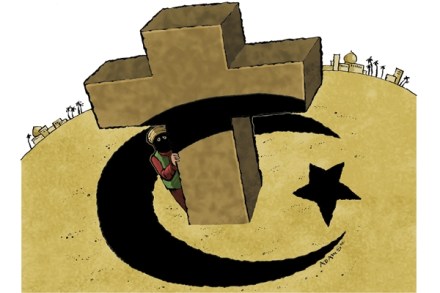
An acceptable hatred

The last politically correct form of prejudice is against football’s working-class supporters There is a brilliant irony to the campaign to ‘kick racism out of football’: its backers — the commentators and FA suits driving this petit-bourgeois push to clean up footie — think in a similar way and use very similar lingo to the football-terrace racists they claim to hate. Indeed, they have fully appropriated the racial thinking of those dumb blokes who used to hurl bananas at black football players. But they have turned it against white working-class football fans, whom they look upon as childish, inferior, tribal and ­monkey-like.

Diamond Jubilee debate: Has Britain declined under Elizabeth II?

Yes Theodore Dalrymple Is the Queen’s Diamond Jubilee a cause for jubilation? Certainly her reign has been a personal triumph: her iron sense of duty, gracefully performed, has been exemplary, if not an example often followed. For 60 years she has exercised a self-control that most of us find difficult even for 60 minutes; her recent state visit to Ireland put all our public figures of the past decades in the shade. Not that that is very difficult, for there is no disguising that her reign has been an era of continuous and continuing decline. Of course, not even accelerating levels of British incompetence have been able to arrest the march of technical progress, and, in raw physical terms, life in these islands has improved greatly.

From Dewsbury to the stars

What does superstardom look like? Well, nothing at all. Like anonymity personified. The seriously big celebs, the ones for whom walking down the street is either irksome or potentially hazardous, develop a knack for blending into the background. When Patrick Stewart arrives to meet me at the Young Vic, I scarcely notice him. The jacket and scarf are regulation winter­wear. His blue jeans are unexceptional, and his natty trilby is hoiked downwards to conceal his face. Only when he lifts the brim and reaches out to shake my hand does the sonorous magnitude of Sir Patrick coalesce, like magic, before me. He apologises for arriving 45 seconds late and sits down to sip coffee and eat a chocolate croissant. ‘Bingo,’ he begins. ‘Bingo is a lifelong obsession.

My first snowfall – Clarissa Tan’s diary

To everything there is a season, says the Bible. And, as I have been discovering, to every season there are certain things. To autumn belongs the wet shiny streets, the brollies and the macs, the brightly coloured soups, the quiet squares where both trees and grass are emblazoned with gold leaves. Then, as autumn moves to winter, there are the fleecy collars and fluffy hats, the steamy breaths, the ferrous skies. Perhaps before the season is over, I’ll get to see windowpanes with actual snow on them, instead of cotton wool. ••• I have spent all my life, until now, in the tropics, where there are no seasons.

Home boys

Meet the Dalis: men who are dependent – and loving it It sounds like a cushy life for a man. On weekdays he potters about at home, running a duster over the surfaces, tinkering with a short story he’s struggling to compose, painting, daydreaming, listening to a bit of Jeremy Vine; his wife, meanwhile, gets up in the dark, takes the 5.47 to Liverpool Street and toils away in a glass tower all day to bring home the bacon. He is dependent, and loving it: we could call him a Dali. There are a plenty of Dalis around these days. You probably know one or two. And the statistics show it clearly. More and more couples, especially if they have children, are choosing to swap the traditional roles.

Race card

Meet Kevin Jackson, the black Tea Party activist disgusted at the prejudices of Obama’s supporters Kevin Jackson talks a lot of sense. He also says things that make you wonder if your ears are playing up. As the newest star of the Tea Party circuit gives you his views on Obama, Palin and David Cameron, you repeatedly ask yourself, ‘Did he just say what I think he said?’ I am interviewing Jackson, a Republican blogger and author of The Big Black Lie, a critique of liberal America, because I heard him on US television saying that voting for Obama was racist. ‘They wanted the black president,’ he told Fox News. ‘Racists that they are, they voted for the man because he’s black, not because he’s qualified.