Features

The most dangerous game

There are four main players in the ongoing, and possibly accelerating, crisis, over Iran and its nuclear programme. There is, of course, the unelected yet ‘supreme’ leader of Iran, Ayatollah Ali Khamenei, who has definitive say over the direction of Iran’s nuclear programme (Iran’s elected — in a fashion — president, the ludicrous Mahmoud Ahmadinejad, has never had dispositive sway over it, and appears to be fading as a political power in any case). Then there is the American President, Barack Obama, who has so far done an incomplete job of convincing Iran’s leader that he means what he says when he says he will not allow Iran to possess nuclear weapons.

Buck up, Boris!

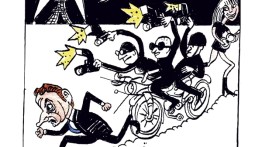
Why isn’t the mayor making mincemeat of Ken? Politicians do love their five-point plans, ten-point plans, 12-point plans, don’t they? Most of the points are usually Polyfilla, the political equivalents of ‘Your call is important to us,’ but at least there’s a nice round number involved. Last week, however, with characteristic originality, Boris Johnson unveiled British politics’ first-ever nine-point plan. Unkind critics sniped that it was a ten-point plan with one point missing. Even for better-disposed observers, such as myself, Boris’s Nine Commandments — intended as the foundation of his re-election campaign — leave something to be desired.

Theatre of rudeness

I’m told that the new production of Dvorˇák’s Rusalka at the Royal Opera House is controversial. There were boos at the first night and reports of audience members walking out in disgust. I too walked out in disgust. Mine, however, had nothing to do with what was happening on stage. It was prompted by the man sitting next to me, who arrived trailing BO the impact of which could alone knock out any Iranian nuclear bomb. The odour was so powerful that I had to get out as soon as possible. No part of my mind could focus on the performance; I had to hold myself together until the first pause when I could flee. When I mentioned this to friends the next morning, the floodgates opened. Almost everyone had had a similar experience.

Dr Scott, I presume?

Zambia’s new, white vice president on understanding Mugabe and standing up to China Lusaka, Zambia Zambia’s new vice president, Dr Guy Scott, sinks into the back seat of his armoured car. Motorbike outriders clear the traffic ahead of us as we glide through the capital. ‘I am enjoying the toys, I must say.’ He means the helicopter and the two motorcades — one for the city, another for the bush. There were two remarkable aspects to last October’s election, in which the Patriotic Front party was voted in, ending the former government’s 20-year rule. The first was the peaceful nature of the regime change. The other was the colour of Dr Scott’s skin.

Borders Notebook

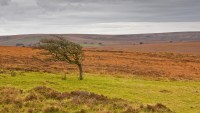
The Borders could handle a wee bit more love: while no one wants the place to be like the Lake District, a-bustle with elderly couples in brightly coloured clothing, a slight increase in appreciation would be acceptable. Flown over, passed through, not much visited, the Borders (by which is meant the cross-border region comprising Berwickshire, Roxburgh, Selkirk and Peebles, and north Northumberland) is scarcely known for what it is, a land not only hooching with history and presently strong — keeping its young — but also astonishingly, ever-changingly, easy on the eye.

The windfarm delusion

The government has finally seen through the wind-farm scam – but why did it take them so long? To the nearest whole number, the percentage of the world’s energy that comes from wind turbines today is: zero. Despite the regressive subsidy (pushing pensioners into fuel poverty while improving the wine cellars of grand estates), despite tearing rural communities apart, killing jobs, despoiling views, erecting pylons, felling forests, killing bats and eagles, causing industrial accidents, clogging motorways, polluting lakes in Inner Mongolia with the toxic and radioactive tailings from refining neodymium, a ton of which is in the average turbine — despite all this, the total energy generated each day by wind has yet to reach half a per cent worldwide.

Secrets of Singapore

They learned from us – now we need to learn from them The last time I visited Singapore, I stayed at the charmingly run-down, distinctly colonial Raffles Hotel. I drank a Singapore Sling in the Long Bar, contemplated a well-fed cockroach in my room and fancied myself to be following in the footsteps of Somerset Maugham. It was more than 30 years ago. I felt like Milord Anglais, making my tour around the still pretty exotic Far East. Well, that’s all gone. Visiting again earlier this month I found a Singapore so prosperous that any possible sense of effortless and, of course, undeserved superiority has been replaced by something close to the opposite.

An astronaut at 80

In a couple of weeks, Alan Bean will turn 80. He’s not planning any special celebration. If he does go out, it will probably be to a local restaurant in Houston, Texas. ‘I’ve eaten barbecue at this restaurant once a week, have done for 15 years,’ he tells me. ‘Nobody there has any idea that I’m anyone other than this old guy who likes barbecue.’ Few people even recognise his name. This is probably because Alan Bean was the fourth man to do something. His late colleague Pete Conrad was the third man to do the same thing — and no one used to recognise him either. The first two were Neil Armstrong and Buzz Aldrin. Apollo 12, sandwiched between the epic first of Apollo 11 and the famous disaster of Apollo 13, has been largely forgotten.

Coventry blues

He who would see England’s future should be separated for a while from the better parts of London and sent (literally, not metaphorically) to Coventry. There, amid the hideous and dilapidating buildings of a failed modernism, he will see precincts with half the shops boarded up, where youths in hoodies skateboard all day along the walkways, the prematurely aged, fat and crippled unemployed occupy themselves in the search for cheap imported junk in such shops as remain open, and the lurkers, muggers and dealers wait for nightfall. I stayed four nights in Coventry, in a hotel whose nearest architectural equivalent was the hotel in which I had once stayed in Makhachkala, in ex-Soviet Dagestan.

‘A little bit extra’

A very chic lady turned to me at a dinner party recently and in tremulous tones confided that she was being investigated for benefit fraud. ‘Infernal cheek,’ I said. ‘How typical that our chaotic benefits system should make such a stupid mistake. Instead of going after the layabouts, some idiot pen-pusher has put two and two together and made nine.’ ‘No,’ she said, her cut-glass voice lowering until it was almost inaudible. ‘I have been fiddling benefits.’ I stared and stared at this elegant woman, dressed from head to foot in Armani. With her salon blow-dried hair and impeccable taste, she was to me the antithesis of what a benefit claimant looked like, never mind a fraudulent one.

Private property

Celebrities have a right to profit from the exploitation of personal information – and so do you Something has been bugging me about the Leveson inquiry, and it’s not a private investigator hired by News International. It’s the pervasive line of defence that you hear when it comes to the invasion of privacy, and with the Sunday Sun rising in the east, it’s worth addressing. There’s no chance the new Sunday red-top will revive the black arts of its predecessor and indulge in what the Met’s Sue Akers has called the Sun’s ‘culture of illegal payments’. But there is every chance that it will carry one basic assumption over intact.

Irreconcilable differences

It has become clear over the last few weeks that we are witnessing the beginning of the end of the coalition. Once, the rows between Tories and Lib Dems used to be about peripheral issues, but they are now about the central planks of government policy. In happier times, disputes used to lead to better policy-making; now they result in crude horse-trading. The coalition used to be underpinned by trust between the central players in each party. That trust is now breaking down and there is a growing feeling that the coalition cannot go the distance until 2015. One Downing Street adviser told me this week, with a fatalistic air, that a ‘2014 election wouldn’t be too bad really. David would have done his best, Nick would have done his best.

Murdoch’s coup

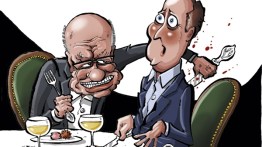
The launch of the Sun on Sunday is a perfectly timed riposte to Leveson Beleaguered staff at News International say they have rarely seen Rupert Murdoch so full of energy. Sleeves up, literally and figuratively, the almost 81-year-old newspaperman is back in his element, tearing around the offices at Wapping, doing what he always loves doing best — creating a new newspaper, and confounding his critics. The Sun on Sunday will be launched this weekend. While other newspaper proprietors are in retreat all over the world, and while Murdoch himself faces the greatest ever threat to his empire as a result of the phone hacking scandal, he charges the barricades, confounding his enemies, launching Britain’s first new Sunday paper in a decade.

Three men and a vote

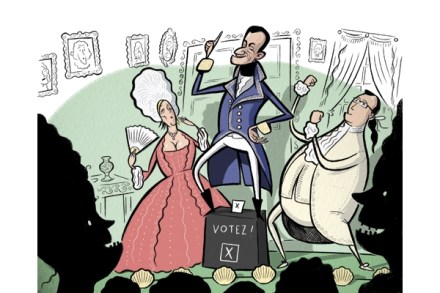
The contest for the Republican nomination is stuck in the rogues’ gallery stage Fredericksburg, Virginia An election year in America is just that — a year. The 2012 race has just kicked off and still has eight months to go, but it is already having a critical effect on me: keeping up with the contest for the Republican nomination makes me want to run away and join the ladies’ auxiliary of the French Foreign Legion. Choosing the nominee for the out-of-power party is a process of elimination. We start with an omnium gatherum, reduce it to a rogues’ gallery, and end up with a candidate. As I write this we have bogged down in the rogues’ gallery stage. Up until recently, we seemed to have narrowed it down to Mitt Romney and Newt Gingrich.

Class is back

…and the divisions are more bitterly felt than ever Until recently, the British middle classes felt quite good about themselves. The class war was over, and they had won it. Pretty much everyone wanted to join the middle classes. If they were not already members, the way things were going they very soon would be. ‘Embourgeoisement’ was the sociologists’ word for what was happening. Contrary to Marx’s flight plan, the bourgeoisie was turning out to be the preferred destination of History. No longer was British society shaped like a pyramid, with a steepling summit of idle toffs and an enormous broad base of deprived and discontented proles.

Travel – Scottish Highlands: Dream land

The doubt that comes to mind in the Highlands when faced with such wonders as Glenfinnan — is this for real? — always arises when recalling the enchanted coastal village Glenelg. ‘Does Glenelg exist?’ seems an almost reasonable thought when away from the place. ‘Did I ever see those colours, that light, the Sound of Sleat and the distant islands? Was that golden eagle a dream?’ Part of the reason is that Glenelg is removed, beyond, even otherworldly in location.

Travel – Norway: Northern light

In the constant light of summer, Tromsø is an extraordinarily civilised place from which to visit the wilderness, discovers Harry Mount  ‘Why do the British look so ill?’ I was asked by a 23-year-old woman at a dinner party in the Arctic Norwegian city of Tromsø. ‘Is it because they have chips for breakfast?’ She seemed to have steered clear of the chips herself; her skin looked like it had been put on fresh that morning. ‘Why do Norwegians look so good,’ I asked back, ‘when they drink even more than we do?’ The answer lay on the plates in front of us: reindeer sashimi followed by grilled whale, then seal, moose, cod and herring — all straight from the fjords and the frozen tundra.