Features

Gove’s paradox

By any standards, the Education Secretary is good news for history. He knows the subject, he likes the subject, and his ‘English Baccalaureate’ is already producing a marked upturn in pupils studying the past. Sadly, Michael Gove is also a Conservative — and a deeply ideological one at that. He has a certain vision of history and, with it, a ‘drum and trumpet’ view of what should be taught in our schools. I would be happy for pupils to learn this aspect of our past. But the problem the Education Secretary faces is how to marry that passion for Whiggish British history with an equally strong determination to liberalise the education system.

The tide turned

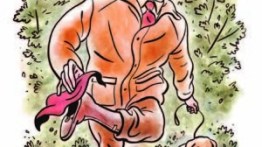
A couple of years ago, a rescue operation was recorded at a lifeboat station in Poole, Dorset. ‘The boat was launched at 13.35p.m. following a call that a man and two children were stranded on rocks in the vicinity of Lulworth Cove. The wind was south-south-west force three. Visibility good. We reached the scene at 13.45p.m. The man and two children — one boy, one girl, both under five — were taken off the rocks and landed at an adjacent cove into the care of a local coastguard mobile unit.’ The report concluded: ‘The man’s name and address were not obtained.’ I can now reveal that the man was myself. At about noon that day, I had dug a pit in the sand for my children to muck about in, while I sat reading a book.

Another country | 14 April 2012

London’s separateness from the rest of Britain becomes more pronounced every year London has always been different from the rest of the country. But in recent decades the differences have widened to the point that, economically and socially, the capital now has little in common with the rest of Britain. The city may be hosting the Olympics in July, but none of those attending should kid themselves that they have visited Britain. London has effectively left the UK; it belongs instead to a loose international federation of global cities united by their economic dynamism and cosmopolitanism and the people who flit between them. This leads to a big problem: Londonitis.

Sweden’s secret recipe

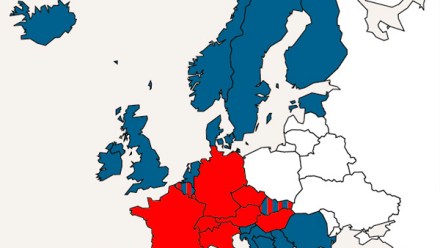
When Europe’s finance ministers meet for a group photo, it’s easy to spot the rebel — Anders Borg has a ponytail and earring. What actually marks him out, though, is how he responded to the crash. While most countries in Europe borrowed massively, Borg did not. Since becoming Sweden’s finance minister, his mission has been to pare back government. His ‘stimulus’ was a permanent tax cut. To critics, this was fiscal lunacy — the so-called ‘punk tax cutting’ agenda. Borg, on the other hand, thought lunacy meant repeating the economics of the 1970s and expecting a different result. Three years on, it’s pretty clear who was right.

Plucking heartstrings

Why I’m proud to play the banjo The death last week of legendary banjo player Earl Scruggs was marked by generous obituaries. He fashioned a style of playing now copied worldwide. In 2004, his instrumental ‘Foggy Mountain Breakdown’ — theme music for the 1967 film Bonnie and Clyde — was chosen by the US Library of Congress for the National Recording Registry. He died at 88. So, a good innings. No doubt he’s now playing elsewhere. As they say in Nashville, ‘The good Lord likes a little pickin’ too.’ A friend wonders how I ‘defend’ playing — or, more accurately trying to play — the banjo. As if it’s a type of discriminatory behaviour now forbidden.

Please shut the gates

Eighty-five years ago the National Gardens Scheme was created and blighted gardens in the UK forever. And in this anniversary year we will be bored silly by the praises sung of it. Starting as a scheme to let everyone, even the hoi polloi, into posh gardens for a donation to charity, it now dominates the garden world, tainting all it touches. Somehow the belief has grown that the gardens under the scheme are great, quality gardens. The reality of their predominant mediocrity can never be confronted because, my dear, it’s all for good causes. Good gardens, awful gardens, nonexistent gardens such as Antony Woodward’s rather vacant plot on an inaccessible Welsh hillside — all may come to the party and be bathed in a rosy glow of goodwill and piety.

Out of the east

If the test of the Arab Spring was its treatment of minorities, it has failed. Hopes that the region was poised to make the transition to liberal democracy have proved to be premature, trampled under the boots of the ethno-religious cleansers. The old-style corrupt despots have metastasised into even older-style Islamist xenophobes. The Arab world, already judenrein, now seems determined to slough off its Christian minority. A few weeks ago, Sheikh Abdul Aziz bin Amdullah, Grand Mufti of Saudi Arabia, responded to a question posed by a visiting Kuwaiti delegation. Would sharia permit churches to exist in their emirate? The sheikh’s response was categorical.

Iraq’s Christian exodus

The Arabs once had a saying about the British: ‘Better to be their enemy, for that way they will try to buy you; for if you are their friend, they will most certainly sell you.’ For Iraq’s Christians it has proved to be sage advice. It is a lesson learned by a 25-year-old engineering student Wissam Shamouy, an Assyrian Orthodox Christian from Bakhdida in Nineveh province, who fled after jihadis gave him a second warning: leave or die. Shamouy’s mother paid a Kurdish smuggler to take him to Turkey and from there he made his way to England because he spoke the language, and was told Britain helped with ‘humanity protection’. Instead, he was arrested for arriving with false documents and imprisoned in Wormwood Scrubs for 122 days.

Cameron’s tragic flaw

The PM’s problem is not poshness, but impoliteness Premierships do not end in failure, as Enoch Powell once asserted, but in tragedy. They start with a beaming figure disappearing behind the door of No. 10 — even Edward Heath, immortalised now as the Incredible Sulk, entered with a radiant grin. And they end with a haunted shadow of a politician creeping out to a waiting car, his every character flaw having been chiselled to destruction. Over the past week, the tragedy of David Cameron has become apparent. It may be a few years before he leaves office, but from here onwards the narrative is clear.

A hymn to the organist

Some people swoon over film stars. I swoon over organists. Good organists, that is, not bad organists. Bad organists I refer to as ‘dominant males’, because the only two chords they play are the tonic and the dominant. Good organists are upholders of some of the highest musical expertise in the land. When you hear the stops being pulled out for the voluntary on Easter Sunday (will it be Bach? Will it be Widor?), spot the organist, and see if you experience a frisson. Here are ten reasons for my partiality. The muscle at the far edge of the palm of each hand. (The one giving strength to the little finger.) It’s amazingly strong. I’m much more interested in this muscle in a man than in his abdominals or, worse still, his biceps.

Class system

When my wife said she thought we should educate our three children at comprehensive schools, it was with a degree of trepidation that I went along with her. I was thankful to save the several hundred thousand pounds it would probably have cost to send them to fee-paying schools, money which I at least showed scant sign of being able to earn. But I wondered whether the education would be good enough. Like many a middle-class parent, I was frightened of a system of which I had no personal experience. My parents had tightened their belts to pay for my schooling, and I feared I was failing to give my children the advantages I had myself enjoyed.

Was Chris for real?

I still don’t know whether I’ve been had I have been wondering what to do about Chris…. Well, I call him Chris, but the truth is that I’ve only met him once and I’d hardly say our brief acquaintance qualifies as friendship. How does one get oneself into these quandaries? Four weeks ago, I was walking along Buckingham Palace Road, towards the coach station, when I noticed Chris. He was a couple of steps ahead of me, talking on the telephone, and in a state of agitation. He was talking to a friend. His father had died that afternoon, and he needed to borrow the fare — 30 quid — for the coach to Leeds. Could his friend help? I was alongside with him by then, and glanced over.

Lack of appeal

Here we go again. Like a macabre version of Groundhog Day, mass murderer Jeremy Bamber is making yet another bid for freedom. This nasty legal saga has been dragging on for almost 26 years, ever since Bamber was first found guilty of the savage massacre at his family’s farmhouse in rural Essex. By a majority verdict, the jury at Chelmsford Crown Court decided that in the early hours of 7 August 1985, Bamber had shot dead his adoptive parents, Nevill and June, his sister Sheila Caffel, and her young twin sons, Daniel and Nicholas. No fewer than 25 rounds from an Anschutz .22 semi-automatic rifle had been fired at the victims, almost all from point-black range.

Battle of the generations

Are the young bearing the burden of the deficit? Should the older generation bail them out? Baby-boomers must pay up Daniel Knowles The baby-boomer generation is the most cosseted, untouchable, powerful generation in our history. To say so isn’t pensioner-bashing, but simply stating a fact. That is the lesson of the outcry over last week’s ‘granny tax’ in George Osborne’s Budget. Even as those in every other generation have seen their incomes fall, and had to consume less, the elderly have been completely protected from Osborne’s axe. Yet when the Chancellor decides to close a tax loophole which fewer than half of those eligible even use, it is denounced by the pensioner lobby as an ‘outrageous assault’.

Sarkozy springs forward

There’s nothing like a crisis to rescue an ailing candidate Yes, he’s back. Just when the French Socialists thought that they were jogging into the Elysée Palace for the first time in 17 years, a discredited president has remounted his favourite war horse, a national security crisis, and with three weeks to go before the first round on 22 April, the left has a fight on its hands. Ten days ago, most commentators agreed that François Hollande merely had to keep his head and events would take their inevitable course. Nicolas Sarkozy, a deeply unpopular president, was about to disappear into the wastepaper basket of history.

Little Pyongyang

There is perhaps one thing that unites radicals and revolutionaries from all countries, and most ages: London. At some point or another, most of the great political dissenters and activists, Voltaire, Marx, Engels, Lenin, Trotsky, Sun Yat-sen and even Ho Chi Minh have found themselves on the streets of our capital, plotting and writing in tiny back rooms. For 300 hundred years, it has been famous for its political tolerance in a temperamental and oppressive world. And as I’ve discovered, London is once again a home to revolutionaries; to defectors from the planet’s most oppressive regime. NovemberI am sitting in a small underground room lit by a dingy orange lamp. A small group of North Korean exiles sit around me.

Lessons in democracy

How to make our private schools open to all To look at David Cameron’s Cabinet is to see that Britain has a deep problem with social mobility. As in the Cabinet, the privately-educated are disproportionately represented in every sphere of British life, from politics to pop music. Almost three-quarters of high court judges, more than half of leading news journalists and a third of our MPs were educated at independent schools, which educated just 7 per cent of pupils. What is relatively new to Britain is that these elite independent schools should be the preserve of the rich. A sprinkling of bursaries and scholarships (not means tested) exist to these schools but they make very little difference.