Features

The latest anti-Semitic cry: ban circumcision

There are lots of weird campaign groups around today, but none so weird as a band of unmerry men called ‘the intactivists’. If you’ve never heard of the intactivists and you’re a bit squeamish, or you are reading this while lunching on a sausage roll, then you might want to turn the page now. Intactivists are men who were circumcised at birth and who, as their name suggests, long to become ‘intact’ again. In a nutshell, they want to recover their foreskins. And they’ll do almost anything to achieve this, including undergoing skin grafts and even attaching weights to the little bits of foreskin that their possibly careless circumciser might have left behind. Hey, look, I told you to turn the page.

Alice Munro won’t let her Nobel go to her head — that’s why she’s a true Canadian writer

Canadians, like the English, are known for our tendency to apologise. The difference is, we actually mean it. Our modesty is not false. Our inferiority complex is not a polite, self-deprecating joke. We really do feel inferior. And we really are sorry. Sorry for taking up so much space for so few people. Sorry for being so dull and functional compared with our glitzy neighbour to the south. Sorry about Celine Dion. And above all, sorry for failing to produce much of anything great apart from Niagara Falls and the Rockies, which we can’t take credit for anyway.

Spies spy – get over it

In the whole panoply of human idiocy is there anything so ridiculous as the outrage that occurs whenever people are reminded that spies spy? There was just such an outburst recently when Edward Snowden left his job as a contractor to the CIA and NSA, repelled, he said, by the discovery that surveillance programmes carry out surveillance. Snowden discovered that American and British intelligence agencies were involved in data trawling and was so horrified that he found it necessary to flee — first to the freedom-loving People’s Republic of China and then, to seek asylum, to Moscow. On the left of the political spectrum he is the new Julian Assange — though without the sex-crime charges.

Going off-piste in Val D’Isere

First things first. Yes, Val d’Isère does have a reputation for being expensive — and it is, especially if you’re planning on eating out and embracing the après ski every night. But no matter what anyone says, you can’t argue with the fact that the skiing is fantastic. Combined with its neighbour, Tignes, there’s a total of 330km of piste to explore, with plenty of steep red and blue runs that are perfect for intermediate and advanced skiers. One of the most frequent complaints about skiing in Val is getting home at the end of the day. Almost every route down to the main town is a challenge, even if you are fairly competent at descending mountains with a couple of planks strapped to your feet.

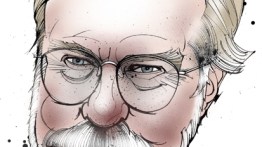
Malcolm Gladwell is wrong about the Irish

Malcolm Gladwell, the curly-haired, counter-intuitive guru of modern thought who wrote The Tipping Point and Blink, certainly has a readable style, and often a striking way of turning received notions on their head. His latest book, David and Goliath — about the inspiring advantages of perceived disadvantage — is accompanied by a much-hyped speaking tour, the blurb for which describes him as a ‘global phenomenon’. In it, among other topics, he plunges into the origin of the Troubles in Northern Ireland, but the location wasn’t his first choice.

Obamacare? Not in the least

   Washington, DC On or around 17 October, the United States will stop paying its bills. The US Treasury will reach the limit of the debt it can legally issue — the ‘debt ceiling’ — and unless Barack Obama and Republicans in the House of Representatives come to an agreement, the US will stand on the brink of default. How did Obama get us into this mess? More importantly, can he get us out before the country (if not the world) plummets into crisis? The answer to the first question might surprise you: Obama is not an adroit politician. Good at winning votes, yes — not only better than the Republicans he faced in 2008 and last year, but better than Bill Clinton and either of the Bushes.

Less sex please, we’re British

Jeer if you will, but I was shocked by the latest Bridget Jones book, Mad About the Boy. I was shocked by the sex. No, honestly. Compared with its predecessors, including a one-off series about how Bridget got pregnant but wasn’t sure by whom, this latest book ratchets up the raunch quite markedly. Granted, Bridget is having it off with a boy of 29 (to her 51), but there weren’t any passages from her previous diaries like this: ‘Oh God. What was I thinking having sex all night? The whole makeup/breakup thing somehow whipped Roxster and me up into a sexual frenzy and neither of us could stay asleep. Was actually hanging upside down from the side of the bed with Roxster holding both my legs in the air whilst thrusting in between them when suddenly —’.

A new Islamist alliance among Syria’s rebels has given Assad the enemy he wants

   Amman — Beirut — Istanbul I recently bumped into a senior officer with the rebel Free Syrian Army who was waiting in the passport queue at the Turkish border. I didn’t recognise him at first, out of uniform and without his entourage, and I told him so. He was following the example of the 7th-century Second Caliph, Omar bin al Khattab, he replied. The caliph was so humble he took turns with his servant riding a horse to Jerusalem to receive the city’s surrender. There was no imagery from Islamic history when I first met the officer a year ago. He was one of those ‘rebels’ western officials have in mind when they describe a ‘secular, moderate’ armed opposition.

The war on Christians

Imagine if correspondents in late 1944 had reported the Battle of the Bulge, but without explaining that it was a turning point in the second world war. Or what if finance reporters had told the story of the AIG meltdown in 2008 without adding that it raised questions about derivatives and sub-prime mortgages that could augur a vast financial implosion? Most people would say that journalists had failed to provide the proper context to understand the news. Yet that’s routinely what media outlets do when it comes to outbreaks of anti-Christian persecution around the world, which is why the global war on Christians remains the greatest story never told of the early 21st century.

Notes on …The Tarn Valley

Why didn’t I know about the Tarn Valley? I’d often been right next door. But here, north-east of Toulouse, between the baking fields of Gers and the rocky mountains around Carcassonne, is this best-kept secret. It’s a lush region of great rivers, rolling green hills and towns with magnificent red-brick gothic architecture and is sometimes referred to as the Triangle d’Or (mostly by estate agents). The sea is three hours away in either direction, which is a boon, meaning that even in August it was eerily devoid of tourists. If the points on the triangle are the towns of Gaillac, Albi and Cordes sur Ciel, in between are any number of really beautiful bastide villages.

Do miracles happen?

Two recent popes are to be canonised on 17 April next year: Angelo Roncalli, Pope John XXIII, and Karol Wojtyla, Pope John Paul II. Both are being declared saints in haste: conventionally the Church has waited for a few hundred years for the dust to settle, with slow promotion from ‘venerable’ to ‘blessed’, before declaring de fide that a soul is with God in Heaven. To establish that this is indeed the case — that a soul is in Heaven — miracles have to be ascribed to candidates for canonisation. The saints themselves do not perform miracles: this is done by God at their request. He, God, interferes with the laws of nature to cure from terminal illnesses those who have prayed to the candidate.

Witch-hunting capitalism in Africa

   Johannesburg  I stumbled upon a grand story the other day, thanks largely to my girlfriend Shmerah, who is doing a masters in anthropology at the nearby University of the Witwatersrand. One afternoon some weeks ago, Shmerah informed me that she and her classmates were excited about the imminent arrival in Johannesburg of the Italian-American philosophy professor Silvia Federici, described as one of the planet’s foremost leftist theoreticians. We were in the car at the time, bickering about something or other. Knowing it would irritate me, Shmerah rummaged in her bag, produced one of Federici’s academic papers and proceeded to read it out loud.

If nurses are really ‘at breaking point’, they should stop working 12-hour shifts

Scarcely a month goes by, or so it seems, without one or other representative body of the medical profession complaining about how dangerously overworked and generally unappreciated its members are. The latest is the Royal College of Nursing — still smarting, perhaps, from the Francis report into the fatal negligence at Stafford Hospital — which found that nurses today are frequently stressed out and ‘forced to choose between the health of their patients and their own’. Forgive me, but they would say that, wouldn’t they? The preamble notes that morale has deteriorated since a similar RCN survey eight years ago published under the same self-fulfilling title, At Breaking Point.

If you think British banks are bad, you’ve never tried China’s

It’s hard to think of anything more badly run than a Chinese bank. Somalia perhaps, or the BBC’s remuneration committee. Certainly, Beijing’s embattled lenders make ours look like paragons of financial rectitude. We may dislike RBS et al for bringing our economy to its knees, but at least we’re not saddled with a cabal of banks inextricably linked to whoever resides in Downing Street. Let’s start with good old-fashioned service. We may complain about our banks, how they all look the same and bombard us with adverts that would patronise a two-year-old. But at least they pretend to care. China’s banks don’t. Service is dire wherever you go. Internet or mobile banking ranges from poor to non-existent.

Mark Carney has a £250,000 housing allowance – why would he care about rising property prices?

In popular myth, King Cnut the Great, more commonly known as Canute, set his throne on the sea shore and commanded the tide to retreat. One version has it that Cnut’s display was a sign of regal arrogance — though if the event ever did occur, it was more likely a rebuke to obsequious courtiers. Speaking of which, the financial media have been in thrall to a new king of finance since Mark Carney was elevated to the governorship of the Bank of England in July. His procession to office included previous high-ranking positions at Goldman Sachs, the Canadian Department of Finance and the Bank of Canada. If you’re in the mood for a wry smile, visit the Bank of England’s website.

If only more banks were more like Wonga

I know a lot of people who work in the financial industry. One on one, they are decent and kind. I’d trust them to look after my handbag in the pub while I went to the Ladies. But you know what? I wouldn’t trust many of them to look after my pension or my ISA. In fact I’m pretty damned sure that if I bought a financial product from them, they would devote themselves to slowly stealing my savings. I’m not alone in feeling like this. PressChoice does an annual survey asking journalists how much they agree or disagree with the statement ‘the financial services industry conducts itself in an open and honest way’. In 2008 the majority agreed.

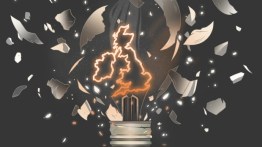
Why Britain’s economy will overtake Germany’s

What’s the most surprising thing that could come out of the current economic upturn? A rapid revival in northern manufacturing? The City really getting behind small British businesses? Ed Balls admitting higher public spending wasn’t always the best way to promote growth? Any of these eventualities would be fairly amazing. But the biggest surprise would perhaps be this: a gradual realisation that the UK is on track to become the largest economy in Europe. In the 19th century, at the height of the industrial revolution, the UK outproduced all of its European competitors. It steadily lost that position, however, ceding industrial leadership to the Germans and the French. In the next couple of decades that pattern will start to reverse.

Al-Qa’eda targeted Kenya not because it’s a banana republic, but because it’s a symbol of African success

If Al-Shabaab was behind the terrorist attack in Nairobi, then the group has come a long way since its foundation in a derelict shampoo factory called Ifka Halane — ‘Clean and Shiny’ — in Mogadishu in 2006. I know a little about the group because I am the only westerner to have met its founder, Aden Hashi Ayro, before he was killed in a US air strike. In those days Al-Shabaab was a small militia providing muscle for the Islamic courts in Mogadishu. For a brief spell the courts did a good job of bringing a degree of law and order. Then Washington foolishly backed an Ethiopian invasion of the country. For Al-Shabaab, this was a godsend. Afghan-trained Salafists don’t enjoy fixing drains or street lights. Insurgency is much more worthwhile.