Features

Nancy Dell’Olio: Englishmen can’t flirt (except for Russell Brand) 

Why can’t British men flirt? This was one of my first thoughts when I arrived in England some years ago. I adore flirting. Like so many Italians, I consider flirting a way of life, an added joy to the day, as harmless, normal and pleasurable to a woman as a glass of chilled champagne at an unexpected hour. When living in Rome, I had become accustomed to that stereotypical Italian man. I’m sure you are all aware of who I am referring to: L’uomo forte. Oh, they are adorable. The subtle glances across a room, the secret smile, that turning of the head and that silent acknowledgement that if only, if only, and then a lingering, regretful pleasure of what might have been. All completely innocent but a continual reminder, an acknowledgement that a woman is a joy to behold.

The fight for your life is now raging

Beneath your noses, a great change in this country is being planned. Secret polls have been taken, and a private member’s bill has been tabled. The euthanasia lobby is limbering up for the fight of its life: to change the law for once and for all. The Assisted Dying Bill, introduced by former Lord Chancellor Lord Falconer, is the fourth such to come before the House of Lords in the last decade. Since it is almost identical to the last bill, which sought to let doctors supply lethal drugs to terminally ill patients and which Parliament rejected in 2006, why is this one being introduced? The answer has largely to do with the changed composition of the Lords.

Notes on … Christmas shopping in Bruges

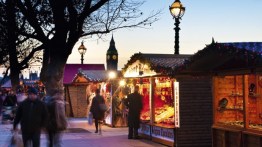
Most Belgians of my acquaintance tend to be rather disparaging about Bruges. It’s a theme park, they say, a Flemish Disneyland. Antwerp is livelier, Ghent is more authentic. A lot of its historic buildings are actually clever fakes. All of this is true, but that doesn’t stop it being one of Europe’s most beautiful cities — and an ideal destination for Christmas shopping. Given the choice between Bruges and Westfield, I know which shopping centre I’d choose. Like a lot of pretty cities, Bruges is a monument to boom and bust. Commerce paid for its ornate medieval architecture, but then the river silted up and Bruges became a backwater. Preserved by poverty, it was rediscovered by the Victorians as a romantic refuge from modern life.

I got a call from Jeremy Hunt about health tourism — but he still doesn’t get it

On Monday morning, Jeremy Hunt’s diary secretary rang me to arrange a time for me to speak to the Secretary of State over the telephone. I had already received an email from his special adviser the previous week, saying, ‘The two points which the independent research make clear are central to what you’ve been saying for a long time; namely that health tourism is a huge problem with a substantial cost to the NHS and the current system is an unfair burden on frontline staff.’ When Jeremy rang, he was charming, full of praise, and eager to tackle the issue of health tourism — the exploitation of the NHS by ineligible, non-tax contributing patients. Yet for all the Health Secretary’s good intentions, I fear his department is failing to grasp the nettle.

How mansion taxes will make us all poorer

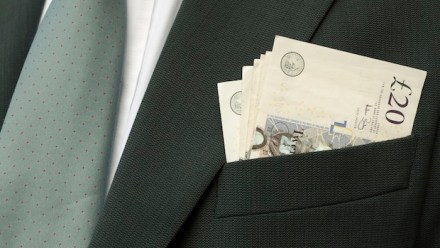
There are few things most of us enjoy more than watching the value of our houses rocket. Every homeowner will have felt the pulse of excitement that comes from a mental calculation of how much has been added to their net worth by the latest bulletin from Rightmove or the Halifax. Yet fast forward two or three years and the same news could make our hearts sink — because by then a mansion tax could well have been introduced, and rising prices will take many middle-class owners over the threshold. The mansion tax bandwagon has been rolling for several years, pushed enthusiastically by business secretary Vince Cable and his Lib Dem colleagues. The idea is that any home worth more than £2 million would be taxed at an annual rate of 1 per cent of its value above the threshold.

Should you invest in nuclear power companies? 

Power companies are the new banks as far as the public is concerned — but does that mean they’re not worth putting your money in? In any troubled marketplace there are always stocks to be picked, but current political turbulence makes that an unusually tough challenge in the UK energy sector. Much anger is currently directed at the  ‘big six’ energy groups — Centrica, Scottish & Southern (SSE), Scottish Power, E.on, RWE and EDF — and their pricing power in the domestic market. The recent round of tariff rises, ahead of the winter heating season and in the face of a moderating wholesale market, served to underline the suggestion that they are price-gouging.

How to make money from the Scottish referendum

The best time to buy an asset is when no one else can stomach it. Great fortunes are made in uncertainty. The self-made rich aren’t the ones who hung around on the edge of an iffy situation thinking about the possible disasters. They’re the ones who calculated the odds and bought before anyone else was sure of the answers. So where is there uncertainty in the UK today? Most English people are utterly uninterested in the prospect of Scottish independence — or in Scotland generally. But if they were actually to look up north they’d see pretty serious turmoil. It is less than a year until every resident of Scotland gets to vote on whether they want to live with the devil they know or the devil they don’t.

They used to catch crooks – now they trawl Twitter. Are our police turning into spies?

Just before the hacking scandal broke, the Sun sent a young and by all accounts decent reporter to meet a woman who said she had a story — a ‘walk-in’ as we call them in the trade. The walk-in produced a phone and said the Sun would want to take a look. One picture on it showed the face of a much-loved TV presenter. The rest of the celeb’s body was more lustful than lovable, however, as he was exposing his member in triumphant fashion. Accompanying the picture was a lot of explicit sex talk. The phone looked as if it belonged to the star’s mistress, and the very famous and very married presenter had been sending her pornographic ‘selfies’ and sex texts to remind her of the joys that awaited her when they next met. The reporter took the phone.

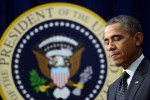
Zoë Wanamaker: We need more giants like Obama

It’s all true about Zoë Wanamaker. She’s like a wood-nymph from the Tolkien franchise. Pixie features, nut-brown eyes, a mischievous tight-lipped smile and a warm cackling laugh. Next week she makes a guest appearance at the Hampstead Arts Festival to discuss her acting career. Had she heeded the advice of her parents — Sam Wanamaker and the Canadian actress Charlotte Holland — she might never have followed them on to the stage. ‘You don’t want to go into that. It’s full of disappointment and rejection,’ they told her. ‘Do something else. Get a proper job.’ Wanamaker’s idea of a proper job was to become a painter. ‘I went to art college for a year to learn to develop my painting technique.

Botswana is persecuting its Kalahari bushmen — and we had a role in it

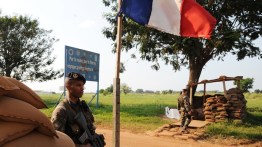
For 17 years I have been reporting on one of the most haunting tragedies of our modern world — the ruthless persecution of the last survivors of the original inhabitants of southern Africa, the bushmen, by a policy seemingly designed to wipe them from the earth. Those responsible are not wicked white colonialists but the government of Botswana, which, thanks to its vast diamond reserves, is per capita the richest country in Africa. We in Britain, however, should take a special interest in this story because through most of that time our Foreign Office has given full support to the policy which created this tragedy, in breach of a solemn pledge we gave to the bushmen in the 1960s. And now there has been yet another disgraceful twist to the story.

There’s a global morality gap — and it’s getting wider

First World, Third World, East, West, North and South; every few years economists come up with yet another supposedly more acceptable way of slicing humanity into manageable chunks. Mostly these great divides are riven by wealth; sometimes (RIP Second World) by ideology. But I think it’s time to name a new divide, a more fundamental, more puzzling one — a split between worlds that will define the 21st century much as the Iron Curtain defined the 20th. I am talking about the morality gap. It is now clear, though not much talked about, that humanity, all 7.1 billion of us, tends to fall into one of two distinct camps. On the one side are those who buy into the whole post-Enlightenment human rights revolution.

Arthur Laffer: cuts succeeded where stimulus failed

 Nashville, TN All the drama coming out of Washington in the last few weeks has obscured some seriously good news: federal government spending is falling. And not at a trickle: think the White Cliffs of Dover. Not since the economic boom following 1945 have Americans seen such a rapid decline in the government’s claim on the nation’s resources — falling by a welcome $94 billion over two years. You need to go back to the end of the Korean war to find a time when US government spending has actually declined over two years. If Republicans in the House stick to the sequester and future caps already built into current budget law, federal spending will stay at this low level for years to come.

The Morrissey myth

Drinking in Corbières, a dingy basement bar just off St Ann’s Square, 30 years ago, you could bump into any number of groovy young Mancunians clustered round the jukebox, talking about the bands they were going to form. One night, as the jukey played ‘The Cutter’ by Echo & the Bunnymen, all evening long it seemed, there was talk of an odd duck from Stretford called Steven Morrissey. Nobody knew him but his name was in the wind. Soon he had formed The Smiths with a guitar player, Johnny Marr, whose sweet pop sound complemented, or supplemented, his partner’s predominantly sour words. For three years the collaboration worked, so long as you felt, as many teenagers have always felt, that the world was jolly unfair, and your place in it uncertain.

I was Ralph Miliband’s research assistant, and this is what he was like

‘You can work as research assistant to Ralph Miliband.’ Thus my tutor at the London School of Economics gave me the news that he had found a way for me to finance my first year of study for an intended PhD on the Labour party’s housing policy between the world wars. The idea was that for twelve months between 1964 and 1965 I would help analyse the changing occupational structure of the British workforce by comparing statistics contained in the 1851 census with those in the 1951 census. As a first step, my new boss took me for a drink in the coffee bar next door to the main entrance of the LSE. Our discussion about the intended project went well. We were both enthusiasts for demographic statistical analysis.

Notes on … Skiing in Switzerland

There’s a myth in the Spectator office, which I’ve never discouraged, that I’m Yorkshire’s answer to Franz Klammer — a veteran ski ace who likes nothing better than to have himself helicoptered to remote peaks in search of deep, virgin powder. But myth it is, I’m afraid: your business columnist is fat, 58 and was never fast on skis or any other form of self-propulsion, even in his youth. So you might think I’m the wrong man to be telling you about my favourite Swiss winter-sports station, which is the picture-book village of Wengen in the Bernese Oberland. This, after all, is the place where ski-racing was invented by British sportsmen in the 1920s, and is still home to the muscular Downhill Only Club.

Tommy Robinson: Double standards, not fear of diversity, provoked the EDL

The first time I met Tommy Robinson I told him to fuck off. The English Defence League (EDL) had just formed and Robinson came up to me after a public interview I was doing in London. Without knowing anything much about them, I am afraid I assumed (white, working-class, Cross of St George at demos) that the EDL were a British National Party front. Which was why I ended up advising him of the procreative way in which to travel. He took it very politely, said he understood that I didn’t know their views and then said, ‘We’re not racists — we’re just working-class guys who are losing our country and can’t bear it.’ Last week, four-and-a-half-years on, we met again.

Don’t hug me! (Even though sometimes it’s rather nice)

When, in 1957, Harold Macmillan accepted the Queen’s invitation to become prime minister, following the resignation of Sir Anthony Eden, he returned from the Palace, marched up Downing Street to where Eden was waiting for him, and gave his old rival a man-hug, right there in front of the Pathé news cameras. No, of course he didn’t. But we have come a long way since then. Indeed, at the party conferences they were all at it: MPs, ministers, party activists, hug, hug, hug — and not a hoodie in sight. After the Mayor of London delivered his speech he was rewarded with a bear-hug from the Prime Minister, no less. At least it was away from the cameras this time, unlike last year at the Olympics, when Boris and Dave had a manly embrace in full view.