Lucinda Lambton

A girl, a train and a miniature pistol: how I met the Everly Brothers

From our UK edition

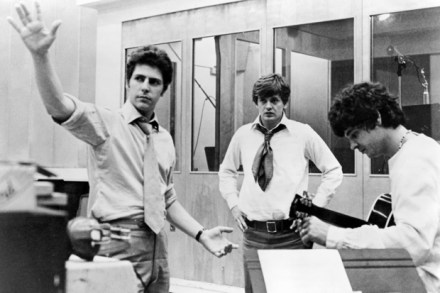
I was drifting in and out of sleep last week, listening to the news, when suddenly eight words — at first sounding no different from the general run — slammed into my senses. ‘Phil Everly of the Everly Brothers is dead.’ For the first time I knew how it felt when ‘the earth stood still’. One of the two brightest flames of my youth had been extinguished. I was friends with both Phil and Don Everly for some 45 years and it was, to be sure, a dazzling friendship. Beat this for its beginnings: it was 1960 and we met at midnight, boarding the Flying Scotsman at King’s Cross, surrounded by the thickly hissing steam from that great green engine. The sleeping car attendant, as neat as a pin in his starched white bum-freezer jacket, was standing by.
Parsons’ displeasure

From our UK edition

Despite its prosaic title, this is a humdinging page-turner of a book, revealing in livid detail the scandal of how the Church of England jettisoned onto the market what the author describes as ‘perhaps the most admirable, desirable and ascetic body of domestic buildings ever built’. Despite its prosaic title, this is a humdinging page-turner of a book, revealing in livid detail the scandal of how the Church of England jettisoned onto the market what the author describes as ‘perhaps the most admirable, desirable and ascetic body of domestic buildings ever built’.

Paradise lost

From our UK edition

‘Jamaican history’, wrote Karl Marx, ‘is characteristic of the beastliness of a true Englishman’. In The Dead Yard, Ian Thomson laments the consequences, with the grim conclusion that the British planters cast Jamaica aside like a sucked orange once they had exploited their estates. Having shaped Jamaica’s past for good or ill, Britain has not helped to shape its future for the good. Today, blessed by nature with startling beauty and cursed by history with such startling evil, the country does not know whether to laugh or cry; and Thomson addresses this dilemma with depth and brio as well as despair. Often too with delight, as his ever observant eyes and ears pick up — with joyful-for-us results — the culture, colour and customs of the country.