Alan Rusbridger

Alan Rusbridger on the joys of four-hand piano

From our UK edition

One of the few social activities not yet prohibited under lockdown laws is four-handed piano playing. I don’t mean sitting side-by-side at one keyboard. That would risk infection and, if snitched on, the possibility of sharing a prison cell with Piers Corbyn. No, the four hands must be divided equally across two pianos, and the instruments must be end-to-end. Safely isolated in this manner — perhaps three or four metres apart — the ivories can be tickled for as long as you want. I’ve been a devoted four-hand piano player all my life — due entirely to the limitations of the two I was born with.
Everything you always wanted to know about classical music but were afraid to ask

From our UK edition

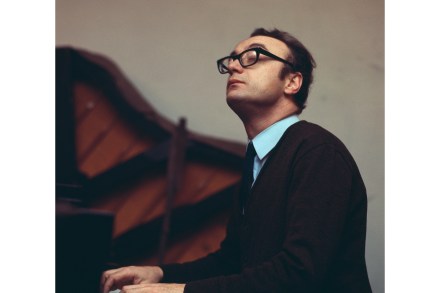
Novelist, essayist, painter, poet, composer. Oh yes, and pianist: Stephen Hough does all of these things very well — and one of them superlatively. Most of us will know Hough as a dazzling but thoughtful concert pianist, at home with almost all repertoire, but with a special affinity for 19th- and early 20th- century works. He recently played a gilded royal piano at the Proms — and before that published his first extended work of fiction. But don’t call him a Renaissance man. He flinches — and points out he’s not much cop at maths or science. That makes the rest of us feel only marginally better. A pianist has to do something while on the road — all those flights and lonely nights in distant hotel bedrooms.

Enjoy the ride

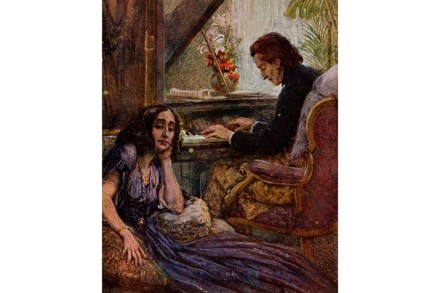
It is easier to say what this book is not than to describe what it is. It is not a biography, nor a work of musicology. As an extended historical essay it is patchy and selective. It is partly about pianos and pianism, but would disappoint serious students of that genre. It is not quite a detective story — though there are, towards the end, elements of a hunter on the track of his prey. It is probably best to begin the book with no expectations of where it will lead. It starts in the Palma workshop of one Juan Bauza in the 1830s as he fashioned an upright piano — crude, even by the standards of the day — from local softwood, felt, pig iron and copper.

Ten reasons why conservatives should take Edward Snowden seriously

From our UK edition

Towards the end of last year Tom Stoppard gave a rather brilliant PEN/Pinter lecture on freedom of expression which was, in part, a kind of love letter to the place which has been his home since 1946: ‘There is no country in the world I would rather be living in, no country where I would feel safer.’ Later in the same lecture he listed his own ‘obsequies over the England we have mislaid’. The list began: ‘Surveillance, mis-selling pensions and insurance. Phone hacking. Celebrity culture. Premiership football. Dodgy dossier. Health and Safety. MPs’ expenses…’ And so on, before underlining his own personal mantra on human rights: ‘A free press makes all the other freedoms possible.

How to stifle the press

From our UK edition

It feels wrong, as a journalist, to be letting outsiders into this secret, but it is really quite easy to cover things up in England. If you are determined enough it won’t cost you a penny to buy silence. Nor does it even much matter whether you live in this country: our legal system stands ready to help all-comers. It couldn’t be simpler. You hire a solicitor with a working knowledge of Britain’s libel laws to fire off a fierce letter to whichever journalist has been pestering you. It will be the opening salvo in a process which rapidly threatens to become eye-wateringly expensive. If it’s a local paper that may well be all it takes.

Diary – 3 May 2003

From our UK edition

This is not a statement that will wring many heart-strings, but if there's one group of professionals which has been a bit down-at-heel in recent months it's libel lawyers. For a variety of reasons – Jeffrey Archer languishing in jail among them – there has not been a queue of claimants outside the Inns of Court waiting to consult eminent practitioners in the black arts of defamation. So the impending case of Galloway v. Moore has put a spring in the step of m'learned friends. For a while it had looked as though we would never again see a titanic High Court slugging match between two veteran pugilists. And now we've got one. Doubtless there is some spread-betting site somewhere on the Internet offering odds on the forthcoming encounter.