Features

Our browbeaten universities

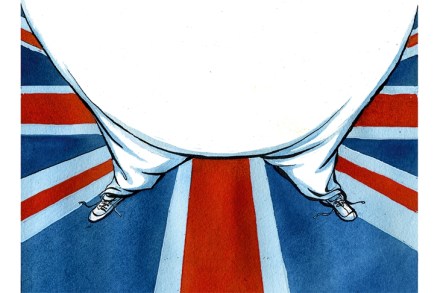
Are university vice-chancellors paid too much? The government clearly thinks so, and is planning to fine universities that can’t justify paying their leaders more than the Prime Minister’s salary of £150,000 per annum. Louise Richardson, vice-chancellor of Oxford University (salary £350,000), strongly disagrees, and has contrasted her salary negatively with those of bankers and footballers. But bankers and footballers work in the private sector and so are not the concern of government. It’s surely an established principle that government can intervene in the pay of chief executives of public bodies, but not of private ones. And any fool knows that universities are public bodies. Or are they? Actually, Professor Richardson is on to something important.

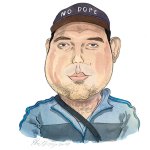
The straight dope

It’s not easy to get hold of Ángel Hernández, the legendary Mexican chemist who for a decade provided illicit performance-enhancing drugs to numerous athletes, including, he claims, all eight 100 metres finalists at the Beijing Olympics. It took me just over a year of trying. The FBI also struggled. The story goes that when they eventually caught up with him in 2005 he had been holed up in a hotel room in Texas, living under an assumed name for two years. Presented with numerous incriminating wire-tapped telephone conversations and bank statements as part of the investigation that eventually sent three-time Olympic gold medallist Marion Jones to prison, Hernández became a state witness in return for avoiding chokey.

Ya Allah!

Last month Luigi Brugnaro, the mayor of Venice, warned that anyone who yelled Allahu Akbar (‘God is the greatest’) in his city was liable to be shot dead by a police sniper. A bit harsh you might think, but it’s weird how tricky it’s become to use the world’s fifth most spoken language in Europe, let alone invoke the Arabic name for God. Three days after the London Bridge attacks, a trio of Muslim women attacked a female nursery worker on Wanstead High Street in north-east London. One of her colleagues told the Daily Mail they were ‘chanting the Quran, and invoking Allah’.

Our big fat problem

The good news is that Theresa May has dropped the threat to withdraw universal free school meals. Thank God (and the PM) for that. School lunches are the biggest weapon we have to fight obesity. The UK is sixth in the supersize race of OECD countries, with a quarter of the population obese. The fact that six of the fattest nations (the US, Australia, New Zealand, Canada, Ireland and the UK) are English-speaking should tell us something about our food culture. But sadly even Japan and South Korea, the slimmest nations, are fattening up fast on burgers and chips. What is to be done? No country is going to have the courage to ban junk food, as they have drugs. Maybe we’ll come to that one day.

Starting again at 48

My name is Katherine and I’m an intern at The Spectator. What does that say about me? If you had to guess, you’d probably assume I was just finishing university and that I’m perhaps the niece or goddaughter of someone important. Because that’s how the media works, isn’t it? That I’m probably unpaid, but it doesn’t matter because my parents will sort me out — that’s if they didn’t buy this internship for me in a charity auction in the first place. And to be honest, that’s exactly how I imagined interns, too. Yet here I am, a 48-year-old mother of three. I felt embarrassed telling my husband I was applying for this scheme, suspecting he might think l had taken leave of my senses.

The green giant

Environmentalism has gone too far; renewable energy is a disaster; scares about pesticides and chemicals are horribly overdone; no, the planet is not going to end any time soon; and, by the way, the answer is nuclear… This isn’t me speaking, but the views of an environmentalist so learned, distinguished and influential you could call him the Godfather of Green. His name is James Lovelock, the maverick independent scientist perhaps best known for positing the theory that our planet is an interconnected, self-regulating organism called Gaia. Not ‘Sir’ James Lovelock, I was mildly surprised to discover when I met him at his Dorset home, perched idyllically just behind Chesil Beach. ‘But I am a CH,’ he says, meaning Companion of Honour.

The lure of the abyss

I received a sad letter this week: Steve is back in prison. Each day the mail comes down to the wing in a pouch, and the office is closed while the staff sort through it, marking a board next to the name of each lucky recipient. When a board is put out, we all have a look, playing it casual but really hoping for a letter, a card, a few quid; anything provides a bit of interest, and the feeling that someone, somewhere has thought of you. It’s nice. Usually it’s nice, but not this time. I knew the handwriting straight away, because health problems that affect his coordination have left Steve with, shall we say, a distinctive script. I opened the letter, and saw the printed header, with the address of a prison in Yorkshire.

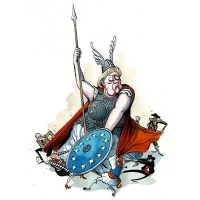
The Merkel supremacy

 Berlin Under the PR system we gave them, it's inevitable that Merkel will have to govern in some sort of coalition ‘Capitalism is armed robbery,’ reads the graffiti on the subway wall, but here in Berlin, German capitalists are doing what capitalism does best — creating new jobs and new industries. Berlin used to be regarded as ‘poor but sexy’(as Berlin’s former mayor Klaus Wowereit put it), but last year the German capital boasted the highest growth in the country — 2.7 per cent, 0.7 per cent above the national average. A city of squats and bombsites has become a city of high-tech start-ups, and now tech giants such as Google and Microsoft are moving in. Cheap rents and a lively nightlife attract smart millennials from across the globe.

Love rats

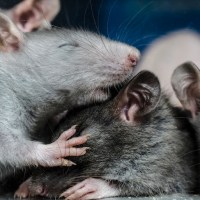
 Paris The rat is an intelligent, flexible and determined creature that's difficult to eliminate A rat’s not called a rat for nothing, and — as we are repeatedly told — we are never very far from one. Certainly not in Paris, where I sit, which has seen a great increase in their number recently. There’s also been a rise in the number of people living on the streets, and perhaps the two are in some way connected. On the other hand, the increase in the rat population may be due to the ban on the use of certain kinds of rat poison, as when arsenic rat poison was banned. Anyhow, the Ville de Paris has undertaken not to rid the city of rats altogether — that would be utopian — but to reduce their numbers.

Too Indian to adopt

I am not surprised that the mother of a white Christian girl should be upset that her daughter was placed by Tower Hamlets council in London with a foster family reported to adhere to a strict form of Islam. But my experience is very different — one in which cultural sensibilities were taken into account, but to an extreme and absurd degree. Our story is about adoption, not fostering, but one assumes that similar decision-making guidelines govern the placement of vulnerable children. My wife and I are British Sikhs, but not practising ones. We have open minds — we like to think there is something out there but we are far from being religious. We both, as it happened, went to Roman Catholic schools. We both work in business and our closest circle of friends are white British.

Lessons from Houston

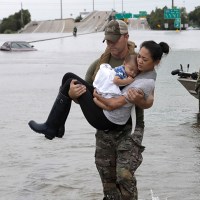
The numbers are awesome. In a matter of hours, Hurricane Harvey dumped nine trillion gallons of rainfall on Houston and southeast Texas: at one stage, 24 inches of rain fell in 24 hours. Like all American cities, Houston is prepared for hurricanes and floods — but Harvey was of a different magnitude. ‘We have not seen an event like this,’ the chief of the Federal Emergency Management Agency, William ‘Brock’ Long declared. It led rapidly to unprecedented flooding in one of the world’s richest cities. The photos from Houston have been heartbreaking. Pensioners have been pictured sitting half-submerged in retirement homes, awaiting rescue.

‘Kill! Kill!’ yelled the mob

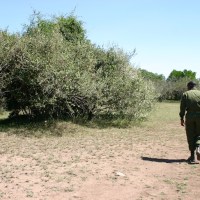
 Laikipia, Kenya Following Kenya’s recently concluded elections, I took a walk on my Laikipia farm and lit up a cigar, stale because I had saved it for a day when I might hear a bit of good news that never seemed to come. I felt it was the end of a terrifying five-year ordeal when I frequently sensed my life was in extreme danger. A few weeks before at a rally on the plains near our farm boundary, our local MP, Mathew Lempurkel, had allegedly declared: ‘If we win this election we will take this land… We will make sure all wazungus (white people) go to their homes.’ This speech was recorded by witnesses, and Mathew was arrested and charged with incitement. But my MP was no stranger to criminal cases.

Let’s redo lunch

As a young sub-editor on the Times in 1926, Graham Greene, future author of The Quiet American and Brighton Rock, had his meals in the office canteen. Elevenpence bought two kippers, a pot of tea and a slice of syrup roll. Plenty to keep a man going through a long subbing shift. Is that ‘pot’ of tea not civilised, with its suggestion of several cups, of the ceremony of brewing and pouring? With a hot main and a hot pudding eaten away from one’s typewriter? Today’s office worker eats al desko. Quick dash to Pret, Eat, Itsu, Leon — it’s as if we haven’t time for more than four letters — for the same sandwich, sushi box or wrap as yesterday. Back to wolf down bacon, lettuce and tomato before a one o’clock meeting.

Iran is our natural ally

The Saudi town of Awamiya — like so many countless cities across Iraq, Syria and Yemen that are witnessing an unleashing of the ancient hatred of Sunni for Shia — now exists in name only. Last month, days before an assault on its Shia inhabitants by the Saudi regime, the UN designated it a place of unique cultural and religious significance. But under the guise of fighting Iran-backed terror cells, the Saudis then subjected Awamiya’s entire civilian population to the indiscriminate use of fighter jets, rocket-propelled grenades, snipers, heavy artillery, armoured assault vehicles and cold-blooded executions. More than a dozen Shia, including a three-year-old boy, were killed. Hundreds of young men were rounded up.

Why is the National Trust hounding hunters?

For the sound of his horn brought me from my bed/ And the cry of his hounds which he oft times led/ Peel’s ‘View, Halloo!’ could awaken the dead/ Or the fox from his lair in the morning. Back in the early 1800s, the legendary huntsman John Peel galloped all over the northern Lake District. His successors are the Blencathra Hunt, a ‘fell pack’ who hunt on foot, but the Blencathra may be the last to hunt on Peel territory. Much of the Lake District is owned by the National Trust, the UK’s largest private landowner, and at the next National Trust AGM, on 21 October, a motion is being put forward which proposes banning trail hunting on all the Trust’s land.

Passage from India

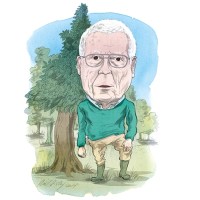
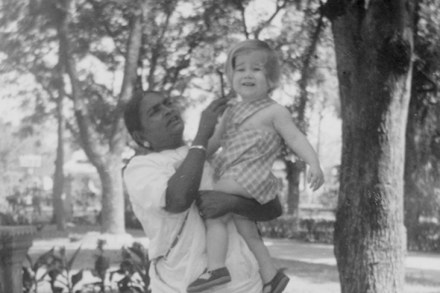
It is not fashionable to feel sympathy for the men and women who lived and served in the British colonies and who had to leave when independence came, whether it was from Kenya, Ghana — or from India, which celebrated the 70th anniversary of its freedom earlier this month. But I do, because I remember the pain and the loss and the homesickness of leaving India — a feeling which has niggled away somewhere deep down all my life. The Indian writer Shrabani Basu (the film based on her book Victoria & Abdul comes out next month) is no friend of the Raj, but she read my recent memoir and said: ‘It must have been particularly painful for the children, as India was the only home they knew.’ Exactly.

University challenge | 24 August 2017

In a few weeks, a new intake of students will arrive, all fresh-faced and excited, at universities around the country. They’ll be thrilled at the prospect of escaping the wagging finger of mum and dad, eager to absorb new ideas. But I’m afraid they are in for a rude awakening. Unless they’re very fortunate, they will soon find themselves enveloped in a world that’s more censorious than stimulating and taught not to question ideas but to learn by heart the progressive creed. It will take a brave and resilient youngster to survive university with their intellectual curiosity intact. Every aspect of campus life, from what you can say to how you should party, is minutely policed by what I called the Stepford Students in this magazine three years ago.

Unsafe spaces

As a child in Glasgow, I learned that sticks and stones might break my bones but words didn’t really hurt. I’m now at New York University studying journalism, where a different mantra seems to apply. Words, it turns out, might cause life-ruining emotional trauma. During my ‘Welcome Week’, for example, I was presented with a choice of badges indicating my preferred gender pronouns: ‘he’, ‘she’, ‘they’ or ‘ze’? The student in front of me, an Australian, found this hilarious: ‘Last time I checked, I was a girl.’ Her joke was met with stony silence. Later I realised why: expressing bewilderment at the obsession with pronouns might count as a ‘micro-aggression’.