Features

A very social spy

I first met Sergey Nalobin in 2012 at Soho House. He introduced himself, in accented English, as from the Russian embassy. ‘On the Ministry of Foreign Affairs orientation course before coming to London, I was told to read Guido Fawkes blog and Private Eye. I enjoy yours more,’ he said flatteringly (I publish Guido Fawkes). A PR company had offered me an irresistibly large fee to give ‘a masterclass’ to corporate marketing types in how to use social media. So it was that I found myself presenting Power-Point slides in front of a boardroom of suits — with one short, heavy-set, cropped-haired Russian from central casting sitting right next to me. Later, over burgers, we exchanged banter. I immediately suggested he was a spy.

Poet of the century

The first book that Tomas Venclova read in English was Nineteen Eighty-Four. Not a bad start in the language, given his future career. Venclova is less well-known in the West than his late friends Joseph Brodsky and Czesław Miłosz, but he’s something like their Baltic equivalent: a dissident poet of international standing, who spent many of the years of his home country’s Soviet occupation in exile in the US. He describes Nineteen Eighty-Four as ‘a very important book in my life, and the one that taught me the most about the Soviet system’. A passage he says made ‘a very strong impression on me’ comes in an exchange between Winston Smith and his interrogator O’Brien. Winston asks O’Brien: ‘Does Big Brother exist?

The art of the sledge

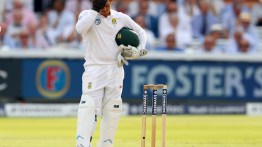
‘Good morning, my name’s Cowdrey.’ England batsman Colin, later Lord Cowdrey, to the Australian fast bowler Jeff Thomson. ‘That’s not going to help you, fatso. Now piss off.’ Lord, who wrote those lines — was it Oscar Wilde? Noël Coward? Woody Allen, maybe? Or was it just a primordial example of sledging: the art and science of the cricketing insult? Sledging is hot again as the Test series in South Africa against Australia reaches new heights of bad vibes. And when we’re getting moral lectures from David Warner — the Australian player who thumped the England player Joe Root in a bar for the unforgivable sin of wearing a joke wig on his chin — well, we know we’re faced with one of those fascinating moral puzzles.

‘Populism, fascism – who cares?’

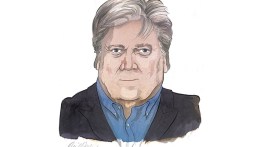
We are in a hotel suite at the Park Hyatt Hotel in Zurich when Stephen K. Bannon tells me he adores the fascist dictator Benito Mussolini. But let’s be clear. Bannon — as far as I can tell — is not a fascist. He is, however, fascinated by fascism, which is understandable, as its founder Benito Mussolini, a revolutionary socialist, was the first populist of the modern era and the first tabloid newspaper journalist. Il Duce, realising that people are more loyal to country than class, invented fascism, which replaced International Socialism with National Socialism. He was thus able to ‘weaponise’ — to use a favourite Bannon word — what the people wanted.

The prince of PR…

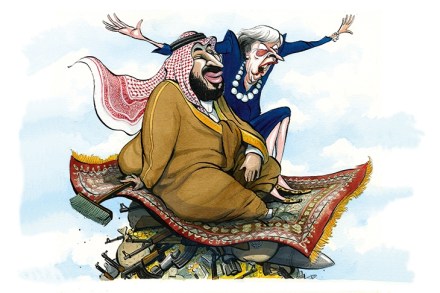
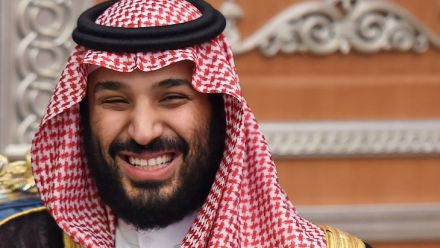
This week, Mohammad bin Salman, also known as MBS, is on his not-quite-state visit to Britain. A parade down the Mall and a state banquet could only be afforded to his father, old King Salman, who made MBS crown prince last June and has given him unprecedented latitude to liberalise Saudi society, lock up his enemies and light fireworks abroad. MBS arrived in London on Wednesday fresh from visiting one friend, Egypt’s General Sisi, and will go on to see another, Donald Trump, on 19 March. Theresa May’s aim will be to show that Britain can thrive outside the EU, but she should think twice before co-opting this new strongman who reputedly encourages his courtiers to call him Iskander — the name by which Middle Easterners know Alexander the Great.

The Russia problem

Mischief and mayhem work better for Russia than steady cooperation with the western powers. This at least is what the Kremlin leadership decided a decade ago, after Putin had accommodated the American wish for an Uzbekistan base for its Afghan war only to find that President George W. Bush continued to criticise him for the brutal way he brought Chechnya to heel. From then onwards he searched for a different frame for foreign policy. This meant reaching out a hand of friendship to China and other developing countries. It licensed Russia’s ministers, especially those responsible for national security, to be as rude as they liked about America. It spelled out that Russia would achieve its re-emergence as a great power in its own chosen fashion.

The real war on women

How hard is it for women to talk freely about sex, gender and the law? Not very, I used to think. I’d heard about a few no-platforming incidents on campuses, where speakers including Germaine Greer were blocked from appearing because of their views. What I hadn’t realised was just how far the problem has spread. In the past few months, I’ve discovered firsthand that political debate is narrowing for everyone — and that fear and intimidation are being used increasingly to curtail free speech. I am one of a small group of women who get together to discuss proposed changes in the law on sex and gender. We’re called Woman’s Place UK. But because of the content of our discussions, certain activists want us closed down.

A very EU coup

Martin Selmayr has always dreamed of being known beyond the Brussels bubble. His wish has now been granted, albeit in not quite the way he might have hoped. It has arrived in the form of a brilliantly executed coup that has handed this 47-year-old German bureaucrat near-total control of the EU machine. The coup began at 9.39 a.m. on 21 February, when 1,000 journalists were sent an email summoning them to a 10.30 a.m. audience with Jean-Claude Juncker. The short notice suggested urgency — and for such a meeting to be happening at all was unusual in itself. Since becoming President of the European Commission, Juncker has held hardly any press conferences.

Two nations

Last month, a 17-year-old business student of Somali extraction, Abdikarim Hassan, was knifed to death outside a corner shop, 70 yards from my home in Kentish Town, north London. At that very moment, in a parody of middle-class life, I was having dinner with friends, playing bridge in my flat. Less than two hours later, and less than a mile away, another youth of Somali extraction, Sadiq Aadam Mohamed, 20, was slashed to death with a samurai sword. That same evening, a mile and a half from me, a 17-year-old survived a stabbing and a 24-year-old was attacked, suffering non-serious injuries. Two people have been charged in connection with the killings. It later turned out that Hassan’s brother, Mohamed Aadam, 20, was knifed to death in September.

Is this feminism?

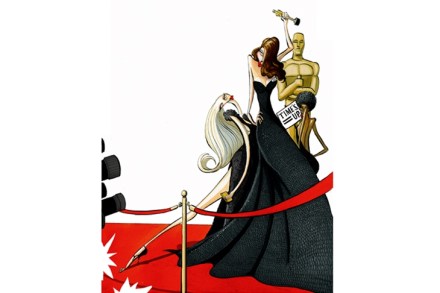
This is the Time’s Up Oscars, the first one where the #MeToo movement is a major player, and no one can predict just how the tricky balance between celebration, industry penitence and the host Jimmy Kimmel’s jokes will pan out on 4 March. This being Hollywood, however, already the chief speculation is about the clothes. The previous dress code of Time’s Up — that actresses should wear black to protest against sexual harassment — dominated both the Golden Globes and the Baftas: only Frances McDormand decisively broke ranks at the latter, and she got away with it because so many of her screen roles are about being stubborn. Don’t count on an all-black hat-trick for the Oscars, though.

Blue pill-pushers

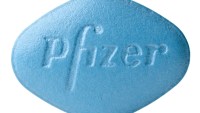
In September last year, official figures showed a startling rise in the number of young British men turning up at A&E with painfully persistent erections. The number of admissions for priapism, to use the medical term, has increased by 51 per cent on the previous decade. Medical experts suggested that the cause was young men taking Viagra in combination with other illegal drugs. This may come as a surprise to anyone who assumed that taking Viagra was the preserve of older men who want to keep their sex life going for as long as possible. But now, 20 years after the famous blue pills were first approved, they are a lifestyle drug for young people. A reasonable question to ask is why younger men, in the prime of life, should need Viagra — or want to take it.

Italians aren’t fascists

 Ravenna Amid relentless propaganda about Italy being in the grip of fascism, Italians go to the polls on Sunday. It will be an attempt to produce their first elected prime minister since 2008, when Silvio Berlusconi won. Since his resignation in 2011, Italy has had four unelected leaders. Italy’s migrant crisis has dominated these elections, especially after the discovery of the chopped-up remains of an 18-year-old Italian girl in two suitcases by the side of a road in the picturesque hilltop city of Macerata in Le Marche. Three Nigerian migrants are in custody for the murder. And in revenge, a 28-year-old fascist lunatic drove around Macerata opening fire on black people at random, wounding six (none fatally). He then gave himself up to police.

Putin’s gamble

Familiar, depressing images emerge from Ghouta in Syria: rows of tiny white shrouds, children killed in relentless airstrikes, makeshift hospitals, families huddling in basements, empty streets heaped with rubble. ‘People are too afraid to go out to bury their dead,’ said a medic identifying himself only as Dr Mohammed. ‘Even the cemeteries are being targeted.’ Hospital workers had to keep the day’s bodies until after dark, he went on, then they hurried out to put them into a single mass grave. Médecins Sans Frontières says 520 people died in Ghouta in just five days last week, so the killing is not on a small scale. Opposition activists on the ground say much of it is being done by Russian planes.

Merkel’s crown princess

On Monday, Angela Merkel did something quite extraordinary. As speculation about her party’s leadership mounted, she named an apparent successor: thae 55-year-old Annegret Kramp-Karrenbauer, appointed as the new general secretary of her Christian Democratic Union party. The choice came like a lightning strike: AKK, as she is already called, was to leave her job as a successful minister-president of the tiny federal state of Saarland and assume the governing position in her party. Now she sits as the CDU’s crown princess, looking to take the throne at (or even before) the next German election in 2021. So Merkel has answered critics who considered her unwilling or unable to refresh her senior team.

Wasting away

The NHS is in dire straits. I never thought I’d say this but as a doctor, and having seen the extent of the current crisis, I’d be scared if a family member had to go into hospital. Despite the best efforts of staff, the pressures are such that it’s all too easy for mistakes to be made. Doctors and nurses are going to work fearful of the situation they will find. They know how unsafe it is, and yet they are utterly powerless to do anything about it. The predictable response is to call for more money to be hurled at the NHS. It’s all because of cuts, they say.

Wham bam, thank you Ma’am

I love Americans’ kindness, generosity and energy but am often thrown by their exaggerated politeness and euphemistic speech. They use ‘passed’ for ‘died’ and always say ‘excuse me’ if they brush against you in a shop. They sentimentally refer to ‘your puppy’ when the dog is patently over three years old. They refer to a dog’s ‘going to the bathroom’. And why say ‘a grown man’ instead of just ‘man’? Wads of paper napkins are handed out unnecessarily in cafés and at parties (where one is sometimes offered ‘a beverage’ instead of a drink). But Americans can also be unexpectedly bloodthirsty and violent and I find this contrast disconcerting.

False flag

One of the most memorable moments of the 2012 presidential debates came when the candidates were asked what they believed to be the chief national security threat facing the United States. Mitt Romney said ‘Russia’. Barack Obama thought that was ridiculous. ‘The 1980s are now calling to ask for their foreign policy back,’ Obama retorted, to the general hilarity of the panel and much of the audience. But that was before Hillary Clinton, the candidate whom Obama had anointed to win in 2016, performed the impossible and lost to Donald Trump. All of a sudden it was Russia, morning, noon, and night. Donald Trump must have ‘colluded’ with the Ruskies. It was the only answer to the otherwise imponderable question: how could Hillary Clinton lose?