Guy Walters

Guy Walters is a British historian

We will all miss Her Majesty

From our UK edition

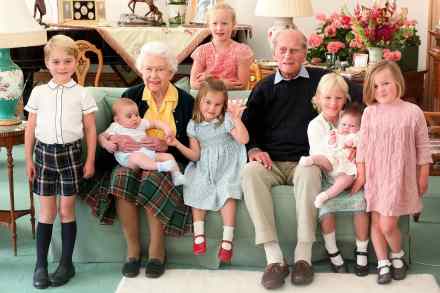
When the 25-year-old Princess Elizabeth became Queen in February 1952, the average age at which her subjects died was, at 69, a year shorter than the number of years for which she was to reign over them. Had she herself died at that age, then her reign would still have lasted for 44 years, making her Britain’s eighth-longest reigning monarch, beating her namesake into ninth place by just under a year. Instead, as we all know, Elizabeth II reigned longer than any other British monarch, a full seven years longer than her own great-great-grandmother. It should be stressed that these statistics are not being presented out of an obsession for record breaking, but rather to indicate the sense of permanence nearly all of us felt about Her Majesty.
Why I blasted my printer with a shotgun

From our UK edition

What's the worst thing about working from home? Surely it's having to use the personal printer, which is the most detestable piece of technology ever invented.  We have the technology to print in 3D, and yet when it comes to printers in our homes, they appear to be virtually unchanged since they were first sold in 1981. We all have our tales of woe with them.

Boris in a spin: can the PM find his way again?

From our UK edition

36 min listen

After two of Boris Johnson's most influential advisers left Downing Street last week, can the PM reset his relationship with the Tory party and find his way again? (00:58) Lara is joined by the Spectator's deputy political editor, Katy Balls, and former director of communications for David Cameron, Craig Oliver.A coronavirus vaccine seems to be the only way out of continued lockdowns, so should everyone be forced to have the jab? (13:49) The Spectator's literary editor, Sam Leith, joins the podcast with Professor Mona Siddiqui, who sits on the Nuffield Council on Bioethics.And finally, should we start referring to people by their surnames again? (25:30) Historian Guy Walters thinks so, and he's joined by the Spectator's etiquette expert, Mary Killen.Presented by Lara Prendergast.

First names are for friends and family, not bosses and builders

From our UK edition

Recently I was listening to Lieutenant-General Tyrone Urch, the army’s Commander Home Command, being interviewed by Martha Kearney on Today. I cannot remember what he was talking about, because I had become quite agitated by the officer’s insistence on using Ms Kearney’s name in every response: ‘Good morning, Martha… It absolutely is, Martha… The things the military is able to do, Martha… I’m no biochemist, Martha…’ On and on it went, this patronising and repeated use of the interviewer’s name. But what rankled more than the repetition was that Lieutenant-General Urch was using Ms Kearney’s first name. Did Ms Kearney tell Lieutenant-General Urch that it was all right for him to use ‘Martha’?

The National Archives are making historians history

From our UK edition

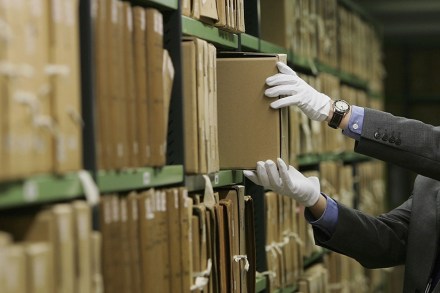
The next time you settle down in the evening to enjoy the latest work by your favourite historian, treasure it, because it may be their last for a while. This is for the simple reason that historians are effectively being denied access to one of the most essential tools of their trade — the National Archives. For many, this non-ministerial government department may just be an ugly slab of 1970s concrete that sits on the Thames in Kew, but it is actually nothing less than the nation’s memory — for it is here that millions of documents produced by the British state during the past thousand years are held.

Appetite for destruction

From our UK edition

Have you ever thrown something away and then realised that you needed it? Surely all of us have done so. There is even a collective noun for such items in The Meaning of Liff by Douglas Adams and John Lloyd: ‘nottage.’ However, it is not just people who have nottage, but governments as well. Last week, we learned how the Home Office in October 2010 had destroyed thousands of landing card slips recording the arrival by boat of immigrants into this country. These slips, stored in the basement of an anonymous tower block, had been particularly useful for Home Office caseworkers when seeking to prove how long somebody had been resident in the UK.