Christopher De Bellaigue

Iran alone: Tehran’s perspective on escalating hostilities

From our UK edition

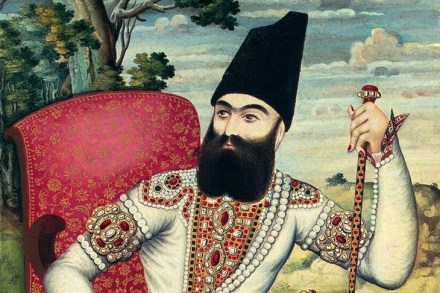
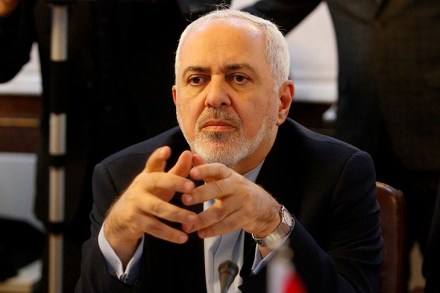
On 20 May, Iran’s foreign minister, Mohammad Javad Zarif, predicted that Donald Trump would fail to subdue Iran just as Alexander the Great and Genghis Khan had failed before him. That Alexander burned Persepolis to the ground and Genghis and his descendants wrought devastation before colonising the Persian plateau doesn’t connote defeat in the Iranian long view; neither the Macedonians nor the Mongols were able to extinguish Iran’s vigour and creativity, which reasserted themselves as soon as the invaders had moved on or been assimilated by the superior civilisation around them. ‘Iranians have stood tall for millennia while aggressors all gone (sic),’ was how Zarif concluded his aspersion on American staying power.

Iran alone

From our UK edition

On 20 May, Iran’s foreign minister, Mohammad Javad Zarif, predicted that Donald Trump would fail to subdue Iran just as Alexander the Great and Genghis Khan had failed before him. That Alexander burned Persepolis to the ground and Genghis and his descendants wrought devastation before colonising the Persian plateau doesn’t connote defeat in the Iranian long view; neither the Macedonians nor the Mongols were able to extinguish Iran’s vigour and creativity, which reasserted themselves as soon as the invaders had moved on or been assimilated by the superior civilisation around them. ‘Iranians have stood tall for millennia while aggressors all gone (sic),’ was how Zarif concluded his aspersion on American staying power.
Trump’s folly

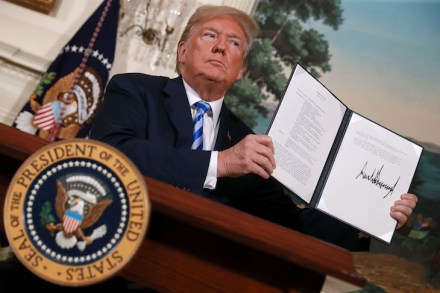
In the White House on Tuesday, with the world just where he wanted it — eyes on the TV, transfixed by his boldness — President Trump uprooted the Iran nuclear deal. Under this agreement, which was signed in July 2015 by Iran and the five permanent members of the United Nations Security Council, plus Germany, the Iranians mothballed significant parts of their rapidly advancing nuclear industry in return for sanctions relief. The country is now considerably further away from a bomb than it was before, and its nuclear facilities are subject to inspections of unusual intrusiveness.

The prince of PR…

From our UK edition

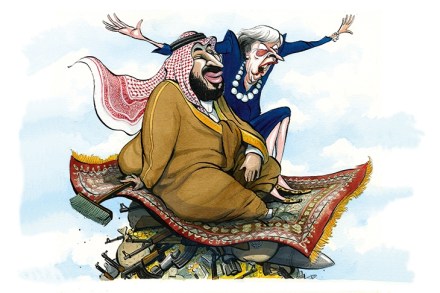
This week, Mohammad bin Salman, also known as MBS, is on his not-quite-state visit to Britain. A parade down the Mall and a state banquet could only be afforded to his father, old King Salman, who made MBS crown prince last June and has given him unprecedented latitude to liberalise Saudi society, lock up his enemies and light fireworks abroad. MBS arrived in London on Wednesday fresh from visiting one friend, Egypt’s General Sisi, and will go on to see another, Donald Trump, on 19 March. Theresa May’s aim will be to show that Britain can thrive outside the EU, but she should think twice before co-opting this new strongman who reputedly encourages his courtiers to call him Iskander — the name by which Middle Easterners know Alexander the Great.

Iran attacks: Why can’t Trump get his head around the difference between a death-cult and a serious state?

From our UK edition

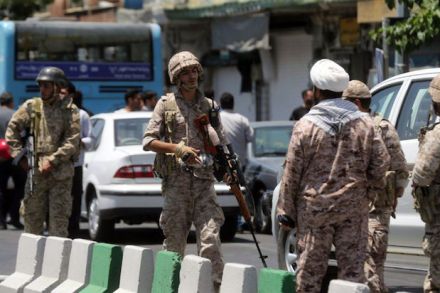
'The Iranian people are moving forward, and today’s fumbling with firecrackers will not affect the will-power of the people… the terrorists are too small to affect the will of the Iranian people and the authorities.’ There is something to be said for this imperious fly-whisk response, delivered by Ayatollah Ali Khamenei, Iran’s supreme leader, in reaction to yesterday’s double-suicide attack on Tehran, which cost at least 12 innocents their lives and caused dozens of injuries. Whatever therapeutic good it may do for the survivors of attacks on our own soil, there is for the IS barbarians and their would-be emulators a dangerous validation in our flags at half mast, our interrupted sporting programmes, and our wall-to-wall media coverage.

The tragedy of Islam’s lost Enlightenment

From our UK edition

I am quite used to people smirking into their sleeves when they hear that I’ve just written a book called The Islamic Enlightenment. The really helpful wags say they expect something along the lines of The Wit and Wisdom of Spiro Agnew, which was billed as a collection of all the memorable aphorisms of the former US vice-president, and contained only blank pages. So, the Islamic Enlightenment — good for a laugh. But we’re all familiar with the serious argument that lies behind the jests; that Islam has not been through an Enlightenment, a Reformation, or any of the other rites of passage that have formed our modernity, and that, ergo, Muslims and modernity are strangers.

Islam’s lost Enlightenment

From our UK edition

I am quite used to people smirking into their sleeves when they hear that I’ve just written a book called The Islamic Enlightenment. The really helpful wags say they expect something along the lines of The Wit and Wisdom of Spiro Agnew, which was billed as a collection of all the memorable aphorisms of the former US vice-president, and contained only blank pages. So, the Islamic Enlightenment — good for a laugh. But we’re all familiar with the serious argument that lies behind the jests; that Islam has not been through an Enlightenment, a Reformation, or any of the other rites of passage that have formed our modernity, and that, ergo, Muslims and modernity are strangers.