Alastair Thomas

The Spectator Podcast: Death of a dissident

From our UK edition

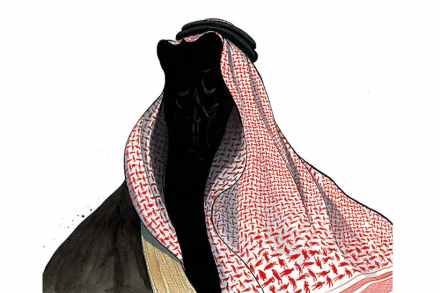
Jamal Khashoggi's disappearance has shocked the world. The Saudi journalist was caught on camera entering the country's consulate in Istanbul, but he never left. The world is outraged; why was he killed and what happens next? In this week's Spectator, John Bradley says that Khashoggi's crime was to fall foul of the Saudi ruling family. What does this mean for Saudi Arabia’s global reputation? Bill Law, a journalist who knew Khashoggi, joins Lara Prendergast, alongside Akbar Shahid Ahmed, foreign affairs reporter at Huffington Post, to discuss. In Ireland, the Europhiles seem to reign supreme, but could Ireland ever join Britain in leaving the EU? In this week's magazine, John Waters wonders whether the Irish are actually less keen on the EU than we might think.
The Spectator Podcast: should we educate children on transgender issues?

From our UK edition

The debate over rights for transgender people rumbles on in the wake of proposed reforms to the Gender Recognition Act. Is there a so-called ‘trans orthodoxy’ shutting down debate on this issue? Meanwhile, across the channel, French socialist Jean-Luc Mélenchon is aiming to unseat an increasing unpopular Emmanuel Macron. Does Mélenchon have a chance of becoming president? In this week’s cover piece, James Kirkup argues that there is no room for dissent within what he calls the trans orthodoxy, that concerns over changes to the Gender Recognition Act are too quickly labelled ‘transphobic’.

Five things we learnt from Dominic Raab’s EU Committee appearance

From our UK edition

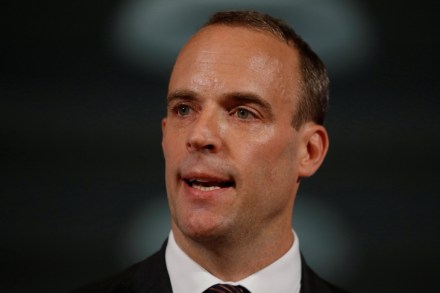
Today, Dominic Raab, settling into his role as Brexit secretary, appeared before the Lords EU committee to answer questions on progress, or lack of, from the ongoing Brexit negotiations. Here’s what could be gleaned from the 100-minute session: Northern Ireland continues to be a stumbling block Unsurprisingly, Raab revealed little about any proposals to resolve the Irish border issue. He did, however, rebut his colleague Jacob Rees-Mogg’s suggestion of introducing border checks 'like we had during the troubles’. He assured the committee, ‘we will not be returning to a hard border.

The ‘woke’ who do coke

From our UK edition

Midnight in Shoreditch, and snaking round the brickwork of old east London is a line of chattering clubbers. Everyone seems to be queuing for something here: a new restaurant, or a new microbrewery. Inside the club, hipster students, bearded professionals and wealthy tourists fill the dance floor. I easily spot the drug dealers weaving in and out of the throng, full of entrepreneurial determination. Conspicuous, too, is the queue of clubbers waiting for the toilet. I feel a tap on my shoulder. ‘Mate, need any gear?’ I glance down to a hand clutching a bag of powder. I tell him I’ll pass, thanks. He doesn’t look disappointed; business is good. Two miles up the road in nearby Hackney, there were several more stabbings last week.

The Corbynasties

From our UK edition

It took a protest of Jews in Westminster for Jeremy Corbyn to own up to the Labour party’s problem with anti-Semitism. It ‘has caused pain and hurt to Jewish members of our party and to the wider Jewish community in Britain,’ he said — an admission that has been a very long time coming. But among Corbyn’s cultish young followers, the apology was met with a shrug. ‘Problem? What problem?’ This I know, because I’m (roughly) a Labour supporter and have lots of Corbyn--supporting friends. And for Corbynites of my age (early twenties), the whole issue remains just another attempt to delegitimise Corbyn’s bid to become prime minister.