Features

The spy who stayed out in the cold

I suspect George Blake, the MI6 officer turned KGB double agent, would enjoy toddling over to the Hampstead Theatre to see himself in the new production of Simon Gray’s play Cell Mates. The problem is that the instant he landed at Heathrow, he’d be arrested and made to serve the remaining 37 years of his 42-year jail sentence, which was rudely interrupted by his escape from Wormwood Scrubs in 1966. When I met him at his dacha near Moscow in May 2012, I found a shrunken old man. He was then 89, with a straggly beard, false teeth, slippers and a cane. Only his deceiver’s charm remained intact. He stood waiting for me in the lane outside, then led me through a door into his vast garden.

The trouble with Miss Markle

‘The thing is,’ said my friend, after the broadcast of the engagement interview with Meghan Markle and Prince Harry, ‘you can’t imagine actually bowing or curtseying to her, can you?’ That is pretty well the crux of the engagement issue: can you see yourself doing either in the case of the newest prospective member of the Windsor family? Personally, I would curtsey to the Queen and I have done to Prince Philip; I would draw the line at Camilla, and I wouldn’t dream of curtseying to Meghan. My friend was in fact A.N. Wilson, biographer of,  inter alia, Queen Victoria.

The marriage gap

Whatever their views about the monarchy, most people will warm to the news of Prince Harry and Meghan Markle’s engagement. Sentimental as it sounds, I was surprised by how much I enjoyed the last royal wedding and how happy I felt for Prince William and Kate Middleton, as she was then. It was one of those rare events when you felt lucky to live in a good country with a bright future. A marriage is, after all, the ultimate statement of confidence in the future — and God knows, we could all do with that right now. Marriage is not easy and never has been, as Harry will know from his own childhood. Nevertheless, people have always accepted that marital unions and stable families make society healthier, happier and more prosperous.

Let Katie speak

I had an all-day ticket for the Lewes Speakers Festival at the All Saints Centre on Saturday. I was keen to hear the writer Damien Lewis on the wartime Special Interrogation Group who’d disguised themselves as German soldiers and stormed Tobruk, Andrew Monaghan on his book Power in Modern Russia, and Theodore Dalrymple, ex-Spectator columnist and a former prison psychiatrist. The last speaker, scheduled for 6.45 p.m., was to be Katie Hopkins. I was curious: is she autistic, does she have a narcissistic personality disorder, or is she just a horrible person and a show-off? I had hardly read her stuff, but after the food writer Jack Monroe won a libel case against her in March 2017 (Hopkins thought Monroe had desecrated a war memorial), my daughter showed me an interview.

Missed connection

To me, the strange words ‘Marsh Gibbon’ once meant I was nearly home. My heart lifted as we creaked and shuddered into the little station at Marsh Gibbon and Poundon, on the slow and pottering line between Cambridge and Oxford. Usually it was dusk by the time we got there, and I can remember seeing the gas lamps lit and flaring, a pleasing moment for anyone who likes a little melancholy. But equally remarkable was the lowness of the platform. Had it actually sunk into the marsh after which the desolate little halt was named? I recall a withered, gloomy porter in a peaked cap carefully setting steps by the door, for the few passengers wanting to alight at this mysterious destination. Without him, they would have had to jump.

Mutti the peacekeeper

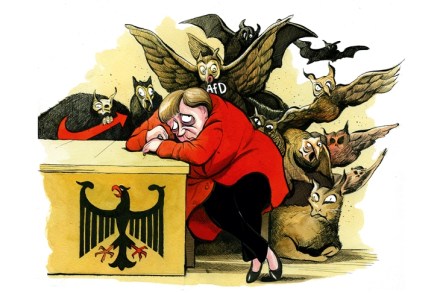
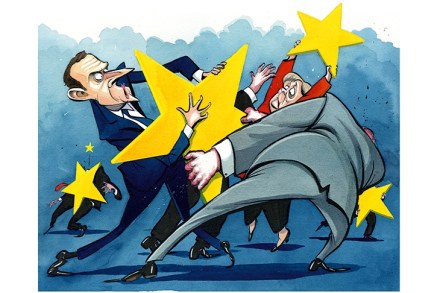
No leader is indispensable, but it does feel like the future of Europe stands or falls with Angela Merkel. She’s been the godmother of the European Union for almost 15 years, and other leaders have learnt to accept one unspoken rule: Merkel is the adjudicator. Her aura of supreme power infuriated Nicolas Sarkozy, who wanted it for himself. Greece’s leftist leader, Alexis Tsipras, fumed that Merkel wanted to make his country a vassal state, ruled by Berlin and the gnomes of Frankfurt. But now she’s at risk of losing her power, and even her enemies fear that her absence will pull Europe in different and conflicting directions. One newly elected European leader once explained Merkel’s role in Europe to me.

Legal challenge

Last week the Daily Telegraph’s front page showed the 15 Tory MPs who had voted against the government under the headline ‘The Brexit Mutineers’. One of the first things pointed out was that two thirds of the group were lawyers. (In fact, only nine of the 15 are barristers or solicitors; a tenth is the son of a High Court judge, but in the hereditary meritocracy in which we live, that counts as the same thing.) This seemed to be taken as a point in their favour — who wouldn’t want our politicians to be sensible lawyers? Certainly, it contrasted with the disdain shown for journalist-politicians, like Michael Gove or Boris Johnson. Would we really rather our MPs were lawyers than hacks?

Tough love | 23 November 2017

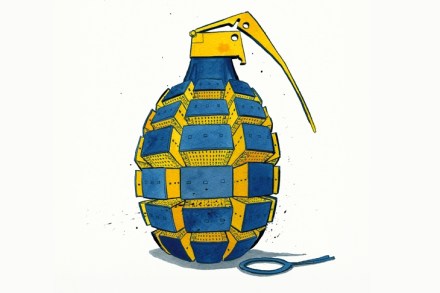
When Angela Merkel invited refugees to Germany in 2015, tearing up the rules obliging migrants to seek asylum in the first country they arrive in, the consequences were pretty immediate. Over 160,000 went to Sweden, leading to well-publicised disruption. Next door, things were different. Norway took in just 30,000; this year it has accepted just 2,000 so far. To Sylvi Listhaug, the country’s young immigration minister, this might still be a bit too much. ‘We have a big challenge now to integrate those with permission to stay in Norway to make sure they respect Norwegian values,’ she says. ‘Freedom to speak, to write, to believe or not to believe in a god, how to raise your children.’ Also, she says, what not to do.

Cashing out

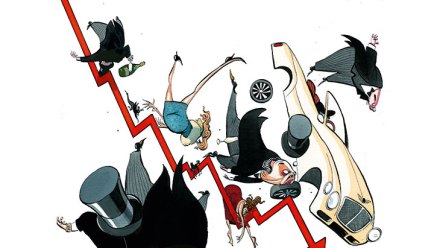
What could be more terrifying than a return to the 15 per cent interest rates with which homebuyers had to contend in the early 1990s? Possibly the vision presented last week in UBS’s Global Economic Outlook: interest rates at minus 5 per cent. It would take us to an unknown world where savers who deposited £100 in a bank would return a year later to find only £95 left. This month’s small rise in interest rates has rekindled fears that the era of ultra-low rates could be at an end and that millions of borrowers, enticed into loans thinking rates of virtual zero are normal, could be left with debts they could not repay. But there is an alternative scenario. UBS notes that during the last crisis the Bank of England slashed rates from a peak of 5.

Cottage industry

There are nights when, crossing the dark parkland by my house, I see a man beneath a remote streetlamp. He is usually alone, and smokes as he circles the low walls of a squat little building. Most nights, after innumerable cigarettes and several laps of the place, he will slip from the light for good. Sometimes another figure will appear, warily loping in and out of the lamplight. A brief exchange follows before cigarettes are extinguished and both slink off into the building. This, I have discovered, is cottaging — or at least the first stages of it. Those who know about cottaging might, quite understandably, have thought it a thing of the past. But as my man under the streetlight explained to me later, when we met, even in the internet era it still has appeal.

Ga Ga Land

Los Angeles stinks. Not just of the usual things: sex, money, suntan oil, hipster food, surfer wax — odours that I like. There’s a new whiff in town, and it’s a bad one. Weed. The smell of marijuana hangs over LA like an invisible menace. It’s an omnipresent fug. To walk from one end of a street to the other, whether it’s along the chaotic Hollywood Boulevard or the half-gentrified, half-terrifying Broadway in downtown LA, is to risk developing a skunk habit. I swear I almost got high popping out for a bottle of Dr Pepper. It’s such an awful smell.

Corbyn 2.0

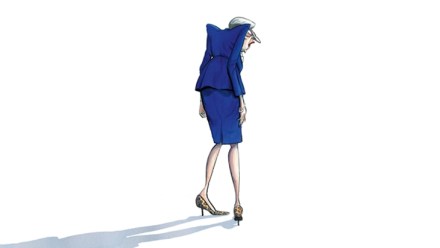
There is a naive belief at the top of government that because the Tories are only a fart’s yard behind Labour in the polls — despite daily manifestations of schism, scandal and incompetence — everything will turn out fine in the end. But this is to ignore the party’s greatest structural weakness: it is clueless in cyberspace. On the social media battlefield, it is fighting with knitting needles against Labour’s laser-guided missiles. The crude stats are humiliating for Theresa May. Her Twitter and Facebook accounts have 411,000 and 540,000 followers respectively, compared with 1.6 million and 1.4 million for Jeremy Corbyn. His online films and tweets are seen by millions, — many times the number who hang on the Prime Minister’s digital words.

Zimbabwe on the brink

History will curse Robert Mugabe. When he took over as prime minister in the wake of the Lancaster House agreement in early 1980, Zimbabwe was one of the most prosperous countries in Africa. Mugabe inherited excellent infrastructure, a strong economy, stable institutions, an independent judiciary, an excellent school system and the goodwill of the world. In the course of nearly 38 years, he wrecked all of this. He corrupted his country’s democratic institutions, destroyed the economy and debauched the currency while making himself and a tiny circle of cronies and relatives spectacularly rich. The complacent British view is that Mugabe started out well but went wrong.

Disappearing act

There are many wonderful scenes in the film version of David Mamet’s play Glengarry Glen Ross, but my favourite comes towards the end, between the broken and desperate real estate salesman Shelley ‘The Machine’ Levene, played by Jack Lemmon, and his vile manager John Williamson, played by Kevin Spacey. Levene, facing not merely the sack but probable imprisonment, is pleading for help, cringing and cowering. But he has gone to the wrong man. When he asks Williamson why he won’t help, the manager replies with a magnificent finality: ‘Because I don’t like you.’ And Spacey’s face, almost deadpan for most of the film as he suffers the abuse thrown at him by his salesmen, is now writhed in contempt.

Write to the end

Always go to a storyteller if you want a sparky answer to a question. What does Jeffrey Archer, bestselling author, member of the House of Lords, one-time candidate for Mayor of London and prison diarist, think will happen to American politics next? Comes the reply: Angelina Jolie. Or perhaps George Clooney. Or maybe even Tom Hanks. One of these, argues Archer, will run for president next time. ‘And why wouldn’t they win?’ He expands. ‘I’ve given in now. The days of spending your life in politics, learning politics, getting ready for high office, are gone. You can have it tomorrow. Macron got it in one minute.’ The words might seem rueful but the tone they’re delivered in is anything but.

The great lost peace

One hundred years ago this month, my great-great grandfather sat down to compose a letter which would finish a long and distinguished career — and destroy his reputation. Henry Petty-Fitzmaurice, 5th Marquess of Lansdowne, had held some of the most prominent posts in the British Empire and government: governor--general of Canada, viceroy of India, secretary of state for war, foreign secretary and Conservative leader of the House of Lords. But in the winter of 1917, as casualties mounted on the Western Front, he decided that enough was enough and that Britain should seek a negotiated peace with Germany to end the first world war. Lord Lansdowne’s ‘Peace Letter’ remains one of the most controversial episodes of the war.

The clown prince

It has long been my belief that whereas the quality of gentiles drawn to Judaism is very high (Marilyn Monroe, Elizabeth Taylor, myself), the dregs are drawn to Islam. And leaving aside the dozy broads who gravitate to it for kinky reasons after watching one too many Turkish Delight ads (Vanessa Redgrave, Lauren Booth), there is something about this religion which attracts the very weakest of Western men. We think of those often half-witted types who learn to build a bomb online. Then there are the imam-huggers of the left who never met a wife-beating mad mullah they didn’t like. A lot of the reason left-wing men seem to have so much time for Islamism is to do with suppressed feelings of resentment towards the march of feminism, which they could never in a million years admit to.