Features

Happy is England

Buying fish at Cambridge market on Sunday, I found myself chatting to the fishmonger about the prospects for England in the World Cup. Another customer, a middle-class woman, joined in. None of us, I think, was a habitual fan. But we found ourselves enjoying a few minutes of spontaneous shared pleasure. It was not mere satisfaction in winning, but shared pride in a team of nice young men, seemingly unassuming, modest, sporting, decent. English, we might have said (though we didn’t). But English as we would like to think it should be — perhaps the Englishness of another time. A once and future Englishness, let us hope. It’s not every day that one has this un-sought sense of shared ‘identity’.

Gimme shelter

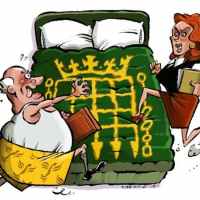
How we love our homes: we make them cosy and secure, protected from the outside world, defended by locks, bolts and burglar alarms. But we haven’t always had our own private dwellings, and under the invasive influence of the internet, home, as we’ve come to understand it, may well soon be a thing of the past. In early medieval times, a home was often just a basic tenement, a shelter shared with cattle, owned by an employer. As prosperity spread, so a sense of the private developed. Common areas subdivided into individual ones; pieces of furniture (chests, bookcases, beds, wardrobes) marked areas for particular activities and specific people. At the same time, a sense of home as a place of refuge started to take hold.

You can say that

‘There. I said it.’ That phrase, and the attitude it strikes, says something pretty specific. It doesn’t just say: here’s what I think. It says: ‘Here’s what I think, and, you know what? It’s what nobody except me dares to say in public.’ It says: I’m brave. It says: I speak truth to power. It says: here I am on the battlements. It also says: I’m a grade-A chocolate-coated plonker. And though most people are too fly these days, too aware of the lurking threat of Craig Brown, to use that form of words, there’s a good deal of there-I-said-it-ism about these days. In particular, when it comes to the issue of ‘free speech’.

Keep off the grass

The autumn squill, Scilla autumnalis, has bright bluebell-coloured starry flowers. It is rare in the British Isles. It is also tiny, so small that most people could easily clodhop straight over it without noticing how lovely it is. I nearly did just that when I went looking for it in Surrey last summer until a kindly local botanist helped me find it flowering away on a grass verge. I went home pleased to have met such a minutely pretty wild flower. But a few days later, the kindly local botanist got in touch again, distraught. The local council had strimmed the verge where the autumn squills grew, and they were no more.

False start | 5 July 2018

I was worried that going to the autonomous vehicle exhibition in Stuttgart would be tantamount to an atheist walking into St Peter’s while the Pope was conducting a mass. There is something religious about the fervour with which adherents to the driverless credo practise their faith and promise us a new kingdom. Their proselytising has indeed convinced many. Politicians are making outlandish statements, such as Jesse Norman’s two weeks ago, that ‘Our entire use of roads is to be revolutionised by autonomous vehicles’, and pouring large sums — a promised £180 million so far — into bizarre research projects such as the development of strange robot cars slower than a Reliant Robin and allowed only on pavements in Milton Keynes.

Football, not rugby, is now the gentleman’s game

Most British sports fans are familiar with the maxim that ‘football is a game for gentlemen played by hooligans, and rugby union is a game for hooligans played by gentlemen’. It was coined more than half a century ago by Arthur Tedder, then chancellor of Cambridge University, and for decades the saying stood the test of time: George Best and Gareth Edwards, Paul Gascoigne and Gavin Hastings, John Terry and Jonny Wilkinson. I rest my case. But something strange has happened in the past season or two. This current crop of footballers, particularly the ones wearing England shirts, are polite and presentable.

The return of walls

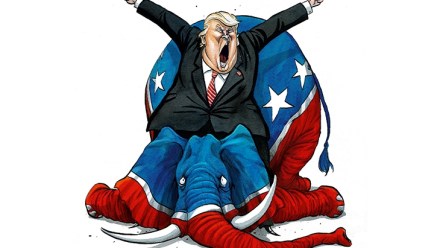
What kind of a president would build a wall to keep out families dreaming of a better life? It’s a question that has been asked world over, especially after the outrage last week over migrant children at the American border. Donald Trump’s argument, one which his supporters agree with, is that the need to split parents from children at the border strengthens his case for a hardline immigration policy. Failure to patrol the border, he says, encourages tens of thousands to cross it illegally — with heartbreaking results. His opponents think he is guilty, and that his wall is a symbol of America closing in on itself. In fact, building a wall would make Trump the norm, not the exception.

Dr Spacelove

Americans traumatised by their current president could be forgiven for thinking that his demand for a ‘space force’ was about protecting the country from aliens. Aliens, that is, of extraterrestrial persuasion, not the ones currently hurling themselves against the southern border. What, really, is implausible these days? As baseball savant Yogi Berra said when told that a Jewish woman had been elected mayor of Dublin: ‘Only in America.’ But as it turned out, Donald Trump’s demand to have a new sixth branch of the US armed services is about protecting America’s satellites and cyber capabilities. A worthy goal. Per the President’s custom, he didn’t inform the White House that he was going to issue his decree.

A cry for help

There is an au pair drought in the UK. Since the 2016 Referendum there has been a 75 per cent drop in applications by foreign girls to work for UK families. Agencies testify that they can’t find girls for their clients, who must turn to other forms of childcare beyond the rare girl keen to ‘learn English’, grandparents, if they can be dragged out of restaurants, and baby-sitting apps like Bambino, Bubble and UrbanSitter. There is a campaign to #SaveAuPairs. Its web page is illustrated with a cartoon featuring a ginger child screaming for its au pair and Theresa May washing up plates, which makes me wonder if this campaign is more ambivalent about working women than it says.

The road less travelled

I have never been an adventurous soul. As an infant in Belfast, I would lie motionless for hours on the kitchen table of our family home, devoid of any curiosity to wander. On one occasion an anxious neighbour, having spied my immobile pose through a window, knocked on the front door to express her concern. ‘Don’t worry. He’s often like that. He won’t be moving anywhere,’ replied my mother. I have carried that inertia into adulthood, reflected in my profound dislike of travel. There is not a shred of wanderlust within me. I never fantasise about visiting distant lands, never leaf longingly through the travel supplements. Most people yearn to explore the world they inhabit, but I could not care less if I never see a new place again.

The Fifa paradox

In 1930, Jules Rimet, the creator of the Football World Cup, crossed the Atlantic in a steamship to attend the inaugural competition in Uruguay. In his bag he carried a small trophy, the World Cup; in his heart he carried the belief that the World Cup could unite nations and smooth nationalism. ‘Men will be able to meet in confidence without hatred in their hearts and without an insult on their lips,’ he declared. Rimet would have been horrified by what the World Cup has become. A tournament that has funded the endemic corruption and racketeering within Fifa exposed by the FBI.

The diversity trap

Britain seems to be following America down a dangerous path. There’s your politician David Lammy accusing Oxford and Cambridge of racial bias — and refusing to listen when they point out they simply accept whoever gets top grades. Then there’s the author Lionel Shriver, pilloried because she dared to suggest (in this magazine) that privileging identity quotas over talent might be a mistake. It seems the UK is succumbing to the same madness over diversity and quotas that has plagued the US for half a century. The hope is that quotas lead to a fairer, more tolerant society, but the reality is very different.  Across the Atlantic, American institutions have enshrined diversity and inclusion as their guiding principles.

The joy of bird-listening

Here’s a rum thing: you can tell the quality of a piece of land with your eyes closed. Your ears alone will tell you if it’s any good or not. And this, as it happens, was good land. I was attempting to explain this concept to a group of disparate individuals, among them land-owners, gamekeepers, shoot-owners, farm workers, solicitors, an official from the National Farming Union, an RSPB warden, someone from Norfolk Wildlife Trust, a local councillor and a person who sells agricultural equipment. So I delegated the explanation to a goldcrest. This is the smallest bird in the northern hemisphere and weighs about a quarter of an ounce. It was pelting down a shower of sweet golden notes from the top of a conifer. Higher, thinner than you can believe possible: now have you got it?

The straight dope | 21 June 2018

Was there ever a more fatuous contribution to a political debate than Lord Hague following up the case of 12-year-old Billy Caldwell — the boy whose mother says he needs cannabis oil to control his epilepsy — with a demand for recreational cannabis to be legalised? But the former foreign secretary has done us a favour of sorts. He has inadvertently explained why Billy Caldwell has become such a cause célèbre over the past few days: the drug-legalisation lobby has cottoned on to his huge propaganda potential. The reason why cannabis oil is not licensed for use as a treatment for epilepsy in Britain has nothing to do with the prohibition of cannabis as a recreational drug.

Britain’s collusion

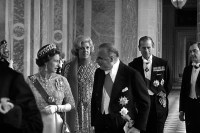
 Washington, DC Reports say the head of GCHQ flew to the US to hand deliver this incendiary material to the CIA When the Romanian dictator Nicolae Ceausescu visited London in 1978, the British government did some serious sucking up. Ceausescu was an egomaniac and possibly crazy. When he went hunting outside Bucharest, his body-guards shot game with machine guns so he could be photographed at the end of the day with a shoulder-high pile of dead animals. He was also said to be a germophobe, sterilising his hand with pure alcohol if it touched a door handle. The French president telephoned the Queen to warn her that when the Ceausescus came to the Élysée, lamps, vases, ashtrays and bathroom taps went missing from their rooms.

Bringing sexy back

Sexual intercourse, Philip Larkin famously wrote, began in 1963. And listening to contemporary commentators, you’d think that it came to an end in 2017 with the birth of the #MeToo movement. For these voices of doom, the end of the erotic is nigh; Britain is on the brink of sexual apocalypse. The recent news that Netflix has banned flirtation from film sets — along with lingering hugs, requests for phone numbers and extensive touching — is for these commentators just the latest example of #MeToo sexual correctness gone mad. They fear we are witnessing the making of a bland new world where the rules and regulations governing social relations between the sexes will become so oppressive that the very sexiness of sex itself will be snuffed out.

The rise of the pop-up brothel

I had been in Los Angeles for less than a month when I received the call from a concerned neighbour back home in London. ‘Why are there men queuing up outside your flat at 3 a.m.?’ It was a good question. ‘And are you aware that a locksmith came over the other day to change your locks?’ I had no idea. ‘Oh and by the way, your tenant has put some kind of security camera outside your front door.’ Concern turned to panic. ‘And there’s been rather a lot of … erm, activity, you know … to-ing and fro-ing. That tenant of yours certainly has an appetite for the ladies.’ My neighbour must have been mistaken. I had rented my apartment to Alan and Ada, a respectable young Chinese couple.