Features

Next up, Nato

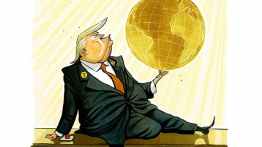
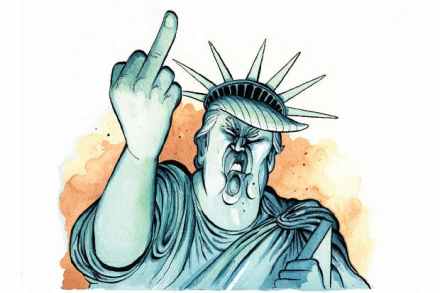
For Theresa May, the most worrying part of Donald Trump’s talks with Kim Jong-un came two days before the two men met. The US President had arrived in Singapore early after escaping the G7 summit in Canada, still sore at being upbraided by his European and Canadian counterparts about tariffs. With time on his hands, he took to Twitter to hit back by switching the conversation to defence and one of his favourite bugbears: Nato. ‘Germany pays 1 per cent (slowly) of GDP towards Nato, while we pay 4 per cent of a MUCH larger GDP,’ he announced. ‘The US pays close to the entire cost of Nato-protecting many of these same countries that rip us off on Trade (they pay only a fraction of the cost-and laugh!)’. This situation, he said, would soon end.

The best place to be poor

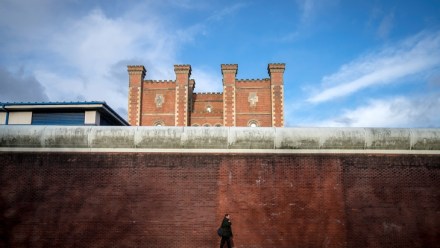
I was born in north London, at the Whittington Hospital in Archway, and at the age of 62, after many years of trouble and wandering, I have come to rest in the streets where I was born. And in my usual cunning way I have become one of the roughly 300 or 400 people living in inner London you perhaps think of as ‘homeless’, making the rounds from drop-in centres to churches, from morning till night, in the hunt for free food. For this is what my life has come down to as I stand on the threshold of old age, the endless movement from one soup kitchen to the next, which at least gets me to the end of the day by a pleasant route. Or it might be not so pleasant, because of course a lot of conflict erupts at places where a large number of people benefit from organised kindness.

Becoming German

In the end, after all the waiting, the document didn’t look like much — a sheet of A4 paper adorned with a German eagle, and one of those tongue-twisting Germanic compound nouns beneath it: Staatsangehörigkeitsausweis. At last, my Certificate of German Citizenship had arrived. How did I feel? Elated, tearful, overjoyed. It was at this moment that I finally understood how so many Brexiteers must have felt when Britain decided to leave the EU. When Britain voted Leave I was distraught, but I wasn’t at all surprised. For anyone with eyes and ears, it was clear that a great many Britons were passionate about leaving, and that a lot of Remainers were merely lukewarm.

What happened to communism?

I remember the autumn day in 1990 when they came to cart away the large hammer and sickle outside my Moscow block of flats. It was about the size of a cow and made out of a gritty grey metal alloy which had, like almost everything in the USSR, never looked new or clean. Once, these objects had been all over the city. Now they were vanishing. Nobody else seemed especially interested in its departure, probably because there were — more excitingly — eggs on sale down the street. A few weeks later, I would watch the Soviet Army’s last Revolution Day parade trundle through Red Square.

Putin’s rot

This is Putin’s time. Next week, the Fifa World Cup kicks off in Moscow, and the Kremlin has spared no expense to showcase Vladimir Putin’s new Russia as a vibrant, safe and strong nation. Half a million visitors will be welcomed — with the Russian press reporting that the notorious ‘Ultra’ hooligans have been officially warned to behave themselves or face the full wrath of the state. Despite four years of rock-bottom oil prices, Putin has nonetheless found the cash to build or refurbish a dozen new stadiums. Moscow has undergone a two-year city-wide facelift that has left it looking cleaner, fresher and more prosperous than any European capital I have seen.

The jihadi sisterhood

‘Does the pin make me go 💥?’ Like most 16-year-old British schoolgirls, Safaa Boular was adept at using emojis. She wanted to ask her online mentor if, when she detonated a bomb belt, she could be sure of killing both herself and her target. Safaa was a fast learner and, before too long, was planning to involve her older sister and her mother in an attack on the British Museum, among other targets. So when she was found guilty this week at the Old Bailey, it confirmed the latest British jihad innovation: our first all-female terror cell. For those who have been involved in profiling terrorists (a job I used to do) it has all become a little more complicated.

Too kind

I originally thought of calling this piece: ‘Kindness is the New Rock ’n’ Roll’ — but only as a joke. And then I discovered that the rock band Peace have a new album out called Kindness is the New Rock’n’Roll. And they aren’t joking. Actually, it might be more accurate to say that kindness is the new mindfulness; but there’s already an offspring of the two that has been dubbed kindfulness. Suddenly, kindness is cool. And hot (or so zeitgeist-watchers keep telling me).

The age of incivility

How long ago it now seems that the big political worry was apathy. Today, wherever you look — Brexit negotiations, US politics, the latest news from Europe — the talk is only of polarisation, division and a coarsening of political behaviour and language. According to a Ipsos MORI survey, most Europeans believe their countries are more polarised than ten years ago. But are we really as divided as the new consensus presumes? What if recent political trends represent instead a long overdue rebalancing of interests after nearly 30 years of liberal domination — both economic and social — favouring the affluent and educated, and so a case of democracy not failing but working (albeit not to the taste of most of the political class)?

The people vs the EU

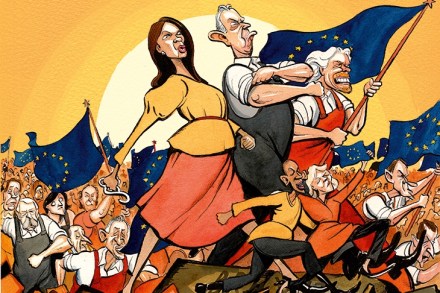
This week the EU revealed its true nature. Rather than hand power to a Eurosceptic, the Italian President Sergio Mattarella defied the democratic process, and the wishes of most Italians, and put a puppet in place. Once again a major European democracy has seen the results of a legitimate vote dismissed; swept aside because the EU can’t countenance dissent. It’s hard not to conclude that those who voted Leave in our own referendum so as to ‘take back control’ had a point. The governing elite in Europe simply can’t afford to relinquish control. They can’t let real people have a real say in who leads them because the grand EU project matters above all. In Italy, in March, the people went to the polls and were deemed to have returned the wrong verdict.

A failure to impeach

Donald Trump got bad reviews in the press — no surprise — when he announced that Rudy Giuliani, the former New York City mayor and federal prosecutor, would join his legal team in the Trump-Russia special counsel investigation. The 74-year-old Giuliani is not as sharp as he was, some said, and isn’t really a practising lawyer any more. How can you effectively defend the President by slipping out of fatcat dinners at New York steakhouses for quick hits on Fox News? That was then. Now, it appears hiring Giuliani was a key part of a new and effective Trump strategy. Just a few months ago, Trump was cooperating with special counsel Robert Mueller, mostly refraining from attacking him directly, and hoping the investigation would somehow go away.

Papal surrender

Just before Ireland voted overwhelmingly to end the country’s constitutional ban on abortion, Catholics in the fishing village of Clogherhead could be seen storming out of Sunday mass halfway through the service. Why? Their parish priest had come on too strong. He had not only ordered them how to vote but also supplied grisly details of an abortion procedure. Presumably some of them voted to repeal the eighth amendment. The ‘Yes’ campaign couldn’t have won its two-thirds majority without the support of practising Catholics. Very few of these, we can assume, were militantly pro-choice. Instead, they were reassured by promises that any future law would be limited in its impact — and determined to ignore a Catholic hierarchy contaminated by child abuse.

The people’s cricket

Blame it on a marketing survey. In 2001, the England and Wales Cricket Board commissioned the biggest piece of market research in the game’s history. They were told cricket was ‘socially inaccessible’, and that there existed a vast swath of ‘cricket tolerators’ — those who didn’t hate the game yet didn’t attend matches. So the ECB decided to take cricket to them. Twenty20, which could be crammed in after work on a midsummer’s evening, was created in the summer of 2003. The new game followed a traditional path: born in England, but perfected abroad. After India overcame its initial opposition, the country inexorably became the home of T20.

All over the shop

A few years ago, some friends came to stay with us on Exmoor. After they unfurled from their Volvo, they presented us with some unctuous Parma ham and a few bottles of Barolo, all of which I received eagerly. ‘Thank you so much!’ I cried, adding, ‘Such a shame we don’t have any Charentais melons, otherwise we could have this as a starter tonight!’ Even though he’d just ferried his family four hours from Primrose Hill and up our bone-shaking unmade track to reach the valley, Justin looked stricken at the thought of Parma ham sans melon. ‘No problem, I’ll run and get some,’ he said, jumping back into the driver’s seat. Then he poked his head out of the window. ‘Where’s your nearest Waitrose?

The great Tory health splurge

A fortnight before Philip Hammond delivered his last Budget, the chief executive of the NHS gave a speech making the case for more funding. Simon Stevens had brought with him picture of a Vote Leave poster, promising £350 million a week for the health service, which he showed to his audience. What a good idea, he said. He wasn’t coming out as a Brexiteer, but he did think the Leavers had a point about giving an extra £350 million a week to the National Health Service. In fact, he went so far as to say that the ‘public want to see’ this promise honoured. And if politicians don’t cough up?

The real special relationship

In all the agonising about Islamism, and what to do about it, it would be a mistake to forget a very useful fact: that Britain has a special relationship with Islam and has done for centuries. The friendship with Islam is unique. Spain was home to Andalusia, a Muslim empire for 700 years. The Germans, Poles and Austrians saw off Turkish Muslim invaders in the Siege of Vienna in 1529 and then again at the Battle of Vienna in 1683. The French lived in the shadow of 732 and the Battle of Poitiers. Britain alone, cut off from Catholic Europe, forged a relationship with Muslims built on trade, the rule of law, mutual respect and an exchange of ideas and cultures. It would be a terrible shame to forget this friendship now.

The lure of the saddle

When asked to describe in three words what it means to win Badminton, the world’s most challenging and prestigious equestrian event, Jonelle Price — this year’s victor and the first woman to take the title for a decade — knocked back a glass of champagne and answered: ‘Dreams. Come. True.’ For the past 20 years Jonelle has relied on dreams and phenomenal willpower to get to the top of the exclusive and very expensive sport of eventing. Hers has been a different route from the classic one of ‘Daddy bought me a pony’ (or in the case of her fellow competitor, Princess Anne’s daughter Zara Tindall, ‘Mummy’). The child of suburban parents, Jonelle first sat on a horse as an eight-year-old.

L’Europe, c’est moi

I meet Bernard-Henri Lévy in a colossally luxurious hotel on a tree-lined avenue just behind the Elysée Palace. The French philosopher is half-reclining on a sofa, with one ankle tucked under his thigh, beneath an ornamental bookcase bearing a bust of Voltaire. He wants to discuss his new play, Last Exit Before Brexit, which will receive its world premiere at Cadogan Hall, London, on 4 June, under the auspices of the Hexagon Society. The play takes the form of a 100-minute monologue. What’s it about? ‘A group of anti-Brexit intellectuals decide to organise a last-chance event in the symbolic city of Sarajevo. They ask me to deliver the keynote speech.