Features

‘It’s my job to challenge the government’: Andy Burnham interviewed

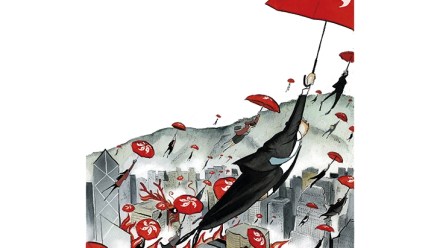
Less than three weeks after Andy Burnham was elected mayor of Greater Manchester three years ago, the city was hit by the terrorist attack that claimed 22 lives at an Ariana Grande concert. Now Burnham is facing a very different sort of crisis as corona-virus sweeps through the north-west. Manchester is about two weeks behind London in the epidemic curve. We had first met in his office to talk about the city and its politics. But that was at the start of last month — my questions, and his answers, were quickly overtaken by events. When we speak again, this time over Skype, much has changed.

Britain needs Boris, the extraordinary man I’ve known for 35 years

As I write, Boris Johnson is in intensive care at St Thomas’ Hospital, battling with coronavirus. For someone with such an unwavering belief in his own destiny, this must be profoundly difficult. He is a man who’s beaten the odds over and over: to become mayor of London in a Labour city, to lead the Leave campaign to victory in the teeth of overwhelming opposition, to become prime minister in spite of all his personal baggage, and then to win the largest Conservative majority since 1987. Here is a man who cannot stare into the jaws of defeat without grabbing hold of victory with both hands. Yet the odds of him triumphing in this case keep narrowing.

A first for Christendom: Holy Week without church

Many of us try to give things up during Lent. Usually it is alcohol, or biscuits. Who would have thought that this Lent we would have to give up each other, and distance ourselves even from those we love most and from all those activities upon which we have relied so much. Even church. In order to slow the spread of Covid-19, our buildings are closed for public worship and even for private prayer. Nothing like this has happened since 1208. The reason then was power, not plague. King John had refused to accept Pope Innocent’s appointee, Stephen Langton, as Archbishop of Canterbury. The pope responded by placing England under an interdict between March 1208 and May 1213, thus preventing the clergy from celebrating the sacraments.

How will the world be changed by the war against coronavirus?

The world as we have known it for the past 40 years has come to a stop. We have a supply chain crisis, a demand crisis, a labour market crisis and an oil price crisis. The second crash that people were long predicting has arrived — but against the backdrop of the Covid-19 threat, it seems like a second-order story. The pound has already hit its lowest rate for decades, and more shocks may occur in the bond and currency markets. How long the disaster will last — or how much worse it will get — is anyone’s guess. Thanks to the virus, events which earlier this year would have been scarcely conceivable have come to pass.

Coronomics: Ordinary remedies won’t be enough for a surreal crash

We have seen crashes before, recessions and depressions, but nothing like this. Our fear of coronavirus has hindered and halted every aspect of daily life. We look out of our windows and barely recognise the country we’re in: police film dog-walkers and pour black dye into lagoons to deter swimmers. We wait in queues for empty-shelved supermarkets. The stock market collapses, surges, then collapses again. None of the old rules make sense. Welcome to the world of Coronomics. If this were a normal recession, the remedy would be simple: encourage people to go out, spend money and boost the economy. But today’s public health concerns require the government to repress the economy, while trying to keep it afloat at the same time.

Revealed: Extinction Rebellion’s plan to exploit the Covid crisis

As we contemplate the havoc being wrought by coronavirus, most of us see mainly sickness, death and economic ruin. Dr Rupert Read, spokesman for the climate protest group Extinction Rebellion — plus sometime Green party candidate, and associate professor of philosophy at the University of East Anglia — has rather a different view. In this pandemic, he writes, ‘there is a huge opportunity for XR… It is essential that we do not let this crisis go to waste.’ Read’s thoughts are set out in a paper entitled ‘Some strategic scenario-scoping of the coronavirus-XR nexus.’ The paper is not meant to be widely read. ‘NB, this is a confidential document for internal XR use, NOT for publication!’ he writes at the head. Small wonder.

Don’t be deceived by Covid stats – we know a lot less than the numbers suggest

There is a concept at least as old as computing itself — Charles Babbage, the father of the field, expressed the sentiment, if not the words themselves — ‘garbage in, garbage out’. The idea is not a complicated one: no matter how advanced the calculation machine, no matter how good the statistical model, no matter how intricate the formulae, if the data on the way in isn’t reliable, the calculation that comes out will be suspect at best — and is liable to be outright wrong. We are regularly told that figures for economic growth were wrong and have to be dramatically revised. So what hope do we have of predicting coronavirus?

The curious age discrimination of coronavirus

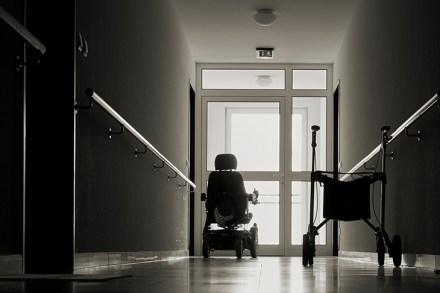
The generational effect of the corona-virus is cunning and baffling. By often being so mild in the young and healthy it turns people into heedless carriers. By often being so lethal in the old and sick, it makes carriers into potential executioners of friends and neighbours. The virus is very dangerous for people who have certain underlying illnesses, which is probably the main reason it is so serious for the elderly. It is almost as if it does not kill people by itself, just worsens other disorders. This is unlike flu, where children are as much at risk as old people. By contrast, in this case, young people in good health, even very young children, generally get such a mild coronavirus infection that they rarely have to seek treatment. An analysis of Chinese cases found that just 0.

The Cornish revolt against second-home owners

It was sunny on Monday so I took the children swimming in Mousehole harbour. It was almost empty but a woman sanding a boat on the quayside scowled at me. She couldn’t hear the children’s Cornish accents, which might tell her that I live here. There have been tensions for years between native Cornish and the incomers who buy houses and drape them with nautical-themed junk. With pandemic, they have developed into hostility. A sign appeared on the bus stop in Mousehole: ‘If you have travelled from a hotspot area outside Cornwall (like London) you are putting vulnerable people in this village at risk of death. Please come back when the virus peak has passed, until then travel is selfish and unkind.’ But it was grey and windy that day, and the sign blew away.

Isolation forces us to work out what really matters

When times are hard it helps to remember those who’ve endured far harder times. I remember my friend Manfred Alexander, who escaped from a concentration camp and hid in my grandfather’s flat in Berlin during the second world war. The month he spent alone in that apartment was far harder than any self-isolation I’ll ever face, yet he survived and prospered. Manfred Alexander was born in 1920, into a bourgeois German-Jewish family, and became friends with my Gentile German grandfather in Berlin in the 1930s. Growing up in Berlin, Judaism wasn’t a big part of Manfred’s identity. It was only when he was expelled from school for being Jewish that he learnt who his Jewish classmates were.

On the NHS front line, we’re braced for what’s coming

From the moment when Boris Johnson announced that the country was moving from containment to ‘delay’ in handling coronavirus, the world’s biggest healthcare organisation has been on a war footing. What doctors like me have witnessed over the past days and weeks has been nothing short of extraordinary. Trusts in the NHS declared a ‘major incident’ on the evening of the announcement, and emergency plans swung into action within hours. By the time I came into work the next morning, managers, who had been up all night, had already started to implement profound changes to the way in which the hospital and services were run, and this continued over the following days. It was replicated in every hospital across the country.

My quest for a universal cartoon

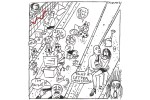
A cartoon caption is a work of art. It is a sitcom in miniature — but whereas a situation comedy might take half an hour to reach its punchline, a cartoon caption has to do so in seconds. Cartoonists toil endlessly, revising and rephrasing, to perfect a caption. There are rules. The funniest word has to appear at the end. The caption has to be a balance between anticipation and delivery. The line has to be succinct and the rhythm has to be right — clumsy phrasing can ruin an otherwise strong comic idea. In 2006 a blogger called Charles Lavoie wrote that every New Yorker cartoon could be captioned ‘Christ, what an asshole!’ — a concise take on Jean-Paul Sartre’s view that ‘Hell is other people’.

We are about to find out how robust civilisation is

On Sunday, lonely as a cloud, I wandered across a windswept moor in County Durham and passed a solitary sandstone rock with a small, round hollow in the top, an old penny glued to the base of the hollow. It is called the Butter Stone and it’s where, during the plague in 1665, coins were left in a pool of vinegar by the inhabitants of nearby towns and villages, to be exchanged with farmers for food. The idea was that the farmer or his customer approached the rock only when the other was at a safe distance. Four modern coins were on the rock, anonymous offerings to the spirits of the moor. Never once in my six decades did I expect to be back in a 17th-century world of social and physical distancing as a matter of life and death. There are no good outcomes from here.

The agony of reading Hilary Mantel

It is dispiriting being an also-ran. Setting yourself up as a writer takes hubris. It is a wild and outrageous claim that you have something to say, in a voice worth being amplified. Then along comes Hilary Mantel, and you realise with deadening clarity — you have little to say, badly. Earlier this month, The Mirror and the Light, the concluding part of Mantel’s Tudor trilogy, was published. You might have noticed? It is a titan. A book adored by critics which will be bought by actual readers. It sends ripples through social media. Have you read it yet? Have you got it? Have you seen the size of it? My writer friends, most of whom write historical fiction, are in a froth.

In Italy, the novelty of house arrest has worn off

 Ravenna, Italy My family is in lockdown in our isolated house in the countryside a mile from the sea outside Ravenna. It is amazing how easily the state can deprive citizens of liberty. Like everyone in Italy we have now been under virtual house arrest for a week and cannot leave home without a valid reason. The novelty of such a dramatic situation quickly gave way to ennui. Valid reasons for leaving home are: going to work, buying food or medicine, or seeing the doctor. Everyone must carry a completed form (downloaded from the Interior Ministry website) in which they declare the reason they are not at home. If stopped by one of Italy’s numerous types of police they must hand them this form. Mobile phone records are used to check whether people are telling the truth.

Brexit, Boris and the battle to be Labour leader: Lisa Nandy interviewed

The Labour leadership contest has been going on for so long that two of its candidates, Lisa Nandy and Rebecca Long-Bailey, have taken to counting down the hours they have left. The race to succeed Jeremy Corbyn started in early January, and will finally finish on 4 April. When we meet, Nandy is feeling run-down — not because of coronavirus, but the sheer length of a contest that she had initially thought should run beyond May’s now-cancelled local elections. She regrets calling for that now. A long contest should have helped the Wigan MP. When it started, she was not as well-known as the other candidates, and needed time to establish a reputation with party members.

Two gentlemen of corona: the scientists helping to fight Covid-19

We will have to get used to this. Every afternoon the prime minister strides into a butterscotch room in Downing Street and stands at a lectern between two drooping flags to give the latest dolorous news to an uncertain nation. How ironic that Boris, who instinctively loathes ‘doomsters and gloomsters’, is obliged to play the mortician’s bean--counter and recite the daily tallies of the infected and the dead. He’s flanked by the best brains in the land. On the right, Sir Patrick Vallance, the government’s top scientific adviser. To the left, Professor Chris Whitty, the chief medical officer. They wear the usual suit-and-tie uniform of reassuring officialdom. And both men stand a few inches taller than the Prime Minister.