Features

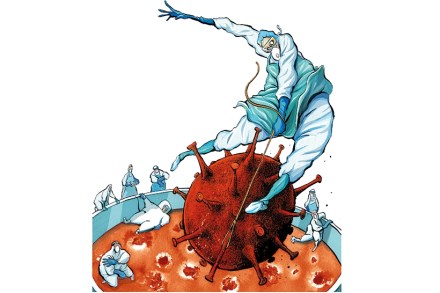
How worried should we be about coronavirus?

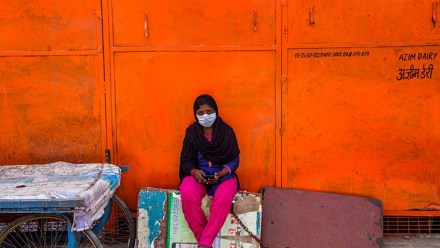
So are we all going to die or is it going to fizzle out? In Naples the police drive along streets with loudhailers, warning everyone to keep indoors; in Britain the government declines to close schools, call off sporting fixtures and persuade people out of the pub. Something feels not quite right: either there is huge overreaction or under-reaction to Covid-19. Health Secretary Matt Hancock has not helped calm fears by announcing that the government has been working on a worst-case scenario of 80 per cent of the population catching the virus and 500,000 dying from it. It isn’t easy for the scientists, either. In a fast-developing disease there is, inevitably, a shortage of up-to-date, peer-reviewed studies to give you an accurate picture.

The US is caught in the crossfire of the oil wars

When America used a drone to take out an Iranian general a few weeks ago, it triggered a standoff between the two countries that barely moved oil prices. America was seen to have passed the first test of what Donald Trump hailed as ‘energy independence’. The US oil industry has surged over the past five years, making it the world’s biggest oil producer, and now a net exporter. The hope in DC has long been that this would turn the tide — not just on energy costs, but on the power dynamics in historically sticky relationships between democracies and dictatorships. By becoming energy independent, America decoupled itself from the Middle East; by exporting its energy, it was starting to liberate the world economy too. But all along, America had a vulnerability.

Life under lockdown: Italy is being consumed by panic

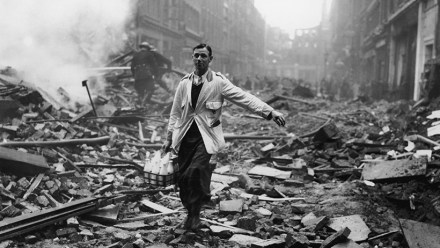
Ravenna The whole of Italy is now in quarantine and infected by the kind of panic I imagine an invaded people feels as it waits for the enemy to knock on the door. I work from home and suppose I must be thankful at least for that. I have just heard the youngest of our six children, Giuseppe, who is four, ask Carla, his mother: ‘Mamma, do you know why it’s called coronavirus?’ ‘No, bello, I don’t, tell me’ she replied. ‘Because it’s the king of tutti i virus!’ he crowed which caused Carla to smother him with kisses. ‘Bravissimo! Amore mio! Bravissimo!’ The word ‘corona’, in case you didn’t know, is Italian for crown. Did he invent that himself I wonder?

How British science can flourish after Brexit

I’m a Texan as well as a physicist so I hope it doesn’t sound boosterish if I say that no nation has contributed more to basic science than Britain. No other country has such an uncanny aptitude for it. I’m not sure what combination of poetry and pragmatism makes this possible, but I don’t need to go far to find evidence. A few streets from where I work in Mayfair lies the Royal Institution, which earned more Nobel prizes in science than all of Russia. Or consider Newton, Darwin, Faraday, Maxwell, Rutherford, Hardy, Dirac, Fleming, Crick, Higgs, Hawking and Wiles. All are bywords for British originality. They have something else in common: none was concerned about the utility of their work.

America has a choice between two kinds of crazy

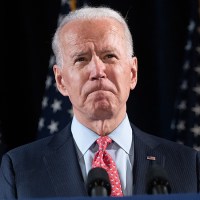
‘We are the United States of Amnesia,’ said Gore Vidal in 2004. These days, it’s more the United States of Dementia. In 2020, the country seems determined to choose between two elderly men who, it is fair to say, are some distance from sanity. Joe Biden, the 77-year-old who even aides admit has lost his ‘cognitive fastball’, has somehow emerged as the presumptive Democratic nominee. Assuming that his candidacy or health don’t implode somehow between now and the party convention in July, Biden will face Donald Trump at the ballot on 3 November. America’s choice, then, is between two kinds of crazy.

Crude tactics: Russia and Saudi Arabia are at war over oil prices

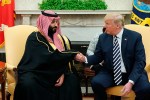
It all started at what every-one thought would be a routine meeting between Opec and non-Opec nations in Vienna. There were the usual fake smiles and firm handshakes in front of the cameras from the dignitaries. Bored journalists roused themselves to prepare to write stories they expected never to be read, before they could at last head to the pub. And then, out of nowhere, came a bombshell. Downward pressure on oil prices from the coronavirus panic was posing an obvious risk to Saudi Arabia’s still heavily oil-dependent economy. And this is what a cartel like Opec is for: to agree to release less oil into the market, pushing the price back up. A Saudi-led motion proposed a cut of 1.5 million barrels per day. To everyone’s shock, Russia rejected this outright.

Jonathan Sacks: Joy is the Jewish way of defeating hate

Last Monday night and Tuesday were our Jewish festival of Purim, when we recall the events described in the Book of Esther. It is the oddest of all festivals. There is rejoicing, which starts a fortnight before at the beginning of the Jewish month of Adar. There’s a celebratory meal on the day itself. We send charitable gifts to the poor and presents to friends. There’s riotous noise during the reading of Esther whenever the name of the arch-villain Haman is mentioned. And it’s the one day in the year when it’s considered a religious duty to drink slightly too much alcohol.

In defence of modern children’s books

A few years ago, I was surprised to open a newspaper and read that the head teacher of a London public school had decided to ban my books from his library. He described the adventures of Alex Rider, which have sold around 20  million- copies worldwide, in terms so derogatory that I have no mind to repeat them. Suffice it to say that the article quite put me off my cornflakes. But the strange thing was that — once I had got past the sheer offensiveness of his language and a mindset that believed that banning books could ever have good connotations — I was actually quite sympathetic to his wider point of view. Everyone agrees that children benefit from reading, but we seldom discuss what exactly we would like them to read.

Will coronavirus push globalisation into reverse?

Ten years ago, the World Health Organisation issued a new definition of ‘pandemic’: a disease that infects a large number of people and spreads quickly across the world. These days, once the first of these criteria has been fulfilled, the second is generally just behind. Everything travels faster now: goods, services, diseases and — crucially — fear. As the number of Covid-19 cases rises, so too does the cost of our reaction to it: already as much as $1.5 trillion from cancelled flights, postponed orders and businesses shutting down — an inevitable outcome in our globalised, interconnected world. A virus that germinated in Wuhan has led to the cancellation of this weekend’s rugby match between Italy and Ireland in Dublin.

Eco-friendly is not female-friendly

Forgive me, Greta, for I have sinned. It has been five days since my last Waitrose order. I meant to be good and green. To go from Whole Foods to farmers’ market with my canvas bag and eco-conscience. But it was cold and dark and the boys from the supermarket come right to the door. So I filled the bin with plastic wrappers and turtle-trappers and laid waste to my good intentions. I try, I really do. I wash every yoghurt pot, rinse every tin. I carry a KeepCup, a water flask, a folded tote. I trudge to the Edgware Road with empty bottles for shampoo, conditioner and laundry soap and fill them up, one splurting pump at a time. I take off my make-up with washable pads. I reuse envelopes, salvage rags, turn the bed sheets sides-to-middle.

Toryism, but not as we know it: an interview with Ben Houchen

Who do the Conservatives have to thank for helping them win so many seats in the north of England? Tory MPs normally name Boris Johnson, for his different approach to politics. Sometimes Dominic Cummings, too, for applying focus. But there’s one other figure regularly mentioned as a patron saint of Red Wall Tories: Ben Houchen, mayor of Tees Valley. He’s perhaps the most influential politician you’ve never heard of. The initial Tory breakthrough in the north-east of England came three years ago when Houchen, aged 30, beat the Labour favourite to become metro mayor. ‘I thought I’d give it a good go, put up a bit of a fight, cause the Labour party a bit of a black eye — then hopefully do well and move on to something else.

Dear Mary’s guide to coronavirus etiquette

The first piece of advice is to view coronavirus as a blessing. ‘If only there could be something to unite all humans against a common enemy — like a meteorite heading towards earth,’ said my wise older friend Anne some years ago, ‘then all wars would stop.’ I always thought she had a point. Now corona-virus is that common enemy. And don’t forget we won’t necessarily die — only 2 per cent of us, mainly oldies, will.

Coronavirus and the cycle of panic

If you have just cancelled your trip to Venice and ordered your £19.99 surgical face mask from Amazon, how about this for a terrifying vision: by the time we get to April, 50,000 Britons will have succumbed to a combination of infectious disease and adverse weather. Frightened? If you are, don’t worry: you survived. It was two years ago. In 2017-18 the Office for National Statistics recorded 50,100 ‘excess winter deaths’. The explanation, according to the ONS, was probably ‘the predominant strain of flu, the effectiveness of the influenza vaccine, and below average winter temperatures’. Coronavirus (Covid-19) is a pretty virulent virus all right, but not in the way you might imagine.

What would a Keir Starmer Labour party look like?

There’s still a month of the Labour leadership contest to go but most MPs have already concluded that Keir Starmer will win. The shadow Brexit secretary has led in every category so far: MPs, unions and local parties. As the contest enters its final stage, polling suggests the membership agree and Sir Keir will sail through. His closest rival, Rebecca Long-Bailey, is now seen as a ten-to-one outsider. One bookmaker is already paying out on a Starmer victory. But if the race seems all but over, the conversation about what he’ll do as Labour leader is very much on-going. Is he the leader that the party’s moderates have craved to stand up to the hard left — or a vessel for continuity Corbynism? So far, he has tried very hard not to say.

Where did it all go wrong for Tony Blair’s protege in Guinea?

When Alpha Condé ‘Le Professeur’ became president of Guinea in 2010, he was hailed by Tony Blair as an ideal leader — the very model of what an African premier should be. Unlike previous rulers, Condé didn’t shoot his way to the top, but arrived armed with a law degree from the Sorbonne and Guinea’s first ever democratic mandate. Blair chose Le Professeur as a client for his Africa Governance Initiative (AGI), set up to nurture a new generation of ‘good guy’ African leaders, and Condé was introduced to a network of experts — not woolly DfID types, but sharp tacks with Downing Street experience. The idea was to replicate Mr Blair’s successful policy ‘delivery unit’ across Africa.

Spare me the ‘furbabies’ – the humanisation of pets has gone too far

‘Can my dog meet your horse?’ asked the woman, as her German shepherd lunged at me, making my thoroughbred jump up and down in panic. We had been riding through the woods, a friend and I, when we came across one of those dog-walking clubs. Up to a dozen of what looked like former guard dogs and their owners came round a bend on the track towards us. ‘He just wants to say hello!’ the woman persisted. How many times have we all heard that from a dog-owner in the park before said beast pounces and humps us half to death? So I told her very firmly: ‘Absolutely not. Do not come any closer.’ ‘Oh, but I’m getting him used to things.’ I’ve had this before. ‘Listen here. My horse is not a practice prop for your dog.

Le crunch: are the Brexit talks doomed before they begin?

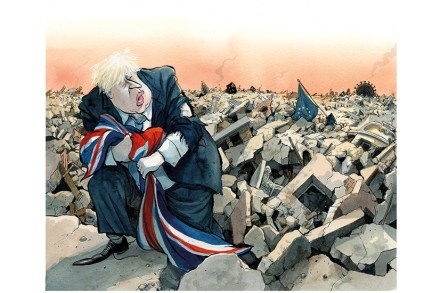
When Boris Johnson and the new European Commission President Ursula von der Leyen met in Downing Street last month, they agreed on one thing immediately: that it was time to stop the sniping, animosity and backbiting that had characterised the first round of the Brexit talks. The Prime Minister emphasised that Britain wanted to be the EU’s close friend and ally. Only a few weeks later, and already the Brexit wars are back. The two sides are so far apart that many diplomats think there is a better-than-even chance that the talks will fail. One member state is already planning around the central assumption that there will be no deal by the December deadline. For its part, No. 10 is braced for the talks to collapse sooner rather than later.