Features

Brexit, if used properly, can speed Britain’s post-Corona recovery

Will the recovery be shaped like a V or a U, some other letter or perhaps the Nike swoosh? This is a much-discussed question among economists right now — but it is not the most important question. We’re familiar with the idea of an up-and-down financial crisis where things return to their starting point: we had roller-coasters in the mid-1980s. Even after the global financial crash of 2008-09, financiers still kept their place as masters of the universe. Global supply chains were repaired and the old power structures remained in position. This time might be very different. Old fixes are being applied to a new crisis. Central banks, for example, have less scope to cut interest rates than they did ten years ago.

How Graham Greene earned The Spectator a place in cinematic history

When Graham Greene impulsively took up film reviewing for The Spectator in 1935, he was not yet the renowned literary figure he was to become, and thus, like so many other writers in those parlous economic times, prosaically in need of cash. As it happened, the confluence of interests between a 30-year-old novelist of modest commercial success and Derek Verschoyle, The Spectator’s literary editor from 1932 to 1939, resulted in something extraordinary — for there is nothing prosaic about these reviews. Greene’s opinions about the films he critiqued for the magazine over nearly five years constitute an impromptu cultural history of the 1930s, in addition to being a joy to read.

Spectator covers that almost were

Sometimes The Spectator goes to press very shortly after election results have been announced. In those instances, Morten Morland, our cover artist, draws versions to cover for any outcome.  These have since been framed and hung at Old Queen Street in the lavatories. For our 10,000th issue, we're sharing some of them. The last UK general election was on a Thursday and our cover went Friday morning: we had three versions. Boris winning, his being held to a hung parliament and (pictured) Jeremy Corbyn winning, depicted as an unlikely saviour with Jo Swinson and Nicola Sturgeon (who were talking about putting him in power via coalition deals) depicted as the parents around the crib.

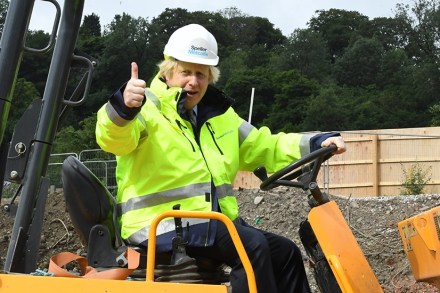
Boris’s difficult decision: When should lockdown be lifted?

When Chequers was donated to the nation, the accompanying Act of Parliament was explicit about the intended effect. ‘The better the health of our rulers, the more sanely will they rule,’ it said. Prime ministers need time to think, as well as recuperate, and as Boris Johnson continues his convalescence there, he will be in need of that help. Not only is he still recovering from several days in intensive care, he is also facing a policy problem without precedent — and without good answers. Whatever solution he opts for will determine his premiership, the public’s faith in the British state and this country’s future standing in the world. In the absence of the optimist-in-chief, an air of depression has settled on the government.

Salman Rushdie: ‘The implausible has become everyday’

When I say goodbye to Sir Salman Rushdie in his offices at New York University in Lower Manhattan in early March, we bump elbows. Not that it’s much more than a gesture, by this stage: we shook hands unthinkingly on first meeting, and we’d just shaken hands again. It’s a novelty, still halfway to being a joke. As I descend in the lift to Cooper Square, it occurs to me that if I’ve given Rushdie coronavirus I will be halfway to achieving what the mullahs couldn’t. Halfway funny as a hypothetical; halfway not at this distance, writing the piece up three weeks later. As Alan Moore’s nihilistic Rorschach puts it: ‘Good joke. Everybody laugh. Roll on snare drum. Curtains.’ I don’t imagine Rushdie will take offence at this.

Ad infinitum: 200 years of Spectator adverts show how little changes

A conventional hierarchy of print media would put serious journalism at the top. Far beneath that would be tabloid journalism. And then at the very bottom would be advertising. Except, in one respect, I think that order should be reversed. Yesterday’s advertising is much more interesting than yesterday’s serious journalism. I suspect this is because advertising, like tabloid journalism, reflects what people really care about — and always have done. Gossip. Sex. How to attract the opposite gender. What car to buy. Health complaints. Miracle cures. Death. Money. The Beckhams. The Windsors. The new 55in QLED 4K television. At last relief from embarrassing itching.

Sugared with wit: How ‘Mr Spectator’ came to life

The Spectator is a child of the 19th century, and damned proud of it. First published in 1828, the link provided by its 10,000 issues to a long-vanished age of Regency waistlines and Romantic poets is one of the great wonders of journalism. Its success was built upon Victorian foundations, yet it is a peculiarity of the current media landscape that The Spectator, the only current affairs magazine actually to have been published in the 19th century, should in many ways seem the least Victorian of the lot. The New Statesman, Prospect, Standpoint: all have a certain quality of moral earnestness that one could imagine Gladstone admiring. The Spectator, by contrast, seems to breathe the coffee-perfumed air of an earlier age.

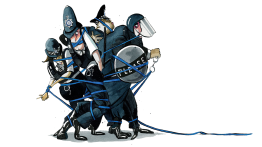
The Spectator’s love affair with satire

The Spectator has always known when and how to wield the scalpel. A tour through its history reveals how, from the get-go, it mercilessly parodied the world in which it lived. When still six weeks young, The Spectator savaged the morbid obsessions of late-Georgian society. The caricaturist George Cruikshank exposed the press’s fetishisation of a contemporary murder: the accompanying article, ‘Points of Horror!!!!’, tartly noted that ‘the taste for murder in the enlightened public’ was ‘so extravagantly eager, that murderers will come to be held in the light of public benefactors’.

Virus deaths may not be the greatest challenge ahead for Africa

Red roses are hardly a priority for people in a virus-wrecked global economy, and one day recently the world’s flower market pretty much collapsed. At the vast Aalsmeer auction in Holland, there were scented mountains of unsold roses, gerberas and tulips. Some last stems still find their way into bouquets across a world that has cancelled all gatherings except funerals. But in the coming months, cut flowers might become a sight as rare as bananas were for children in the Blitz. This story is a disaster for Kenya, my home country, which was until last month a top flower exporter. While western states repurpose their economies towards becoming vast hospitals, Africa is too poor to cope with the medical emergency, and virus deaths will probably not be the greatest challenge ahead.

Why Trump and Xi might both lose the corona wars

The Covid-19 pandemic came along just as Cold War II was getting under way between the United States and the People’s Republic of China — the superpowers of our time — with the European Union and a good many other US allies quietly hoping to be non-aligned. Far from propelling Beijing and Washington towards détente in the face of a common enemy, the new plague has only intensified the Cold War. For the first time, China’s campaign of disinformation has been on a Russian level, with wild anti-American conspiracy theories being disseminated by senior Foreign Ministry officials.

Bill Bryson: It’s impossible to be sick of England

‘It’s remarkable that bad things don’t happen to us more often,’ notes Bill Bryson in his latest book, a look at the ‘warm wobble of flesh’ that is the human body. He wrote it long before coronavirus upset the world, but parts of it are particularly relevant now. Viruses worth their salt know how to get around, writes Bryson. Researchers from the University of Arizona infected a door handle to an office and found it took just four hours for a virus to spread through the building, turning up on virtually every device inside and ‘infecting’ half the workers. Kissing, oddly, is among the least effective ways to spread germs. Ordinary touch is best. ‘A successful virus is one that doesn’t kill too well and can circulate widely.

The lie of the land: we’re not all in this together

There’s a friend of mine who likes to torture me occasionally. ‘I really don’t like to tell you this,’ she trills, ‘but I’m looking out on to a field of daffodils. In the hedge just outside the kitchen window there’s a blue tit nesting.’ If she wants to go for a walk, she heads into the woodland behind the house. She’s in her oather home in Wales (normal residence: Fulham) and rather fancies staying there, having got the hang of the whole working-from-home thing. Another friend, who’s getting on a bit, is in her other home (this isn’t just a holiday cottage, but a proper estate that they’ve had for years) in Cornwall (normal residence: Chelsea). She called the other day when it was hot.

How to scale a mountain without leaving home

In January a friend visited me at my home in Colombo, and I promised him that we would climb Adam’s Peak. That plan was scotched when, days before he landed, I went down with dengue fever. But I’d done Adam’s Peak before (twice, actually), and there would always be another chance to do it, right? Things changed. When lockdown came to Sri Lanka, I found I was already bored and irritable in the first week. Then I saw a cheery Facebook post about some chap called David Sharp who used his time in isolation to calculate how many stairs he would have to climb in his home to ‘top’ the various mountains of the British Isles. Virtual mountaineering, if you will. Well, I thought, why don’t I do the same with Adam’s Peak?

Domestic abuse sufferers are the hidden victims of lockdown

For years, ministers from successive governments have conducted drills for all kinds of pandemic scenarios. But they never imagined a lockdown. It’s a new tool, and its implications — and side effects — have never been properly tested. So no one really thought about the effect it would have on something like domestic abuse. Before the lockdown, it was estimated that two women a week were killed by their current or former partners. But that was when they could move freely. Now, opportunities for escape are scarce. The only time a victim is alone is when their abuser goes to the shop, or if they’re allowed out for exercise.

In this time of modern contagion, I find myself turning to ancient prayers

There is an ancient Celtic prayer that is as relevant today as it was all those centuries ago: Be Thou between me and all things grisly, Be Thou before me in all things mean, Be Thou between me and all things gruesome Coming darkly towards me. We live in a grisly time and don’t quite know what to do with the gruesomeness of it. This little prayer, whose origin is sometime between the 5th and 9th century, has that sense of foreboding that we are feeling in these dark days too. For the Celtic Christians, the darkness was all too real. They were a largely rural people, living in turbulent feudal times, but they understood much about the practicalities of life and how to turn concerns and desires into prayers. Celtic Christianity started after the Romans left Britain in 410.

Throughout history, dark humour has helped us cope in a crisis

In these strange times, people naturally turn to the past for orientation: Londoners recall the spirit of the Blitz, while citizens of St Petersburg look back to the Nazis’ Siege of Leningrad to remind themselves what they can overcome. But tales of suffering and heroism take us only so far. Humour is just as important. It punctures the sense of pervasive anxiety and shines a light into unfamiliar and dark places. Here, too, the past can serve as a guide. History reminds us that laughing in the face of fear is a powerful impulse, regardless of the risk involved. Soviet citizens lived in a world where a single wrong word could mean denunciation and their lives being torn apart by Stalin’s ruthless secret police. A harmless joke could lead to the dreaded 5 a.m.

Coronavirus must not rob us of our liberties forever

The American economist and historian Robert Higgs noted long ago that during the 20th century the various wars, and the various declared equivalents of war, such as against drugs and viruses, regularly led to permanent expansions of state power. Power is the ability to coerce physically, war being the pre-eminent coercion. There has to be some reason that citizens of the UK and US are coerced to pay about 40 per cent of GDP for the wars and other activities of the state, whereas a century ago they paid about 10 per cent. Further, the state’s recently expanding regulation of many private activities — literally a million regulations promulgated by the US federal government, for example — calls on citizens to pay indirectly, too.

Will coronavirus hasten the demise of religion – or herald its revival?

On Saturday evening, Christians will prepare for an Easter unlike any other. With every church closed, from St Paul’s Cathedral to the meanest country chapel, Anglican worshippers will be directed to a website where lay leaders, priests and bishops will hold a ‘virtual vigil’ ending at dawn on Easter Sunday. In Westminster Cathedral, the mother church of Catholics in England and Wales, a deacon will sing the great Easter proclamation known as the Exsultet. But this year, when the final syllable dies away, he will look out into the nave and see row upon row of vacant seats. It’s faith, but without the faithful. It’s happening the world over. This week Jewish families were forced to celebrate the Passover Seder without guests for the first time.