Christopher Snowdon

Christopher Snowdon is Head of Lifestyle Economics at the Institute of Economic Affairs

LIVE: The Spectator’s Alternative Covid Inquiry

From our UK edition

53 min listen

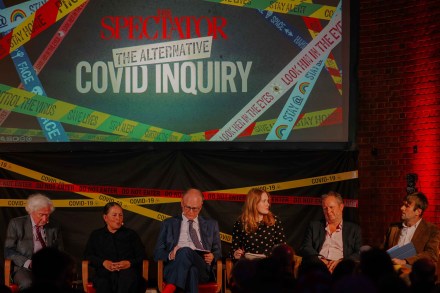
As the official Covid Inquiry comes to an end, the Spectator has convened a panel of our own experts to ask the questions that the Inquiry didn’t – or wouldn’t – answer. The Spectator’s commissioning editor Lara Brown is joined by science writer and Conservative peer Matt Ridley, Oxford professor of theoretical epidemiology Sunetra Gupta, former Supreme Court judge Jonathan Sumption, journalist Christopher Snowdon and science writer Tom Whipple. This is a condensed version of the event. Subscribers can access the full event via Spectator TV and you can find more events from the Spectator here.

LIVE: The Spectator’s Alternative Covid Inquiry

Netflix’s documentary poses some hard questions for Lucy Letby’s supporters

From our UK edition

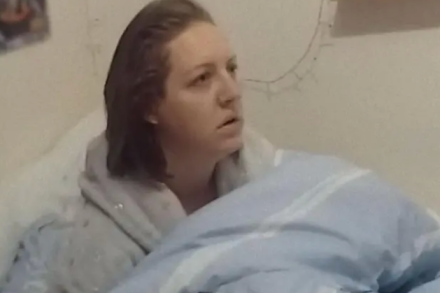
I often tell friends they should read up on the Lucy Letby case because it is not going away. People will be talking about it for decades, possibly centuries. Even if she confesses, some people won’t believe her. A working understanding of the events at the Countess of Chester hospital in the mid-2010s will soon be as essential to social discourse as a rudimentary knowledge of the Premier League table, so you might as well do the prep now. The lies. The disturbing comments. The gaslighting. The falsification of medical records. The bizarre scribbling The case is so vast that it can swallow you up. The first trial took ten months and then there was another trial, two attempts at an appeal, and the Thirlwall Inquiry.

Labour’s zero-alcohol crackdown makes no sense

From our UK edition

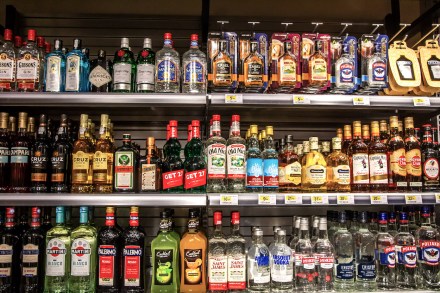
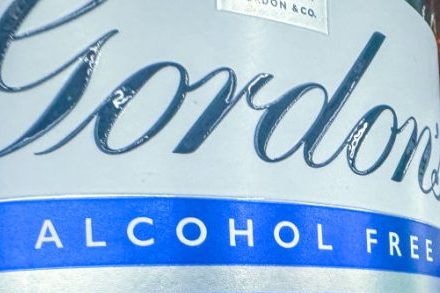
Labour is weighing up a crackdown on people under 18 buying 'no and low-alcohol' drinks. On current form, this means Keir Starmer's government will launch a public consultation, commit itself to a ban, endure weeks of mockery and abuse from the public and then perform a humiliating U-turn. But when the inevitable climbdown comes, what will be the main reason? Let us consider the options. Firstly, it is impractical. Where do zero-alcohol drinks end and soft drinks begin? The very definition of a soft drink is that it has no alcohol. Assuming that the government doesn’t want to ban teenagers from buying Fanta and Pepsi Max, it is going to have to make a legal distinction between a non-alcoholic drink and a soft drink.

Zack Polanski’s insane economics

From our UK edition

When the ubiquitous Green party leader Zack Polanski was on the BBC's Sunday with Laura Kuenssberg show singing the praises of wealth taxes last month, he said something that got my spider-sense tingling: ‘This isn't about creating public investment, we can do that anyway, we don't need to tax the wealthy to do that.’ On the face of it, this is a slightly odd thing to say. Other lefties, such as Richard Burgon MP, have argued that a wealth tax could be used to give more money to Our Precious NHS or remove the two child benefit cap. Polanski is right to say that we can have more ‘public investment’ without a wealth tax – we can tax other things – but why he is so eager to divorce tax revenue from public spending?

‘Inequality’ isn’t changing children’s brains

From our UK edition

Last week, the Office for National Statistics published data showing that income inequality in the UK has fallen to its lowest level since 1996. I’m sure you don’t need me to tell you that – you'll have doubtless noticed the improvements in social capital, trust and general wellbeing yourself. How, exactly, does income inequality cause anything? Because that is how things work according to The Spirit Level, the 2009 bestseller which claimed that almost everything is connected to inequality.

The case for Letby’s innocence looks weaker than ever

From our UK edition

The annual Panorama documentary on Lucy Letby appeared on BBC 1 this week, barely a week after a more one-sided pro-Letby documentary was shown on ITV. Channel 4 has a Letby show in the works and Channel 5 has already broadcast two. Fortunately, there is plenty of material for producers to get their teeth into. Not only did her trial last ten months but there was a retrial after that, plus two appeal attempts, and her supporters have been making new claims on any almost weekly basis ever since. Hundreds of pieces of evidence could be cited, almost all of it circumstantial but almost all of it pointing an accusing finger at staff nurse Letby The ITV documentary was Letbyism 1.0, mostly consisting of talking points about shift patterns, Post-it notes, door-swipe data etc.

Which European country has the largest nanny state?

From our UK edition

Across Europe, Nanny’s influence is growing: there has been a steady erosion of liberty for those of us who like to eat, drink, vape or smoke. Leading the pack in the 2025 Nanny State Index is Turkey where the state’s penchant for control borders on fetishistic, banning vapes outright and taxing alcohol off the scale. Its only saving grace is that so many of its little prohibitions are poorly enforced. Hot on its heels is Lithuania, where the war on fun is fought with puritanical zeal. Alcohol is a particular target, with the drinking age raised to 20 a few years ago and all advertising banned. E-cigarettes are not outlawed entirely but are saddled with such a ludicrously high tax – €6.30 (£5.30) per bottle – that they might as well be.

Activist-academics push to Make America Teetotal Again

What constitutes a safe level of drinking? For some activist-academics there is none – and they are loudly lobbying for alcohol to be treated like tobacco in official US health advice. The Dietary Guidelines for Americans are under review and will be updated this year. Currently they recommend moderation: two drinks or less in a day for men and one drink or less in a day for women. Pressure, however, is being applied for a new recommendation: no safe level.But that would fly in the face of decades of evidence that has shown those who drink in moderation live longer than those who do not, mostly because alcohol consumption lowers the risk of heart disease, stroke and diabetes. The current guidance from 2020 is roughly where the sweet spot is from a health perspective.

pregnancy

Is the sugar tax to blame for the slushy drinks scare?

From our UK edition

The alleged ‘success’ of Mexico’s tax on sugary drinks inspired George Osborne to announce a sugar tax for the UK in 2016. But the news that the tax has led to children being poisoned by drinking frozen slushy ice drinks suggests it – just like Mexico’s – could be doing more harm than good. Mexico’s levy was said to have reduced demand for sugary drinks in the country – it would have been surprising if it didn’t. But it did not lead to Mexicans consuming fewer calories: rates of obesity have continued to climb since the tax was introduced in 2014. One of the little-known consequences of the Mexican sugar tax is that it led to 'a significant 6.6 per cent increase in gastrointestinal disease rates in areas lacking safe drinking water'.

The truth about blinkered single-issue campaigners

From our UK edition

Why do single-issue campaigners oppose solutions to their problems? Once you become aware of 'not invented here' syndrome, you start to see it everywhere: climate change activists lobbying against nuclear energy, anti-smoking campaigners campaigning against e-cigarettes, anti-obesity campaigners complaining about weight loss drugs. There are even some anti-alcohol campaigners who want to clamp down on alcohol-free beer. Whenever innovation steps up to provide a practical solution to a serious problem, it is those who should be most delighted about it that put up the most resistance. This all seems self-defeating until you realise that these campaigners already had a solution in mind which they are more interested in implementing than in actually fixing the problem.

How to fight back against the nanny state

From our UK edition

Have you ever noticed that there is no pressure group for people who want the government to leave them alone? On the face of it, this is strange because a lot of people want the government to leave them alone and there seems to be a pressure group for everything. There are organisations entirely devoted to agitating for political action against drinking, gambling, smoking, sugar consumption and even infant formula. And yet there are millions of people who use these products and would like to continue doing so without further interference from the government.

How to catch a traitor

From our UK edition

A quarter of a century after the first series of Big Brother, there is still some life in reality TV. Most of it is dross, but reality TV at its best tells you something about the human condition. What The Traitors (BBC One) tells us is that people are very good at lying. We over-estimate our ability to read people, and ‘body language’ is as likely to mislead us as it is to provide a ‘tell’. It is because people are good at lying that the faithfuls spend most of their time banishing fellow faithfuls based on nothing but vibes. They are then filled with remorse before picking another target at random and doing exactly the same thing again. The other thing The Traitors shows us is that people act in their rational self-interest and generally do it rather well.

What’s the point of banning Elf bars?

From our UK edition

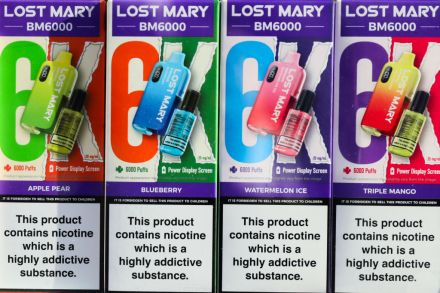
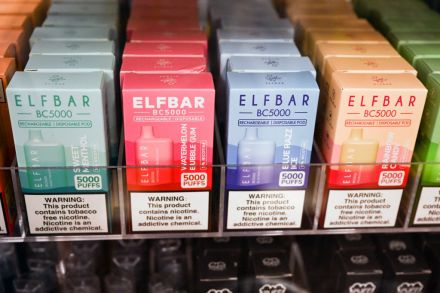
Part of me wishes that disposable vapes had never been invented. Until they arrived, it seemed like the battle for tobacco harm reduction in Britain had been won. The kind of people who want to ban everything wanted to ban e-cigarettes, but most people could see that they were a relatively harmless substitute for cigarettes and were helping to drive down smoking rates. Then along came the Elf bars and Geek bars and the mood began to sour. Whether it was because of the price or the colours or because it was simply a fad, they became somewhat popular with teenagers, just as Juul had become popular with high school students in the USA a few years earlier. It was easy to exaggerate the scale of underage vaping.

Taxing the gambling industry just won’t work

From our UK edition

Ahead of the Budget on 30 October, Rachel Reeves is being bombarded by lobbyists urging her to loot their enemies. The New Economics Foundation wants a ‘jet-setter tax’ on frequent fliers of €100 per flight. Action on Smoking and Health wants a levy on tobacco companies. Greenpeace reckons it can raise at least £26 billion a year by levying a wealth tax on the ‘super-rich’. An assortment of think tanks and pressure groups linked to the Labour donor Derek Webb think they can squeeze another £3 billion out of the gambling industry by doubling gaming and betting duties.

What is Chris Whitty up to?

From our UK edition

There was a period during the pandemic in 2020 when the pubs were open but you could only go to one if you sat on your own and had a meal. You were allowed to buy an alcoholic drink but once you had finished your meal you could not buy another one. There was also a 10 p.m. curfew when the pub had to close and everyone had to go straight home. Whether this did much to stop the spread of Covid is debatable (there were reports of a lot of house parties starting just after 10 p.m.), but it allowed the ‘public health’ establishment to turn pubs into what it thought they should always have been: functional, sterile restaurants where fun is discouraged if not outright illegal. At the top of that establishment sits the Chief Medical Officer, Professor Sir Chris Whitty.

Why was George Orwell a socialist?

From our UK edition

When George Orwell’s publisher, Fredric Warburg, read the manuscript of Nineteen Eighty-Four in December 1948 he wrote a rapturous report to his colleagues, saying that the book was ‘worth a cool million votes to the Conservative party’. He described it as ‘a deliberate and sadistic attack on Socialism and socialist parties generally. It seems to indicate a final breach between Orwell and Socialism’. Warburg had known Orwell for more than a decade. If he believed that Orwell had swung to the right, it is hardly surprising that other readers of Nineteen Eighty-Four got the same impression. Orwell was too sick with tuberculosis in 1949 to write more than a few book reviews.

Obesity isn’t behind the sicknote crisis

From our UK edition

The European Congress on Obesity is an annual treat for health journalists, because it guarantees a week of ready-made stories based on unpublished research announced at the conference. Although it only started yesterday, it has already produced such headlines as ‘Children who use smartphones at mealtimes more likely to be obese’ and ‘Children “bombarded by junk food adverts” on video game sites’. According to the Times, the latter study found that people who watch video game live streaming are ‘subjected to adverts for junk food and sugary drinks for 52 minutes of every hour’, which sounds rather unlikely. Another finding from the conference made the Times’s front page today.

Why no-fault evictions shouldn’t be banned

From our UK edition

A decade ago, left-wingers started using the phrase ‘zero hours contracts’ to refer to what had previously been known as casual labour or piece work. Once this pejorative term become widely used, Ed Miliband, then the leader of the Labour party, promised to ban them. Similarly, the phrase ‘no fault evictions’ was almost unknown to the general public until 2017 when pressure groups like Generation Rent and Shelter began using it and Jeremy Corbyn promised to ban them. The term had been used for years by landlords to distinguish the eviction of someone whose tenancy had expired (a Section 21 notice) from an ‘at fault’ eviction of someone who had broken the terms of their tenancy agreement (a Section 8 notice).

Banning disposable e-cigarettes won’t stop kids vaping

From our UK edition

The government thinks it has finally found a popular policy. Better still, it is a policy that it can implement, or at least legislate for. According to a press release from the Department of Health and Social Care, a ban on disposable vapes is supported by ‘nearly 70 per cent of parents, teachers, healthcare professionals and the general public’. The British public love a ban. Last month a survey found that 29 per cent of us want to close the nightclubs to deal with the remnants of Covid-19 and 20 per cent want to re-introduce lockdown. So, vox populi, vox dei? I think not.

The public health plot against large wine glasses

From our UK edition

Professor Dame Theresa Marteau seems to have something of an obsession about glasses and tableware. In the last ten years, she and her team at Cambridge university have carried out numerous experiments in the bars and restaurants of Cambridgeshire to see whether restricting the size of wine glasses reduces the amount of wine consumed. This has yielded a mixed bag of evidence. When they combined their findings in a ‘mega-analysis’ (sic) in 2020, they found a possible effect in restaurants but not in bars. Marteau nevertheless suggested that ‘regulating wine glass size is one option that might be considered for inclusion in local licensing regulations.