Features

Could possession of the Bible become an offence in Scotland?

For the Scottish National party, the phrase ‘nanny state’ is not so much a criticism as an aspiration. This is the party that wanted to assign a state guardian to every child born in Scotland through its ‘named person’ scheme, only to be thwarted by the Supreme Court. Under Nicola Sturgeon’s leadership, there have been repeated attempts to regulate the eating and drinking habits of people, including proposed bans on two-for-one pizza deals and minimum pricing on cheaper alcoholic drinks. It makes sense, then, that the party’s paternalism should extend to the question of free speech.

Is our test-and-trace system ready to stop a second spike?

We are going to hear a lot about Test, Trace and Isolate (TTI) in coming weeks, as we approach autumn and fears of a second wave of Covid-19 grow. Now we have moved away from national lockdown but do not yet have a vaccine, the test-and-trace system is our main bulwark against a resurgence of the disease. But how good a defence is it? A study published in the Lancet Child and Adolescent Health this week suggests there is a huge amount at stake.

Sea change: China has its sights on the Bay of Bengal

Pangong Lake is the most unlikely of places for a naval conflict between two of the world’s nuclear-powers, India and China, with a third, Pakistan, looking on with not a little interest. Lying some 280 miles east of Islamabad, 360 miles north of New Delhi and 2,170 miles west of Beijing, Pangong Lake is in the remote northern Himalayas. In 1905, the explorer Ellsworth Huntington said that its beauty could ‘rival, or even excel, the most famous lakes of Italy or Switzerland’. It is a harsh world, frozen in winter, inhabited by a sparse indigenous population of hardy goat herders.

Dear Boris: what happens if Trump doesn’t accept defeat?

Dear Prime Minister, You already have quite enough on your plate. So forgive me if I hoist a storm cone over another potential problem. I refer to the US presidential election on 3 November and the possibility of its ending in deadlock and confusion. I was the British ambassador to Washington during the Bush/Gore election of 2000. The outcome hung in suspense for a month. Everything turned on which contestant had won more votes in Florida. In the end, the matter had to go to the US Supreme Court for a decision. I was present at the hearing. After 9/11, it was the most dramatic moment of my time in Washington. The events of November and December 2000 were a stress test for the American constitution.

Can the new Scottish Tory leader thwart Nicola Sturgeon?

As a boy, Douglas Ross, the new leader of the Scottish Conservative and Unionist party, had two interests: cows and football. Growing up on a dairy farm in Moray, he never aspired to hold political office. He enjoyed the solitude of early morning milking. ‘Some people like big tractors, other people like sheep. I was just really interested in dairy cattle, and Holsteins in particular,’ he explained earlier this year. Now he finds himself faced with one of the more daunting tasks in British politics: thwarting Nicola Sturgeon and, in the process, preserving the United Kingdom of Great Britain and Northern Ireland. In 2016, Ruth Davidson identified Ross as one of the most talented new Tory MSPs produced by that year’s Holyrood election.

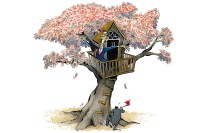
The rise of the Econian

A study has shown that protestors who took part in Extinction Rebellion’s demonstrations last year were overwhelmingly middle-class, highly educated and southern. Well, there’s a surprise. It turns out some 85 per cent of the London protestors had a degree, a third had a postgraduate qualification and two thirds described themselves as middle-class. Three quarters of those charged with offences lived in the south. And, if the accents I heard from the protestors as I biked through the throng on my way to work were anything to go on, a high percentage were public school--educated, too. I’d never seen so many Econians — the public school boys and girls who rule the wokerati world.

Why the US assassination of Iran’s top general didn’t spark a war

Iran’s new meddler-in-chief in Iraq is a bespectacled general called Esmail Ghaani. Brought in to replace Qassem Soleimani after his death in a US airstrike in January, he has the same green uniform as his predecessor, the same grey beard, and the same orders to make Iraq’s Shia militias do Tehran’s bidding. That, though, is where the similarities end. Soleimani was a legend among his followers in Iraq — he spent years building contacts with local commanders and joined them on the battlefield against Isis in Mosul. Ghaani, by contrast, is an owlish, uncharismatic figure who looks like he might be happier behind a desk. Unlike Soleimani, he doesn’t speak Arabic and has to rely on a translator during his visits to Baghdad.

Should Nicola Sturgeon get a statue?

The Scottish National party and its supporters like the world to see Scottish independence as a final act of decolonisation, Scots throwing off the yoke of English imperialism and, with it, the taint of having been imperialists themselves. Last week Scots academic Sir Geoff Palmer compared it to the process that led to his native Jamaica gaining its independence. Yet Scots were the greatest of British colonialists and, for most of the 300-odd years of the Union, strong unionists. Scots statuary of figures from before the 1707 Act of Union is quite sparse. But even those few earlier Scots haven’t been exempt from the wider debate about our monuments.

Why do we still struggle to see Xi’s China as a threat?

For years Westminster has been obsessing over Russian interference in Britain. Yet while we fret over oligarchs and social-media bots, the most dangerous assault on our democracy and security goes not just unchallenged, but largely unnoticed. Beijing is richer and more sophisticated than Moscow on every level, and its influence more prevalent across British society. But even as we witness events in Hong Kong and Xinjiang, we still struggle to see China as a threat to our way of life. This blind spot means China has been able quietly to amass huge amounts of influence with little pushback. Just look at how Huawei settled itself in our communications infrastructure and then expanded into our establishment.

Boomer and bust: Covid is fast-forwarding us into retirement

It was on a foggy walk to Hell’s Mouth that the sea fret lifted and I looked down, down, down at sea smashing against rocks and yes, it felt like a sign. I was on a socially distanced hols — if we define ‘socially distanced’ as ‘a bunch of mainly metropolitan friends romping in north Cornwall’ — for my summer of 2020 epiphany, which was this. Of the dozen or so happy, shiny, busy fiftysomethings bodyboarding, yakking and stuffing down Kettle Chips in their wetsuits, only one had what a retired major in Tunbridge Wells might call a job — and that was the books editor of the Oldie.

Tear gas Ted: the mayor manning Portland’s barricades

Portland, Oregon The federal courthouse in downtown Portland, Oregon, has become ground-zero for the nightly orgy of assaults, looting, arson, and public nudity — and, most recently, a surrealistic duel between protestors and federal agents using leaf-blowers to drive back each other’s tear gas — that continues to enliven America’s so-called Rose City in the wake of the death of George Floyd. It’s a curious thing, this new alignment of some of America’s most high-profile mayors with the very people burning down their towns. In Portland the competent authority figure is 57-year-old Ted Wheeler, who took office three and a half years ago.

Why does no one want to be a cartoonist any more?

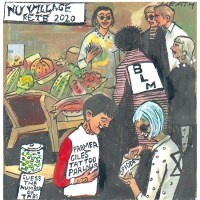
‘Nightmare!’ is how The Spectator’s cartoon editor Michael Heath has been describing cartooning for at least 30 years, but it’s truer now than ever. Eighty years ago, cartoonists were so celebrated that waxworks of Low, Strube and Poy were displayed in Madame Tussauds. Today, all that remains of Low is a pair of waxy hands in Kent University’s British Cartoon Archive. We are a vanishing species. There is a lack of new blood in the industry that doesn’t bode well for the future. When I was a student, getting published in Punch and Private Eye was seen as the pinnacle of a career in humour. Many tried —and succeeded — from an early age. K.J. Lamb was selling gags to the Eye while still at Oxford.

Why should I have to wear a face mask to give blood?

Any day now I shall be frogmarched, or at least very firmly escorted, out of a blood donor centre in London. I know this is going to happen because I made the appointment weeks ago and I intend to keep it. But when I signed up to donate my pint of blood to the public good, I was not required to wear a muzzle during my donation. Now I am. I do not intend to do so. I find the idea of donning one of these face-nappies physically repulsive, and dislike the mouthless, submissive appearance they create in all their wearers. I also believe them to be futile. I know the government believes this too, because it was saying so only eight weeks ago, and there has been no great scientific discovery since then. But above all, I am severely distressed by the obligation.

How Lebanon unravelled

Lebanon will be 100 years old on 1 September. But the joke circulating in Beirut is that the country may not be around for the party. Eye-watering hyper-inflation, not helped by the Covid pandemic, has brought the country to its knees, just as famine and extreme poverty sparked its creation after the end of the Great War. Lebanon eventually won full independence from the French in 1943, and became an impossibly glamorous, multilingual entrepôt with a rare facility for doing business. According to Major General Sir Edward Spears, the British minister to Syria and Lebanon, the country ‘sprang from a far older and higher’ civilisation than the French. Even so, it has always had a tendency towards self-destruction.

Putin plans to make the West destroy itself

There’s only one person who’ll be genuinely pleased with the Intelligence and Security Committee’s Russia report, finally revealed on Tuesday, and that’s Vladimir Putin. Russia emerges as an amorphous and formidable enemy — all the more so because the inconclusive and much-redacted report contains next to no substantiated allegations. Instead Russia appears as a phantom, unknowable menace, and this will spawn a thousand conspiracy theories far more corrosive and confusing to our politics than any Moscow-generated Twitter-storm or document leak. There’s no smoking gun on Brexit. Yet the government-induced delay in publication allows anyone that way inclined to imagine a cover-up.

How Britain can tame China

Chinese leaders love to use the phrase ‘win-win’, but they actually hope to win twice and leave other nations in positions of relative disadvantage. The Chinese Communist party’s behaviour during the Covid-19 crisis is a case in point. In the midst of the global pandemic, the People’s Liberation Army and the Ministry of State Security have conducted cyber-attacks against hospitals, pharmaceutical companies and medical research facilities developing Covid-19 therapies and vaccines. Triumphing in the race for a vaccine would help China emerge from the crisis in a position of relative advantage economically and psychologically, while reinforcing the idea that China’s authoritarian mercantilist system is superior to democratic free market systems. Win-win.

What would it mean to ‘decolonise’ the Classics?

We classicists peering into the past can sometimes be blindsided by the present. 2020 brings the charge that our discipline promotes racism. Last month, America’s Society for Classical Studies announced ‘the complicity of Classics as a field in constructing and participating in racist and anti-black educational structures and attitudes’. A pre-doctoral fellow at Princeton has enjoined ‘white classicists’ to ‘unlearn white supremacy in themselves’. And, closer to home, Oxford’s Faculty of Classics is being petitioned by many of its students to ‘acknowledge explicitly its own role in the proliferation of racist, colonialist, and white supremacist attitudes’. Have I really chosen the career of racism-pedlar?