Features

Why I’ve given up on handbags

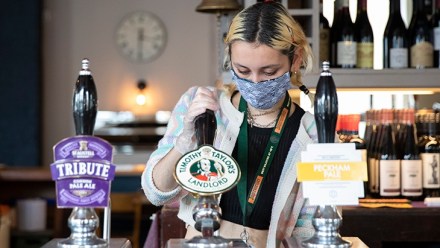
I have given up handbags. Men may think this a trifling thing. Women will understand it was not a painless decision. In my adult life I had rarely left home without a bag. Sometimes just a small clutch bag, but more likely a bucket bag which hung, with the weight of a Yorkshire terrier, from my shoulder. I have a dent in my collarbone to prove it. Then came Covid. You may remember that obsessive hand-washing was the first thing asked of us. It preceded social distancing, mandatory masks and the proscription of everything that makes life enjoyable, and though I’m not a herd animal I did give some thought to my normally relaxed attitude to germs. For one thing, I use public transport a lot. Wherever I went, my bag went with me.

Sweden’s new epidemic: clan-based crime

Stockholm ‘We have an obvious problem,’ admitted the Swedish Prime Minister Stefan Löfven recently. He was referring not to the Covid pandemic, but to a summer of crime that has left even jaded Swedes reeling in disbelief. There are regular bombings, hand grenade attacks and shootings. Young men are killing each other at a horrific rate — ten times that of Germany. The feeling is growing that the government has completely lost control. Yet, while Löfven has finally acknowledged the existence of the problem, he still seems in denial about its true nature.

Thanks to Covid, village shows are withering away

I measure out my summer in invitations to judge classes of flowers, fruit and vegetables at local village shows. The flower-show calendar is as changeless and as adamantine in its continuity as the high days and holy days of the Christian liturgical year. Or rather it was. In the past, as I have prepared to set out to one of these shows, armed with my RHS Horticultural Show Handbook, schedule of entry classes, tape measure (to assess the longest runner bean) and gardener’s knife (to cut into a beetroot’s bloody heart), I have sometimes thought how pleasant it would be to stay at home in my own garden, for judging is very precise and tiring work.

The Dragon school’s bizarre decision to ban Gunga Din

Why should radical leftists bother destroying institutions when the establishment will do the work for them? The governors of the Dragon, the prep school in north Oxford, have decreed that one of its boarding houses, Gunga Din, shall now be known as Dragon House. Presumably no consultancy fees were incurred for that name. In a letter to Old Dragons, which as an alumnus I received, the chair of governors, Andrew Webb, sets out the wonderful contortions that led the board to the decision. The name was originally chosen by ‘Hum’ Lynam, headmaster from 1920 to 1942, from Rudyard Kipling’s 1890 poem. The poem’s hero is a regimental bhisti (a water-carrier) in the service of the British military in India, whose activities are narrated from the view of a British soldier.

Bassam Tibi’s 40-year fight against Islamic fundamentalism

When al-Qaeda destroyed the Twin Towers almost exactly 19 years ago, the aims of the terrorists were not fully understood by many in the western media. Osama bin Laden intended not just to wage war against the non-Muslim world but to present himself — and his jihadi narrative — as the new voice of Islam. He was fighting a war of ideas, as well as one of terror. One of the best ways to understand and combat the ideological side of the jihadi movement is to read the works of the philosopher Bassam Tibi, who has been fighting fundamentalist ideas for the past four decades. His work — speeches, essays and more than 40 books — tracks the methods by which Islamists operate.

Just the ticket: why I love collecting stubs

I know the exact day when my future life as a critic was set on its course, because I still have the ticket stub to prove it. It was 5 June 1992 — seat D4 at the 8.15 p.m. screening, to be precise — when I went to the Curzon Phoenix cinema in central London with three schoolfriends to see what would become my all-time favourite film (and, subsequently, book), Merchant Ivory’s Oscar-winning masterpiece Howards End. That perforated ticket stub, a little raggedy around the edges now, sits in pride of place on one of the three cork pinboards I display in rotation on the wall of my bedroom, all of which host a mini patchwork quilt of tickets for plays, films and exhibitions I’ve seen.

The depraved rule of Thailand’s Caligula king

The Roman emperor Caligula was renowned for his extravagance, capricious cruelty, sexual deviancy and temper bordering on insanity. Most famously, before he was assassinated, he planned to appoint his favourite horse as a consul. This is probably a legend. But King Maha Vajiralongkorn, who ascended the Thai throne in 2016, adopted Caligula’s playbook for real. In 2009 the then crown prince promoted his pet miniature poodle Foo Foo to the post of air chief marshal, in which capacity he served until his death in 2015, aged 17. Foo Foo’s cremation was preceded by four days of formal Buddhist mourning.

Seagulls don’t deserve to be protected

Thousands of city dwellers have to live with the noise and mess of urban gull breeding colonies. Often dubbed ‘flying rats’ because they gorge on garbage, gulls are protected by Natural England — a public body sponsored by the government — on the grounds that they are supposedly endangered. Anyone who has to put up with their dawn-shattering racket and profuse defecation can only wonder at the truth of this; and the fact is that it’s based on seriously flawed science. The wildly held belief (which also appears on the Natural England website) that the UK’s herring gull population has declined by 60 per cent is untrue.

The race to find a Covid vaccine has become a global power struggle

It could be the most audacious piece of political theatre of modern times. At the end of next month, just a week or so before Americans choose their next president, we could see Donald Trump standing on the White House lawn in front of a handful of friendly journalists, rolling up his sleeve and looking solemnly into the camera with hardly a wince as a nurse expertly administers America’s newly licensed coronavirus vaccine. ‘We did it,’ he will announce, adding that the biggest mass vaccination programme in history is ready to roll out. ‘An American vaccine that has made America great again.’ Far-fetched? Ridiculous? Perhaps not. Even though trials of Britain’s Oxford vaccine were paused this week, others remain on track.

Pilgrimage in the age of pandemic

To complete the Hajj is the pinnacle of Islamic worship, required once in the lifetime of every able-bodied Muslim who can afford the journey. In its 1,400-year history, the annual pilgrimage has been cancelled dozens of times, by wars, political strife and pandemics. As I found out when I made the journey, it is a swirling sea of humanity: some 2.5 million visiting Mecca over a few days, from all over the world. When the Covid crisis came, worship was suspended. But then something was attempted that would have once seemed impossible: carrying on the tradition, but under digitally monitored social distancing. The results were extraordinary.

As New Yorkers flee, the suburbs are under siege

New York ‘Land of the Flee’, screamed the New York Post front page this week. Moving vans are lining up in Manhattan. Residents have had enough. It had been ‘another bloody weekend in Gotham’ with 21 people shot, and a rising wave of non-gun violence. At 11 a.m. on Saturday, a man leapt on top of a young woman on a subway platform in midtown and began grinding against her until a group of bystanders forced him to stop. You can watch the whole thing on video and decide never to take public transport again. Living in New York has always felt like walking on a very narrow beam. The chasms on either side are the thrill of it. They create extremes of excitement, anxiety, achievement and despair. But many are now deciding: to hell with the city that never sleeps.

Downside’s downfall: the dissolution of a monastery

The monks of Downside Abbey in Somerset elected a new abbot last Thursday, according to sixth-century rules laid down by St Benedict. The next day, they sent an email notification saying they had voted ‘to make a new start and to seek a new place to live’. It was a shock to those who know the place. The monks will leave behind a beautiful abbey church built in the Gothic Revival style — its 166ft tower visible for miles around — a monastery and cloisters, the largest monastic library in Britain and a grand-looking public school with more than 300 pupils. It’s as if a piece of English Catholicism, like a decaying chunk of church masonry, has fallen away. But it has been a long time coming.

Why people have sex in graveyards

The oldest churchyard in Torquay is being used by people openly having sex and sunbathing nude in broad daylight. This was how it was reported in the local newspaper, of course — ‘broad daylight’ is a phrase that is only ever used by subeditors trying to make things sound more depraved. (Who sunbathes except in broad daylight?) It was not the first such report since the pandemic began: in June, a couple were witnessed coupling in Brandwood Cemetery in Kings Heath, Birmingham; police were called amid concerns over public indecency, and fears that they may not even have been from the same household. A few weeks earlier, another pairing was witnessed in the churchyard of St Mary Magdalene, Sutton-in-Ashfield.

The Covid trap: will society ever open up again?

The great pandemic of 2020 has led to an extraordinary expansion of government power. Countries rushed to close their borders and half of the world’s population were forced into some sort of curfew. Millions of companies, from micropubs to mega corporations, were prohibited from carrying on business. In supposedly free and liberal societies, peaceful strollers and joggers were tracked by drones and stopped by policemen asking for their papers. It’s all in the name of defeating coronavirus; all temporary, we’re told. But it’s time to ask, just how temporary? As Milton Friedman used to warn: ‘Nothing is so permanent as a temporary government programme.’ Measures that seemed unthinkable a few months ago have been implemented in haste and without debate.

Government jobs don’t have to be in the capital

Boris Johnson has put a huge amount of stock in persuading reluctant civil servants to return to their desks in Whitehall. His campaign this week to get more people back to the office was tinged with the suggestion that those who were slow to return might be in danger of losing their jobs. This divided the cabinet, with Matt Hancock pointedly suggesting that he was happy with many in his department continuing to work from home. Never one to miss the opportunity for a battle with Westminster, Nicola Sturgeon suggested that the government’s campaign to get people back to the office amounted to ‘intimidation’. But why not see the slow return to the office as an opportunity? The government should be using the aftermath of the crisis to rebuild the state.

The science of tennis grunts

The cancellation of Wimbledon this summer deprived fans of their annual exercise in moralising. There is one topic SW19-goers love to complain about every year: the grunting sounds that players emit as they hit the tennis ball. Maria Sharapova, who retired in February, was called the Queen of Screams. Her grunts were once recorded at 101 decibels, more than a Boeing 707 as it touches down. They even inspired a series of ringtones. ‘I’ve done this ever since I started playing tennis and I’m not going to change,’ Sharapova once said. Yet her grunts were said to be mysteriously absent on the practice court. Grunting can give players a tactical advantage.

Is the government about to bankrupt thousands of homeowners?

Within the next year or two, I could go bankrupt. My mistake: to join a government-backed affordable housing scheme and purchase a one-bedroom flat in east London. For the past four years, it has been my pride and joy — not to mention my savings, my pension and my financial future. I was grateful for the government’s help in getting a foothold in the city. But now another government policy is hurtling towards me, against which I have no defence. Nor do potentially tens of thousands of first-time buyers and the owners of affordable housing in my position. It might be the next big scandal to hit the government. It’s about cladding.

Has China really beaten Covid?

It has to be seen to be believed: a pool party attended by thousands, with the young bodies packed so tightly that you could barely see the water. There was a DJ, neon lights and outlandish acrobatics from performers on water jetpacks. The scenes, captured on video and sent around the world, were all the more extraordinary because the party was in Wuhan. It wasn’t long ago that the same people were locked down in their millions. They were not even allowed to go outside for exercise. The only people you would see on the streets were the kuaidi xiaoge (‘delivery bros’), gig economy workers who dropped off groceries, medicines and everything in between.