Simon Clarke

Dr Simon Clarke is associate professor in cellular microbiology at Reading University.

Is the government’s Chinese travel policy really necessary?

From our UK edition

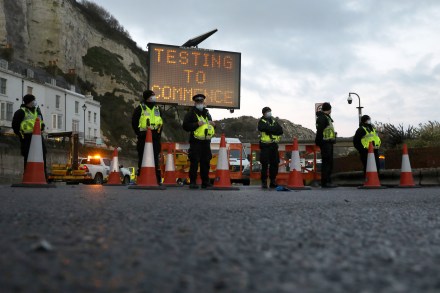
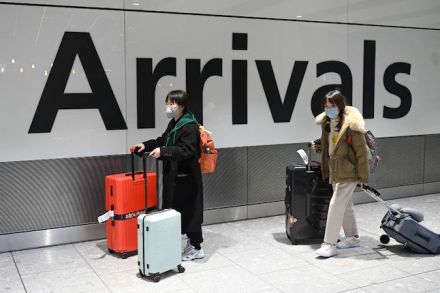
Anyone travelling from China to the UK will now be asked to present evidence of a negative Covid-19 test before they are allowed to enter the country. But what will this achieve and is this measure even necessary?  It’s often argued that these sorts of restrictions don’t work, and this is a reason the UK should not have impeded travel from China. But this depends entirely on where the bar for success is set. If the measures are intended to completely stop all infected individuals then they clearly won’t work. This kind of testing isn’t accurate enough to identify everyone who is infected and someone will always find a way around the rules.
Podcast special: Britain’s role in the global economic recovery?

From our UK edition

35 min listen

Covid 19 has been a crisis without borders. In a highly interconnected world, every country has felt the impacts of the pandemic, from supply chain disruption to low productivity and high inflationary pressures. Should the post-pandemic economic recovery be a global project? For decades, the UK has been a key player on the economic world stage but is this still relevant today at a time when the UK faces domestic financial challenges and global supply chains are decoupling? Or can the ripple effect of lending a hand to one economy, become a good investment for Britain's future?

Don’t underestimate the Omicron variant

From our UK edition

As the Omicron variant makes its way through the population of the UK, the Chief Medical Officer’s warning that we don’t know all that much about the variant, but ‘all the things we do know are bad’ was not what anyone wanted to hear this week. Unfortunately, Chris Whitty is right. The Omicron variant’s assault on the UK has been like a blitzkrieg so far, and it has left a trail of shock and confusion in its wake. It is no wonder that Sage have advised this week that more restrictions may now be needed to prevent a rapid rise in hospitalisations. There is still a lot we don’t know about Omicron, but we have been able to build up a partial picture of the variant.

Is Boris right to fear the Omicron variant?

From our UK edition

Boris Johnson announced a new raft of coronavirus measures on Saturday, after two cases of the Omicron variant were detected in the UK. Face masks will soon be made mandatory in shops and on public transport and  PCR tests compulsory for those travelling to the UK. These new restrictions were revealed less than half a week after health authorities in South Africa informed the World Health Organisation of the discovery of the new Covid-19 variant, designated B.1.1.529 and now re-named Omicron. First isolated on 9 November, on Saturday two cases of the virus were detected in Britain, in Essex and Nottinghamshire. Is Boris Johnson right to fear this new variant? In South Africa the appearance of the strain coincided with a steep increase in case numbers.

If tiers don’t work, expect a third wave in the new year

From our UK edition

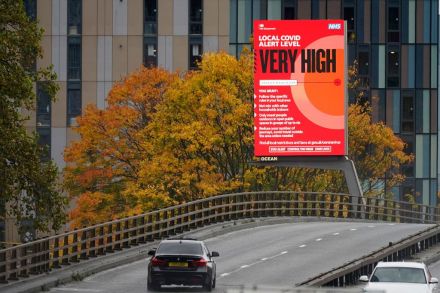
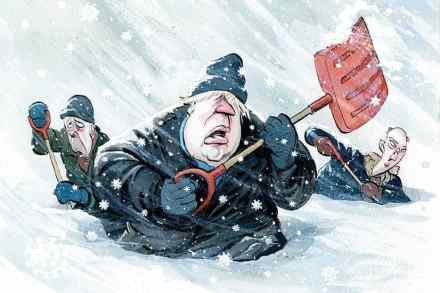
‘The difficulty is that we’re coming out of the tough autumn measures, out of the lockdown… with the incidence of the disease still pretty high,’ Boris Johnson explained on Friday. It is against this backdrop that he finds himself trying to sell tougher Covid rules as England emerges from the November lockdown. It is an especially difficult sell, of course, when an area has been placed in a higher tier than before the lockdown – even if, as in many instances, cases are now lower than when the tier system was first introduced. It understandably appears incoherent and arbitrary. The Prime Minister’s case is that he hates lockdowns too, but observing the Tier system properly is the quickest way to normality.

It’s time to prepare for winter Covid restrictions

From our UK edition

Earlier this week, the health secretary Sajid Javid said in a Downing Street press conference that the government was not yet ready or willing to activate its Covid ‘Plan B’. His announcement came after the Scientific Advisory Group for Emergencies (Sage) argued last week that Plan B measures – such as mandatory masks, working from home and vaccine passports – should be prepared for now to reduce the need for tougher restrictions in the winter. Both Sage and the health secretary will have been keeping a close eye on the number of Covid infections, hospitalisations and deaths, all of which have been rising steadily this month.

Christina Lamb, Simon Clarke and Hannah Moore

From our UK edition

21 min listen

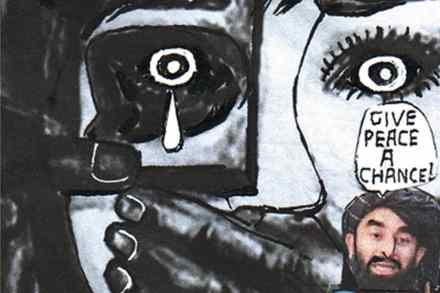
On this week's episode, Christina Lamb reads her letter from Kabul about the situation on the ground under the new Taliban control (00:56). Simon Clarke makes the case for Covid boosters (06:19). And Hannah Moore talks about the horrors of so-called 'American' sweet shops in the West End (15:18).

What Britain should learn from Israel about booster shots

From our UK edition

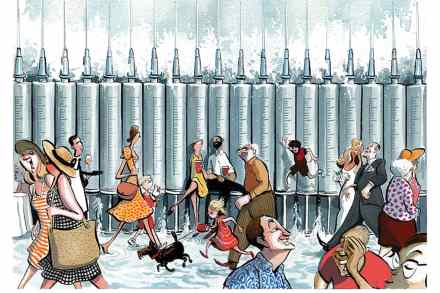
It’s hard to remember a time when politicians have so publicly put pressure on the Joint Committee on Vaccination and Immunisation. Even the vaccines minister, Nadhim Zahawi, said this week that the booster programme is his ‘absolute priority’ as it will ‘help us to transition the virus from pandemic to endemic status’. So why is the JCVI so against booster jabs in all but the rarest of cases? My understanding is that its thinking has three parts. First, that the UK has not experienced Israel’s waning immunity against infection because we have had a longer gap between doses.

We could be understating the ‘Kent’ Covid strain

From our UK edition

‘Our estimate which is that the risk of death increases by 30 per cent is itself uncertain. We think it could be anywhere between 10 per cent and 50 per cent according to our analyses,’ said Dr Nick Davies, the author of one of the studies referenced in Friday’s Downing Street press conference, during an interview on Radio 4. Between listening to the press conference last night and Dr Nick Davies, you could be forgiven for thinking that this latest development is all rather tentative and possibly merely a quirk of statistics that is - as yet - no cause for alarm.

The new variant: a note on the evidence

From our UK edition

Boris Johnson introduced a third lockdown last night after an assessment by Britain’s four chief medical officers that the NHS wouldn’t be able to cope within three weeks on present trends. ‘Cases are rising almost everywhere, in much of the country driven by the new, more transmissible, variant,’ the medical officers said in a statement. With Covid caseloads clearly rising in hospitals nationwide, the grounds for action are pretty clear. But how sure can we be that the new variant is to blame?  One question seems to be asked again and again: if the new Covid variant is much more transmissible, why isn’t it rising everywhere? Why just in London and the South East?

What the new strain means for our fight against Covid

From our UK edition

‘What’s going on in Swale?’, asked a health journalist who I often speak to. This was back in November. I responded that I didn’t know where Swale is, let alone what its problem was, although I guessed it was most likely something to do with Covid-19. But now, we’re all looking at places like Swale — and much of Kent — and wondering what’s going on.  Back in the summer, the UK government would put countries on the quarantine list when their infections hit 20 per 100,000 residents. In Swale, at the last count, it was 2,600 per 100,000 residents.

South Dakota’s failed Swedish-style Covid experiment

From our UK edition

Nothing much happens in South Dakota. It is a long way, in almost every sense, from the bright lights of New York, which was the epicentre of the spring coronavirus outbreak in North America. Now, however, the midwestern state, which was previously hailed for taking the ‘Swedish approach’ to coronavirus, is facing a virus rampaging out of control. So what went so badly wrong? And is there a lesson for the rest of us? When the pandemic first hit the US, the ‘Plains States’, including South Dakota, escaped relatively lightly. On 15 April, coronavirus daily diagnoses in South Dakota peaked at 181. The daily death count topped out on 6 May when five people passed away. This time around, however, South Dakota has not been so fortunate.

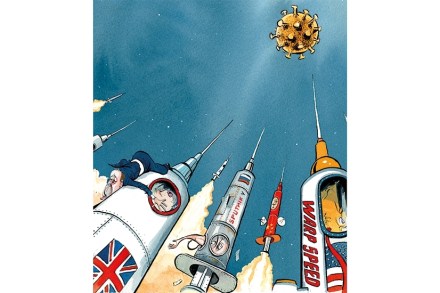
The questions we must ask about the Covid vaccine

From our UK edition

After a difficult nine months, we are naturally all sick of lockdowns and other Covid restrictions. Everyone misses parts of their pre-coronavirus lives, from seeing friends and family, to pubs and restaurants, to the theatre and concerts and, yes, even our workplaces. It was therefore no surprise that this week’s news of a vaccine breakthrough was widely applauded. It is human nature, after all, to cling on to things that give us hope. Hope that was encouraged by leading scientists such as Sir John Bell. After the Pfizer news broke, the Oxford professor was asked on BBC radio whether we would be returning to normal by spring. His response? ‘Yes, yes, yes.’ This was a When Harry Met Sally moment that proved to be music to the ears of millions of Britons.

The dangers of knee-jerk lockdown scepticism

From our UK edition

From the very start of the pandemic, modelling projections and empirical data have been twisted to suit different agendas. Fanatics on both sides of the debate have cherry-picked data — whether those demanding tougher restrictions or those on the other side who believe that the virus is harmless and that this is all big fuss over nothing. Cold, detached analysis was an early victim of Covid-19. And so it proved yet again after the Prime Minister’s press conference last Saturday, during which a number of projections were presented showing how the Covid-19 death toll could proceed in the coming weeks. A number of models were used to justify placing England into a second lockdown.

What lockdown sceptics get wrong about Sweden

From our UK edition

Should Britain return to a form of lockdown — the logical conclusion of a suppression strategy — or should we adopt a different approach, one that looks more like Sweden? Those in favour of a so-called ‘segmentation strategy’, where the vulnerable are shielded and the rest of us are allowed to continue with our lives unrestricted, often point to the Scandinavian country as an exemplar. It’s an alluring argument, certainly, but one that does not stand up to scrutiny. A sober look at Sweden, in fact, shows that it is far from the great success story some so desperately want it to be. Supporters of the Swedish approach would correctly point out that, compared to the UK, it has had fewer deaths per million than we have had.

What lockdown sceptics get wrong

From our UK edition

One of the more peculiar features of Covid is just how cleanly the crisis has split us down political lines. As a serving Tory councillor, you may assume that my views on masks, lockdown and the virus are predictable. But I’m also a microbiologist and I’m dismayed by the attitudes of some fellow travellers.  Pandemics, particularly ones involving dangerous viruses like this one, are not merely a question of personal freedom but also of collective responsibility. Of course I desperately want a return to normal life. To be frank, however, I do not think that’s going to happen any time soon. Why? Because the virus is simply too dangerous to be left unchecked.