Charles Parton

Charles Parton is a former UK diplomat who spent 22 years working in China. He is an associate fellow at the Royal United Services Institute and the Council on Geostrategy.

China spy scandal: ‘a masterclass of ineptitude’?

From our UK edition

13 min listen

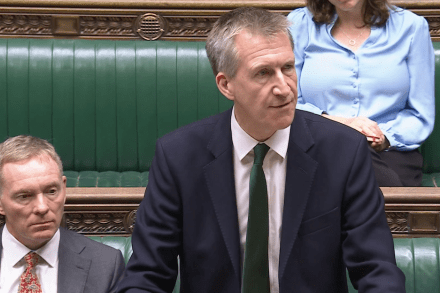
Tim Shipman and Charles Parton, China adviser at the Council on Geostrategy, join James Heale to discuss the ongoing fallout over the collapse of the Westminster spy case. Security minister Dan Jarvis answered an urgent question on the matter late on Monday in Parliament, stringently denying that the government played an active role in collapsing the case. But, as Charles and Tim stress, the case still doesn't add up. Is it as simple as the government not wanting to offend China? And is the deputy national security adviser being 'hung out to dry'? Produced by Patrick Gibbons.
The US and China are in more than a trade war

From our UK edition

Headlines on the current discord between the United States and China speak only of ‘trade war’. Negotiations in Geneva have led to a 90 day ‘truce’. If only the war were that limited. If only agreement on solving trade hostilities would return things to normal. But what is normal? Sadly, trade is just one aspect of a much broader war, in which neither side is contemplating a truce. The head of China’s BGI group, a former high ranking official, understands the reality better: ‘Many people talk about financial and trade wars, but the deadliest battle is the technology war. The technology war will ultimately determine the fate of both sides. Whether the US can defeat China or whether China can rise from adversity will depend on the technology war.

Why the new pope won’t be welcome in China

From our UK edition

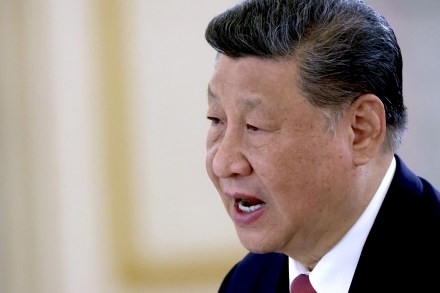
Choosing a new pope has more in common than you might expect with the Chinese Communist Party (CCP) congress's system for picking a new general secretary. Both processes are autocratic, secret, and rigid; they focus on the leader’s infallibility, and involve a lack of succession planning. And women don't get a look in. China's president Xi Jinping commands over 1.3 billion souls; so, too, will the new pope. He will also own the allegiance of an estimated 12 million Chinese. But how will he exercise his pastoral care and oversight? Pope Francis, who was laid to rest yesterday following his death on Monday, had a ‘thing’ about China. He was keen – desperate perhaps – to visit the country.

Xi Jinping’s alarming blueprint for the future

From our UK edition

I don’t know what books Rachel Reeves keeps at her bedside, but, since the Treasury still seems to be setting the UK’s China policy, I heartily recommend that she read the former Australian prime minister Kevin Rudd’s magnificent On Xi Jinping. Ideology and -isms may or may not be Reeves’s thing, but while the book is primarily a dissection of Xi’s Marxist, Leninist and nationalist ideas – ‘a form of intellectual biography’, in Rudd’s words – it is of practical value to policy-makers. In laying out how Xi is applying his ideology to China, Rudd provides not only a guide to understanding the Chinese Communist party’s path over the past decade but also a convincing look into the future.

What is China’s ‘United Front’ agenda?

From our UK edition

34 min listen

When Chinese spy scandals break, like the latest involving Prince Andrew and his Chinese business associate, one organisation often comes up – the United Front. Mao Zedong had dubbed it one of the Chinese Communist Party’s three ‘magic weapons’. So what is this mysterious ‘United Front’ and how important is it to advancing the CCP’s agenda? Joining the podcast is Charlie Parton, a former British diplomat in Beijing and a special advisor on China to the Foreign Affairs Select Committee. He is now chief advisor to the Council on Geostrategy’s China Observatory. ** Chinese Whispers is nominated in the Political Podcast Awards 2025.

The Harvard man who became Xi Jinping’s favourite academic

From our UK edition

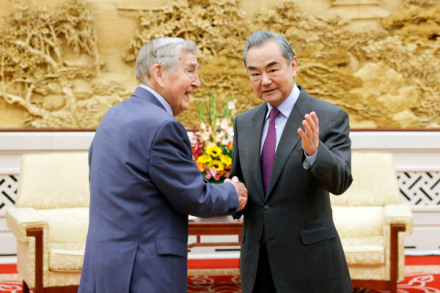
Xi Jinping is a busy man. He holds down three jobs. As General Secretary of the Chinese Communist party (CCP), he rules 1.4 billion people and disciplines 100 million party members; as Chairman of the Military Commission, he commands and reforms the world's largest army; and as president, he glad-hands a succession of Beijing-bound heads of states. In his spare time he has also authored ten books. So you can be sure that when he carves out time for a separate meeting with a hitherto unremarkable American academic, it is not without purpose. Graham Allison, in case you have not heard of him, is an historian with a chair at Harvard. He met with Xi Jinping and Chinese Foreign Minister Wang Yi as part of a delegation of American business executives earlier this year.

The thoughts of Chairman Xi – in digestible form

From our UK edition

While giving a talk on China I was asked an unusual question: ‘What is the one word you would use to describe China?’ By China we mean of course the Chinese Communist party (CCP) and, more specifically, Xi Jinping. My reply was: ‘Solipsistic.’ Xi wants China to lead the world, but to take very limited responsibility for solving the world’s problems Steve Tsang and Olivia Cheung, from the School of Oriental and African Studies, have produced a study in solipsism, and a mighty fine one. Xi and the CCP are solipsistic in the vulgar rather than true philosophical sense. They are supremely self-centred in their belief that the external world should exist or conduct itself only in so far as it reflects the CCP’s reality. Understanding Xi’s political thought is vital.

Could China spy on us through our electric cars?

From our UK edition

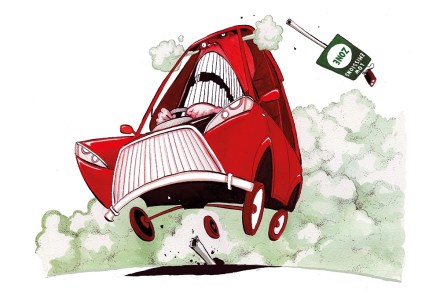
Ulez currently may be Westminster’s favourite talking point, but sharper MPs and ministers are more concerned about the emissions from the front of your car than the back: data, lots and lots of it.   Buried in the electronic control unit of every new electric car is a cellular internet of things module (CIM). The CIM is a vital component of the system which controls the sensors, cameras, audio, geolocation capability, engine and more. Connected to the internet like your mobile phone, it acts as the gateway for information to go in and out of a car. Manufacturers use that information to improve design and performance. They send back software improvements and updates.  Soon, perhaps the only answer will be to issue ministers with bicycles So why are ministers worried?

Road rage: the great motorist rebellion has begun

From our UK edition

38 min listen

This week:In his cover piece for the magazine Ross Clark writes about ‘the war on motorists'. He argues that the backlash against London Mayor Sadiq Khan’s expansion of Ulez is just the beginning, as motorists – and Labour MPs – prepare to revolt. He joins the podcast alongside Ben Clatworthy, transport correspondent at the Times, to discuss whether the Ulez expansion is just a money-grab. (01:11).  Also this week: In his piece for The Spectator, journalist Ian Williams compares both Labour and Conservative policy on China. He says that Labour is gearing up to take a much more hawkish stance on China. He is joined by Charles Parton, senior associate fellow at RUSI, who worked as a diplomat in China for over two decades.

Why China won’t invade Taiwan

From our UK edition

41 min listen

In much of the conversation surrounding China and Taiwan, the question of invasion seems to be a ‘when’ not an ‘if’. But is an invasion really so inevitable? No one knows for sure, of course, but there are good reasons to think that speculations of a war have been overblown. For one, the economic links between Taiwan and China mean that their respective interests are not so zero sum. For another, China may well be causing serious damage to itself through an invasion. Former diplomat Charles Parton has written for the Council on Geostrategy on why Xi Jinping would not take the risk of invading, and he joins the podcast. Also on the episode is Professor William Kirby at Harvard University, who explains the complicated trade links between China and Taiwan.

The next Chinese tech threat is already here

From our UK edition

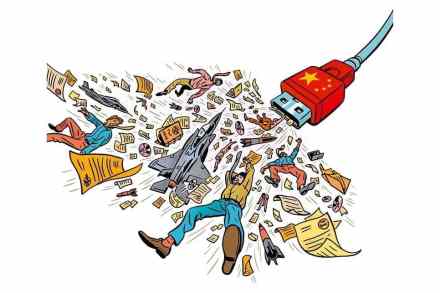
In recent years we’ve had fierce debates about the safety and security of Huawei, 5G, TikTok, semiconductors, ChatGPT and artificial intelligence. All of which may have given you technological indigestion. Let me add something even more threatening to the mix of the threat from China: the security of cellular (internet of things) modules.   Unlike the mythical urban rat, you really are never more than a few feet away from a cellular module. If semiconductors are the bricks with which the new industrial and lifestyle revolutions are being built, cellular modules are the doors and windows. They are small components embedded within equipment or devices which process software, have geolocation capability, e-sims to connect to the internet (in the manner of mobile phones) and much more.

Should Confucius Institutes be shut down?

From our UK edition

30 min listen

Should Confucius Institutes be shut down? There are hundreds of these centres across six continents, funded by the Ministry of Education, with the stated goal of public education on and cultural promotion of China. They offer classes on language, history and culture of China, and some would say they help to plug a crucial shortage of Chinese language skills in host countries, especially across the West.  And yet, these have become deeply controversial. Criticism of the institutes range from their CCP-sanctioned curriculum which do not include sensitive topics, to allegations of espionage and erosion of academic independence with Confucius Institutes as the core.

Is Xi losing control of China’s zero Covid protests?

From our UK edition

Tony Blair recently described the Chinese Communist Party (CCP)’s zero-Covid policy as 'completely irrational'. He is completely wrong. Within the context of the CCP’s interests, it makes sense. 'Completely political' would have been nearer the mark, but not a bull’s eye. When Covid first appeared, the CCP got it right. Lockdowns and restrictions meant the China largely escaped deaths and serious illness. Later the mistakes – or rather the inevitabilities of the system – kicked in. China’s home-produced vaccines were insufficiently effective, but the CCP refused to use foreign vaccines, even though they had been licensed for use within China. Partly, this was misplaced nationalistic pride.

Don’t read too much into Hu Jintao’s disappearance

From our UK edition

Since being helped out of the Great Hall of the People at the end of the 20th Party Congress, Hu Jintao has not been seen in public. Nor is he likely to be. Retired senior party officials rarely are. Apart from at congresses and big party or state occasions, such as the 100th anniversary of the founding of the party in July last year or the military parade on the 70th anniversary of the end of the second world war, they rarely emerge. The premature departure of Hu from the closing session of the congress has provoked much speculation.

Rishi’s mad dash

From our UK edition

47 min listen

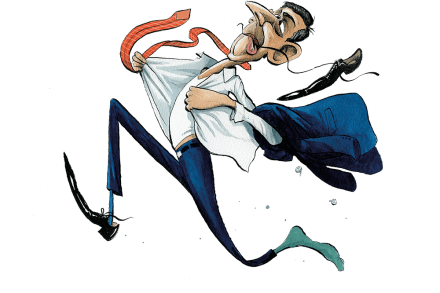
In this week’s episode:Can Rishi catch up?Katy Balls and Kate Andrews discuss Rishi Sunak’s mad dash to catch up with his rival, Liz Truss in the polls (0.55)Also this week:Is it time the UK severed ties with Chinese-made tech?Charles Parton argues this in the magazine this week. He is joined by Dr Alexi Drew, a consultant in emerging technologies and international relations (13.33)And finally: What’s not to love about country-pop music?Sam Kriss writes about this in the magazine. Joining him for the podcast is Rod Liddle, the associate editor at The Spectator (31.01)Hosted by William Moore.Produced by Natasha Feroze.Subscribe to The Spectator today and get a £20 Amazon gift voucher: spectator.

The China threat our politicians don’t seem to have noticed

From our UK edition

The Chinese Communist party can congratulate itself on another sign of its rise: for the first time it has become a factor in deciding the fate of British politics. During Monday’s televised leadership debates, Liz Truss and Rishi Sunak tried to appeal to Tory members by outdoing each other on their commitment to protect our national security, economic prosperity, data privacy and values from the CCP. They both referred to Chinese theft of our science and technology, but the problem is much, much wider than that. What is more serious is our blithe willingness to import Chinese control into the most sensitive areas of our economy and society. Neither aspiring prime minister mentioned the most crucial area – more crucial than 5G and Huawei.

The day I was tapped up by Chinese intelligence

From our UK edition

Nigel Inkster, a former director of MI6, has described China as an ‘intelligence state’. This was true even before the Chinese Communist party (CCP) passed laws that all individuals and organisations must help the security forces when asked. Chinese officials, party members and citizens have long been active across a broad front in advancing the interests of the CCP, seeking out political, military, scientific, technological and commercial information. Britain has to be wary of more than just the Ministry of State Security (MSS) — China’s secret police agency — or the military intelligence department.

How to counter China

From our UK edition

When another country does something to upset the Chinese Communist party, it gets accused of ‘a Cold War mentality’. This is psychological projection, in Freudian terms, a defence mechanism which projects onto others the negative aspects of one’s own self. But the CCP is right in a way: we should have more of a ‘Cold War mentality’ or at least a ‘values and systems war’ mentality. China is not the Soviet Union. We never co-operated with the USSR on trade and investment or science and technology. We do with China. Indeed the CCP sees itself as fighting a ‘values and systems war’.

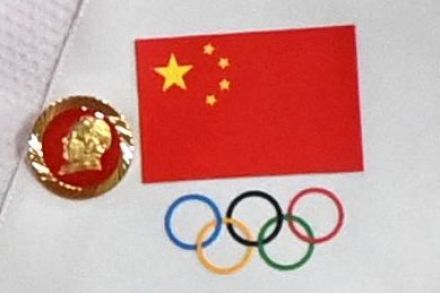
Cult of Mao: Will the Olympics punish China?

From our UK edition

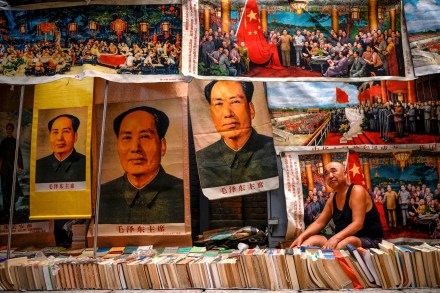
As one of the embassy drivers I met in Beijing saw it, ferrying diplomats to meetings was secondary to his responsibility of lecturing us on China’s true place in the world. A conversational bully, to Mr Wang listening was a sign of weakness. Crossing Tiananmen with its vast picture of Chairman Mao, I interrupted his flow to ask his opinion of the Great Helmsman. ‘Great man. He made China great.’ ‘But,’ I asked, ‘what about the fact that he caused the avoidable deaths of a minimum of 36 million Chinese, the figure reached by a Chinese Communist party (CCP) member and official news agency journalist after years of research?’ ‘No, it was not so many.’ We shall see what action the IOC takes against the Chinese cyclists.

What China wants from Britain

From our UK edition

What are we to do about China? To turn a phrase beloved by the Chinese Communist party (CCP) on its head, Beijing is increasingly ‘interfering in our internal affairs’. Yet if you hoped to answer that question by reading the recent integrated review of defence and foreign policy, the most you would find is that China is a ‘systemic competitor’. But recognition is not a strategy; at best, the review indulged in ambiguity, or perhaps obfuscation. The Prime Minister wants good relations with China. Who doesn’t? Certainly, a new Cold War would be disastrous, for us and for the CCP.