Features

How Thérèse Coffey plans to help millions back to work

If you haven’t heard of Thérèse Coffey, then this will be — to her — a sign that she has been doing something right.  As Work and Pensions Secretary she has had to sign people on to benefits faster than anyone who has held the position before. If this had gone wrong during lockdown, she would be as infamous as Gavin Williamson. But the system, Universal Credit, managed 1.5 million claims in four weeks. Many things have gone wrong for the government over the past few months, but the welfare system has (so far) held up. Coffey has kept her anonymity.  ‘My main task has been making sure that DWP runs effectively. Being in the news would probably be a sign that it wasn’t,’ she says over lunch in The Spectator’s boardroom.

The truth about Burma’s ‘imprisoned princess’

As Perseus was flying along the coast on his winged horse Pegasus, he spotted Andromeda tied to a rock as a sacrifice to Poseidon’s sea monster Cetus. It was love at first sight. Perseus slew Cetus and married Andromeda. Thus began the damsel-in-distress archetype that has been a mainstay of western culture ever since. Riffs on the archetype have been used by Chaucer, Shakespeare, Dickens and Wagner. Perhaps it was these examples that inspired the global liberal establishment (the BBC, Hollywood and the Nobel Peace Prize committee among others) to create, in the 1990s, the mythical version of Aung San Suu Kyi, Burma’s ‘imprisoned princess’, the saintly spiritual heir to Mahatma Gandhi, as Time magazine described her.

Spare me the cult of Sally Rooney

I have invented a new literary category, chic lit, to describe all the books written by elite females (Lena Dunham, Caitlin Moran, Elizabeth Day, Dolly Alderton, Sally Rooney, ad infinitum) for elite females. If you’re not one and can’t stand any of them, god help you. Their books will be forced on you anyway. Publishers can’t hear you scream. There is no metric for books kicked around living rooms or dumped in charity shops. Sally Rooney’s Normal People, for instance, is the worst novel I’ve ever finished. I had to. I was that appalled.

Divided nation: will Covid rules tear the country apart?

‘From this evening, I must give the British people a very simple instruction — you must stay at home,’ Boris Johnson declared on 23 March. At the beginning of the pandemic, when infection levels first began to rise, the country was all in it together. The prescription was a national one, and the Prime Minister could speak to the nation as one. Though infection levels have begun to surge again, the restrictions are now specific and local. The PM can no longer address the country as a whole, and this poses a problem for him. Last time, at least, there could be no claims that the Tories were favouring one particular area at the expense of the rest.

The fall of Golden Dawn

Next week, the biggest Nazi-related trial since Nuremberg will come to a close. Following the murder of Greek musician Pavlos Fyssas by a member of the neo-Nazi party Golden Dawn seven years ago, the entire leadership and dozens of members were charged under counter-terrorism legislation with running an organised crime syndicate. The case file, which runs at more than 3,000 pages, includes charges of murder, arson, possession of guns and explosives, and even trafficking. A combination of the famously sclerotic Greek justice system and circumstance held up the trial for years. The pandemic and the lockdown that followed it pushed the verdict back even further. But now, at last, it’s nearly over. The party’s troubles extend beyond the courts.

American meltdown: a democratic disaster

Tuesday night’s debate between President Donald Trump and Joe Biden was a hopeless mess — a national embarrassment. For 90 minutes, two cantankerous and incoherent old men ignored the rules, shouted over each other and ruined the event. Trump insulted Biden’s intelligence and his children. Biden told Trump to ‘shut up’ and called him ‘a clown’. The debate may prove useful in one sense, however — as a foretaste of the democratic meltdown that is coming America’s way after the election on 3 November. Again, the rules of the contest will not be accepted, each side will accuse the other of cheating and the whole occasion will turn into a disastrous farce.

Let men have their boys’ clubs

Taken to the Garrick Club one evening, I was surprised when a mouse ran across the carpet. I squeaked and pulled my legs up. Not a murmur from the other armchairs. My host leaned over. ‘No one minds the mice,’ he explained. ‘It’s the women they don’t want.’ It made me laugh then and it makes me laugh now. I thought fondly of this story when I read in the paper that Emily Bendell, founder of the lingerie brand Bluebella, had instructed lawyers to seek an injunction preventing the Garrick from ‘continuing to operate its discriminatory policy’ of excluding women would-be members. As it happens, I don’t mind being there on sufferance between the allotted hours and in the permitted rooms. Boys will be boys, gentlemen will be gentlemen.

At last, the Conservatives are showing some fight in the culture war

A beautiful noise rang out last week in the wake of the news that the government is considering Charles Moore to become the new chairman of the BBC and Paul Dacre to be the head of the broadcasting watchdog Ofcom. The noise was the sound of the British left wailing that toys they thought were theirs alone might now (under a Conservative government) finally go to identifiable conservatives. The former editor of the Guardian Alan Rusbridger shrieked that ‘this is what an oligarchy looks like’. This and similar tweets were presumably sent from the lodgings of the Oxford college that Rusbridger was made principal of five years ago. Others who screamed themselves sick included BBC employees who briefed that Moore’s appointment ‘would shatter morale. People will leave.

BBC sports coverage is becoming unwatchable

Back when I was a kid, just before the internet flattened the world, I spent my Saturday afternoons listening to live football on the radio. The signal came and went, voices bobbed up above the waves of static and sank back down into their crackly depths, but the experience was always magical. I clung to the commentators’ every word and watched the ball dance from player to player in my mind. Probably the most memorable voice was the Northern Irish snarl of Alan Green. Anyone familiar with BBC Radio 5 Live will know his style: irate and indignant, liable to explode at any moment about some mistimed pass or bad tackle — but always, always entertaining. Green has worked for 5 Live for more than 45 years, but is now being shuffled out by the BBC.

The myth of the ‘stolen country’

Last month, in the middle of the Covid panic, a group of first-year university students at the University of Connecticut were welcomed to their campus via a series of online ‘events’. At one event, students were directed to download an app for their phones. The app allowed students to input their home address, and it would piously inform them from which group of Native Americans their home had been ‘stolen’. ​We all know the interpretation of history on which this app is based. The United States was founded by a monumental act of genocide, accompanied by larceny on the grandest scale. Animated by racism and a sense of civilisational superiority, Columbus and his ilk sailed to the New World.

A murderer among us: I was Dennis Nilsen’s boss

How would you know if one of your colleagues was a murderer? When police announced the man they’d arrested for multiple horrific murders was Dennis Nilsen, many of his former colleagues — including me — were amazed, but perhaps not completely incredulous. Des worked with me at the Hotel and Catering Jobcentre in 1980 and he was unquestionably odd. My wife recalled him saying in the office one day: ‘You know it would be really easy to pick up some rootless young man in a bar and knock them off. Who’d notice? Who’d care?’ For his colleagues it was just another rant, a weird take on his continuing critique of Thatcher’s Britain. ‘Oh shut up, Des!’, they no doubt thought.

Closing time: the Tory brawl over Covid rules

‘The mood of the parliamentary party has noticeably worsened in the past five days,’ one senior Conservative backbencher says. He’s not talking about Brexit — these days, the majority of Tory MPs continue to back Boris Johnson’s hardball approach — but about Covid. No. 10 favours a pre-emption strategy when it comes to the pandemic. They want to clamp down on the virus long before it has a chance to get out of control. ‘Go tight, go early,’ as one Johnson ally puts it. But that approach is triggering considerable resistance among Tory MPs. Broadly, they believe that the government should stick to its previous policy of trying to keep the virus within the capacity of the health service to deal with it.

Boris’s Dunkirk moment

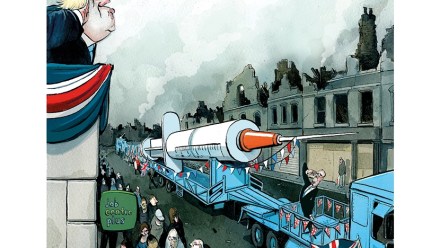
It’s hard to deny that Boris Johnson’s government has so far had a ‘bad war’ against the pandemic. Our death toll is high compared with other countries and our economy is in worse shape. We face rising cases, increased hospital admissions and more restrictions. It’s all so bleak; yet that is why now is precisely the moment for Boris to imitate his great hero, Winston Churchill. In the coming months, Britain can play as pivotal a role in a global victory against the virus as we did in the second world war. The war analogies only go so far, of course. We are fighting a virus, not an evil ideology. But there are similarities. Like the second world war, Covid has caused UK government debt to exceed GDP.

The true cost of coronavirus on our economy

When future historians look back on 21st-century mortality statistics, they will struggle to find anything out of the ordinary in Britain in 2020. When they look at the economic data they could be forgiven for thinking we were hit by an asteroid. The Office for Budget Responsibility predicts a fall in GDP of around 12 per cent in 2020, the equivalent of having the 2008-09 recession twice in one year. The second quarter saw GDP fall by 20.4 per cent, breaking the record set during the Great Frost of 1709. The economy rallied by 6.6 per cent in July — which sounds impressive until you consider that it only took the economy back to where it was in the spring of 2013.

Where’s Boris?

At the end of last week, the Prime Minister invited Tory MPs to a massive conference call, a kind of digital fireside chat to lift their spirits. It was a disaster. First the MPs were astonished to learn that he wasn’t taking questions; then his connection failed halfway through — at which point the callers, who had been ‘muted’, became ‘unmuted’ and started talking loudly and all at once. One of them, Michael Fabricant, started singing ‘Rule Britannia’. When the call came to an end, the MPs were all left wondering the same thing. What’s happened to Boris? Where is the man we thought we voted for? Physically, Boris Johnson is still around.

How many care homes are to blame for Covid deaths?

Cases of coronavirus are on the rise again inside care homes. Last week, Public Health England reported that 35 care homes had ‘infection incidents’ linked to Covid. And an internal Department of Health memo suggested that ‘satellite tests’ — which mainly take place in care homes — were picking up an estimated 1,100 new cases every day. This is extremely worrying for the most vulnerable people in our society — almost half of Covid deaths in the UK, more than 19,000, have been in care homes — but especially worrying when you look at the care regulatory system presided over by the Care Quality Commission (CQC).

We should give Trump credit for his foreign policy successes

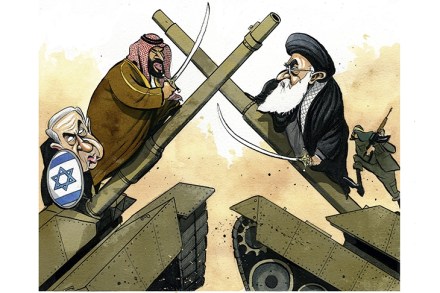
Various luminaries from the Republican party have begun turning up on social media, on television and in newspapers urging Americans to vote for the Democratic nominee Joe Biden. One group of foreign policy mandarins recently signed a letter declaring that President Trump has ‘gravely damaged America’s role as a world leader’ by aligning himself with dictators, dishonouring the rule of law, imperilling national security and more. I have no involvement with the Trump administration or campaign, and never have. But I beg to differ. Consider the scene on the White House’s south lawn this week, where Trump presided over a historic deal between Israel, the UAE and Bahrain. The Saudis might soon follow suit.

Why the Japanese love wearing facemasks

On any given street in Tokyo today, almost everyone will be wearing a mask. The Covid-19 death toll in Japan is around 1,500 in a country of 126 million people. This is dramatically less than the UK’s, yet everyone still covers up, and there are hardly any anti-mask movements of the sort that have become popular in Europe and America. Why are the Japanese so happy to wear masks, when it makes some people from other nationalities so cross? The first reason is the most obvious: to avoid spreading germs. Not catching germs, mind — spreading germs. It is considered bad manners in Japan to have a cold or a cough without trying to contain the bacteria or viruses being discharged. Of course, Japanese people, like anyone else, also wish to avoid catching germs.