Features

Mark Drakeford has made Wales a laughing stock

Imagine a country where you’re allowed to buy vodka and cigarettes but not baby clothes, because they are ‘non-essential’. A place where supermarkets can sell you socks but, mysteriously, neither tights nor lightbulbs. All right, you may plunge to your death down a dimly lit staircase in Pontarddulais, but at least you didn’t get that terrible Covid. Often the butt of ignorant jokes, my homeland Wales is now quite rightly a laughing stock. Supermarkets have been allowed to remain open during the 17-day ‘firebreak’ — or Llockdown as it could more honestly be described.

The magic of cinema isn’t just about film

Cinema is fading. Borat went straight to Amazon Prime, where he is smaller, and Bond 25 — no time to die eh? — is delayed until next year. In response Cineworld has ‘temporarily’ closed its cinemas and the smaller film houses are struggling. Millennials and Generation Z don’t mind, but I am no such creature: I was an usherette at Options in Kingston-upon-Thames in 1990. Do they know that cinema remains, despite its best efforts, the most inspiring kind of mass culture? Dreams mean nothing to the gilded and interesting: they do not need them. But I, an ordinary suburban child, did need cinema, specifically Options, which is now an Odeon, showing Ooops! The Adventure Continues… With product such as this, you could argue cinema deserves to fail.

Winston Churchill’s remarkable love of science

Churchill was the first British prime minister to appoint a scientific adviser, as early as the 1940s. He had regular meetings with scientists such as Bernard Lovell, the father of radioastronomy, and loved talking with them. He promoted, with public funds research, telescopes and the laboratories where some of the most significant developments of the postwar period first came to light, from molecular genetics to crystallography using X-rays. During the war itself, the decisive British support for research, encouraged by him, led to the development of radar and cryptography, and played a crucial role in the success of military operations. Churchill himself had a scientific grounding that was hardly extensive but was nevertheless sound.

The fundamental flaws of NHS Test and Trace

The NHS Test, Trace and Isolate programme — which was meant to be one of our main weapons in the fight against a second Covid-19 peak — has not had a good few weeks. First, when schools went back last month, an inevitable rush for tests was not met with sufficient supply. It then emerged that 16,000 people who had tested positive had failed to be transferred to the tracing system. Not a great start. Then, the government’s Scientific Advisory Group for Emergencies (Sage), for long an advocate, quietly disowned the programme, saying it is having marginal impact. Are these just teething problems as the programme gets scaled up?

Kemi Badenoch: The problem with critical race theory

Even now, months after the event, Labour MPs have not forgiven Kemi Badenoch for saying that Britain is one of the best countries in the world in which to be black. It was during the Black Lives Matter protests and many politicians — including Sir Keir Starmer — were ‘taking the knee’ to show fealty to its cause. Badenoch took a different view, seeing within all this a pernicious ideology that portrays blackness as victimhood and whiteness as oppression. In parliament this week, she went further: this, she said, is ‘critical race theory’ — a new enemy for the Tory party and, as equalities minister, one for her to fight.

Europe’s long Covid: things aren’t getting better any time soon

China is now suffering only mild symptoms from the global pandemic. It is Europe that is stuck with the dreaded long Covid. The Chinese economy has rebounded and its exports are going through the roof, as it sells medical equipment to a world devastated by the pandemic it covered up. The virus originated in Wuhan, yet China has avoided much of the pain, despite how slow Beijing was to admit to the initial outbreak. But eurozone economies were a tenth smaller this spring than at the start of the year. Only a few weeks ago, it had seemed that Britain — and Europe — was on a steady path to recovery. The UK economy seemed to be bouncing back. This stood to reason: we have significantly more control over Covid-19 than we did in March.

The National Archives are making historians history

The next time you settle down in the evening to enjoy the latest work by your favourite historian, treasure it, because it may be their last for a while. This is for the simple reason that historians are effectively being denied access to one of the most essential tools of their trade — the National Archives. For many, this non-ministerial government department may just be an ugly slab of 1970s concrete that sits on the Thames in Kew, but it is actually nothing less than the nation’s memory — for it is here that millions of documents produced by the British state during the past thousand years are held.

Xi’s world: Covid has accelerated China’s rise

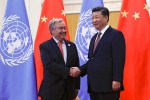
Back in February, the Chinese state appeared to be in trouble. A terrifying virus had infected thousands of people and the country’s social media exploded in anger against the authorities faster than Chinese censors could scrub away the critical comments. Like governments elsewhere, the Chinese Communist Party (CCP) turned to the emergency analogy of choice, the second world war. Channelling Mao Zedong’s guerrilla campaign against the Japanese in the 1930s, state media declared that China was fighting a ‘people’s war’ against the virus. As in that earlier war, China’s conflict with the virus has shifted from a defiant retreat to a declaration of victory. Nor is this just bluster.

Covid has become the go-to excuse for shoddy service

When we were hit by Britain’s biggest crisis since the war, some people behaved like heroes, laying their lives down to fight coronavirus. Others made their excuses, put their feet up and had a good long six-month snooze. My favourite Covid excuse came from Eurostar, which declared in August that, ‘As a result of coronavirus, we are only able to offer wifi in our Standard Premier and Business Premier carriages’. Wireless broadband was duly disabled in its standard-class coaches — until, besieged by complaints, the company conducted a full reverse--ferret operation and turned the wifi back on. Again and again since the virus struck, companies and institutions, big and small, have pounced on Covid as a wonderful excuse to be lazy — or ruthless.

The terror of choosing the wrong email sign off

Just now, I wrote an email and I couldn’t for the life of me think how to sign it off. ‘Kind regards’, the default setting for most messages, felt a bit too formal, given I am on friendly terms with the recipient; he’s older than me and a priest. ‘Yours ever’ seems forward. ‘Best wishes’ is fine for strangers but may be stilted for someone you know quite well. ‘M’, my most frequent sign-off, would look downright rude. An ‘X’ was out of the question. So plain ‘Melanie’ it was. But I was left wondering which of the range of options I should have gone for, each suggestive of a slight difference on the register from intimacy to formality.

Can Macron stem the tide of Islamism in France?

Just over a week ago, Emanuel Macron said he wanted to end ‘Islamist separatism’ in France because a minority of the country’s estimated six million Muslims risk forming a ‘counter-society’. On Friday, we saw yet another example of this when a  history teacher was decapitated in the street on his way home in a Paris suburb. Samuel Paty had discussed the free speech in the classroom and shown cartoons of Mohammed. Some parents had protested, leading to a wider fuss - and, eventually, his murder. M Paty was murdered, Macron said, ‘because he taught the freedom of expression, the freedom to believe or not believe.’ The president is now positioning himself as the defender of French values, determined to drain the Islamist swamp.

Why I called Michael Gove to ask for some dosh for the teenage cancer trust

Is locking down again the right remedy for Britain, or will it only add to this country’s suffering in the long-term? It’s certainly been a disaster for many British charities — one report earlier this year estimated that there would be a £12 billion black hole in funding. And it’s been catastrophic for the charity I support: the Teenage Cancer Trust, which provides bespoke care for ill teenagers. An awful lot of people have heard of the Teenage Cancer Trust — but there’s something about teenagers that means they don’t pull at people’s heartstrings the same way that children do, so raising money is that bit more difficult. You could say that teenagers don’t have the ‘Bambi effect’.

Why this lifelong Republican has to vote for Biden

For as long as I was old enough to think about politics, I have been a Republican. When my dad told me, aged six, that Bill Clinton had beaten Bob Dole, I’m told I cried. I don’t remember this, but do have vivid memories of running around St Andrews in my first year at university in a handmade McCain-Palin T-shirt with ‘NO-bama’ sketched in sharpie on the back. I graduated into an internship on Mitt Romney’s campaign and when I moved to London I became a spokesman for Republicans Overseas. Never in my wildest dreams would I have imagined the first time I voted Democrat would be to put Barack Obama’s vice president in the Oval Office. Yet I’m voting for Joe Biden and Kamala Harris.

If Biden wins, who will govern?

Joe Biden started spouting nonsense about his background again this week. Trying to sound all man of the people, he told a rally in Ohio that he would be the first president ‘in 80 or 90 years’ who did not attend one of those fancy Ivy League schools. Well no, Joe — Reagan didn’t go to an Ivy, nor did Carter, Nixon, Johnson, Eisenhower, Truman or Hoover. Joe also likes to claim that he is ‘the first in his family to go to college’. It’s a line he famously pilfered in 1987 from a Neil Kinnock speech. It also happens to be untrue. Three decades ago, people cared when Biden lied. Now nobody cares. It’s hard to oppose, let alone revile, a man who no longer seems to have any idea of what he is saying.

Only a ‘good’ Brexit can stop Scottish independence

Victimhood has always been the core of nationalism. We are oppressed by Them: if We were free, our problems would be solved. This has been the lure of nationalism, and the reason why it is invariably disappointing once achieved. Scottish nationalists have their own myth of victimhood, but it has to go way back into the mists of time: to William Wallace (died 1305), Robert the Bruce (died 1329) and the Declaration of Arbroath (1320). More recent and relevant history does not so easily fit the victimhood bill. After all, the Stuarts had their eyes on the throne of England at least as much as the Tudors fancied theirs. Mary Queen of Scots was willing to assassinate Elizabeth to get it. Her son James actually succeeded. The Scots muscled their way into English politics during the Civil War.

All these lockdown puppies come at a price

‘Book H in for a colonoscopy at a private clinic,’ begins one entry in Sasha Swire’s enjoyable diaries about her husband (which she should have called What Hugo Did During Term-Time.) She accompanies him to his appointment — whether for juicy material or moral support, we are not told — and relates how the bored consultant bangs on in detail, not about her hubby’s bum, but about the time his pointer swallowed a budgie. ‘As for their fees, simply extortionate!’ the expensive consultant whines in conclusion of a ‘violent diatribe’ against our world-beating veterinarian profession. At this flagrant pot and kettling, Lady Swire flares up: ‘It’s a racket — not unlike your game.

How to stop trawling from trashing the North Sea

Recently Greenpeace dropped a boatload of granite boulders on to Dogger Bank, a permanent threat to any boat that attempts to drag a trawl net across the sandy sea-bottom. One of the biggest boulders had my name painted on it, because Greenpeace asked and I said yes. And in saying yes, I crossed a line that I have never crossed before in 40 years of writing about the environment. I joined the activists, in I hope a measured way, because it’s so very important to give the North Sea a chance to revive itself. Dogger Bank is the ecological heart of the North Sea and it played a large part in the growth of civilisation in northern Europe.

Local lockdowns have failed the north

The announcement of the ‘Rule of Six’ policy last month was met with much furore – in the south of England. Those of us in the north will have thought: lucky old them. To have a dinner for six is a liberty that has been denied to us for months now. We had a meal booked with friends in April which had to be rearranged for August because of the lockdown. The rearranged meal had to be cancelled in the end because it was for six of us: we could not (and still cannot) meet anyone from different houses. I wonder how well this is appreciated in the south. I live outside Oldham where we been subject to the strict lockdown measures since 30 July.