Features

There’s no one more obsessive than Sherlock Holmes fans. And I should know

There is no better time to read a Sherlock Holmes story than a winter evening. As the rain lashes against the windows and the fog descends, we can imagine ourselves sitting companionably with the great detective and the good doctor around the Baker Street hearth, waiting for the step of a visitor upon the stair. Unfortunately, our 21st-century climate rarely cooperates. The rainstorm arrives when we’re far from a hearth, fighting with an umbrella that turns inside-out at the first breath of wind. And when were you last enveloped in a London fog? The savagery of the elements beating down on 221b seems to belong to another world.

Bring back the album

Usually when my tweenage sons ask about relics from my 1990s adolescence – ‘What’s a landline?’ ‘What’s a phone book?’ – we’ll have a good laugh about these obsolete artefacts of the not-so-distant past. But last year when my ten-year-old asked about ‘Immigrant Song’, which he’d heard on the soundtrack to a Marvel movie, and I replied, ‘Oh, I think it’s on the third Led Zeppelin album’, his response left me winded: ‘What’s an album?’ What’s an album? The horror! How had this abject failure of parenting happened? I’ve raised my kids in as analogue a household as possible, with piles of books, newspapers and magazines on every surface. I’ve limited screen time and kept them away from smartphones.

The ‘Crewkerne Man’ is reviving political satire for the AI age

You’ve probably seen the videos. Kemi Badenoch delivering her Budget response in the form of a rap to a sobbing Rachel Reeves. Keir Starmer as a McDonald’s drive-thru worker. David Lammy as a Spice Girl in a tight dress. Reeves (again) as the Grand High Witch from The Witches. Behind the videos is one man. He runs the Crewkerne Gazette, an online publisher of viral political videos made with artificial intelligence. The ‘Crewkerne Man’ would not give me his name when we met for lunch in Somerset last week.

An apology to Hope Not Hate and Harry Shukman

In August, The Spectator began to investigate allegations that Harry Shukman, a 33-year-old freelance journalist, had used a fake British passport as part of a two-year undercover investigation into the far-right in Britain which was sponsored by Hope Not Hate. We published an article about this in our 6 September issue titled: ‘Dirty tricks: the sinister tactics of Hope Not Hate.’ As a result of correspondence from their lawyers, we now know the passport was not ‘fake’ at all: the true story is even more interesting.

Why British diplomacy needs the royals

Watching David Dimbleby watching the royal family, I am instantly reminded of the BBC’s other royal David. It is pure Attenborough as he examines the exotic plumage and rituals of rex Windsorianus in its natural habitat. In this week’s first episode of What’s the Monarchy For?, a three-part study of the sovereign for BBC1, Dimbleby examines royal power, engagingly prodding and poking fun at both sides. However, it ends as it starts, with our host still scratching his head. The monarchy is the first thing much of the world thinks about when it thinks about Britain Perhaps we will have an answer by the end of the final episode.

How I bonded with Tom Stoppard over the classics

Many years ago, and well retired, I was working in my study when the phone rang and a voice said: ‘This is Tom Stoppard. David West put me on to you.’ West was professor of Latin at Newcastle University and Tom called him when he had queries about Latin. But he had a question about the ancient Greeks which David could not answer, so he suggested Tom try me. I have no memory of what the question was, but my answer must at least have satisfied him because he continued to throw the odd leg-break my way. To give some idea of his range of interests, on one occasion he became interested in the Greek perfect tense. He had done Latin and some Greek at his school in Yorkshire.

Labour is now the party of welfare, not work

Keir Starmer and Rachel Reeves have gone into bunker mode. The pair – whose political fortunes are so tightly bound – have been forced all week to defend the Chancellor’s claims at last week’s Budget that there is a black hole in the country’s finances. Mendacity soon gave way to something closer to bewilderment. Neither can grasp why they are being called out for their omissions and dishonest briefings – always more fiction than fiscal – about the state of the economy. Their new argument is this: once you factor in the Budget’s own measures – welfare increases, the U-turn on winter fuel payments and the desire to increase headroom – a hole did indeed appear. They insist they had no choice.

Nick Thomas-Symonds: ‘The Brexit architects essentially ran away’

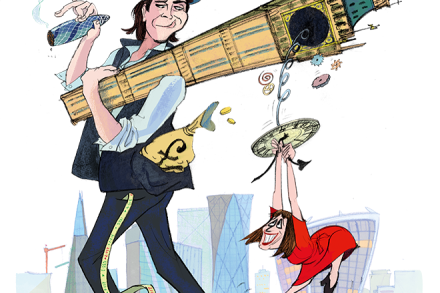
With his owlish expression and affable manner, Nick Thomas-Symonds looks more like the academic that he was, rather than the political bomb disposal expert he has become. Brexit is the greatest political issue for a generation, yet Keir Starmer has chosen to put this softly spoken Welshman in charge of defusing it. The Cabinet Office minister, responsible for post-Brexit negotiations with the EU, is following in the footsteps of Olly Robbins and David Frost, but his lack of public notoriety says much about how things have changed as we approach the tenth anniversary next year of the vote to Leave.

My life as a writer

It was roughly 55 years ago, at the tail end of the 1960s, that I took the monumental decision to become a writer. It wasn’t exactly an agonising one. By then I’d been on the European tennis circuit for a decade, and was kaput. Joining the circuit at 19, I travelled non-stop seeing the world. I was never tired or hungover no matter how much I partied – and I partied relentlessly. And, needless to say, there were constant thump-thumps in the heart, as at every opportunity I pursued beautiful women. Right out of the box, I found writing easy. Well, it was not exactly writing; copying is the better word I had a great advantage in this regard. As one of the worst players on the circuit, I was usually free to pursue the fairer sex by the second day of the tournament.

The art of owning up

Though Rebecca Culley is obviously a wrong ’un – having stolen £90,000 from her dear old gramps while pretending to care for him and only spend a minimum of his cash on ‘bits and bobs’ – I couldn’t help feeling a flash of admiration for her. When she was caught bang to rights, she diagnosed herself as a ‘spoilt brat’. At last, a person with lousy personality traits – in this case acquisitiveness, laziness and dishonesty – has refused to reach for some bogus medical synonym to justify their behaviour and has used words which all of us can read and think: ‘Yep, sounds about right.

Bring back the Budget tipple!

Of all Gordon Brown’s mistakes, perhaps the most sobering was his decision to end the tradition of drinking at the despatch box on Budget day. Commons convention holds that alcohol in the chamber is forbidden – with the sole exception of the chancellor when making his or her big speech. Rachel Reeves is known to like an Aperol spritz, though sadly not enough for her to restore this great custom. But we wanted to do our bit, so in protest at this abstemiousness we set ourselves a challenge: try every chancellor’s drink for which records are available, all in one sitting.  The tradition of the ‘Budget tipple’ seems to have been popularised in the 1850s, with Benjamin Disraeli. ‘Dizzy’ favoured a simple brandy and water – good for keeping one alert, warm and alive.

Marriage is the real rebellion

Jonathan Swift had a suitably unromantic attitude to holy matrimony. Once, when sheltering under a tree during a storm near Lichfield, he was asked to marry a heavily pregnant bride to a rather guilty-looking groom. Asked to provide evidence that he had performed the shotgun wedding, Swift found a piece of paper and wrote: Under an oak, in stormy weather,I joined this rogue and whore together;And none but he who rules the thunderCan put this rogue and whore asunder. Despite his cynicism, even Dean Swift would lament the marginalisation of one of our foundational institutions. Marriage is undergoing a seemingly inexorable decline. In the 1970s, almost three quarters of the adult population were married.

The path to peace in Ukraine will be tortuous

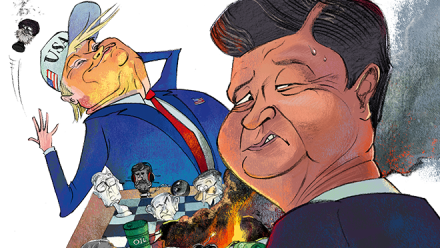
In order to impose peace terms, you first need to win the war. That fundamental principle seems, for the moment, to elude Ukraine’s European allies. Donald Trump, on the other hand, has taken the more pragmatic – some would say more cynical – view that Ukraine will never defeat Russia and therefore needs to make the best of a bad lot. Trump’s strategy for peace in Ukraine has been to browbeat Volodymyr Zelensky into approving a deal acceptable to Vladimir Putin. In fairness, Trump has also gone some way to putting the squeeze on the Kremlin too, by sanctioning the oil giants Rosneft and Lukoil, authorising the Ukrainians to use US--provided long-range weapons against Russian targets, and threatening to provide Kyiv with Tomahawk cruise missiles.

Are you too cool for marriage?

The term ‘spinster’ doesn’t seem to scare young women like it once might have. In fact, it is rarely heard nowadays. Instead, women are declaring themselves ‘alpha singles’ and eschewing dating altogether. Influencers are keeping their relationships quiet, for fear that simply posting photos of a new amour can lead to an exodus of followers. Vogue has declared boyfriends to be unfashionable. Women, it seems, are swapping engagement rings for solo travel, matcha lattes and nights spent at home with an LED face mask. Is marriage suddenly uncool? There are certainly plenty of women pushing this idea. Elle McNamara, a beauty influencer who goes by the name ‘Bambi Does Beauty’, posts advice videos on Instagram and TikTok aimed at other women.

Would you pay £65 for toothpaste?

Time was, you didn’t look forward to going to the dentist. Even for routine stuff, your highest aspiration would be to get it over as quickly as possible with as little unpleasantness as possible. Most of the procedures seem pretty mechanical, including having the most sensitive bits of your teeth scraped with a metal thing. That was what I thought before I encountered Anti-Ageing Dentistry at the Nejati clinic in Belgravia, where the founder – it seems wrong to call Brandon Nejati a mere dentist – talks about ‘pampering’. This is where a really expensive luxury spa meets dentistry and it’s the most obvious example of how oral care is changing.

Are we finally about to crack fusion energy?

Imagine dropping a pea-sized capsule through a spherical chamber and hitting it with a colossal bolt of laser energy as it falls. If the capsule contains a mixture of deuterium and tritium, two heavy versions (isotopes) of hydrogen, then the atoms may fuse, turning into helium and emitting fast neutrons as they do so. Those neutrons and their accompanying radiation can heat molten salts around the walls of the chamber and that heat can be used to power industrial processes – or to boil water and generate electricity through a steam turbine. That’s the dream of a firm called Xcimer, one of the more ingenious fusion energy startups, based in Colorado.

The catastrophic dumbing down of German education

German teachers are a privileged species. Most of us enjoy the status of a Beamter, a tenured civil servant. We can be dismissed only after a serious criminal conviction, we are exempt from social insurance contributions, and even our mortgage rates are lower. Such comfort discourages dissent. Yet, after more than 25 years as a pampered Beamter, I find myself overwhelmed, not by the teaching load or the students, but by the accelerating erosion of academic standards. Having taught English, history and Latin at four different Gymnasien, the equivalent of a grammar school, I have learned that challenging students is frowned upon by both bureaucrats and politicians. Nearly all my colleagues agree that standards have plummeted.

Ukraine is on the verge of political collapse

Defeat, political implosion and civil war – those are the jeopardies that Volodymyr Zelensky faces as Ukraine heads into the most difficult and probably the last winter of the war. Evermore effective Russian strikes against Ukraine’s energy and transport infrastructure are likely to plunge swaths of the country into cold and darkness. Russian troops continue to push forwards slowly and bloodily in Donbas and, more dangerously, on the southern flank in Zaporizhzhia. Desertions from the Ukrainian army are up four times since last year and the number of deserters now matches the number of active fighters. The US has turned off the money taps and Europe struggles to produce the cash Kyiv needs to keep its war effort going.