Features

Cuba is next on Trump’s hit list

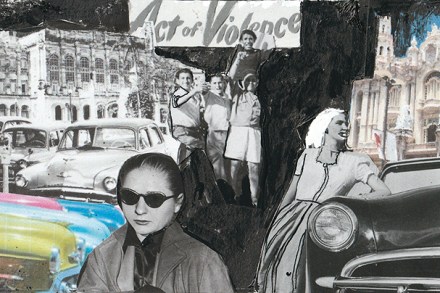
It’s hot in Havana. The summer’s electrical storms have arrived, lighting up the sky, while down on the ground we’ve been without power for 16 hours, meaning no sleep. The four-month-old US oil blockade is biting, but Cuba’s government still refuses to bend the knee to Washington, so surveillance aircraft are circling. An aircraft carrier, the USS Nimitz, has arrived in the neighbourhood. We expect an attack at any moment. Donald Trump has made it clear that after Venezuela and Iran, Cuba is next on his list for decapitation. His administration wants a change of government and the economy opened up. Cuba’s 95-year-old ex-president Raul Castro has been indicted for murder, opening the way for an abduction like the one in Caracas in January.
How Iran turned Trump’s propaganda against him

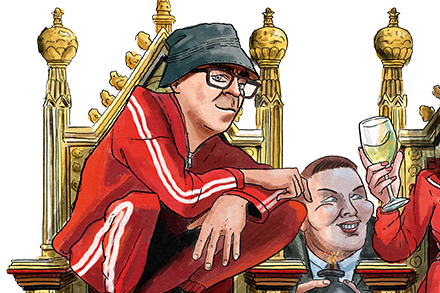
On 19 November 1941, King George and Queen Elizabeth paid a visit to Woburn Abbey, home of Britain’s covert propaganda war against the Nazis. Surrounded by a park full of rare monkeys, and among corridors bearing Old Masters, the King and Queen were presented with ‘Britain’s Secret Army’, a fleet of radio stations that broadcast subversive content deep into enemy territory. Sefton Delmer, who before the war had been a foreign correspondent for the Daily Express, presented his new German station. While the officious BBC German Service was lecturing Germans about the virtues of democracy and the evils of fascism, Delmer was trying something different.

The Pope’s AI intervention shames our politicians

I was born into a sternly Presbyterian culture. Politically, I’m more Orange than Donald Trump’s skin tone. But today I am on my knees giving thanks to the Pope. He has produced the most powerful political document of the year, taking on the greatest challenge of our times. His first encyclical, Magnifica Humanitas, deals with the changes which will be wrought to all our lives by artificial intelligence in the months and years ahead. AI will transform our economies and societies massively and irrevocably; it will change what it means to be human; it may even mark the end of humanity itself. If it takes the Pope to alert us to this revolution then perhaps the Reformation wasn’t such a good idea after all.

‘Do you know the local MP?’ ‘Aye, she runs the sauna’: my Shetland dispatch

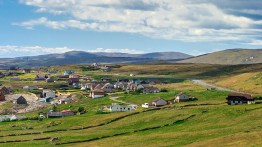
The Shetland Islands The SNP have had better weeks. It’s strange to think that it was only this month that the party won a staggering fifth term in office, despite independence being no closer, and a record of failure on everything from education to drug deaths. Perhaps the most remarkable result for the SNP leader John Swinney was the election of Hannah Mary Goodlad in the Shetland Islands. Since 1950, this was the first time these islands had voted for someone other than the Liberals or Lib Dems. Goodlad triumphed after a vigorous campaign featuring windswept social media videos and three visits from Swinney; before her election, she ran an outdoor sauna business.

Is the West deserting Ukraine at precisely the wrong moment?

Moscow is coming under direct drone attack, the Russian economy is creaking, patriotic bloggers are ever more apocalyptic in their predictions of military disaster and evidence is piling up that Russia’s elites are becoming seriously disillusioned with the war and Vladimir Putin himself. Is this the moment for Britain to desert Ukraine by easing sanctions and refusing to commit more money to Kyiv’s military? Last week, the British government issued licences for the import of gasoline products from Russia refined in a third country. No. 10 also approved  licences for British companies to continue to service tankers carrying Russian liquefied natural gas (LNG).

Your mocktail is pathetic

Mocktails. Even the name sounds dodgy. Who is this apparently innocuous canned drink mocking, pray? Probably you, if you’ve shelled out close to four quid for a can of artfully tinted water. Like much today, mocktails in tins make me want to cross my arms and make a ‘humph’ noise. When I was a girl, you drank alcohol from the age of 14 or – if you were on primitive antibiotics for VD, this being the sexed-up 1970s – you drank plain tonic with a twist, hoping that no one would spot the absence of gin and mock you as a milquetoast. In the 1980s, my American father-in-law introduced me to a cocktail without alcohol, the Shirley Temple. The contempt in the name was clear: composed of ginger beer, lime juice and grenadine, with a cherry on top, this was a drink for small children.

Save the curlew!

Unlike last year, when drought caused many curlews in the Durham dales to delay breeding, this has been a great spring for them. Last week, wherever I walked, anxious curlew parents were whinnying above me like aerial ponies. At one point I stepped carefully aside as a day-old chick, clumsy on its oversized blue legs, tried to hide in the cotton grass. The Pennines, North York moors and eastern Scotland are the world stronghold of the curlew, or ‘whaup’, a bird whose bubbling aria fills the sky over these moors in spring so fully that you cannot find a one-minute gap of silence between their songs in a typical April dawn (I’ve tried).

Who ruined the Southbank Centre?

Europe’s largest hub of the performing arts, which great musicians the world over once called home, is now a grim laboratory, obsessed with a ‘diversity’ that taints everything it touches. We hate, thought Keats, things that have ‘a palpable design upon us’. Under the direction of Misan Harriman, chairman of trustees, the Southbank Centre increasingly resembles a political boot camp, where slackers are herded for re-education. The Royal Festival Hall, its centre-piece, is a dump. Where there used to be a well-stocked bookshop and a place to buy records, there are now battalions of laptop-tapping students and scruffs of all ages, some plainly up to no good. And the transformation has been deliberate. ‘No snobs here’ is the message.

Weight-loss drugs killed my appetite for life

Sam Altman, the co-founder of OpenAI, which launched ChatGPT, is not overweight. Gay tech billionaires rarely are. Even so, as he explained in a recent interview, he was keen to try a GLP-1, one of those drugs that have revolutionised weight loss in the past five years. You can understand why he was curious. Ozempic or Mounjaro might appear to have nothing in common with artificial intelligence, but both phenomena have created a sensation that we’re entering an era of accelerating and uncontrollable change. Alas, he screwed it up. He had someone inject him with a megadose, puked all night and then lay in bed for days ‘staring at a white ceiling thinking nothing’, not only feeling no urge to eat but also no ‘desire for anything’.

Burnham’s fate will be decided in the Strait of Hormuz

In the last few days, the government has performed two extraordinary about-turns. On Tuesday, it was revealed that the Treasury is covertly pressuring supermarkets to freeze prices on essential goods. This was odd: when Rishi Sunak floated a similar idea as prime minister, the Labour opposition accused him of acting like Ted Heath. On Wednesday, we woke up to even stranger news: Keir Starmer would be lifting some sanctions on Russian oil to ease our supply problems. This is a prime minister who has spent the past year telling anyone who will listen that Nigel Farage is in league with Vladimir Putin; a prime minister who loves nothing more than being pictured with Volodymyr Zelensky on the steps of No. 10. So how do you explain these two politically painful manoeuvres?

The performative hypocrisy of the pro-Palestine mob

You haven’t really made it in life until you’ve addressed the Oxford Union. That’s how I feel upon reading the flattering invitation to debate the proposition, ‘This House Believes Modern Youth Activism is Primarily Performative’, which tells me that I am ‘a sharp and independent voice’ with ‘a historically informed perspective’ who challenges ‘orthodoxies across the ideological spectrum’. Unfortunately, the 200-year-old body cannot cover the airfare from Washington to London, let alone an honorarium. But with an appeal like that, how can I say no? As an undergraduate, I was a member of the Yale Political Union, which, like the Oxbridge institutions on which it was modelled, is a boot camp for future politicians.

The National Garden Scheme is the perfect antidote to Chelsea’s vanity

Shortly before the New Gardens Organiser at the National Garden Scheme (NGS) is due to arrive at our farmhouse in north Norfolk, my youngest child – in the throes of a screaming meltdown – eyeballs me as she rips the heads off a row of giant ‘Mount Everest’ alliums. By the time Fiona Black arrives, I’m spiralling into an existential crisis myself. Why did I bother asking if we’d be suitable, I wonder, contemplating the futility of gardening alongside children and dogs. Sliding tackles have taken out most of the alliums that survived the dogs’ digging. I retrieve a football from a bed of irises and chuck a bottle of Roundup weedkiller out of sight (soon-to-be illegal in the UK, but so effective, it’s the chemical compound I just can’t kick).

No one recognised me on the Cannes red carpet!

‘We are taking the picture to Cannes,’ said John Gore, the producer and financier of My Duchess, my new film about the Duchess of Windsor. ‘How exciting!’ I said. Then, a minute later, I thought, ‘Oh God! What am I going to wear on the red carpet?’ The following day I told my artist friend David Downton about my dilemma while lunching at Claridge’s. ‘Let’s call Stéphane Rolland,’ he said. ‘Wonderful idea!’ I said. ‘He’s great! He made the red dress I wore for the Heart Truth Red Dress gala in New York a few years ago, and it was spectacular.’ David called Stéphane as we had coffee, and the talented couturier sketched a terrific drawing of a beautiful white dress with ruffles while they chatted, and texted it to David. ‘Amazing!’ I exclaimed.

What lists of our greatest novels get wrong

‘Where are all my favourite parts?’ Arnold Schoenberg asked, on being presented with a severe academic analysis of the Eroica symphony. ‘Oh, there they are. In the tiny notes.’ The tendency of many people, presented with the overwhelming abundance of an art form, is to exclude as much as possible. Reduce the wonderful life of incidental invention to the tiny notes; erect walls excluding the fascinating curiosity, the eccentric, the madly idiosyncratic. Produce a list of the 100 Best Books, sticking to declared Greatness. People have been producing lists of the Best Books for a hell of a long time. When copyright law was reformed in 1774, it enabled publishers to produce collections of novels for the first time.

Cultural amnesia explains our fury at the past

I was in Newcastle the other day and found myself standing beneath Lord Grey’s Monument. The column is 135 feet of Roman Doric, which seems a generous allotment for a man now principally famous as a bergamot-blend tea. Earl Grey passed the Great Reform Act of 1832 and broke the old grand Whiggism, of which he was a scion, in the process. The city built the column while he was still alive. Two hundred years on, Lord Grey is a landmark locals use to orient themselves towards Primark. A few yards away, in the cathedral, I came upon a memorial to Admiral Collingwood, Nelson’s second-in-command at Trafalgar. I doubt one Geordie in a hundred could tell you who he was.

‘It’s like a Mexican standoff but no one has any guns’: inside the farcical coup against Keir Starmer

It is an old adage of leadership contests that ‘If you shoot for the King, you’d better not miss’ – but no one expected the starting gun to be fired at Charles III. At the exact time on Wednesday when the monarch was reading the King’s Speech to parliament, allies of Wes Streeting, the Health Secretary, put a bomb under proceedings by making it clear that he is set to challenge Keir Starmer this week. ‘Yes, it’s inevitable,’ one says. The timing horrified MPs even on Streeting’s wing of the party. A cabinet minister declared: ‘Having failed with his kamikaze coup, Wes has now undermined every single one of his colleagues and disrespected the King.

The three things Trump wants from his China trip

Donald Trump flew to Beijing this week, and when he sits down with China’s President Xi Jinping on Thursday morning he will want three things: a tariff truce that survives his own courts, Chinese pressure on Iran to end the war that never seems to end, and a photograph that makes him look victorious. Xi has problems of his own. But he has watched four American presidencies from Zhongnanhai, the walled compound beside the Forbidden City where the Communist party leadership rules, and he knows the value of silence when his counterpart is talking himself into trouble. Trump’s approval rating is the lowest of his second term. Trump has obliged Xi noisily.

How the Saudis wriggled out of the Iran conflict

Some of the highest-paid sportsmen in history, the golfers of the LIV league, had bad news recently. Saudi Arabia said it was pulling out of LIV Golf after sinking $5-6 billion into it. The highest-paid golfer was reported to have been on a $600 million contract over four years; others were getting more than $100 million. The men in plaid are, in a sense, victims of Donald Trump’s war with Iran. The LIV announcement is not just sports news. The Saudis were, by their standards, already in financial trouble, and then they had to spend tens of billions on defence and propping up their economy during the 38 days of the war. Crude oil prices have gone up but not enough to compensate, given the difficulties in exporting it.