Daniel French

Daniel French is an Anglican priest in Salcombe

How Sarah Mullally can fix the Church of England

From our UK edition

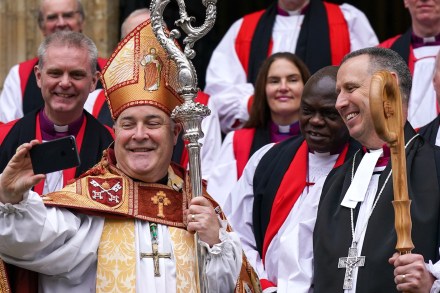
Regardless of whether Sarah Mullally was our preferred choice for the new Archbishop of Canterbury, we should wish her well in her appointment. I hesitate to say ‘congratulate’, as this role is not a career prize but a demanding ministry of service. An archbishop should emulate Christ, who came not to be served but to serve. It is hard to live this way, especially under media scrutiny, doing a job so busy. In a few months, Canterbury will enthrone its new successor to Saint Augustine. I have mixed feelings about these inauguration and enthronement services.
God the ‘Father’ isn’t sexist

From our UK edition

Calling God ‘Father’ may be ‘problematic’, pronounced the Archbishop of York at Friday’s formal opening of the General Synod. Watching the live stream, I did a double take and had to rewind a few seconds to play it back. Did he really just say this? Archbishop Stephen Cottrell explained his reasoning: ‘For all of us who have laboured too much from an oppressively patriarchal grip on life…’ Who is the ‘us’ here? Is it too personal to ask what in Cottrell’s history has been oppressive? Can he really claim to have laboured under the patriarchy? The calculation is that there needs to be a revolution so that the unchurched masses, especially the young, will flock back But more importantly, do we really need a gender-neutral makeover of our sacred liturgy?

Welby’s bid to placate statue topplers could backfire

From our UK edition

I’m a Church of England vicar and I’m worried about the Archbishop of Canterbury’s planned review of statues and monuments. The church, we have been told, hopes to ‘play a leading role’ in facilitating ‘meaningful dialogue’ and apply ‘justice’ with ‘real outcomes’ in assessing statues. But what does this mean for churches like mine? Anglicanism prides itself on being a highbrow form of Christianity. It operates in subtleties and niceties. In Anglican-speak, the expectation is that a ‘review’ is a modest bureaucratic exercise where a few monuments are quietly mothballed into vestries and some ethnically diverse depictions of Christ commissioned. If so, there is little to worry about.

Why millennial men are turning to the Book of Common Prayer

From our UK edition

The Book of Common Prayer is enjoying a revival in the Church of England, despite the best efforts of some modernists to mothball it. Over the past two years, more and more churchgoers have asked me about a return to Thomas Cranmer’s exquisite language, essentially unaltered since 1662, for church services and private devotions. Other vicars tell me they have had a similar increase in interest.   It helps that the Book of Common Prayer has had a fair bit of attention recently. The late Queen Elizabeth’s insistence on the use of Prayer Book texts in her funeral rites meant that in September more people witnessed the beauty of this liturgical treasure than watched Neil Armstrong’s first steps on the Moon.

Christmas Special

From our UK edition

90 min listen

Welcome to the special Christmas episode of The Edition! In this episode, we look at five major topics that dominated the news this year and the pages of The Spectator. First up a review of the year in politics with our resident Coffee House Shots' team James Forsyth, Katy Balls and Isabel Hardman. We discuss how Boris seemed to make such a strong start to the year through the vaccine rollout, but squandered this goodwill with several own goals. We also touch on some of the big political moments of the year: Partygate, the Owen Paterson affair and of course Matt Hancock. (00:39) Next, we go global and look at three of the major powerhouses that took headlines this year. The EU, who ends the year in a panic over Russia, extreme Covid measures, and upcoming elections.

Cop out: Boris’s battle to save the climate summit

From our UK edition

32 min listen

In this week’s episode: Can Cop26 deliver on its grand promises? In our cover story this week, Fraser Nelson assesses the state of the upcoming Cop26 summit in Glasgow and questions their very effectiveness in dealing with climate change in a world of global players with very different priorities. He is joined on the podcast by reporter Jess Shankleman, who is covering Cop26 for Bloomberg. (00:48)‘This one’s in Glasgow, but you’d best think of it as the Edinburgh Festival for environmentalism. Lots of fun, lots of debates, lots of protests, lots of street action, but not really any much of concrete substance.’ – Fraser Nelson Also this week: Is it moral to bribe your child to go to church?

The strange religiosity of Covid compliance

From our UK edition

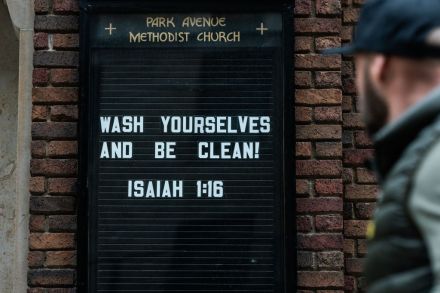
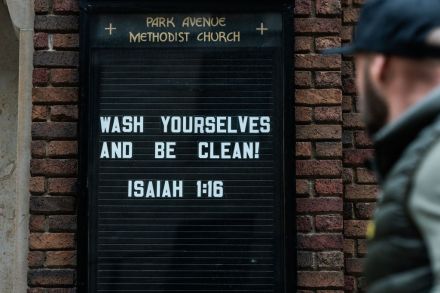
Something has gone badly wrong with the Established Church when it appears more indignant at the breaking of social distance rules than the ruining of two marriages by the same politician. On Sunday’s GB News morning show even the unflappable Nigel Farage was unusually wide eyed when the Bishop of Manchester, Rt Rev David Walker, remarked of the now disgraced Matt Hancock: ‘So, I think I’m more worried about the fact that he failed to keep social distancing than I am about the fact that here is a middle-aged bloke having a bit of a fling.’ https://www.youtube.com/watch?

The C of E’s misguided obsession with statues

From our UK edition

The Church of England has once again misunderstood the mood of the nation. Guidance published this week urges the country’s 12,500 parishes and 42 cathedrals to address, search out, assess and remove offensive artefacts of ‘contested heritage’. The framework follows the call by Justin Welby, Archbishop of Canterbury, for a review of church statues. Of course racism must be taken seriously, but I doubt I was the only cleric who, upon hearing this development, let out a loud groan. The edict is both a concession to advocates of divisive identity politics and a distraction from the more pressing issues on which the church should be focused.

Vicars like me are struggling in lockdown

From our UK edition

A year of living through a pandemic has taken its toll on the best of us. Vicars like me are no exception.  As a healthy and normally upbeat 52-year-old, this feeling of gloom is frighteningly new. Anecdotal stories from clergy friends tell a similar story to my own: the urge is to curl up and mask the misery with binge marathons of Netflix box sets. But this brings only short-term relief. A cursory look at social media posts show that a good number of vicars are struggling to keep it together.  The pressures on vicars come from every quarter. Some vicars have been landed with the impossible task of maintaining empty churches as elderly volunteers withdraw to shield or isolate.

What was the point of the Vicar of Dibley’s BLM sermon?

From our UK edition

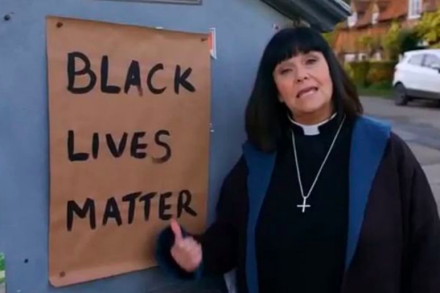
The first rule of preaching is not to be preachy – and it’s here that the Vicar of Dibley slips up in lecturing her parishioners on Black Lives Matter in an episode broadcast last night. When I am training curates, I show them Alan Bennett’s skit ‘Take a pew’ from Beyond the Fringe (1961), where a clergyman’s painful attempts at being hip are sunk by the rising of his sing-songy parsonical voice. Dawn French’s character would have been wise to watch too. The normally inoffensive sitcom, which is being broadcast this Christmas in a series of ten minute specials, features the TV vicar ‘taking the knee’. Surely this year, more than ever, we could have done without sermonising like this in a sitcom.

Vicars against lockdown

From our UK edition

Is it time for vicars to speak out against lockdown? As an Anglican priest, I've watched in bemusement as some of my colleagues have waded in on Brexit, Black Lives Matter, or Dominic Cummings's trip to Barnard Castle. But why are many of these same voices silent on an issue that affects far more of us: the Prime Minister's drastic order for us to stay at home and the curtailing (again) of church services? The church used to pride itself on robust debate. It was a seedbed for intellectual giants who were not afraid to say their mind. But whatever happened to those colourful canons, dotty theologians, and rebellious bishops who made the Church of England so gloriously interesting, if not fun?

A Covid carol concert? No, thanks

From our UK edition

To imagine that the Church of England could contemplate effectively cancelling Christmas may sound like the stuff of Dickensian melodrama or scripted out of the Grinch. Of course, not even the Pope has the power to erase the 25 December. But this year's church celebrations could be so muted that Christmas effectively becomes a minor feast. Just as exhausted people need their spirits lifted, toning down Christmas could be the final straw. Oliver Cromwell would be delighted. None of this might seem plausible, of course, until you consider the heavy handedness of church authorities during the initial lockdown. Parish churches were closed, even for private prayer, and vicars were banned from entering.

Salcombe and the tourist invasion of ‘Chelsea-on-Sea’

From our UK edition

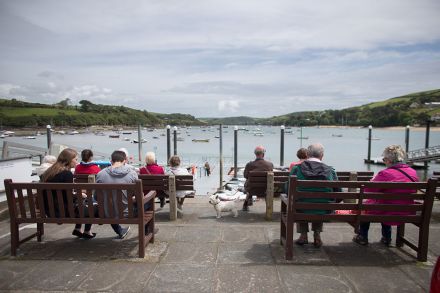
‘The invasion of ‘Chelsea-on-Sea’, screamed the headline on the Mail Online above a report of how Salcombe’s mayor had blasted ‘disrespectful tourists for failing to socially distance’. As the local vicar, I find myself hearing the consternation from all sides: tourists who don’t recognise themselves as ‘invaders’; shopkeepers and pub owners who rely on tourists for their livelihoods; and locals who are welcoming (or not) these people arriving for their summer holidays. This week’s heatwave has only heightened tensions and added to the influx of people arriving here. Roads are gridlocked, beaches packed and narrow streets filled with holidaymakers.

Could an underground church now emerge in Britain?

From our UK edition

Coronavirus and the fallout from it could have been a chance for the Church of England to talk about the grand vision of Christian hope and mortality. The Bible warns us of plagues and pestilence. It tells us that we live in a broken world. It makes it clear this pandemic is far from unprecedented. Yet it also has a message of good news. Instead, too many of the Church’s senior figures have ditched this vision, choosing rather to scare us or play politics when it comes to coronavirus. This missed opportunity, sadly predictable, uncovers a deeper Anglican crisis than push button issues like gay bishops, transgender liturgies, or declining congregations. Ultimately it stems from a lack of confidence among bishops and theologians when it comes to the supernatural.