Diary

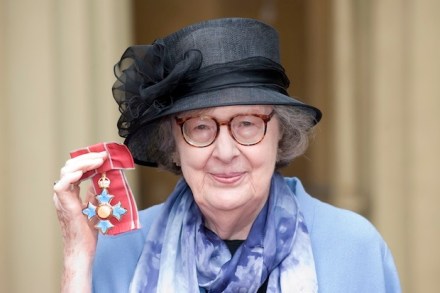
Penelope Lively’s diary: My old-age MOT

My surgery has been calling in all those over 75 for a special session with their doctor — a sort of old-age MOT. I came out of mine pretty well, I thought: I could remember the name of the Prime Minister, blood pressure excellent, spark plugs need cleaning, windscreen wipers ineffective, bodywork showing signs of wear. But not too bad for 80. Gerontologist Tom Kirkwood, in his book Time of Our Lives, gives a clinical but excellent and entirely comprehensible account of what we should expect, and what can and cannot be done about it. His study of a group in their mid-eighties found that not one had zero age-related disease, and most had four or five. We take our pick: hips, knees, macular degeneration and so forth.

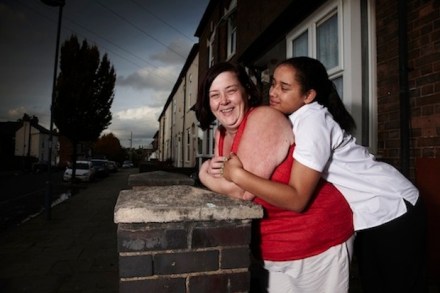
White Dee’s diary: From Benefits Street to Downing Street?

There’s no reason why you should have heard of me. No reason why you would have watched a Channel 4 television series called Benefits Street — with a title like that, I’d have changed channel if it came on my telly. But they didn’t tell us the title when they wanted to spend 18 months filming on our street. For reasons I can’t pretend to understand, five million people tuned in. It’s supposed to be the biggest hit Channel 4 have had since The Snowman. A fairly normal bunch of people — myself, Fungi, Black Dee, Becky and Mark — have become reality TV stars. It’s like Big Brother, except no one is evicted. Or paid.

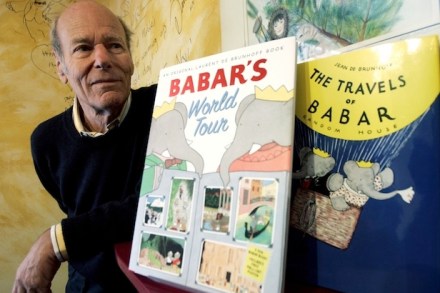
Alexander McCall Smith’s diary: Meeting Babar’s creator

As any author will tell you, literary festivals differ widely. If you are invited to Willy Dalrymple’s Jaipur Festival, with its renowned final party, you say yes within minutes of receiving the invitation. Other invitations you might take a little longer to accept. The Key West Literary Seminar, which took place a couple of weeks ago, is one of the glamorous ones. I was ready for Florida, as Scotland had been visited by gale after gale and accompanying driving rain. As luck would have it, we arrived in Key West at exactly the same time as the polar vortex that had frozen the entire United States, including a normally balmy Florida. No matter: Key West was, for the duration, one huge literary celebration. I was invited to lunch at a house in the old part of the town.

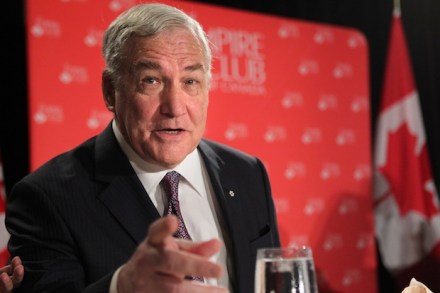
Conrad Black’s diary: Why I won’t join the campaign against Rob Ford

When visiting Britain and Australia last November, I discovered that the mayor of Toronto, Robert Ford, is now the world’s best-known Canadian. He has acknowledged the occasional use of cocaine and, overall, the response to his foibles has been welcome. The world has been astounded to learn that not all English-speaking Canadians are whey-faced, monosyllabic Americans-on-Prozac. They might also learn that the contiguous metropolitan area of Toronto — now home to about seven million — has a very high standard of living and a low crime rate and is one of the world’s more impressive modern cities. The mayor is an ample and florid man who describes himself as ‘350 pounds of fun’, but he departed from Canadian tradition with his candour.

Ferdinand Mount’s diary: Supermac was guilty!

You have to hand it to Supermac. Fifty years after the event, he is still running rings round them. The esteemed Vernon Bogdanor (The Spectator, 18 January) tells us that Iain Macleod was wrong in claiming that Sir Alec had been foisted on the Conservative party by a magic circle of Old Etonians. On the contrary, the soundings had ‘revealed a strong consensus for Home. So Macmillan was not slipping in a personal recommendation when he advised the Queen to send for him — he was doing precisely what he was supposed to do.’ This is a deliciously selective account.

Michael Heath’s diary: I’ve fallen among hipsters (and I have the T-shirt to prove it)

I now live in the hippest part of London, Shoreditch. It must be Tony Blair’s idea of heaven, a multicultural mix of hugely rich and up-and-coming young things of every nationality, huge high-rise blocks of £5 million duplexes, old Victorian buildings ripped apart to make way for young men with beards working on searing new technology, hordes of young beautiful women striding around looking very much in charge. But amazingly something has escaped developers. The pubs, of which there are many. There is a wonderful example on the corner of my alley, the Eagle, a finer example of a Victorian pub than you’ll ever see. It was once the locale of music hall artist Marie Lloyd, famous for singing ‘She sits among the cabbages and peas’.

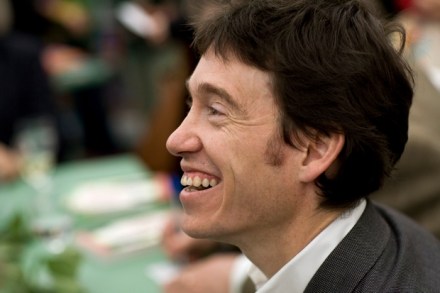
Peter McKay’s diary: The Old Etonian David Cameron should have been

David Cameron gives Old Etonians a bad name. Critics deplore his Old Etonian-ness,  his Lord Snooty Factor.  Childish, but it’s an uncomplicated prejudice which can be freely expressed in our otherwise rigidly policed public discourse.  Is there an OE who might rescue the school’s reputation? There is:  Rory Stewart, 40, Tory MP for Penrith.  Known in some quarters as ‘Florence of Belgravia’ because of his expertise in Arabic affairs, he is famous for walking 6,000 miles through Afghanistan in two years and for writing two bestselling books about working there and Iraq. And, says the Guardian – of all papers – he is ‘hugely appealing: self-deprecating, funny, open, curious and kind’.

James Bartholomew’s diary: Give up the Today programme – you’ll feel better

It’s amusing to see serious journalists and authors struggling to use Twitter under instruction from their newspapers and publishers. They realise they lose dignity by condensing their great thoughts into a mere 140 characters: it is inevitable, whoever you are. Imagine Jesus had been obliged by his Father to tweet. It just wouldn’t have been the same: ‘Might be a bit short of loaves and fishes on the mt today. Take a miracle to feed everyone!’ or ‘Great supper with the lads tonight — worried that tomoro might not go so well. #nastyfeeling’ This year the referendum on Scottish independence takes place at last. Oh, please, may the Scots vote yes! Pretty please! Come on Salmond! Everyone says what a brilliant politician you are.

Sebastian Faulks’s diary: Inside the official first world war commemorations

A year or so ago I was asked to sit on a committee that advises the government on how to commemorate the first world war. It consists of about 30 dauntingly well-qualified people (former heads of the army and of Nato, historians, ex-defence secretaries), so there seems little for me to contribute at meetings. But it is interesting to be on the government side of something and see how it deals with public expectation and the press. In the summer there was a report in a British paper that the Germans had sent over their commemoration team and asked if, instead of dwelling on the conflict, the British could make 2014-18 a chance to talk up the European Union. I emailed the Department of Culture to ask if this could be right.

Steve Punt’s diary: Britain is now living in a middle-class parody of itself 

One of the most dispiriting experiences currently available is any commercial break during a televised football match. In a Champions League game, within seconds of the half-time whistle you are pitched into a garish carnival of crap which glaringly and proudly condenses Everything Wrong With Modern Britain into three bombastic minutes, beginning with the laughably pompous Champions League choral theme and then going downhill from there. Adverts follow for gambling, drinking, and borrowing money, along with violent computer games and cars. A multi-millionaire actor will exhort recession-hit viewers to bet on the next goal, via a handy app. Glossy couples and sexy croupiers make online cash-fleecing look like a James Bond casino.

Nigel Lawson’s diary: My secret showdown with the Royal Society over global warming

The long-discussed meeting between a group of climate scientists and Fellows of the Royal Society on the one side, and me and some colleagues from my think-tank, the Global Warming Policy Foundation on the other, has now at last taken place. It was held behind closed doors in a committee room at the House of Lords, the secrecy — no press present — at the insistence of the Royal Society Fellows, an insistence I find puzzling given the clear public interest in the issue of climate change in general and climate change policy in particular. The origins go back almost a year, to a lecture by the president of the Royal Society, the biologist Sir Paul Nurse. In it he chose to launch a gratuitous personal attack on me, making a number of palpably false allegations.

Mishal Husain’s diary: Sachin, women secret agents, shipbuilding .. and telling the time.

I’ve worked for the BBC for years and have been listening to the Today programme all my adult life, but joining it as a presenter feels like exploring a new frontier. Being on top of your brief is one thing; the mechanics of a three-hour live radio programme quite another. Take the junctions leading up to the ‘pips’ at the start of each hour. From television, I’ve been accustomed to directors counting presenters down to these junctions while they ad-lib on air — the idea being to stop talking as the voice in your ear says ‘zero’. But radio presenters are pretty much on their own, watching the clock and navigating to a precise target of five seconds to the hour. To my presenter colleagues, all this comes naturally.

Celia Walden’s diary: Have I finally caught my husband in an affair?

For a minute I just stood there with my back against the wall, staring at the credit card receipt. Then I slid down into a crouching position on the kitchen floor. ‘So this is it,’ I thought to myself. ‘This is really going to be how I find out.’ I’d found the receipt in the front pocket of one of my husband’s suitcases on Tuesday morning. It was for dinner for two at the Four Seasons Hotel in Santa Barbara — a place he’d told me he’d never been. He’d had the Merlot and the rib-eye; she’d had the cucumber martini and a Caesar salad. I’m guessing that she waived the dressing. I’m already working out the logistics by the time my husband gets home from work.

Gyles Brandeth’s diary: The pub where the Queen came in by the fire escape

Hard on the heels of the 90th birthday of Nicholas Parsons (10 October) comes the 65th birthday of the Prince of Wales (14 November). Neither is due for retirement any day soon. Indeed, I suspect retirement would be the death of the long-serving host of Radio 4’s Just A Minute. The Duchess of Cornwall listens to his programme, I know. Perhaps her husband does too. Either way, Parsons is a perfect role model for Prince Charles. Nicholas is young at heart, unfailingly charming and wholly committed to the strange lot that fate has accorded him. He has been hosting Just A Minute for 46 years and not missed a single recording. He will be at it until he drops. For his birthday I gave Nicholas a copy of my book The Seven Secrets of Happiness.

Alexander Waugh’s diary: Shakespeare was a nom de plume — get over it

Researching a new book on Shakespeare’s sonnets, I stumbled upon an astonishing piece of hitherto unnoticed evidence in a 16th-century book by a sex-maniac clergyman from Cambridge. I shall not bore you with the details; suffice it to say that William Covell (the author and S-MC in question) revealed in words not especially ambiguous by Elizabethan standards that ‘Shakespeare’ was a nom de plume used by the courtier poet Edward de Vere. Now a lot of people have been saying this for a very long time — so stale buns to that, you may think — except that no one has yet noticed that the matter was revealed in a book as long ago as 1595, so that makes it an important discovery.

Jonathan Aitken’s diary: My life as a Christian outreach speaker

The last time I wrote for The Spectator I was sitting in a prison cell. I sent the then editor a poem called ‘The Ballad of Belmarsh Gaol’. Instead of printing it in the poetry column, Frank Johnson put it on the magazine’s cover. It received what is euphemistically called ‘a mixed reception’ — so mixed that I have never again tried my hand at verse. In those dark days 14 years ago I was wrestling with my self-inflicted agonies of defeat, disgrace, divorce, bankruptcy and jail. As I contemplated my non-future, its only certainty was that I would never again be in demand as a public speaker or as a political commentator in the media. But life is full of surprises.

Tristram Hunt’s diary: Why has Gove allowed a school that makes women wear the hijab?

ONE OF THE MINOR sociological treats of being appointed shadow education secretary is a frontbench view of David Cameron’s crimson tide — that half hour journey, every Question Time, during which the Prime Minister’s face turns from beatific calm to unedifying fury. It starts at 12.04 with the merest ripple of annoyance in his shiny, placid countenance. At 12.07, the ripple has become a swell of irritation, still far out to sea, at anyone daring to question the wisdom of government policy. By 12.10, it is a wave of indignation and wounded amour propre at the wilful duplicity of his opponents. And by 12.14, the crimson tide is crashing over the rocks of the dispatch box, back and forth for the next quarter of an hour. Close up, it is a marvel to behold.

Billy Bragg’s diary: The right does not own freedom

A great night to be in Pittsburgh. The local baseball team, the Pirates, were attempting to reach their first play-offs in 21 years. Meanwhile in Washington DC, a Republican party rejected at the polls last year was seeking to increase its popularity by bringing the government to a halt. On the Strip, a bustling street along the banks of the Allegheny River, it seemed everyone was wearing a shirt declaring his or her allegiance to the Pirates. In the pizza joint where we’d gone before I played my first Pittsburgh gig in nearly two decades, the TV above the bar reported on the stalemate in Washington. But it didn’t feel much like a shutdown. No one in the place seemed to care that the Republicans might be in a hole, nor willing to suggest that they stop digging.

David Hare’s diary: Actresses are smarter than journalists

So mysterious, the Conservative party. In every poll, our five most admired institutions are the NHS, the BBC, the Royal Mail, the armed forces and the monarchy. The Conservative party wants to destroy four of them. Conservative? The only traditional aspects of British life to be preserved are private education, executive over-pay, the rights of both the security services and the press to wiretap innocent citizens, and the delegation of foreign policy to Washington. Some Tories even want to send high-speed trains zipping through their own rural constituencies. Ministers muttering into their beards about how everything must be changed and changed utterly more closely resemble the Trotskyites of my youth than Conservatives. Shouldn’t the party change its name?

Damian McBride: Why I clutched at my trousers in front of Jeremy Paxman

They say nothing beats the feeling of seeing your book in print. But for me, the proudest moment was presenting the first copy to my Mum. She’s been ill recently and I read her most of the chapters in draft while she was convalescing, albeit leaving out the nasty bits. I sat with her that evening, reading her more of the book and feeling quite pleased with it. But the nervous feeling kicked in the next day when I saw the first extracts in the Daily Mail, and heard some of the reactions from the media and Labour folk. It strikes me as bizarre that people would reach conclusions and issue condemnations after reading 2 per cent of the book, but it didn’t stop them piling in.