Diary

Why Rebecca Long-Bailey had to go

Do you remember where you were when the BBC showed a rerun of Bowie’s Glastonbury set? When we ask each other that in future, the answer is always going to be: ‘At home, recovering from a day of Zoom calls.’ It’s 100 days since lockdown and as we slowly emerge it’s hard to keep a sense of proportion about the events in between. I remember pricking my finger for a trial antibody test; I remember my delight at discovering that an old-time cockney butcher still exists on a nearby council estate; I remember the absolute stillness of the air as a sparrowhawk circled over south London. Best to fix these memories in writing now, because the cryogenic social frost is well and truly melting. I’m on a public webinar with Katja Kipping and Jagmeet Singh.

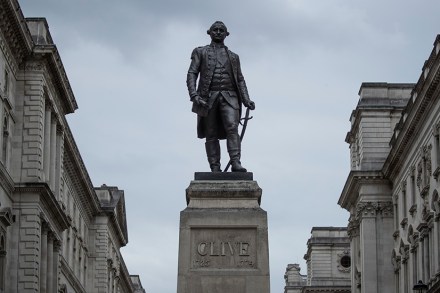
As V&A director, I won’t save Clive of India

‘Pray for us St Sebastian that we may deserve to pass through this pestilence,’ reads the inscription on a 15th-century reliquary imploring the patron saint of plague victims to assist Augsburg as the city faced another disease outbreak. Today, this exquisite silver offering — set with rock crystal, pearls and sapphires — sits alone in the Medieval and Renaissance Galleries of the V&A, patiently awaiting the return of the British public after our own Covid plague. During lockdown, curators have been selecting objects charting the design response to coronavirus — most notably, the NHS rainbows — which might join our existing collection of 18th-century smallpox mourning rings or 1993 Keith Lewis Aids brooch.

We are living through a frenzy of conformity

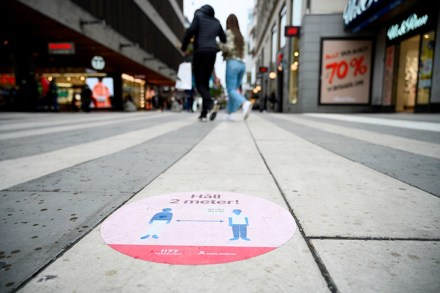
Reality seems thinner these days. As I walk along the high street, passers-by drift apart as though afraid of crossing auras. Three months of lockdown has made this repulsion of human contact a matter of instinct. I can’t help but see this tendency reflected in the escalating intolerance and hostility on social media. So at the start of the week I decide to spend a few days away from Twitter. It’s not the ideal forum for civilised debate at the best of times, but even some of those I respect are now behaving like poorly socialised children who’ve just learnt some flashy new expletives. J.K. Rowling is bombarded for holding views about biological sex differences that would have been considered self-evident only a decade ago.

Social distancing destroys our lives as social beings

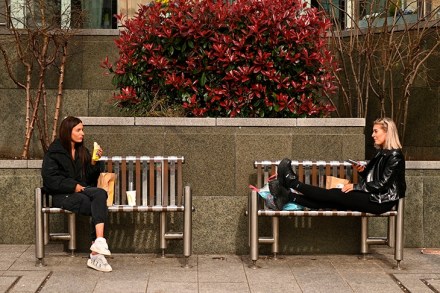
A lockdown diary is an oddly negative thing. At the dinner parties that we aren’t going to, we aren’t discussing all the interesting things that we aren’t doing. This week, I am not heading for the Austrian Alps to walk in some of the finest mountain scenery in Europe and enjoy a week of Schubert, as I like to do in June. The Austrian government has pioneered the technique of allowing facilities to reopen but only on terms that keep them closed. The beautiful concert hall at Schwarzenberg can open, but only with social distancing which reduces its capacity by 75 per cent and makes any performance financially unviable. In England the government plans to reopen pubs on terms that keep them half-empty and unprofitable.

Let’s not forget all the decent cops out there

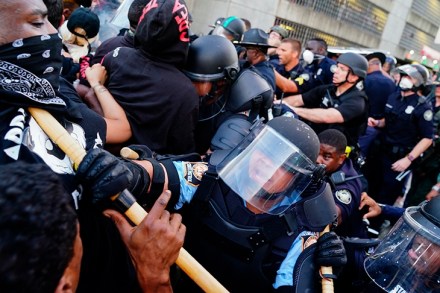
One victim of police brutality is police decency. Our son has a tutor, J., who works with autistic kids in our corner of West Cork. After lockdown began, she was no longer able to work with her students, one of whom had a birthday coming up in March. The boy lives in Bandon, 15 miles away, so J. phoned our local garda station to ask for permission to drive beyond the lockdown radius to deliver a small gift and card. The garda on duty gave her a polite no, as birthdays weren’t on the list of exemptions. Fair enough. Twenty minutes later, the sergeant called J. back. He had to visit the Bandon garda station that afternoon, so if she could bring him the gift, he would hand it on to a colleague in Bandon, who would deliver it at the boy’s house on his way home that evening.

The Cummings road trip debacle is my last straw

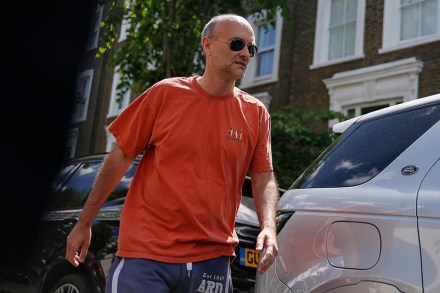
I can’t remember the day I realised Santa Claus wasn’t real but I will never forget the moment I lost my belief in the Conservative party. It happened very recently — this morning, in fact. It was an odd day anyway which began with my reading an email from Mary Wakefield, inviting me to write this diary, even as she was appearing on my TV screen: an unnerving experience. Should I accept? Should I pretend that I’m ignorant of the biggest news story of the moment? I’m reassured that the one of the most trenchant and earliest attacks on Dominic Cummings’s road trip was written by Alex Massie and appeared on The Spectator website. It was an extraordinary article and kudos to The Spectator for publishing it.

My lockdown achievement? Getting shingles

The choir of Notre Dame made a recording of Howard Goodall’s beautiful version of Psalm 23. Unlike cathedral choirs here they are wholly adult. It is so well done. The hands of the pianist in the middle of the screen are surrounded by the faces of the performers singing the incomparable King James text in impeccable English. The four-minute piece is intercut with shots of Notre Dame before the great fire. I found it tremendously moving — tears to the eyes. A gift to the British from Paris. Who says the Entente Cordiale is dead? I’ve been in isolation and lockdown since the middle of March. I agree with Lord Sumption (about everything!) that this is an outrageous attack on our liberty. My dog has more liberty than I do.

The revenge of the oldies

Entering my 54th day of quarantine, I recall how much I was looking forward to this spring in England. There were so many exciting events and celebrations planned. Several friends were throwing big birthday bashes; I was picking up a couple of awards, performing my one-woman show, going to Cannes, and most exciting of all, participating in a plethora of events surrounding the VE Day celebrations. All of the above have gone with the proverbial wind, except for, in a small way, the latter. The Queen’s Pageant Master, Bruno Peek, asked me if I could lead the nation’s toast to our heroes and heroines of the second world war. VE Day dawned sunny and hot. Percy and I festooned the balcony with Union Flags and bunting, and at 3 p.m.

Can London’s theatres survive this crisis?

Never have I stared at my own face so much. Not because I want to, it’s just always there now, ever present in one part of the screen I’m compelled to look at as I talk to the person who requested a Zoom, or a Teams, or a FaceTime. It feels apt, in an existential crisis, to keep opening new ‘windows’ to see out into the world, only to discover they are only mirrors, reflecting oneself. A dark morality tale for the isolation age. ‘You won’t find it on Zoom, James, the answer to your problems lies within.’ Or something. Is that really what I look like when I talk, though? Why do I always look so tired? It’s not as though I was out last night.

Rachel Johnson: What I wish I’d said about my brother’s treatment

When the post office and stores closed in our village on Exmoor, my youngest stared out of the car window as we drove past and saw its dreaded ‘Closed’ sign and ‘For sale’ placard outside for the first time. ‘That’s my whole childhood,’ he wailed, ‘GONE.’ As an over-50 who’s had peak everything, I can’t complain — out loud anyway — but I find the losses for younger generations too painful to contemplate. No travel, no parties, no pubs, no clubs, no sport, no sex, no education, a life unlived online for the foreseeable. Given how badly Oliver took that one tiny but vital enterprise shutting up shop, I’ve been shocked and impressed by how well millions have adapted to the closure of the country.

Ian McEwan: The strange vocabulary of coronavirus

The vocabulary of Brexit has passed into oblivion. Now there’s fresh work to be done. We all know about ‘flattening the curve’, but are you comfortable yet with ‘fomite’, a word my older son, a virologist, taught the family early on? It’s an object or surface on which an infectious agent like a coronavirus might be lying in wait — just for you. A cheque in the post, next door’s cat, the tennis balls you are about to double-fault with — all good candidates. You knew that already. Then how about ‘lipid envelope’, the outer shell of certain viruses. We learn with relief that the envelope of our coronavirus of concern is easily destroyed by soap and water.

How did the virus get past my Obsessive Compulsive Corona Disorder?

When two members of my family went down with what appears to be Covid-19, I felt concerned. What I hadn’t bargained on was the sense of wounded pride. As the patients, pale as veal, collapse into their beds for 16 hours of fretful, jagged sleep, I ask myself how the wretched virus could have penetrated my defences. Have I not for three weeks of lockdown carried out normal household tasks with the heightened vigilance of a Porton Down lab technician moving radioactive material across an infant-school playground? If an Amazon parcel came to the door, I commenced the Corona Protocol. First, don safe-cracker gloves (the indoor pair not the supermarket pair) to take package. Immediately, march packaging out of back door to recycling bin.

This is the life I’ve always wanted — social distancing without social disapproval

Week five… which is to say I’ve been self-isolating in the country since 6 March. Meanwhile, engagements which threatened a return to town have been falling over like a row of dominos. If it were not for the terrors surrounding us, this is the life I’ve always wanted — social distancing without social disapproval. My wife Sabrina, who to my amazement is a techno whizz, has expanded her social life digitally, sometimes with pals by the roomful. I am learning not to blow my cover story (‘Tom’s working’) by passing behind her while she’s on FaceTime. Meanwhile, the days are not long enough for me to not work and keep up with my magazines.

Unreal, uncertain and mostly silent: life in the centre of New York’s coronavirus storm

‘How are you bearing up?’ ‘Is everyone terrified?’ ‘What’s the mood?’ These are the questions concerned family and friends are kindly asking about New York City which, according to my armchair epidemiology, is about ten days behind Italy and ten days ahead of Britain. It would be reckless to describe things as calm, not with a New Yorker dying every seven (?!) minutes, and refrigerated trucks parked ominously outside hospitals. But I sense no mass panic. Life, of a sort, still goes on. People run, dogs are walked, post is delivered, Amazon arrives, and the shelves are stocked with food. The absence of cars without the presence of snow is a novelty, as are the nods of camaraderie.

Michael Morpurgo: Kale smoothies, writing, Pilates – my strict isolation schedule

Writers like me are used to long hours alone. I’ve never enjoyed that side of it. I don’t like the bleakness of silence. As I try to settle and gather thoughts on my bed, pillows piled up behind me — Robert Louis Stevenson did the same, and it worked for him — I must have birdsong, music, the murmur of voices, and I must be able to see the living world from my window. I need the reassurance that I am not alone. I get up from the breakfast table always reluctantly, knowing the hours of solitary work that lie ahead, often dreading to have to go to it. I make myself do it, because I do have a story in my head I want to tell, because I need to prove to myself every day that I can still do it, and because it’s how I earn my living.

Sajid Javid: Why can’t my mum buy groceries?

As every Chancellor knows, behind every figure in the Treasury lie thousands of human stories. At times like these, saving lives is the first, unmitigated priority. This means releasing whatever resources the NHS requires. Hospitality, retail, the self-employed: otherwise healthy enterprises of every description are facing an existential threat. Supporting businesses with government-backed loans is a good start, but it won’t be enough. Temporary tax cuts are also needed: ‘No need to pay’ rather than ‘Time to pay’. If we want the economy to surge back once the danger has passed, these measures will need to be rolled out soon and at top speed. The economic package thus far is only the opening salvo in the fightback against coronavirus.

Suzanne Moore: I was hurt that so many of my ‘colleagues’ denounced me

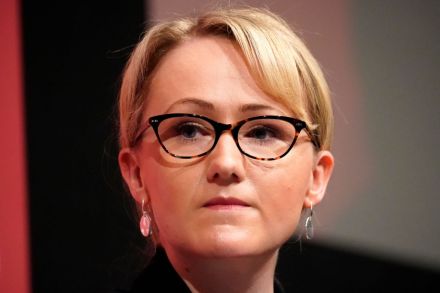
I have been trying to write about a great unpleasantness for some time: the trans debate that we don’t really have. Men go to Woman’s Place meetings. So do trans women, it’s not a separatist organisation. But for some godforsaken reason the Labour leadership hopefuls thought they might endear themselves to their lost ‘red wall’ voters by signing pledges calling Woman’s Place and LGB Alliance ‘trans-exclusionist hate groups’. I was appalled to see that the signatories included Lisa Nandy, who is bright, and Rebecca Long-Bailey, who isn’t. Anyway, having been asked not to write about this subject for months (I still have the police reports from the threats I received last time), I insisted.

Nick Robinson: Am I a superspreader?

‘Aren’t you meant to be in quarantine?’ the man in the cloakroom queue asks. I sense that his enquiry is motivated more by concern about his wellbeing than mine. ‘Don’t worry! I’ve not got the coronavirus,’ I try to reassure him cheerily. That’ll teach me to talk about my health on the Today programme. I mentioned on air that I’d taken a precautionary test after returning from holiday in south-east Asia with a cough. Soon afterwards my guide in Phnom Penh sent a message to ask how the rest of my trip had gone. Pleased and somewhat puzzled by her solicitousness, I quickly realised that she had heard about my test and wondered whether I — or rather, she — was all right.

Prue Leith: My carbon footprint should put me in jail

I made the mistake of saying I thought insects might help feed the world. They are high-protein, cheap to farm (they breed like rabbits and grow like Topsy), require little water and energy and probably wouldn’t mind being factory-farmed. Now my post is full of mealworm powder and cricket flour and invitations to champion bug farms. Being an adviser to the hospital food review has been surprisingly uplifting. The panel members are mostly NHS professionals who are champing at the bit to improve matters and have already led changes in their own hospitals, so know it can be done. In one hospital, lunch was as good as the best home cooking. Yes, some hospital food is dire, and reform will be a huge task and take years.

Julian Smith: Despite being sacked, it has been a weirdly good week

A doctor will tell you heart attacks may appear to come out of the blue, but if you look carefully, you can spot the telltale signs. The same is true of my prospects at last week’s cabinet reshuffle. Things seemed positive enough on Monday. I attended an event in London to celebrate the first same-sex marriage in Northern Ireland. Westminster Hall was packed with many of those who had pushed social changes through last year, such as Lord Hayward and Conor McGinn, together with new MPs such as Colum Eastwood, the charismatic, debonair SDLP leader.