Melvyn Bragg

Melvyn Bragg’s In Our Time is broadcast on Radio 4 at 9 a.m. on Thursday.

My farewell to In Our Time

From our UK edition

I set up In Our Time 27 years ago. I had been shunted from Start the Week to what was cheerfully known as the ‘death slot’, 9 a.m. on Thursdays, because BBC management decided I could no longer present that programme after becoming a member of the House of Lords. I know I’ve said it before elsewhere, but its success from those inauspicious beginnings was very fulfilling for me. I decided to retire from IoT in September. I will miss it as it gave me a tremendous education, but I know it will be in very good hands – Misha Glenny is a first-class broadcaster and writer. While passing on the baton, I would like to say how much the audience reaction always meant to me. There were many young people who reacted to the programme and the podcast.
My lunch with Salman Rushdie

From our UK edition

I have just come back from spending some days with David Hockney at his house in Normandy. We are making a film about him – the longest film about a single subject I have ever attempted. Like Monet’s, Hockney’s environment is his subject. The great sequence of ‘The Four Seasons’ is from his grounds. He finds all the different blossoms he needs there, and there is a river and a pond. His friend has turned an old barn into a magnificent studio. David is in his mid-eighties but is as sharp as he was the first time I interviewed him for The South Bank Show in 1978.

How McCartney and I helped put pop on the map

From our UK edition

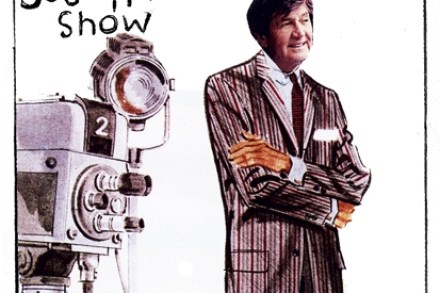
In 1977, when I set up the South Bank Show for ITV, I wanted Paul McCartney to be on the first programme. His unique talent apart, I thought he would be the key to unlocking one of my chief aims in the new programme, which was to disrupt the accepted order of play in which classical music, ballet and opera were at the top of the pyramid while down at the bottom was pop music. McCartney took some netting, but he came on and we met at Abbey Road Studios at about midnight and the programme was launched. Not without criticism: the Daily Telegraph critic wrote that as far as arts programmes were concerned, it drew the line at Lennon/McCartney. Those were the days. Clive James saw what the programme was trying to do and backed it and that was vital.

My lockdown achievement? Getting shingles

From our UK edition

The choir of Notre Dame made a recording of Howard Goodall’s beautiful version of Psalm 23. Unlike cathedral choirs here they are wholly adult. It is so well done. The hands of the pianist in the middle of the screen are surrounded by the faces of the performers singing the incomparable King James text in impeccable English. The four-minute piece is intercut with shots of Notre Dame before the great fire. I found it tremendously moving — tears to the eyes. A gift to the British from Paris. Who says the Entente Cordiale is dead? I’ve been in isolation and lockdown since the middle of March. I agree with Lord Sumption (about everything!) that this is an outrageous attack on our liberty. My dog has more liberty than I do.

Diary – 16 July 2015

From our UK edition

I witnessed what was almost a violent fight to the death on Hampstead Heath the other morning. Broad flawless sunlight, the serenity of one of London’s greatest lungs and then, from the little pond opposite the mixed bathing pond, screams. A swan, its neck arched like a bow, yellow beak wide open, was shielding four cygnets from the splashy persistence of a determined mongrel. The swan struck, the mongrel dodged the blow. The swan swivelled and followed the attacker into the shallows, but the dog still ducked and taunted the swan. A frantic owner ran along the bank fruitlessly calling out the dog’s name. Someone — me I’m afraid — yelled, ‘Grab it! It’s shallow water!’ I went towards the bank but the owner took courage.

Melvyn Bragg’s notebook: I found hell on Regent Street

From our UK edition

John Lloyd, producer of Blackadder, Spitting Image, QI etc, has boldly picked up where he left off at Cambridge more than 40 years ago. He has gone back to his youthful passion for stand-up. I’m making a South Bank Show about him and last week I went to Ealing Town Hall. He was on the 9.30 slot in ‘Chortle’ week. It was unlike any stand-up I’d ever seen. But then Not the Nine O’Clock News, his first big hit, was like no comedy show I’d ever seen and his originality continues on Radio 4 in The Museum of Curiosities. What makes his act so fresh is the mixture of funny broad jokes, bullet points of esoteric scholarship and entertaining recollections from a career seriously dedicated to making people laugh through other people.

William carries on

From our UK edition

This richly detailed and engrossing biography, a fine companion volume to William Hague’s life of Pitt, will still many arguments and feed others. Two hundred years ago the Act abolishing the slave trade was, as it remains, a beacon of humanitarian legislation, a defining moment when morality met commerce in open battle and won a famous victory. The anniversary has loosed a flood of opinions, apologies and accusations and too often the voice of William Wilberforce has been drowned. Hague restores him to his proper place, as lynchpin of the movement, though he was certainly one man among many. Thomas Clarkson did far more research, for instance.