Diary

Why I don’t regret leaving the BBC

I have just had my second jab and it poses a dilemma. As an assiduous Covid rule-taker, I have been appalled by those — including friends and relatives — who have flouted or sidestepped the regulations and guidelines in the belief that they don’t apply to them. ‘We know we shouldn’t but it’s good for us’ or ‘We use our common sense’, they say. Since the issue is as incendiary as Brexit, I have fumed in silence. Of course the rules are anomalous and inadequately explained by ministers but I tend to trust the scientists. That said, the mantra ‘no one is safe until we are all safe’ is clearly nonsensical. Unlike those who are still waiting, I am now as safe as I am ever going to be. Hence my dilemma.

My painstaking preparations for Prince Philip’s funeral

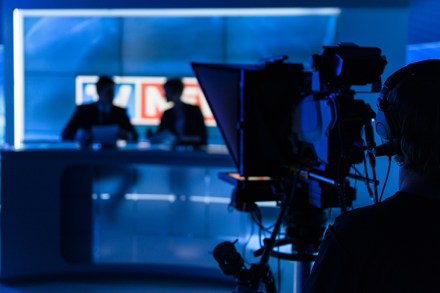
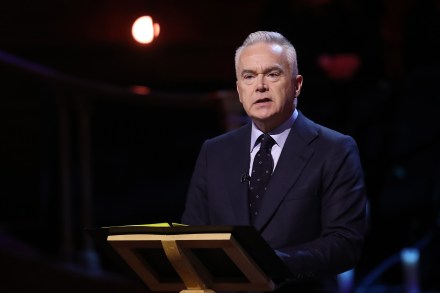
The files arrived marked ‘STRICT EMBARGO’ and ‘CONFIDENTIAL’ and ‘FORTH BRIDGE REVISED’ and stamped with various crests and insignia. My dog Mot was intrigued and sniffed the stack warily. I have a few days to ingest this mass of information — ceremonial detail, armed forces involvement, order of service, processional arrangements, musical selections, historical precedent, the unabridged chronicle of Windsor and its College of St George and its splendid chapel — before hosting the BBC’s coverage of the funeral of the Duke of Edinburgh. In four hours of live broadcasting, watched by an audience of millions, the focus is on accuracy and tone.

The hidden death toll of lockdown

The last patient I treated was 105 years old. She has lived through two world wars, a depression and at least five pandemics. It’s a real honour to treat centenarians. They teach me much about life: how it is and how it ends. I can also lighten the mood with my 80-year-old patients by telling them that they’re still young. It’s common to hear talk about an ‘ageing society’ being some kind of disaster befalling the country. Yes, people are leading longer, healthier lives now than ever before. Is this really a ‘demographic timebomb’? I’d call it the greatest achievement of our time. When my patient was born in 1915, average life expectancy was about 55.

In America, politics has become a form of religion

When I finally head back to church this weekend, after a year of Covid-avoidance, it is going to feel a little strange. These past 12 months constitute the longest stretch of time I’ve been away since I was born. And I’m not going to lie, part of me liked the sudden plague-long dispensation. I’ve become used to the lazy, empty, gently unfolding Sundays. They’ve grown on me. I could live like this, it occurs to me — as so many others do, all the time. So why go back? When I ask myself what exactly I’ve missed, I realise it isn’t a weekly revelation. I don’t expect to feel something profound every time I go to Mass — because most of the time I don’t, and rarely have.

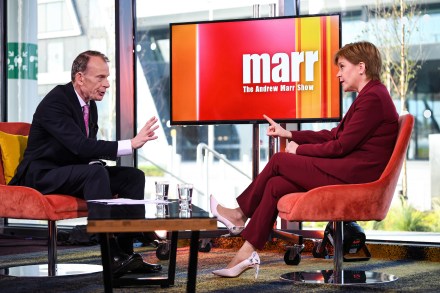
Andrew Marr: Scottish Unionists must rethink – and fast

Spring Cannot Be Cancelled arrives on the doorstep. It is a gloriously illustrated book by Martin Gayford about his conversations with David Hockney, now living in Normandy, and who I have recently interviewed. It’s a book about many things — Hockney’s love of France and French painting, his reflections on many other artists among them. But at its heart is this octogenarian’s adoration of nature, his belief that art is rooted in love, and a restless gusto for life. That’s a lesson I’ve been thinking about as I hirple (good Scots word) round Regent’s Park, observing spring surge all round me. Every day, the faint green haze on the trees grows richer, buds explode into white or pink, new flowers jump from the earth.

Why I won’t be replacing Piers Morgan

Piers Morgan may have been the UK equivalent of a TV shock-jock, but there’s another side to him. I’ve known Piers for more than 30 years — we went to the same journalism college — and he has a large heart. Years ago Judy and I and the kids were holidaying in Florida and, unknown to us, we were papped in a hotel pool. The photos were hawked around the tabloids and I had a call from Piers, then editor of the Daily Mirror: ‘These pool snaps… I’ve bought them, exclusively.’ ‘Cheers, Piers. I thought you were a mate.’ ‘No, no — I did it as a favour. I’m suggesting I send one of our snappers to your hotel, do some properly posed holiday shots of you all, and run those instead.’ I shook my head.

Science is not an instrument of patriarchal oppression

Safe spaces, diversity quotas, gender-neutral pronouns, culturally relative facts, heteronormative hegemony. Are my right-on credentials right on enough? Am I sufficiently penitent for being white, cis and male? Will I be cancelled or de-platformed by the Pronoun Police? What is my woke-quotient? At least as far as science is concerned, it’s a satisfactory zero. Science is not a patriarchal instrument of colonial oppression. Nor is it a social construct. It’s simply true. Or at least truth is real and science is the best way we have of finding it. ‘Alternative ways of knowing’ may be consoling, they may be sincere, they may be quaint, they may have a poetic or mythic beauty, but the one thing they are not is true.

Hollywood can’t believe Harry’s dissed Queen Oprah

Santa Monica is a soothing place to be locked down. I moved here from New York for four months in November with my two adult kids after I lost my beloved husband, Harry Evans. I couldn’t face the task of finishing a book in our empty country house where for years we’d shown each other our pages at the end of the day and laughed over chicken pot pie. Meanwhile in Manhattan, I was tired of pretending that freezing outdoor dining, with buses barrelling past, was like sitting on the sidewalk at Les Deux Magots in Paris. With the California sun on my back at breakfast, and the orange trees in my garden, I have the calm I need to reflect on happy times with Harry. The theft of Lady Gaga’s French bulldogs sent a chill through the serenely ensconced household.

George Osborne: Why I’m going into banking

Spring in Somerset — again. If someone had told me last February that I’d spend seven of the next 12 months here, I’d have explained that was impossible: I’ve always been a city boy. Three lockdowns later, and we’ve bought a home here. I love it. Snow, then snowdrops, now daffodils — and the wild garlic is coming up in the woods. Covid has converted me to the countryside. Bruton Place in Mayfair? Not for now. Bruton itself? Yes. There’s a Bruton Set, of course. They spend a lot of the time explaining why they didn’t want to be part of the Chipping Norton Set. I’ve met one of my heroes: Sir Don McCullin, the war photographer. He’s lived near here for decades. Before Christmas he showed me his archive of prints.

Salmond, Sturgeon and why The Spectator went to court

Did Nicola Sturgeon lie to the Scottish parliament? A Holyrood committee into the now infamous Alex Salmond affair has been looking into what she knew and when she knew it. In its possession is Salmond’s explosive written evidence, which contradicts her account. So who is telling the truth? This SNP-chaired inquiry has been in no rush to find the answer. Last month, it made the extraordinary decision not to publish the Salmond submission at all — blaming legal problems. There’s a risk, it said, that his account might identify some of the women who complained against him, thereby defying a court order to protect anonymity. Without the key evidence, its inquiry would run into the ground. All very convenient. And questionable.

Trump is being defended by Foghorn Leghorn

We weren’t long into Bruce Castor’s opening speech defending Donald Trump in his impeachment trial before we knew it was going to be special. ‘I don’t want to steal the thunder from the other lawyers’ thunder,’ Castor intoned to a mildly befuddled Senate. ‘But Nebraska, you’re going to hear, is quite a judicial thinking place.’ We never got around to the payoff for that one, but there were plenty of other amusements. We learned about the ‘Greek Republic’, which apparently awaits salvation from the United States Senate. We had a tech update: ‘We all know what records are, right: the thing you put the needle down on it and then play it.’ My favourite: ‘The floodgates will open.

Minority groups should ignore the anti-vax charlatans

My great-great-grandmother, born on a Barbadian plantation and transported to what was British Guiana in the 19th century, gave rise to a tribe that has spread across the globe. Weirdly, Covid has brought us together (via Zoom) in a way that used to be reserved for weddings and funerals. My New Yorker nephew found a time of day that could accommodate the Californians, the Canadians and the English rump in London, Cambridge and Nottingham. Harlem’s lights glimmered from another nephew’s screen, while the Florida gang kept their windows shut just in case the neighbours not so far away in Mar-a-Lago decided to drop by. Sadly, someone forgot to let the Trinis, the Bajans and the Welsh know about the meet-up, and it was way too early for Jakarta.

The horrifying toll of lockdown on the poor and mentally ill

I start the week with someone throwing faeces at me. I thought people were supposed to clap for doctors these days, not hurl poo at them? Never mind. Thankfully I’m fast on my feet despite it being the early hours of the morning, and dodge the mess, which hits the wall behind me. I’m working a week of nights covering A&E for mental health and this kind of mayhem is not as unusual as you might expect. The naked man, covered in excrement, runs around screaming. The nurse with me doesn’t even flinch. I love A&E nurses. They’ve seen and heard it all. I’m sure if there were a nuclear Armageddon, it would only be cockroaches and A&E nurses who would survive.

Vaccination is the only way out of this catastrophe

Monday started with me opening my bedroom windows to let what little light there is come through, only to find two workmen on my balcony looking surprised that anyone lived in the building. Since my shooing gestures weren’t understood, I had to step outside, putting myself inside the regulatory two metres, to tell them to ‘get off my land’. As they weren’t even wearing masks, I now am worried they could have been carrying Covid. My landlord is carrying out external redecorations. Is this truly ‘essential’ work? I asked.

The cult of Donald Trump

The thing we most need to understand right now is how you deprogram people who have been in a cult. By cult, I mean a group of people living out an imaginary world view created by a charismatic leader. These things sometimes end with the guru hopping on a private plane to escape the authorities; others end in mass suicide; still others go up in literal smoke, as David Koresh did, or sometimes they collapse in a welter of claims of abuse and corruption. But when the cult is political, and when the guru is the sitting president of the United States, it all gets a little messier. That’s what the core of the Trump movement is. Not all Trump voters, by any means. But the core: a cult. And these lost souls will believe anything and everything the leader says.

The comment that baffled Boris

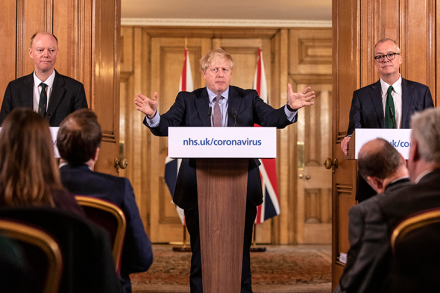
Real men are not supposed to confess to feeling fear. But I am frightened, second time round, about the plague. There is superstition involved. Back in March, I had an underlying belief that I would be somehow immune. This time, I feel differently. It’s partly those vertiginous graphs and partly my gloomy streak, a ‘just-my-luck’ sense that if I did succumb, it would happen with the vaccine only a hand’s-grasp away. So I’m cautious. For many people, the latest lockdown is atrocious, job-destroying, family-wrecking news. For me, it’s more of the same.

The joy of a cancelled Christmas

Among the greatest bores right now are those friends who insist on telling you, usually as if it’s some kind of state secret, that Covid lockdown hasn’t changed their lives very much. They work from home, anyway, you see. They were practising social distancing before it was cool! They’re not terribly social at the best of times. How lovely not to have to endure another dinner seated next to some tedious stranger or, worse, a drunken office party at this time of year. And I have to confess that I am one of those bores. Yes, I miss people a bit, or at least being around lots of people. But an excuse to be without them for days on end? I have every intention of taking full advantage of it until the vaccine.

Jeremy Vine: Save our cycle lanes

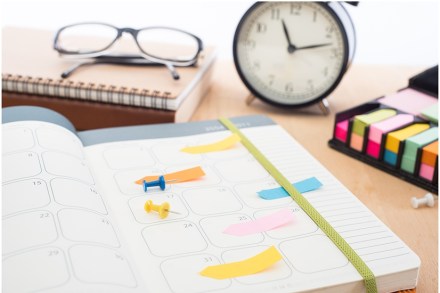
‘Stopping the diary/’ wrote Philip Larkin, ‘Was a stun to memory,/ Was a blank starting.’ I never really understood those lines until Covid. The pandemic has turned my diary into an acre of white space, like the gymnasium wall at school just begging for some adolescent graffiti. ‘PARTY,’ I want to scribble. ‘SMALL FLAT, 100 PEOPLE, 8 P.M. BRING A BOTTLE.’ The damping down of all social activity this year has made the question ‘What did you do over the weekend?’ crassly offensive, or even something more sinister. Am I being asked this by a member of the new Stasi trying to catch me out? Before the pandemic I used to pretend to have an interesting life. Now I admit to a boring one: ‘Nothing,’ I reply.

How the green-ink brigade is destroying the arts

I’m often asked why Channel 4 recently banned an episode of my show The IT Crowd because of ‘transphobia’. I blame spell check. Before the internet, people who sent in crazy, entitled, demanding complaints were known as the ‘green ink brigade’ because of their tendency to write letters in what they thought were attention-grabbing colours. These same lunatics are now taken seriously because spell check means they no longer confuse ‘there’, ‘they’re’, ‘their’ and ‘antelope’. It’s still the same crazies, but these days they’re on Twitter and jumpy executives carry out their every wish.

We don’t want pandemic novels – we want gentle escapism

I’m often asked when I’ll write a pandemic novel. I’m not sure I’d ever be tempted, though the backdrop of Edinburgh’s deserted streets at the height of the (first) lockdown certainly provided food for the imagination. I dare say novels will arrive — some may even be good. But I find that fiction concerning momentous events usually benefits from the dust having settled. Only then can we begin to comprehend the human costs, stresses and implications, by which time there may also be an audience ready to relive the experience. In the near future, however, I foresee a hunger for escape to a gentler and more reasonable world.