James Graham

James Graham is a playwright and screenwriter. His latest TV series, Sherwood, is available on BBC iPlayer.

Boris, Sherwood and the politics of the past

From our UK edition

It feels like the end, but we’ve been here before. The past months of Boris Johnson’s teetering administration have felt like the final act of a Shakespearean tragedy and yet the curtain just won’t fall. This week saw one of those rare electric nights of drama when a prime minister looks set to be toppled. At least, they used to be rare. In the first 25 years of my life I had only three prime ministers. The past chaotic decade looks to be about to produce its fourth. The axe hovered in the air for Johnson, but was prevented from falling – at least at the time of writing – by Nadhim Zahawi, the MP for Shakespeare’s Stratford-upon-Avon, denying us the climax. The question many have is – why?

The birth of the culture wars

From our UK edition

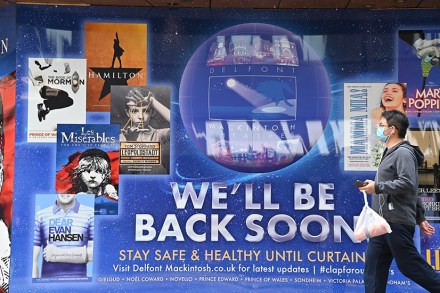
The last time I wrote for The Spectator’s diary slot, over the summer, theatres were tentatively beginning to turn their lights on again, following the historically long closures at the height of the pandemic. On Monday night the West End went dark once more, but thankfully only briefly. Theatres along Shaftesbury Avenue and beyond dimmed their lights at 7 p.m. to mark the legacy of Stephen Sondheim, who died last week. I came to Sondheim’s work quite late myself, and I’m sure a new audience will be found following the affection generated at his passing. Sondheim’s impact is felt as much on the theatre scene here as it is in America, but he didn’t write about British politics, of course — or did he?

The true cost of theatre closures

From our UK edition

It turns out that if there’s one thing more expensive than making theatre, it’s not making it. Empty buildings haemorrhage money. Postponing a show already in rehearsal or raising the curtain only for it to be dropped shortly after — as happened in December when theatres reopened just to close days later — scares off investors and unsettles audiences. (I might also say that being unable to gather as a community to make sense of the world through stories is costly not just in a financial sense. But then I am a pretentious playwright.) No, what we need is to begin filling our diaries once again with plays, musicals, comedy gigs and concerts. What the live arts need is certainty.

Can London’s theatres survive this crisis?

From our UK edition

Never have I stared at my own face so much. Not because I want to, it’s just always there now, ever present in one part of the screen I’m compelled to look at as I talk to the person who requested a Zoom, or a Teams, or a FaceTime. It feels apt, in an existential crisis, to keep opening new ‘windows’ to see out into the world, only to discover they are only mirrors, reflecting oneself. A dark morality tale for the isolation age. ‘You won’t find it on Zoom, James, the answer to your problems lies within.’ Or something. Is that really what I look like when I talk, though? Why do I always look so tired? It’s not as though I was out last night.