Diary

Susan Hill: The brilliance of the NHS cancer service

Exactly 50 years ago I drove, for the first visit of many, across country to Aldeburgh in Suffolk, following the Pied Piper, Benjamin Britten. I had been obsessed by his music, and indeed by him, since first hearing the ‘Sea Interludes’ from his opera Peter Grimes in a music appreciation lesson. His sound worlds, his persona, the place he both lived in and recreated in his work, spoke to me in a way nothing else ever has. As I drove in, past the church to see the sea, the Moot Hall, the fishing boats, the shop where he had bought china mugs to string in a line and tap with spoons for the sound of raindrops in Noye’s Fludde, I felt the real, everyday world and his imaginative one interlock. That first visit is etched in my memory.

Sarah Sands: I never wanted to climb the BBC career ladder

After I took the editor’s job at Today on Radio 4 nearly three years ago I had to answer to John Humphrys, in his kitchen, over monastic soup and cheese. He asked me if my hidden intention was to try for one of the top jobs at the BBC. I told him that editing the Today programme was the top job so far as I was concerned. To have no interest in any higher rung on the corporate ladder confers freedom, but federal powers tend inexorably to exercise control over member states. Over time I came to realise how much sovereignty means to me, and handed in my notice last week. I shall leave in September cherishing the programme even more than when I joined.

Rory Stewart: How will Brexit be remembered when my son gets to my age?

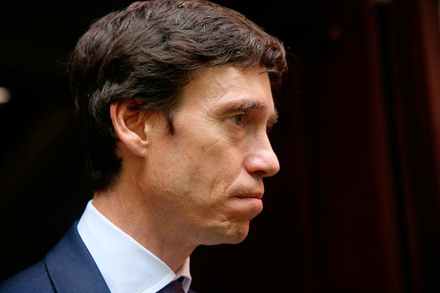
I still live in the same house, in London, in which I lived as a baby. I walk my five-year-old son every morning to the same school, on the same route that I took 43 years ago, holding my father’s hand. We sing Gilbert and Sullivan in the same bedroom. I am whacked with a sword in the same garden square in which I once whacked my father. And the picture of me in red velvet knickerbockers can be superimposed over the picture of my son in his Batman costume — each of us seated at the same corner of the same dining room, peering gloomily at the two candles on our birthday cake. What will London look like when my son is the age I am now?

Andrew Doyle: I may have to kill off Titania McGrath

I start the week by going through my iPhone to delete the numbers of former friends. It sounds depressing, but it’s actually quite cathartic. I suppose it all started with Brexit. I’m not a confrontational person, so it was surprising to find so many friends turning against me over their newfound devotion to a neoliberal trading bloc. Since then, I’ve watched the ongoing curdling of rational minds with a growing sense of incomprehension. So many on the left appear to have surrendered to a collective fantasy in which the slightest point of political disagreement is interpreted as evidence of fascism.

I was joking about Meghan and Harry becoming king and queen of Canada

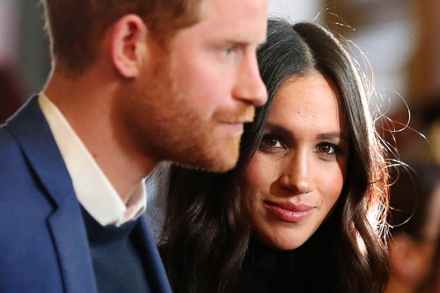
Washington, D.C. On 8 January, I tweeted about the Sussex-Markles: ‘Obviously the plan is to return to Canada, lead a revolt against British rule, and establish an independent Canadian monarchy.’ Two days later, the New York Times opened a story about the Canada-bound Duke and Duchess of Sussex: ‘Some have suggested they could become king and queen of Canada.’ IT WAS A JOKE! Otherwise, I’m going to have Canadian security surveilling my cottage in Ontario as a node of Sussexite sedition. Yet maybe I had glimpsed something. A poll has suggested that 60 per cent of Canadians would support the appointment of Prince Harry as governor general.

Judge Boris by what he does, not how he does it

The night before our last issue went to press, I received a message from the Prime Minister saying that he was sorry, that he had hoped to write the diary but couldn’t find time. No problem, I replied, he’d just seen off Jeremy Corbyn and had a Queen’s Speech to agree and deliver and our print deadline was 10.30 a.m. At 7 a.m. the next morning, I woke up to find a new message ‘Have done diary. Am finishing now.’ At 10.20 a.m.: ‘It’s done. 860 words.’ Then another message: ‘Still in car.’ At 10.28 a.m., with two minutes to go, I gave up hope. Then, at 10.29 a.m., it landed, word-perfect. Boris Johnson likes to take things close to the wire, often to the despair of those around him.

Boris Johnson: Perhaps my campaign was ‘clunking’. But sometimes, clunking is what you need

You may wonder why I am up at 4.45 a.m. writing this diary when I have a country to run, Queen’s speech to prepare, vast mandate to deliver, and so on. The answer is simple. It is a question of obligation. When I bumped into the editor (at Sajid Javid’s 50th birthday party) a couple of nights ago, he explained — with a slightly glassy expression — that he had taken a gamble. He had already printed the cover of the Christmas treble issue, he said. I know all about the Xmas cover. It is lavish, laminated, and on much thicker stock than the normal cover. It costs a bomb. Once you have printed it, you can’t change it. ‘Your name is on it,’ said Fraser. What could I say? I became editor 20 years ago. I owe this magazine.

Andrew Sullivan: The evidence against Trump is overwhelming

When people ask me what the mood is in DC these days, the only word I can come up with is ‘surreal’. Everyone in this town — including almost all the Republican senators — knows Trump is guilty as charged over Ukraine, and then some. The evidence is overwhelming. And seeking to get a foreign power’s help in a domestic election is such a textbook case for impeachment — the Founding Fathers were obsessed with foreign meddling — it really should be over by Christmas. It won’t be because of Roy Cohn. That legendary lawyer had a simple technique whenever his clients, Fred and Donald Trump, were sued. He would sue back. And Trump has a simple technique when accused of anything: immediately accuse the accuser of the exact same thing.

Remembering the genius of Clive James

‘Clive James Stirs.’ That was the standard subject line for the emails I used to get from the great Australian polymath. I liked it. It cast him, I thought, as a sort of barnacled kraken — still hanging in there, occasionally roused to action. He was usually submitting a new poem. For a while, after he first announced his illness and his poem ‘Japanese Maple’ had gone viral thanks to a tweet from Mia Farrow (Clive found this funny, and was pleased), there was a faintly ghoulish cachet in the thought that we might be the publishers of Clive’s last poem. But of course, he didn’t die — and the poems kept coming. ‘In the meantime I hope to have a couple more poems for you,’ he wrote in spring 2015, ‘if I am granted life.

Andrew Marr: December elections are a very bad idea

December elections are a bad idea. Never mind politicians talking rot — the ludicrous promises, the ludicrous numbers — it’s the lack of light and the foul weather that is making this one so bleak. People should be out of their houses, having lively conversations in the daylight, queuing for public meetings, hammering placards on to fences or alongside fields. But my impression is that most of us are staying at home, curtains drawn, harvesting insights from bloggers and news bulletins. The country feels crotchety and antisocial. I’m interested in the parallels with the December 1923 election. Back then, a Conservative prime minister, lacking his own mandate, risked going to the country.

George Osborne: The temptation of voting Lib Dem

Going to Pizza Express is a very usual thing for me to do, unlike Prince Andrew. I grew up in the branch on Notting Hill Gate. Family lunches, children’s birthdays, first dates and political summits all took place around its tables. In 2005 David Cameron and I went there for dinner to take stock of his campaign for the Tory leadership. My phone went off. It was the chancellor, Gordon Brown. He wanted to know whether I, as his shadow, would skip a key vote as he couldn’t make it. I politely said we should let the whips arrange the pairing. I held the phone to David’s ear as Gordon shouted that he’d ‘never been treated with such disrespect’ in all his 22 years in parliament. Then he hung up on me.

It would be a big mistake to underestimate Corbyn

Thud. It’s my advance copy of Dorothy Byrne’s new book, Trust Me, I’m Not a Politician, landing on the doormat. I’ve known Dorothy, Channel 4’s head of news and current affairs, since we were in the newsroom together at Granada Television in Manchester almost 40 years ago. Then as now, she took no prisoners. I remember her curtailing her research conversation with a regional politician with the words: ‘No, I’m afraid I’m not inviting you to appear on tonight’s Granada Reports, councillor. You’re simply not coherent.’ Dorothy’s book reflects on the startling fact that more Britons believe in aliens than trust politicians, and asks what’s gone so badly wrong.

If parliament were more modern, might it become less aggressive?

I’m writing this in Crete where a late summer has seen brilliant sunshine and temperatures reaching 25°C — but can I enjoy it? The unrelenting diet of gloom coming at me from every direction leads me to question even the dazzling blue Aegean and the cloudless sky. It’s surely a sign of global warming and the possibility that we are, quite possibly, doomed. I worry about Jeremy Corbyn. Will he be in Downing Street by Christmas Day? Will Trump have started world war three? Will Orfordness lighthouse, which has stood valiantly on its little shingle spit since 1792, have finally fallen into the sea? Everywhere I look, the tide is drawing in. The collapse of Thomas Cook has left Crete — and the rest of Greece — in a fairly terrible state.

Nick Timothy: Theresa May folded like a Brompton bike during the Brexit negotiations

As my train hurtles northward, my phone starts to buzz. Jeremy Corbyn has agreed to hold a December election. So: a Tory prime minister, miles ahead in the polls, fighting an election pledging to get Brexit done — and facing a useless opposition. It all feels very familiar. And yet comparisons with 2017 are not so simple. Last time round, Labour successfully faced both ways on Brexit. Now their indecision means they are being squeezed between pro-Leave Tories and pro-Remain Liberals. Last time, Corbyn won the consolidated anti-Tory vote, but today it is fragmenting. And the differences continue. Boris Johnson is a born campaigner, whereas Theresa May wilted under pressure. Boris has ended austerity, while Theresa refused to change fiscal policy.

Should we be blaming Balliol, rather than Eton, for our political woes?

In our house, the biggest source of tension is that I think there is an important difference between deferring a decision — ‘Do we need carpet on the stairs?’ — and making one. Charlotte argues that ‘Inaction is a choice; not choosing is a choice.’ One that can have consequences, she insists. Like when the house is freezing because the weather has turned. I saw her point on Super Saturday, when MPs voted not to decide — yet — on whether to back Johnson’s Brexit. The decision to delay (‘inaction’) may end up having more momentous consequences than approving the deal in the meaningful vote. Which is why I was annoyed with all those MPs and journalists who dismissed Super Saturday as ‘Soporific Saturday’.

Helena Morrissey: my manifesto for the next govenor of the Bank of England

The start of term at Oxford University is bittersweet for the close-knit Morrisseys; we have just ‘lost’ three offspring to their undergraduate studies. Dropping them off at their colleges (Wadham, Christ Church and Keble, with another Morrissey at All Souls), my husband Richard and I felt a little wistful as well as proud. Every year we observe the striking diversity of the students in every sense bar one: they all seem very clever. Oxford is getting something right — broadening accessibility by contextualising offers, while unashamedly sticking to high standards. This is helping it maintain its crown as Britain’s highest-ranked university, one of four in the global top ten (the other six are all American).

Even Donald Trump is tweeting about Spectator USA

We’ve just launched the US edition of The Spectator and the reaction so far has been great. Americans can be quite gloomy these days, but business optimism runs in their blood. They seem enthused about The Spectator’s transatlantic appeal. I met no end of Rod Liddle fans who thrilled at the sight of his name on the first US cover. Various people told me that America was crying out for a magazine with our sense of humour. But not everyone gushed. At our launch party in Washington DC, Anne Applebaum, the historian and journalist, asked how on earth we expected to make ‘the most quintessentially English magazine’ work in the US. The answer is that the US edition isn’t all that English. Most of the writers are US-based; most of the articles are about America.

Richard Dawkins: It’s hard to imagine that Leave would win a second referendum

On a book tour to promote Outgrowing God, travelling from London’s Festival Hall to Birmingham and then Manchester, I have plenty of time to listen to audio books, my new enthusiasm. This week it’s Douglas Murray’s The Madness of Crowds. The title is a well-chosen echo from Charles Mackay’s 1852 classic. Well chosen because our present epidemic of bullying ‘wokeness’ is disturbingly reminiscent of the witch-hunts of past centuries. I’ve had mixed feelings about Murray since he traduced me as a cowardly Islamophile (I’m accustomed to the opposite, equally unjust accusation). But his latest book is beyond brilliant and should be read, must be read, by everyone.

Robert Hardman: My private encounter with David Cameron and the Queen

David Cameron’s revelation that he sought ‘a raising of the eyebrow’ from the Queen during the 2014 Scottish referendum campaign has caused conniptions at the Palace. But it has also eclipsed the royal record of the prime minister who did more to reform the monarchy than any of the Queen’s 14 (and counting) British PMs during this reign — Churchill included. It was Mr Cameron and his chancellor who tore up the 250-year-old Civil List, the moth-eaten system for funding the monarchy, and devised an annual grant pegged to Crown Estate revenues. It was also Mr Cameron who rewrote the laws of succession. Since 1979, there had been 13 failed parliamentary attempts to change a system which enshrined male primogeniture and a ban on marrying Catholics.

Nick Robinson: is the country ready for Hexit?

The nation is deeply divided. We can, it seems, talk of almost nothing else. Passions could scarcely be higher. No court or parliament can block or postpone it. Hexit is happening. That’s right. Hexit. Humphrys is leaving the Today programme after 30 years. On learning the news, one of more than seven million loyal listeners revealed his outrage and sense of loss, tweeting: ‘Who will I shout at on the radio in future?!’ My friend and companion in the Today studio Justin Webb replied with his characteristic charm. ‘Oh, that’s simple. Nick Robinson.’ I have been warned. John is famously irascible.