Arts feature

The man who changed Indian cinema

At 6ft 4½in tall, Satyajit Ray was head and shoulders above his countrymen. His height was unheard of among Bengalis, ‘a low-lying people in a low-lying land’, as the colonial saying went. With his stature, jawline and baritone voice, he might have been a Bollywood hero. Instead, he chose to tower over the world of art-house cinema, a directorial giant among the likes of Bergman, Kurosawa and Fellini, alongside whom he is credited with inducting cinema into the temple of high culture. His standing was secured with his first film, Pather Panchali, which premièred at New York’s Museum of Modern Art in 1955. India then only churned out musicals which, as Ray later put it, ‘present a synthetic, non-existent society’.

The opera that wouldn’t die

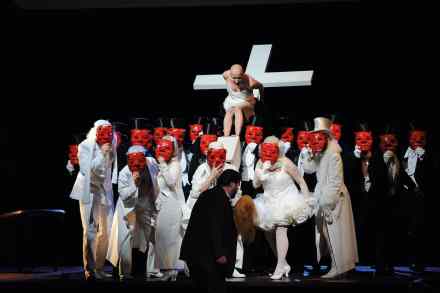
When Erich Wolfgang Korngold completed his third opera, Die tote Stadt, in August 1920, he’d barely turned 23. Yet such was his reputation that what followed was practically a Europe-wide bidding war for rights to the première. The young composer had his pick of companies and conductors (the Vienna State Opera tried and failed). In the end – almost unprecedentedly – Die tote Stadt was launched on the same night in two cities simultaneously. Audiences in Hamburg and Cologne both erupted into applause, but Korngold, who could be in only one place, had chosen Hamburg – where he was so dazed by the response that Richard Strauss, who was present in the audience, had to remind him to go up and take his bow.

The art of extinction

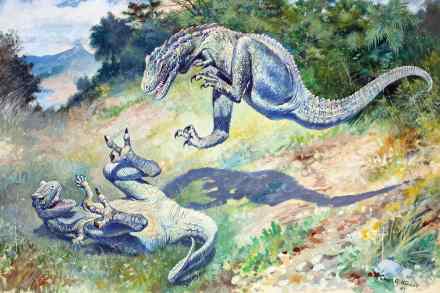
In one of Italo Calvino’s fables, a single dinosaur survives the extinction of his kind. After a few centuries in hiding, he comes out to discover that the world has changed. The ‘New Ones’ who have taken over the planet are still terrified of dinosaurs; they tell each other terrifying stories about the time when the reptiles ruled the world, or secretly fantasise about being brutalised by them, but they don’t recognise the survivor for what he really is. They no longer know what a dinosaur looks like. The newcomer is given a name – the Ugly One – and invited into their society. Eventually, they find a heap of dinosaur bones in a melting glacier, and take their new comrade to gawp at it.

Nationalise the royal collection!

The royal collection consists of millions of objects whose purpose and ownership are sometimes obscure. Does the collection serve the monarchy, and if so how? Or is the care of the collection, and of the palaces that contain it, the sacred duty of the Queen? Housed throughout the royal palaces, it includes works held by the Queen in trust for the public as well as those owned personally by Elizabeth Windsor, such as valuable paintings by Monet and Paul Nash that were bought by the late Queen Mother and not taxed as part of her estate. This is the sort of confusion that needs to be cleared up to prevent the perception that the royals act in their own narrow interest when it suits them, a necessary step in the post-Prince Andrew era.

The return of the implausibly moreish Borgen

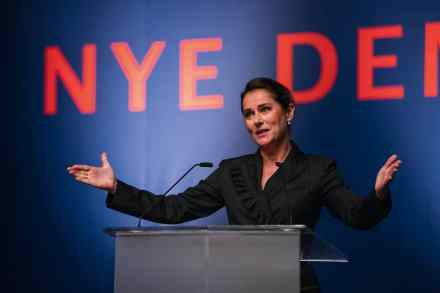
A decade ago the unthinkable happened: a subtitled TV drama about people agreeing with one another went global. On paper it bore the hallmark of a barrel-scraping pitch from Alan Partridge. Somewhere between youth hostelling with Chris Eubank and monkey tennis, he might easily have proposed a new ne plus ultra in implausible entertainment concepts: Danish coalition politics. Yet Borgen caught a thermal and soared. The show took its name (which, correctly pronounced, sounds like a Cockney saying ‘Bolton’) from the so-called fortress in the heart of Copenhagen where state business is conducted. It featured Birgitte Nyborg, a moderate heroine who snuck into Denmark’s highest office through a small centrist crack between left and right.

The nightmare of making films about poets

Television and film are popular mediums. Poetry has never been popular. This is Sam Weller’s father in Pickwick Papers, when he discovers his son writing a valentine, alarmed it might be poetry: Poetry’s unnat’tral; no man ever talked poetry ’cept a beadle on boxin’ day, or Warren’s blackin’, or Rowland’s oil, or some o’ them low fellows; never let yourself down to talk poetry, my boy. In 1994, I made a short film about Kipling. The director, Tony Cash, a man with a first-class Oxford degree in Russian, objected to a two-second reference to Aristotle’s ‘pity and terror’ in my script. ‘If you mention Aristotle, they [the TV audience] will think you’re an arsehole or an idiot.

Artist, actor, social justice warrior, serial killer: the many faces of Walter Sickert

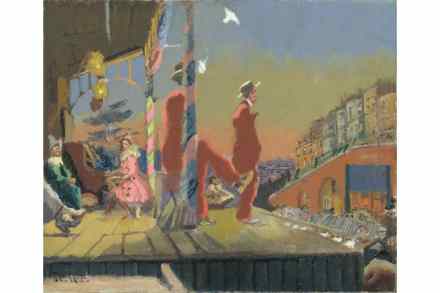
‘It’s too dark and life is too short,’ was Walter Sickert’s explanation of his decision to leave London in 1898. Separated from his first wife Ellen Cobden and in financial trouble, he did a flit across the Channel to Dieppe. A magnet for artists in the summer season, the town had long been a popular subject for tourist views. ‘I see my line…’ he wrote soon after his arrival. ‘Picturesque work. This place Dieppe, is my only up to now, goldmine.’ The place had already had a transformative effect on his painting.

Why I booed Birtwistle

With the passing of Sir Harrison Birtwistle last month we are witness to a changing of the guard in new classical music. For 70-odd years contemporary music in the West was dominated by a highly exclusive atonal mode of thought that produced works that were hostile to the wider music-loving public and written for a small but highly subsidised cultural circle. If it was spontaneous when it began, the atonal idiom – meaning a highly dissonant style – quickly ossified into a kind of luxury backwater of music, so obscure it couldn’t even be questioned, yet endlessly backed by public subsidy which the public could nevertheless never challenge.

‘I came, I saw, I scribbled’: Shane MacGowan on Bob Dylan, angels and his lifelong love of art

We join Shane MacGowan, much like a character from one of his songs, in a world where prosaic, often harsh realities vie with feverish flights of fancy. The former Pogue conducts this interview remotely, ‘sitting on a vastly uncomfortable lime green leather chair, within reach of a grey bucket, in a small but surprisingly unspeakable room. In a corner, Jimi Hendrix is repairing some broken guitar strings, while in the kitchen behind me, Bono is loading the dishwasher and a leprechaun with a gold earring is rolling what he says is a cigarette. On the walls are a selection of my wife’s multidimensional angel paintings and one or two of my drawings. Clint Eastwood is on the telly and Maggie Barry is on the record player.

Disney’s rococo roots

Extensive research went into the writing of this piece. First, I lay on the sofa watching Disney’s Cinderella. Then, Beauty and the Beast. Then, because I’m assiduous about these things, Frozen. The singalong version. I wish I could tell you that the sofa was a rococo number with ormolu mounts and a pink satin seat, but that would upholster the truth. My excuse – who needs one? – was the Wallace Collection’s delightful exhibition Inspiring Walt Disney: The Animation of French Decorative Arts. It’s not often that I leave a show smiling, humming and near enough twirling my way through the West End. Bibbidi-bobbidi-boo.

The beauty of gasholders

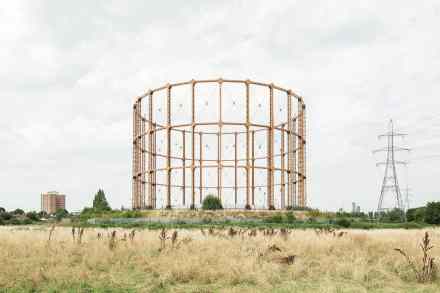
On 25 October 1960, a Boeing pilot aiming for Heathrow accidentally landed at an RAF base, only realising his error when the runway turned out to be alarmingly short. Disaster was averted, but the near-miss caused some embarrassment, and the minister of aviation had to answer questions in the House. What had confused the pilot, it emerged, was the advice from air traffic control to start his descent ‘in line with the gasholder’. He had picked the wrong one. Ever since, the gasholders near Heathrow and RAF Northolt have had painted on them, in 50ft-high letters, ‘LH’ and ‘NO’. There is a surprising amount of strange lore about these industrial relics, which once kept the nation’s homes and factories lighted and warm.

Don’t read Ulysses; listen to it

Dublin. 16 June 1904. A little after 8 a.m. Two men – both annoying, one stung with grief and ambition – are having an argument. One is pierced by thoughts of his late mother. ‘Pain, that was not yet the pain of love, fretted his heart.’ She has come to him in a dream smelling of wax and rosewood. ‘Dedalus,’ the other calls up to him. ‘Come down, like a good mosey. Breakfast is ready.’ Ireland. 16 June 1982. 6:30 a.m. Radios all over the country emit the words ‘Stately, plump Buck Mulligan’, and don’t stop broadcasting until they have read out every word of Ulysses, down to its last, heart-stopping syllable. There was no abridgement and no explanation: just the text, entire.

Raphael – saint or hustler?

For tourists to Rome, the must-see event of 1833 was the exhumation of Raphael from his tomb in the Pantheon. For years the city’s Accademia di San Luca had been claiming possession of the artist’s skull and running a profitable line in souvenirs. That September, the question would be settled. Was the ‘most eminent painter’, lauded in his friend Pietro Bembo’s fulsome epitaph as having ‘lived virtuously 37 virtuous years’, really buried there? And did his skeleton have a head? Hans Christian Andersen was one of 3,000 ticket holders for the six-day lying-in-state. The skeleton was there all right, complete with head, but its dignity, reported Andersen, was somewhat dented by the rattle of bones when it was returned to the tomb.

Keith Allen discusses Pinter, Max Bygraves and the sensitivities of contemporary audiences

Keith Allen was cast in his latest show by Lady Antonia Fraser. He explains this odd circumstance when we meet during a break in rehearsals for Pinter’s The Homecoming. ‘I was asked if I wanted to do The Caretaker at the Theatre Royal Bath. And I said, “Yeah, I’d love to.” Then I had a conversation with Antonia Fraser who told me the script was licensed to someone else. She said, “Why not do The Homecoming instead – with you as Max?” And I said, “Yes.”’ Max is the thuggish head of an emotionally damaged Cockney family with criminal connections. His wife has died and he lives with his sons in a household that simmers with pent-up aggression. The plot is a quest to replace the dead mother with a powerful female figure.

Film’s most unforgettable scene

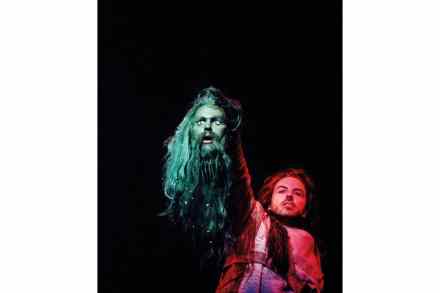
The actor never knew they would use a real horse’s head. This was May 1971 and John Marley was preparing to perform in the most infamous scene in The Godfather, playing the corrupt movie producer who wakes up to find a horse’s head in his bed. Reportedly, Marley assumed this would just be a plastic prop. But the director, Francis Ford Coppola, had other ideas. In a note to himself, Coppola observed: ‘If the audience does not jump out of their seats on this one, you have failed.’ So he quietly sent an assistant to a dog-food factory to pick up a genuine head, newly hewn from the shoulders of a racehorse. She brought the stinking object back in a freezer box and it was slipped into the bed with Marley for maximum authenticity.

Saudi Arabia’s burgeoning art scene

A little more than a century ago, a charismatic British army captain called T.E. Lawrence and fearsome Bedouin warriors swept through the sublime canyons around the desert city of Al-’Ula where I stroll today. They blew up the Hejaz railway, built to transport hajjis from Damascus towards Mecca but repurposed during the first world war by Turks to ferry munitions and troops. Such was the 1916-18 Arab Revolt that threw off Arabia’s Ottoman yoke. Today a very different kind of Arab uprising is sweeping through Al-’Ula. The canyons resonate not with bombs but with art. Dubai-based Zeinab Alhashemi has constructed boulders made from camel hides for a piece called ‘Camouflage 2.0’.

In praise of the Dome

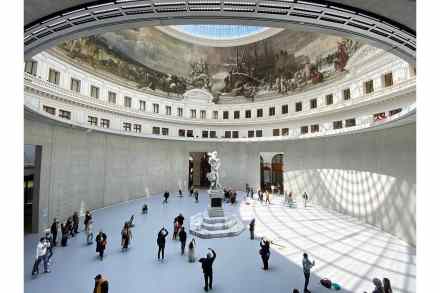
London’s City Hall stands empty. The bulbous, Foster + Partners-designed ‘glass testicle’ — in Ken Livingstone’s words — occupies one of the best sites in the capital: Thames-side, squaring off to the Tower of London, and overlooking Tower Bridge. But in December, its occupiers — the Mayor, the London Assembly and the Greater London Authority — deserted their glitzy £43 million headquarters for a cheaper building more than five miles east at the Royal Docks in Newham. It took them less than 20 years to outgrow their purpose-built home. According to the architectural commentator John Grindrod, City Hall is a giant glass-and-steel metaphor.

Stupendous: The World of Stonehenge at the British Museum reviewed

This exhibition is Hamlet without the Prince, and all the better for it. Stonehenge is not there; it remains in Wiltshire. But 430 astonishing artefacts from the neolithic and bronze ages fill a hairpin course like a Roman chariot-racing circuit in a vast room. It is blessedly free from videos of prehistoric Britons tugging on ropes to move monoliths. There is a henge on display, though. (The word in its technical sense was invented in 1932 by Sir Thomas Kendrick, later director of the British Museum.) This is the Seahenge that emerged on the shore at Holme-next-the-Sea in 1998: 55 big oak posts round a two-ton upturned rooted trunk. Gloriously, being trees, they can be dated to a year: 2049 BC. It was sad that it had to be dug up, but here it is, anatomised in a museum.

The art of the high street

I can no longer remember when it was that high streets did not all look the same. The architectural writer James Maude Richards bemoaned the disappearance of local character from our shops as early as 1938, but even so he could include a plumassier, submarine engineer and shop of model transport in his winsome introduction to the high street. With the exception of some of the specialists, subs included, these were shops that could still be found in many towns beyond London. Eric Ravilious did the illustrations for the book (which, alongside three of the original prints, is on show at the Arc gallery in Winchester from 18 February to 15 May).