Arts feature

King Charles III’s love of classical music

The musical tastes of King Charles III are more sophisticated than those of our late Queen. That’s not being rude: it’s just a fact. Her favourite musician appears to have been George Formby, whose chirpy songs she knew by heart. No doubt she relished their double entendres – but the hint of smut meant that, to her regret, she had to decline the presidency of the George Formby Society. Our new monarch, by contrast, adores the Piano Concerto in E flat major by Julius Benedict (1804-85). He recommended it in an interview a couple of years ago. I’d never heard of the piece, which existed only in manuscript until Howard Shelley and the Tasmanian Symphony Orchestra recorded it for Hyperion in 2008.

Kazuo Ishiguro: My love affair with film

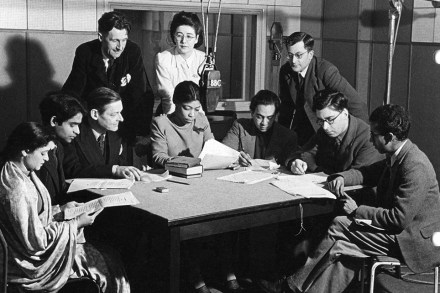
Everyone has a type they can’t resist. For the writer Kazuo Ishiguro, it’s old men. Old men secretly worried they’ve spent entire lives on the wrong side of history. Old men born in a world of certainty, transplanted to a different, more dubious one. Old men asking themselves, as so many of us will do (if we haven’t already): ‘What was it all for?’ But as I wait at the offices of a West End PR firm to interview Sir Kazuo about his new film with Bill Nighy, Living, I can’t help but wonder what unlikely preoccupations these are for arguably the nation’s greatest living literary talent. Those of us with humdrum lives may daydream about winning a Nobel Prize.

War games do something seriously unpleasant to our brains

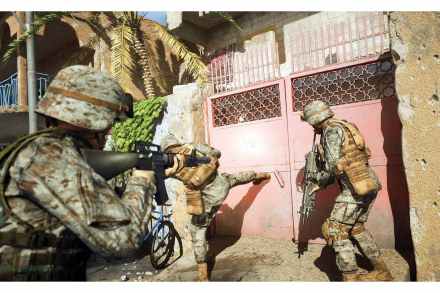
Three years ago, I killed several thousand people over the course of a single weekend. Late into the night, I ran around butchering everyone I saw, until by the end I didn’t even feel anything any more. Just methodically powering through it all, through the wet sounds of splattering heads, bodies crumpling, shiny slicks of blood. I thought I was past caring. But when I finally went to bed, I couldn’t sleep, and in my dreams I was haunted by all the men I’d killed. I saw their brains exploding, again and again and again. In my defence, I’d had a bad week. It was December: a grotty English winter, not particularly cold but still utterly grim. The kind of winter that seems to stick to everything, like a layer of congealed grease. I was worried about money.

The rise and fall of Tammy Faye

Tammy Faye Bakker was a chirpy, perky televangelist noted for her lavish mascara and her barrel-stave eyelashes. She once conducted an interview on her PTL (Praise the Lord) chat show for which she remains revered among gays. It was in 1985 and she was talking to Steve Pieters, a soft-spoken church pastor with a soup-strainer moustache. He had Aids, a disease that killed Rock Hudson that year and was scything through Reagan’s America. Tammy wanted to know all about Steve’s faith, his health and his orientation. ‘Have you given women a fair try?’, she asked rather naively. The pastor told his story and the interview deepened into an extraordinary confessional.

How politics killed theatre

Hope can be remarkably persistent. And so, despite several years of experience pointing in starkly the other direction, a recent weekend saw me at Who Killed My Father at the Young Vic, the latest from ubiquitous Belgian director Ivo van Hove. A young friend had gone with his father the previous week and both described it as ‘excellent’. Intense, but in a good way. Worthy broadsheet publications gave it four stars. I had my doubts: Édouard Louis, on whose angry memoir about growing up in a working-class, homophobic home in northern France the play was based, is not my cup of tea.

Why I admire Saudi Arabia’s monstrous new city

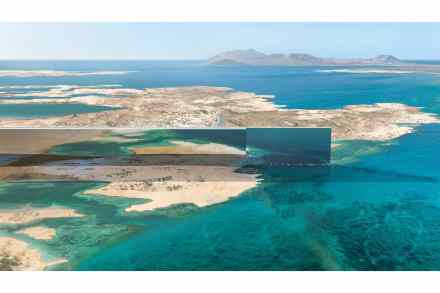
The Kingdom of Saudi Arabia wants me to know that it is building a new city. Its adverts follow me around the internet. ‘Imagine a traditional city and consolidating its footprint, designing to protect and enhance nature.’ I’m imagining. Their city ‘will be home to nine million residents, and will be built with a footprint of just 34 square kilometres. And we are designing it to provide a healthier, more sustainable quality of life’. According to its website, this new town ‘is a civilisational resource that puts humans first’. Which all sounds vaguely nice, if also nicely vague (although as I happen to be a human myself, I do appreciate the gesture). That is, until you see what they actually mean by this.

The art of menus

There is, of course, no endeavour, no craft, no profession, no trade that neglects to ‘reflect society’. This is a commonplace. The collective narcissism of considerate builders, for instance, claims that hod carriers and brickwork reflect society. The contention of Menu Design in Europe is kindred. Graphic artists, restaurateurs, decorators and chefs have, through two centuries, expanded their capabilities according to the milieux in which they have practised. Menus are, then, not merely functional lists, they are self-advertisements, exhibitions, seductions and, occasionally, desirable objects that are apparently collectible. Indeed this book has the unmistakable feel of an obsessive’s scrapbook, a completist’s trophy.

Why the Arts Council should kill off ENO and ENB

Pity Arts Council England, least loved of our NGOs, understaffed and under-resourced, its arm’s-length status gnawed to the shoulder by DCMS ukases, the stinginess of the Treasury and the government’s (in some respects, welcome) indifference to our higher culture. In return for its annual grant-in-aid (currently £336 million), it is obliged to cheer-lead policies of inclusivity and diversity and step gingerly over the eggshells of elitism, racism, gender politics and decolonisation. Its hands are further tied by the requirement to operate as extensions of the social services. The diktats of Levelling Up have to be honoured. The disabled and the disadvantaged, the young and the old are all crying out to be championed.

The art of the monarchy

Elizabeth II spent virtually all her life surrounded by one of the world’s greatest art collections. Even when she was a child, and the likelihood of her inheriting the throne still seemed remote, visits to her grandparents at Buckingham Palace involved looking at pictures, since George V enjoyed showing her the Victorian narrative paintings that hung there, such as William Powell Frith’s ‘Ramsgate Sands’. Nobody knows exactly how many works of art there are in the Royal Collection, but at the end of Elizabeth II’s reign nearly 300,000 objects had been catalogued online, probably just under a third of the whole.

The uncomfortable lessons of the new Fourth Plinth statues

The Revd John Chilembwe – whose statue now adorns Trafalgar Square – is notorious for the church service he conducted beneath the severed head of William Jervis Livingstone, a Scottish plantation manager with a reputation for mistreating his workers. The night before, Chilembwe’s followers had broken into his house and chased him from room to room as he tried to fend them off with an unloaded rifle. Eventually, they pinned him down and decapitated him in front of his wife and children. It was the most significant action in the 1915 Chilembwe rebellion, a small, short-lived affair in an obscure corner of the British Empire today known as Malawi. It says a lot about our times that a figure with Chilembwe’s record should be vaunted with a public statue.

‘Good’s never going to triumph’: the makers of BBC show Industry on bad bankers

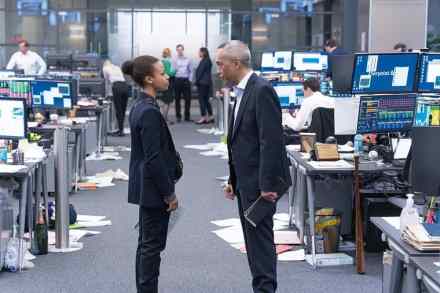
Finance in screen fiction is a realm of monsters. From Gordon Gekko in Wall Street and Patrick Bateman in American Psycho to the crazed party animals of The Wolf of Wall Street, the arena of deal-making is portrayed – particularly in America – as winner-take-all without trace of empathy or redemption. Industry – the British-made television drama that follows a group of young bankers competing on a City trading floor whose second series airs on BBC1 later this month – is a more subtle example of the genre. Its characters are not monstrous but they are all flawed, ruthlessly transactional in their dealings with each other, and frankly hard to like. There aren’t any nice guys.

There’s much more to Winslow Homer than his dramatic seascapes

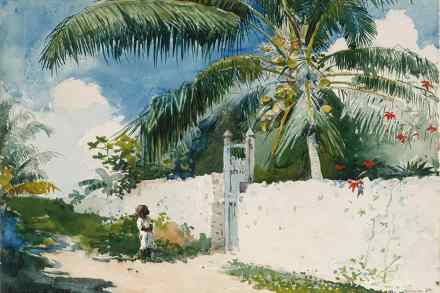
Until the invention of photography war reportage depended on old-fashioned illustration, and even after that the illustrated press took a while to catch up. Photographic reproduction didn’t work on cheap newsprint, which demanded a crispness of definition that early photography couldn’t provide. So reports on the American Civil War in the new illustrated periodicals aimed at the middle classes continued to rely on wood engraving, and it was as a print designer that the 25-year-old Winslow Homer was sent by Harper’s Weekly to cover the fighting in 1861. Apprenticed to a commercial lithographer at the age of 19, Homer had no formal training as an artist but he had a nose for the decisive moment that added drama to a reporter’s copy.

In praise of character actors

The star system is a false hierarchy: the best rarely make it to the top. I thought of this recently when it was announced that David Warner had died. Few outside acting could name him, though you may have seen his head flying off in The Omen, a film in which heads are cheap. Warner was a Manchester-born jobbing actor: a character actor, better defined by what he is not, which was a star. I could write pages about why a star is a star, and a character actor remains a character actor, but the most significant reason is simple. Warner was brilliant but he was not handsome.

The magic of Les Ballets Trockadero de Monte Carlo

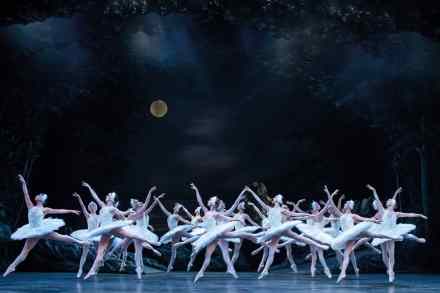
Drag isn’t what it was. Pantomime dames, character actors and any number of sketch-show comedians had fun dressing up as harridans or movie stars (check out Benny Hill’s unforgettable Elizabeth Taylor) but those old-school travesti turns have been out-camped by a more unsettling performance style that women are finding increasingly hard to take. Directors and commissioning editors tread very carefully when it comes to ethnicity, sexual orientation and disability but women, it seems, are still fair game.

Why Merseyside is the natural home for a Shakespearean theatre

Prescot is a neglected little town in Merseyside noted for having Britain’s second narrowest street and for its Brazilian waxing salon. It’s now also home to Shakespeare North, a game-changing new theatre. This handsome, modern brick building overlooking a Jacobean church has a light, airy, unfussy interior – a stairway to heaven. You leave the modern world and enter an octagonal cocoon, modelled on a 1630 playhouse, built of slowly splitting green oak, the limbs all pegged together, not a nail in sight. The seats (two tiers) accommodate between 320 and 470 people, depending on the configuration of the stage. Its acoustic is spot-on and it feels cosy but not claustrophobic. The sound and lighting technology is modern but it can be candlelit if need be.

In defence of country-pop

I am aware that the music I enjoy is widely considered to be the worst ever produced in human history. Worse than a roomful of children with recorders, cymbals and malice; worse than a poultry abattoir. Every so often, someone will ask me what I listen to, and I’m forced to tell them the truth. ‘These days,’ I’ll say, ‘it’s mostly country.’ Their nose will wrinkle, as if I’ve just let out a stealthy fart in their direction. ‘But old country, right?’ they’ll say, almost pleading. ‘Classic country?’ No, not classic country.

The joy of volcano-chasing

Katia and Maurice Krafft were both born in the 1940s in the Rhine valley, close to the Miocene Kaiser volcano, though they didn’t know each other as children. They met on a park bench when they were students at the University of Strasbourg, and from that moment on, according to their joint obituary in the Bulletin of Volcanology, ‘volcanic eruptions became the common passion to which everything else in their life seemed subordinate’. They married in 1970, formed a crack team of volcano-chasers, équipe volcanique, and set off to get as close as they possibly could to the very edge of every fiery crater, to collect samples and data and just to be there, ecstatic with the enormity of it all, like a pair of mad moths drawn into a candle flame.

Stop tearing down controversial statues, says British-Guyanan artist Hew Locke

When Hew Locke was growing up in Guyana, he would pass by the statue of Queen Victoria in front of Georgetown’s law courts. Henry Richard Hope-Pinker’s 1894 statue had been commissioned to mark the monarch’s golden jubilee, but not long after Guyana became independent from British rule in 1970, the statue was beheaded and the remains thrown into bushes in the botanical gardens. ‘I remember being shocked that such a sacrilegious thing could happen,’ says the Edinburgh-born, Guyana-raised, London-based 62-year-old artist. ‘It set me thinking about what public statues are for. Who are these people? How come we pass by them without noticing every day?’ Half a century later and thousands of miles away, Locke is still thinking about these questions.

From Leonardo to Hepworth: the art of surgery

A doctor with wild grey hair and mutton chops holds a scalpel in his bloodied hand. He has paused for a moment, allowing one of his students to take his place and complete the incision. It’s a remarkably clean cut; the young man with the clamp has barely dirtied his shirt cuffs. Even so, the patient’s mother, if that’s who she is, weeps in the corner. She can see nothing but frock coats and a segment of open flesh. The 19th-century Philadelphia-based artist Thomas Eakins did not paint surgery as it was, exactly, but he did capture something of its veiled sterility. There may be no gowns or masks in his earlier medical pictures, but the wool coats and shirts worn by the doctors only do so much to soften the atmosphere of the operating theatre.

Paris’s glittering new museums

How do you manage a dictatorship? By producing ‘a succession of miracles’, according to Louis-Napoléon, that ‘dazzle and astonish’. In 1852 he inaugurated his Second Empire regime with a strategy of soft power predicated on the assumption that the loyalty of politically volatile Paris was to be won not by violent repression but by visible magnificence and grand designs. This wasn’t an original idea: it followed the policies of le Roi Soleil and Bonaparte, not to mention the Roman emperors. It worked again for Louis-Napoléon because, as well as such jaw-dropping follies as Charles Garnier’s extravagant opera house, it extended to Haussmann’s lavish investment in socially useful boulevards, sewers, housing and parks.