Arts feature

There’s something about Mary

I think I probably qualify as the oldest fashion editor in the world, because in spite of my advanced age I am still writing about clothes (in the Oldie). This gives me one USP: it means that I was actually around — even wearing them myself — when the revolutionary fashion ideas that are now the stuff of museum exhibitions were being invented. Next month the Mary Quant exhibition opens at the V&A, and sure enough I have been asked to talk about those giddy times for a video that will be shown at the museum. I was 16 in the autumn of 1955 when Quant’s shop, Bazaar, first shocked the passers-by in the King’s Road, Chelsea, with its startling window displays. One of these featured a black-and-white gingham skirt.

Playing dead | 21 March 2019

In March 1968, Frank Zappa released an album called We’re Only in it for the Money. Presumably, then, Zappa — who died a little over a quarter of a century ago — would be delighted to discover that he begins his latest tour next month, with a series of shows in the US followed by a visit to the UK in May, including a show at the Palladium in London. Zappa will be appearing in holographic form, using footage filmed in a Los Angeles rehearsal space in 1974, his disembodied voice backed by a live band. The show is to be made up of ‘footage that no one has ever seen, as it has been locked in the vaults since the early 70s,’ says Jeff Pezzuti of Eyellusion, the company that produced the hologram.

Everyman

Toby Jones shuffles into the café in Clapham where we are meeting. He’s wearing a duffle coat and a hat and carrying a rucksack. He looks just like one of those unsung characters that he specialises in, the kind of person you don’t take much notice of unless you have to. Today we are talking about his new ‘vehicle’ (sorry), Don’t Forget the Driver. It’s an everyday tale of an everyday coach driver (Peter Green) from Bognor Regis, his daughter Kayla, who turns ennui into an artform, and mother Audrey, who’s going downhill fast with Alzheimer’s. It is going to twang the nation’s heartstrings. What makes it different is that it is Jones’s first go at writing a TV comedy — or co-writing one.

Master of white

Artists can be trained, but they are formed by their earliest impressions: a child of five may not be able to draw like a master but he can see better and more intensely. The light of Valencia was burnt into Joaquin Sorolla y Bastida’s mental retina and he could not get it out of his mind: ‘I live here like an orange tree surrounded by heaters,’ he told an interviewer in Madrid in 1913. Never a studio painter, he worked best under the lamp of his native sun and returned to Valencia from wherever he was living every summer to set up his easel on the beach.

‘They’re finally going to play my music’

According to his friend and fellow-composer Ernest Reyer, the last words Berlioz spoke on his deathbed were: ‘They are finally going to play my music’. It has taken time, but he was right. A century and a half later, Berlioz 150 is the watchword of the hour. That is as it should be. Berlioz was a devotee of the ancient world (‘I have spent my life with that race of demi-gods’), where it was believed that at the moment of death one might be granted foreknowledge of the future. Why has it taken so long? In his native France there were plenty of reasons. As a forceful, witty but sardonic music critic he inevitably put Parisians’ backs up with his attacks on modern Italian music, which he regarded as frivolous, formula-ridden and fatally undramatic.

Home truths | 21 February 2019

The creation of a commission to examine beauty in new building created a stir in the media, with the chairman subjected to a hate storm of unusual turbulence even by the standards that he regularly has to endure. Hate storms arise when powerful interests are threatened, and this was no exception. There is hardly a person in this country who is not aware of what Milan Kundera has called the ongoing ‘uglification of our world’ and who does not hope that something might be done about it. No one I talk to denies the need for a large number of new houses. But they all hope that this need can be reconciled with our deep-seated desire for beauty. Kant wrote that in judgments of beauty we are ‘suitors for agreement’.

Miracle of Mumbai

It’s a 31ºC Mumbai morning, and on Marine Drive the Russian winter is closing in. The Symphony Orchestra of India (SOI) is rehearsing Rachmaninov’s Second Symphony ahead of its first ever UK tour, and even on the campus of the National Centre for the Performing Arts (NCPA) — a palm-shaded tropical Barbican next to the Arabian Sea — this is still music to raise a shiver. Strings sigh; horns call across frozen steppes. Then the guest conductor Martyn Brabbins gives the signal for a break and players spill into the foyer, chatting and gulping tea. If the sky were more grey and the tea less sweet, it could be a general rehearsal anywhere in the UK.

The waist land

Strange to think when you visit the Christian Dior show at the V&A that his time as designer was so very short. From the first show in 1947 when he brought the war to an end — at least in terms of clothes — with the New Look, to his sudden death at the age of 52 was just a decade. But in that brief time he brought about a revolution in fashion, creating some of the most beautiful dresses ever made for women, with a line that was wholly his own. It was both architectural and natural: the skirt of his celebrated Bar suit was based on the corolla of a flower. He was a creative genius, but also brilliant at PR and commercially astute, as you would be if you’d lived through the interesting times he had.

Apocalypse Dau

Dau is not so much a film as a document of a mass human experiment. The result is dark, brilliant and profoundly disturbing. For three years up to 400 people, only one a professional actor, lived for months at a time on a city-sized set specially built for the shoot near Kharkov, Ukraine. Modelled on the real Kharkov Institute of Experimental Physics between 1938 and 1968, every detail on the set was scrupulously in period, from the light fittings to the lavatory paper. The participants — who included a real-life Nobel Prize winner and famous orchestra conductor as well as real former KGB and prison officers — were required to live in role 24 hours a day, eating Soviet food, wearing Soviet underwear and undergoing Soviet-style total surveillance.

Queen bitch

In 1950, Bette Davis had a string of recent flops behind her. She was 41, married to an embarrassing twerp (her third husband), and her career was spiralling above the plughole. She only got the lead part in All About Eve when Claudette Colbert — who was all signed up — ruptured a disc while doing a rape scene on another film. The story goes that with Colbert shrieking in traction, the producer Darryl Zanuck, who hadn’t spoken to Davis since using the words ‘You’ll never work in this town again’, was obliged to offer her the part. It didn’t take much. No sane actress could resist Joseph L. Mankiewicz’s fabulous script with its sophisticated wit and refreshing cynicism.

‘I wished Jimmy Porter would just shut up’

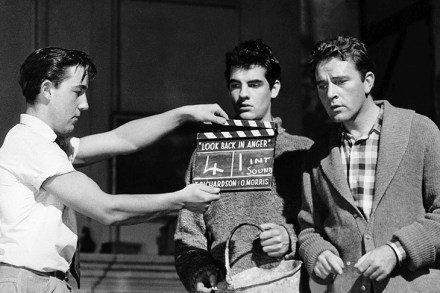
Gary Raymond must have been wondering if it was the end of a promising career — curtains. He was starring in The Rat Patrol, a wartime adventure series. Co-star Justin Tarr had managed to roll the jeep Raymond and fellow actor Christopher George were travelling in. Raymond escaped with a badly broken ankle (he tells me it still gives him jip). George had more serious injuries, including an injured back and a heart contusion. Raymond lived to act another day, but when The Rat Patrol ended after two series, it really was the end of his Hollywood years. But what a few years he’d had, in El Cid alongside Charlton Heston and Sophia Loren, The Greatest Story Ever Told (playing Peter) and in Jason and the Argonauts. I’m interviewing him in the canteen at the National Theatre.

Big in Japan

An early morning in late November in the peaceful glades that surround an ancient temple complex. A Shinto priest in sombre silks slips through a sliding door; a maple leaf catches the breeze. Suddenly, the silence is broken by the crunching thwack as two 400lb slabs of prime meat collide. It is the 15th and final day of one of Japan’s six annual sumo tournaments: the Kyushu Basho, held every autumn in the balmy southern city of Fukuoka. A group of visiting wrestlers have begun their pre-breakfast workout in one of the outbuildings of Torikai Hachiman-gu, preparing for the afternoon bouts at the arena three miles away.

The write stuff | 3 January 2019

Given their track record, you might think that Dick Clement and Ian La Frenais would be spared the struggles that lesser screenwriters go through to see their writing on screen. But this, it turns out, would be naive. Clement and La Frenais may have written some of the best-loved programmes in British television history: Auf Wiedersehen, Pet; Porridge; The Likely Lads; Whatever Happened to the Likely Lads? Their CV may contain the huge hit film The Commitments — as well as more recently acclaimed TV dramas like The Rotters’ Club and Archangel. Yet, when I meet Clement on a solo visit to London, the two most striking things about him are how driven he remains at 81, and how driven he apparently needs to be.

Birth of a masterpiece

In the early 1370s an elderly Scandinavian woman living in Rome had a vision of the Nativity. Her name was Birgitta Birgersdotter, and she was later venerated as St Bridget of Sweden. In her account of the experience, transcribed by her confessor, she described herself as an eye witness. Her narrative began: ‘When I was present by the manger of the Lord in Bethlehem…’ Around a century later, Piero della Francesca (c.1412–92) used Bridget’s vision — or parts of it — as a starting point for a painting. This picture, now in the National Gallery, is one of the best-loved depictions of this immensely popular subject in the history of art. In some respects, Piero followed Bridget’s visionary account closely.

The empress of art

Somewhere in the bowels of the Tehran Museum of Contemporary Art is a portrait from a lost world. Its subject is a beautiful young woman: Her Imperial Majesty, Empress Farah Pahlavi of Iran. The condition of the work, however, a luminous print by Andy Warhol from 1977, is so bad that it could be a metaphor for Iran itself. Fundamentalist vandals have slashed at it with knives. The Empress — forced into exile when the Iranian Revolution overthrew her husband, the Shah, two years after the portrait was completed — discovered this upsetting news while watching French TV in her Paris apartment. ‘Seeing that, I said, “They are stupid”,’ she tells me. ‘Instead of tearing it they could have sold it!’ One day, she hopes to see it on display again.

Renaissance man | 13 December 2018

The first thing Gary Kemp bought when Spandau Ballet started making money was a chair. He’s very proud of that chair. He talks about his chair in tones midway between one of Monty Python’s four Yorkshiremen and Nicholas Serota. ‘I wasn’t making any money until “True” was successful, in 1983,’ he says. ‘The first thing I really bought was a William Morris chair. What the fuck is a 22-year-old boy living in a council house with his mum and dad doing going out and buying a William Morris chair?’ It was the first chair anyone in the Kemp family had ever owned outright, he says. ‘Everything in our house was on HP, apart from the cat. It’s very different to the old Alan Clark thing. We were handed down no furniture.

Love hurts

There is very little art about modern poverty, because who wants to know? It is barely acknowledged, unless there is redemption, or salvation, as in A Christmas Carol. Those most suited to make it — those who are actually poor — are usually too busy doing something else, such as surviving. So, it is remarkable to learn that Alexander Zeldin’s play LOVE, a success at the National Theatre in 2016, is now a film and will air this weekend on BBC2. The closest thing to it recently was Benefits Street, which was exploitative and, therefore, an instant hit. Zeldin is 33. He read French at Oxford University and is artist-in-residence at the National Theatre. His work is plain and understated. He listens, rather than writes, and there are no diatribes, just calm despair.

The birth of minimalism

The Spectator is responsible for many coinages. One of the most significant came in 1968, when an article by our 24-year-old music critic, Michael Nyman, appeared with the headline ‘Minimal Music’ (reprinted below). It was a wry joke about music that was more experimental than strictly minimal but it stuck and a musical style that, whatever you think of it, has rarely been matched in influence or reach was born. Walking home from the Fugs’ concert, organised by the Middle Earth at the Round House last week, I was shocked by the 4 a.m. silence — by its awesome superiority to a lot of modern music, and by its unfamiliarity.

Moderne times

On 10 September 1973 the 1930s Kensington High Street department store formerly known as Derry & Toms reopened as Big Biba. It sold the dress designer Barbara Hulanicki’s distinctive look in furniture, paints and wallpaper, sports equipment and food, as well as her familiar fast fashion. If you had to define that aesthetic then, you’d have said it was campy and kitschy. But above all you’d have said it was deco, an increasingly familiar word for the between-wars moderne style in everything from buildings to jewellery. Derry & Toms itself was a 1933 moderne temple of commerce, slathered in stylised ironwork and bas-reliefs.

You be the judge

James I and VI liked to term himself Rex Pacificus. Like most politicians who talk a lot about working for peace, he was an appeaser. Inheriting the English throne after Elizabeth, whose foreign policy was defined by breaking Spanish dominance, James appears to have seen the purpose of his own Whitehall government as being to facilitate every Spanish demand. The first high-profile victim of James’s Iberophilia was the war hero and poet Sir Walter Raleigh. Within four months of Elizabeth I’s death in 1603, Raleigh was on trial for treason under the new regime. His death sentence was commuted until 1618, when it was carried out at the direct request of the Spanish ambassador. Shakespeare’s Globe is staging the trial of Walter Raleigh as a piece of theatre this month.