Arts feature

Shooting star | 15 August 2019

Only one thing makes Frank Skinner nervous. ‘Water. Water scares me. I don’t get nervous on stage. Just in swimming pools. I didn’t learn to swim until 2013. Avoiding water is easier if you live in Birmingham.’ The stand-up comedian’s image is plastered across the centre of Edinburgh on six-foot placards to advertise the dates of his national tour. ‘SOLD OUT’ is blazoned across the top. This seems a weird strategy — promoting a product that’s no longer available — and I ask him about it when we meet at a quietly expensive hotel near Bristo Square. ‘I’ve sold out the Edinburgh run but there are tickets available for the tour... The quick-sellers are hard to predict.’ He tells me he loves performing stand-up.

Divine comedy | 8 August 2019

The locals probably can’t bear the Edinburgh festival. Their solid, handsome streets are suddenly packed with needy thesps waving and flapping at them from every kerbside. ‘New interactive comedy quiz, starts in five minutes.’ ‘Award-winning monologue about growing up Chinese in Droitwich.’ ‘Stalin the Opera performed by tone-deaf choir.’ There’s a waggish actor who stands on George IV Bridge challenging passers-by not to take a leaflet. ‘When I hand out my next flyer I’m going to jump off the parapet.’ He’s there every day. One of the first shows I sampled was Titania McGrath Mxnifesto (Pleasance Courtyard, until 25 August).

Original Finn

Last year I found myself giving a lecture in Helsinki. When I came to the end, I asked the audience if there were any questions. There followed a period of complete silence, after which a man cleared his throat and explained that, being Finnish, it was extremely difficult for them to speak in public; they preferred to come to the podium afterwards, one by one. The Finns are a quiet people, and Helene Schjerfbeck — who has claims to be the greatest Finnish painter — is a quiet artist. But her pictures, which are on show at the Royal Academy, have qualities that mild-mannered and taciturn individuals sometimes possess: seriousness and intensity. When she does raise her voice, it’s all the more telling. A good example comes early in the exhibition.

Blessed be the fruit

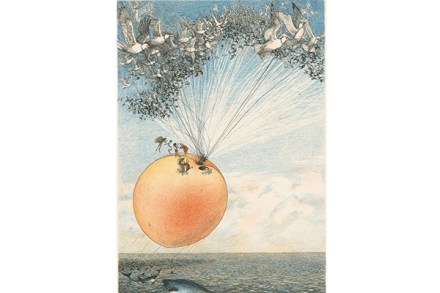
Bunnies were out. Beatrix Potter had the monopoly on rabbits, kittens, ducks and Mrs Tittlemouses. ‘I knew I had to bring in creatures of some kind,’ wrote Roald Dahl on his first thoughts towards a children’s book. ‘But I didn’t want to use all the old favourites that had been used so often before, like bunnies and squirrels and hedgehogs. I wanted new creatures that no one else had ever used.’ After making a long list of earwigs, pond skaters and Devil’s coach-horse beetles, Dahl cast a centipede, an earthworm, a silkworm, a glow-worm, a spider, a ladybird and an old-green-grasshopper. ‘It was fun,’ the author wrote, ‘to sit down and try to make a slimy old earthworm, for instance, into a rather loveable interesting character.

Striking the wrong note | 18 July 2019

Every summer for the past six years, Bayreuth has risen to its feet to acclaim an English Brünnhilde. Catherine Foster, from Nottingham, was the heroine of Frank Castorf’s anti-capitalist staging of Richard Wagner’s Ring cycle. The director was booed to the rafters, the singer hailed as saviour. Three perfectionist conductors, Kirill Petrenko, Marek Janowski and Christian Thielemann, insisted on her return each year. Across Europe, Foster commands the roles of Elektra, Isolde, Senta (Flying Dutchman) and Turandot. At 44, she is approaching her vocal prime. So it is a bit odd to find that no British company has offered her a leading role, or presently plans to do so. Six years of ovations at Bayreuth count for nothing in Blighty.

‘I merge into the background, me’

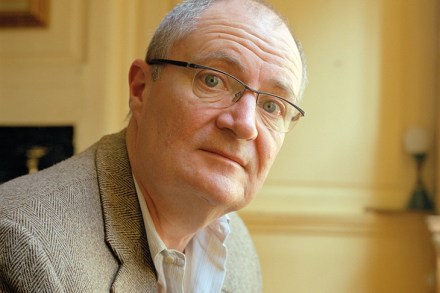
‘I live completely anonymously,’ whispers Jim Broadbent down the phone from Lincolnshire. Nonsense, I counter. You’re one of the most recognisable actors in this united luvviedom. ‘Am I?’ he asks gently. Oh come on. You’re Bridget Jones’s dad, Del Boy’s arch-enemy Roy Slater, Lord Longford campaigning for Myra Hindley’s parole, dotty antiques-shop owner Samuel Gruber in the Paddington films, Game of Thrones’s Archmaester Ebrose, testy but lovable W.S. Gilbert in Mike Leigh’s Topsy-Turvy, and the blackmailer who unacceptably shakes down Maggie Smith’s eponymous Lady in the Van.

Cutting edge

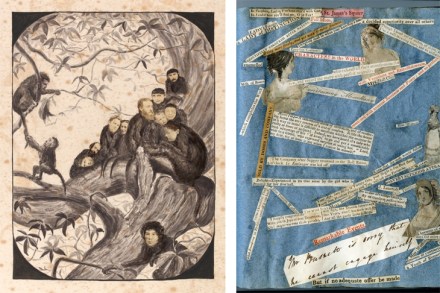
The art-history books will tell you that sometime around 1912, Picasso invented collage, or, actually, perhaps it was Braque. What they mean is that sometime around 1912 a man of sufficient standing took up a technique that had been quietly practised in largely domestic spheres by a largely female army of amateurs, and applied it in his own work. Cue the universal astonishment of observers who pretended they had never seen such a thing before. This narrative has been recycled ever since, assuring us that the collage techniques that shaped the language of dada, surrealism and all the other isms that made up modernism, as well as pop art and even today’s Photoshop-driven design, all emanated from that one original spark of paper-sticking cubist genius.

Selfie queen

The selfie is, of course, a major, and to me mysterious, phenomenon of our age. The sheer indefatigability of selfie-takers, not to mention their number, is amazing. Recently, I stayed in an apartment not far from the Trevi Fountain in Rome — a selfie-magnet so powerful that not only was it surrounded by a dense crowd during daylight hours, but a small, determined knot could still be spotted late at night, doggedly snapping away in the dark under a steady drizzle. This global fixation adds an extra interest to the retrospective of work by Cindy Sherman at the National Portrait Gallery. She has been making pictures of herself, and little else, for more than four decades.

Vegas dreamtime

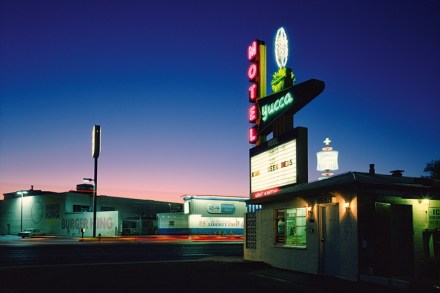
It’s to be expected. You take photographs in order to document things — Paris in the case of Eugène Atget in the late 19th and early 20th centuries, the shacks of the American south in the case of Walker Evans in the 1930s — and these documents then acquire a quality of elegy. What is extraordinary is the speed with which this happens, the brevity of the ‘then’. As soon as the images emerge in the developing tray — even, conceivably, the moment the shutter is clicked — they are imbued with how they will be seen in the future. The photographs in Fred Sigman’s book Motel Vegas were commissioned in the mid-1990s in order to record the signage of once-thriving motels on Fremont Street in Las Vegas.

Some like it hot | 13 June 2019

‘Playing God is indeed playing with fire,’ observed Ronald Dworkin. ‘But that is what we mortals have done since Prometheus, the patron saint of dangerous discoveries.’ There’s no Prometheus in the RWA’s new exhibition Fire: Flashes to Ashes in British Art 1692–2019, but there are plenty of flames, some dangerous, some not. The third in the Bristol gallery’s trilogy of shows on elemental themes, following The Power of the Sea (2014) and Air (2017), Fire features the most dramatic of the four elements, and the most fun to paint. Artists love playing with fire.

Ring without the bling

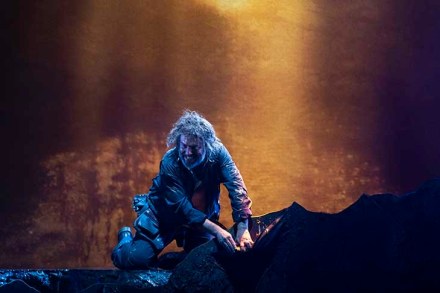
At Longborough Festival Opera, Richard Wagner is on the roof. Literally: his statue stands on top of the little pink opera house, surveying the Evenlode valley from beneath a stone beret. He’s not alone, mind. A figure of Mozart looks up indignantly. On the other side of the pediment stands Verdi, arms folded, glowering huffily at the floor. But Wagner is on top: a permanent reminder that this is the company that took on the greatest musical-dramatic challenge in the operatic universe, and in 2013 staged a full production of Der Ring des Nibelungen in a converted barn. And next week, they’re going to start all over again.

Shooting star

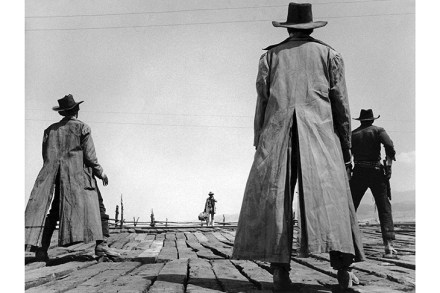
This is an edited extract from the Foreword to Christopher Frayling's Once Upon a Time in the West: Shooting a Masterpiece (Reel Art Press), based on a long conversation between Frayling and Tarantino from January 2018.  The movie that made me consider filmmaking, the movie that showed me how a director does what he does, how a director can control a movie through his camera, is Once Upon a Time in the West. It was almost like a film school in a movie. It really illustrated how to make an impact as a filmmaker. How to give your work a signature. I found myself completely fascinated, thinking: ‘That’s how you do it.’ It ended up creating an aesthetic in my mind.

Up Pompeii!

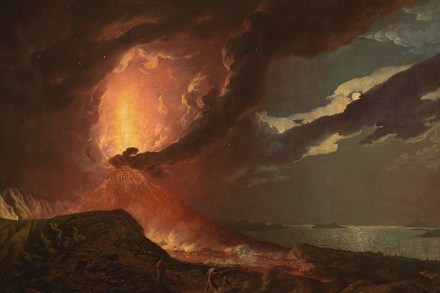
One afternoon in AD 79 an unusual cloud appeared above Vesuvius in the Bay of Naples. ‘It was raised high on a kind of very tall trunk,’ recalled Pliny the Younger, likening it to an umbrella pine tree, ‘and spread out into branches.’ When, finally, the cloud collapsed and the sky grew dark, some people raised their hands to the gods. Others reasoned that ‘there were now no gods anywhere and that the night would last for ever and ever across the universe’. There are corners of the ancient cities that have not seen daylight since they were buried in volcanic debris. While excavations officially began in Pompeii and Herculaneum in the mid 18th century, there remains much to uncover, and still more to restore.

Ghost writer

East Anglia, the rump of the British Isles, has inspired a disproportionate number of writers: Robert Macfarlane, Daisy Johnson, Mark Cocker, Sarah Perry, to name but a few. Towering over them all is the ghost of a soft-spoken man with a shoe-brush moustache and sardonic eyes. Eighteen years after his death, W.G. Sebald’s reputation only grows. Few writers have inspired the commemoration industry Sebald has given life to while still so recently claimed by the past tense.

Full of eastern promise

Most of Hollywood’s Arabian Nights fantasies are, of course, unadulterated tosh. The Middle East, wrote the American film critic William Zinssner, is transformed into ‘a place where lovely young slave girls lie about on soft couches, stretching their slender legs… Amid all this décolletage sits the jolly old Caliph, miraculously cool to the wondrous sights around him, puffing his water pipe.’ It is box-office commercialisation at its worst. As a cinematic franchise, however, Arabian Nights is the gift that keeps on giving, which goes a long way to explaining why Wikipedia has a list of 72 films (nowhere near complete) based on One Thousand and One Nights, starring everyone from Catherine Zeta-Jones to Scooby Doo.

Knight fever

Emperor Maximilian I liked to say he invented the joust of the exploding shields. When a knight charged and his lance struck the opposing shield — bam! — the shield shattered and the shrapnel went up like fireworks. It’s almost impossible to turn the pages of Freydal. Medieval Games. The Book of Tournaments of Emperor Maximilian I and not imagine Batman-style captions. Clank! Thwack! Kapow! The knights and princes of the painted miniatures are all-awl, all-action iron men. Their horses are hooded to stop them bolting and every harness is stitched with bells. All the horse would have heard was the jangling, not the thunder of hooves or the roar of the tiltyard crowds.

What you see is what you get | 25 April 2019

There’s no avoiding the Britishness of British art. It hits me every time I walk outside and see dappled trees against a silver-grey cloud that looks like it was painted by Thomas Gainsborough, or look in the mirror and feel the same gooseflesh anxiety as I do when I see a portrait by Lucian Freud. It’s got something to do with the light — that pale, ever-changing clarity that is so kind to clouds and, when Freud has got his model naked under the skylight, so unkind to human flesh. The phrase the Englishness of English art was coined by Nikolaus Pevsner in the title of a classic art-history book — though he called it an essay on ‘the geography of art’ — based on his 1955 Reith Lectures.

The wonder of Whitby

The 199 steps up to the ruins of Whitby Abbey are a pilgrimage; they always have been. And any good pilgrimage takes effort. Count Dracula (also acquainted with the north Yorkshire town) cheated — he climbed the steps in the guise of a black hound. These days, with its new £1.6 million museum and visitor centre, our vampire friend would find a ground-floor café and gift shop. Knowing English Heritage, there is probably a bowl of water for dogs, which would have kept the Count happy. Whitby is a surprise, with a history that puts it at the heart of Britain’s spiritual and literary life. It’s also a vibrant fishing port, somewhere you can pick up a Whitby smoky — smoked herrings — made in a backstreet smokehouse.

Capturing a moment | 11 April 2019

On Tuesday, thousands of miles apart, in three great cities, London, New York and Los Angeles, 75 dancers will dance 100 solos in each venue in honour of the late iconoclastic choreographer Merce Cunningham, who would have turned 100 that day. It is a spectacularly ambitious wake for the choreographer who for 70 years denied dance a dramatic or expressive face, and threw all norms of beginnings, middles and ends, of meaningful sequence or physical logic, into a bonfire of expectations. This fabulous celebration, involving dancers of the whole spectrum from contemporary to the Royal Ballet, is a declaration of intent for posterity by the Cunningham Trust, established since his 2009 death to ensure digital preservation of 86 of his dances for future performance and study.

Moonstruck

In Shakespeare’s A Midsummer Night’s Dream, a group of slightly ramshackle workmen decide to put on a play. The play they choose — The Most Lamentable Comedy and Most Cruel Death of Pyramus and Thisbe — is famously and funnily terrible, as is their handling of it. Its central scene takes place at night, so they decide to dress up one actor with a lantern and a thorn bush: the idea is that light might shine through the thorns and convey the illusion of moonlight. This is an elegant solution, but Peter Quince, who is directing the scene, adds that the actor must explain to the audience that ‘he comes to disfigure, or to present, the person of Moonshine’.