Arts feature

The art of the pillbox

When Oscar Wilde famously claimed: ‘All art is quite useless’, he may not have had artistic subjects in mind. But it’s certainly true that since the Romantic era, artists have had a special affection for the superannuated. An image of an abandoned building with some sort of past, not necessarily glorious, appeals to our emotions, be it Rachel Whiteread’s ‘House’ or Constable’s ‘Hadleigh Castle’. Even ephemera pre-loved by strangers evoke nostalgia when incorporated in the shadow boxes of Joseph Cornell or the assemblages of Peter Blake. But what about things that are not just obsolete but have never had any use at all? That’s the curious question prompted by a new exhibition at Bodmin Keep, Cornwall’s Army Museum.

How we killed comedy theatre: Nigel Planer interviewed

Nigel Planer is on a mission to bring farce back to the West End. ‘There’s a lot of snobbery in comedy,’ he tells me when we meet at a hotel bar near the Old Vic. ‘People say, “Oh that’s comedy. It can’t have any meaning”.’ The actor and writer is still best known for playing Neil the hippie in the 1980s sitcom The Young Ones and he can recall a time when farce was a staple of London theatre. ‘I remember going along and really enjoying myself, you know, a nice big cast, actors falling over, characters treating someone differently because they think it’s someone else. All that stuff simply delights. But it’s become unfashionable.

Why I will miss our mighty cooling towers – and I suspect I am not alone

One afternoon earlier this summer we drove through Rugeley in Staffordshire. There, looming above the A51, were the cooling towers of the power station: a pinkish red, resembling terracotta, with curving convex sides, like modernist vases on a pharaonic scale. At 385 feet high, they were a little taller than the dome of St Paul’s Cathedral. We remarked on how surprisingly good they looked as we passed them on 4 June, en route to a spot in the Staffordshire countryside where we were going to stay. On 6 June there was a distant rumble like thunder but we thought little of it. However, that evening when we glanced at the horizon there was a gap where the towers had been.

The death of the Edinburgh Fringe

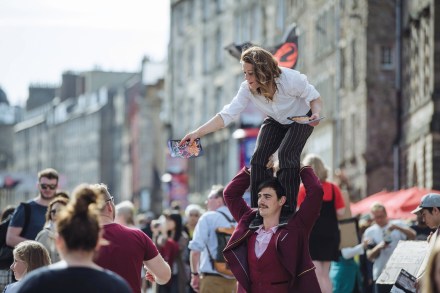
The Edinburgh Fringe has returned after last year’s cancellation but it’s hard to find evidence of the festival on the streets. The atmosphere is weird, unsettling, ghost-like. The defining feature of the city in August is the constant din of music, but as soon as I arrived at Waverley Station I noticed that the pulsing backbeat was missing. The bars that throb with disco and heavy metal have shut up shop. So have the pubs that host free comedy shows from noon till midnight. The insistent tom-tom rhythm has been supplanted by a void. Edinburgh is on mute. Before Covid, there were more than 3,500 shows to choose from. This year’s total of nearly 800 seems like a healthy bounce-back but very few of these productions will run for the full three weeks.

The history of the Theatre Royal Drury Lane is the theatrical history of England

Andrew Lloyd Webber has not been in the best of moods lately, largely thanks to all the Covid delays to his new musical Cinderella, now finally about to open — for the umpteenth announced time — at the Gillian Lynne Theatre. The bigger news, however, is that his theatre at the other end of Drury Lane, the grand old Theatre Royal, is finally finished after massive renovations. Lloyd Webber has spent an awesome £60 million on the rebirth of his Grade I-listed theatre, known to show folk as ‘the Lane’, with his wife Madeleine heavily involved and in cahoots with the heritage expert Simon Thurley and the great theatre architect Steve Tompkins. The result? Oh my goodness! The sheer elegance of its 1812 Greek revival design by Benjamin Wyatt is drop-dead.

What really went on at Britain’s Bikini Atoll?

Nearly a century ago, some Chinese water deer swam the River Ore to Orford Ness. They had escaped from the ornamental deer park at Woburn Abbey in Bedfordshire and, perhaps through ancestral homing instinct, headed as far east as possible without falling into the North Sea. They climbed unsteadily on to this strange shingle spit at the end of England and made it home, along with the gulls, thistles, wild poppies and the brown hares who, reportedly, are too burly to be airlifted by the Ness’s marsh harriers and barn owls. The pioneering deers’ descendants have borne witness since to many faces of human folly. From the first world war to the end of the Cold War, the Ness was home to experiments with airborne weaponry, radar and atom bombs.

A short history of millionaire composers

Let me tell you about the very rich. They are different from you and me, though if you’ve spent much time in the world of classical music, and you hadn’t realised just how different, you could do worse than attend an opening night at Grange Park Opera. True, Grange Park’s founder, Wasfi Kani, is famously adept at cultivating donors: you don’t build an opera house on the late Duchess of Roxburghe’s Surrey estate without a certain fundraising flair. It was when Joanna Lumley shimmered on stage in a midnight-blue ball gown and suggested that we might each like to leave the company at least £25,000 in our wills that I really choked on my prosecco.

Joan Eardley deserves to be ranked alongside Bacon and de Kooning

Painting is a fight and few artists demonstrate this more emphatically than the volatile and complicated post-war master, Joan Eardley. Scotland’s great English artist or England’s great Scottish artist, box her as you will, she’s revered north of the border, but often oddly dismissed south of it. The Scottish public have been enthralled by her work for decades, and spoiled in their access to it, with 60 or so pieces in the National Galleries of Scotland collection alone (the Tate has just one). You’re rarely far from an Eardley here, and never more so than in this, her centenary year, which sees some 20 shows and events lined up to celebrate her life and work. Only one of the exhibitions is in England, the country of Eardley’s birth.

The rise of the ‘sensitivity reader’

You probably won’t have heard about sensitivity readers, but across the pond they are already an essential part of fiction. Sensitivity readers are freelance copy editors who publishers pay to cancel-proof their new books. They read books that feature identities or experiences that are outside of the lived experience of the author. They then critique the writing through the prism of what they claim to be their own authoritative life experience to guide the author toward more authentic representation. For example, the white author Jodi Picoult used a sensitivity reader for her novel about a black nurse who cares for the children of white supremacists.

Welcome to the Impasse Ronsin – the artists’ colony to beat them all

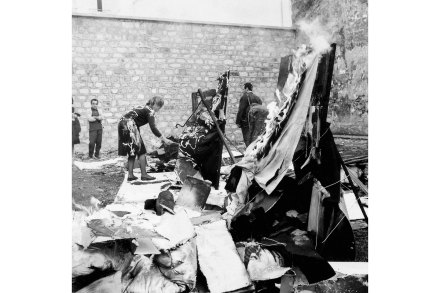
Of all creatives, visual artists are perhaps the least likely to work in isolation; the atomised life of garret-installed solitude is not for them. Artists have always bounced off one another, whether in colonies, studios, collectives or co-operatives. The YBAs would not have been a thing, let alone a now-unfashionable acronym, had a significant group of them not chosen to hang out together. There are outliers, of course, but for the most part artists seem to like rubbing along together, perhaps in the belief that the fumes of oil from one studio can inspire brushwork in the one next door. The Impasse Ronsin, a tiny cul de sac in the 15th arrondissement of Paris, was the artists’ colony to beat them all. It had everything: fame, obscurity, money, poverty, radicalism, outrage.

Nina Hamnett’s art was every bit as riveting as her life

Nina Hamnett is in vogue again. She is the subject of a new pocket biography, no. 7 in Eiderdown Books’s Modern Women Artists series, and her first ever retrospective is now open at Charleston Farmhouse’s gallery space. I confess I didn’t know much about her before this resurrection, but she is now one of my favourite 20th-century artists. In this bucolic gallery space, where cows can be heard bellowing, her portraits are at last hanging together, like a cocktail party finally regrouped. The colours are subtle, beautiful without being decorative; as the co-curator Alicia Foster explains, Hamnett’s use of colour is ‘meaningful, incisive’.

The promoter the critics love to hate: an interview with Raymond Gubbay

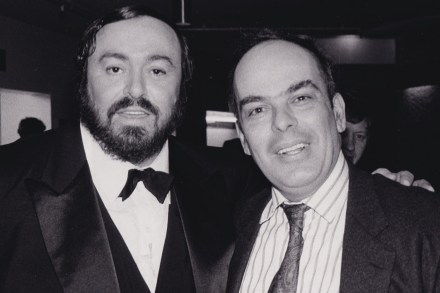
When Raymond Gubbay left school, he was articled to an accountant’s firm. Fascinated by opera and depressed at the prospect of life as a Golders Green beancounter, he wriggled out of it in a matter of months, and into an assistant’s job at Pathé Newsreels. Sensing that newsreels had a looming expiry date, he asked Arnold Wesker (a family friend) to wangle him an interview with Victor Hochhauser, Britain’s leading promoter of mass-market classical concerts. Hochhauser sat behind a desk in his office above a fridge shop in Kensington and asked the 17-year-old Raymond three questions. Where did you go to school? Are you a Jewish boy? And can you start on Monday? Six decades later, even three questions feel unnecessary.

Remembering David Storey, giant of postwar English culture

There is a famous story about David Storey. It is set in 1976 at the Royal Court where, for ten years, his plays had first been seen before heading away to the West End and Broadway. That same week he had won the Booker Prize with his novel Saville. With unrivalled success across fiction, theatre and cinema, Storey was a giant of postwar English culture. He was also, compared with most writers, an actual giant. This Sporting Life, his novel made into a groundbreaking film, grew out of his experience of playing rugby league for Leeds. Unlike Saville, his new play Mother’s Day was greeted by a raspberry fanfare after Alun Armstrong dried during a speech containing 27 uses of the f-word.

‘Germans thought we couldn’t play’: Irmin Schmidt, of musical pioneers Can, interviewed

‘The records are only half of the picture,’ says Irmin Schmidt, founder member of the great German experimental collective Can. ‘Live [performance] is the side of ours which actually has still to be discovered. For many of the people who came to our concerts, it was much more important in building up the legend than the records, because it was something extraordinary.’ Rock music is neck deep in retrospection these days, but the release of a ‘new’ Can album, Live in Stuttgart 1975, can’t be dismissed as just one more trawl through the floor sweepings. Instead, as Schmidt suggests, it reshapes what we know about one of the most influential bands of the 20th century.

The world’s first robot artist discusses beauty, Yoko Ono and the perils of AI

Like a slippery politician on the Today programme, the world’s first robot artist answers the questions she wants rather than the ones she’s been asked. I never had this trouble with Tracey Emin or Maggi Hambling. As we stand before a display of her paintings at London’s Design Museum, I ask Ai-Da whether she thinks her self-portraits are beautiful. What I want to get at, you see, is that, while it’s quite possible for a machine to make something beautiful, it’s hardly comprehensible for a thing made from metal, algorithms and circuitry to appreciate that beauty. ‘I want to see art as a means for us to become more aware of what’s going on in our lives. Art is a way to come together and a way to address problems. Art begins a conversation.

Why Thomas Becket still divides opinion

Visitors to the British Museum’s new exhibition will become acquainted with one of the most gloriously bizarre stories in the history of English Christianity: the tale of Eilward, a 12th-century Bedfordshire peasant. One day Eilward is in the pub when he has the misfortune to run into his neighbour Fulk, to whom he owes a small debt. An angry confrontation follows; eventually Eilward storms off drunkenly — in the direction of his creditor’s house, where he breaks in and starts trashing the place. Fulk catches him red-handed, beats him up and then hands him over to the authorities. One account suggests Eilward was framed; but whatever the truth of the matter, the judge sentences him to blinding and castration.

‘I’m not interested in moral purity’: St Vincent interviewed

St Vincent — Annie Clark, a 38-year-old singer-guitarist of prodigious gifts — spends a lot of time confounding people. She confounds them with stage shows that are less gig than theatre, ostentatiously choreographed and fabulously provocative (though not in any crude sense). She confounds them with an image that morphs from album to album (for her sixth, Daddy’s Home, she has adopted the dissolute Cassavetes-heroine look). She confounds them by, in a puritan age, placing sex squarely within her work, though usually in a plausibly deniable way (the title Daddy’s Home refers to her father’s release in 2019 from prison after serving nine years for his part in a stock-manipulation scheme. She says of the title: ‘It’s pervy’).

Audiences don’t want woke: comic-book writer Mark Millar interviewed

Mark Millar has a raging hangover but he couldn’t be more chirpy or enthusiastic. ‘People say they get worse as you get older but I get reverse hangovers where I feel amazing. I wake up at four or five and I’m ready to go!’ I’ve caught him on a Sunday morning, on his way to Mass, after an exhausting three weeks in which he has been doing up to 45 interviews a day to promote Jupiter’s Legacy, his blockbuster superhero series for Netflix. He ought to be nervous: this is his first big project off the blocks since (in 2017) the studio bought up his publishing company Millarworld for a reported $50-100 million. Instead, as ever, he’s fizzing with energy, enthusiasm and optimism. The reason, he explains, is that he was born with a kind of superpower.

Kubrick’s Napoleon – the greatest movie never made

Two centuries ago — on 5 May 1821 — Napoleon Bonaparte died in a rat-infested house. The fallen Emperor had spent his final years exiled on the British outpost of St Helena. Yet Napoleon’s ignominious last act was only the beginning of his legend. A recent data-driven study, published by Cambridge University Press, crowned him the second most significant figure in history, after Jesus no less. Stanley Kubrick, the virtuoso director of 2001: A Space Odyssey and The Shining, considered Napoleon the most interesting individual who ever lived. Kubrick’s passion project — never produced — was a biopic of the conqueror. He predicted it would be the ‘best movie ever made’. Napoleon’s life has everything a storyteller could want.

The art of storing and unveiling

‘Put beauty first and what you get will be used forever,’ said Roger Scruton in his BBC documentary Why Beauty Matters. The philosopher’s neat elision of beauty and utility is perfectly embodied by Étienne Maurice Falconet’s nymph, who is to be the star of a forthcoming lecture by Waddesdon Manor curator Juliet Carey. This small marble figure would be far less remarkable were it not for the elegance of the 19th-century wooden box in which she is housed. Exquisite, flesh-like pillows of chamois fill the space around the nymph’s form: the box and the sculpture seem at one, as though locked in a dance. The nymph has been stored this way since the 19th century when Edmond de Rothschild commissioned a set of boxes for his collection from Chenue.