Previous magazine Next magazine

Latest issue

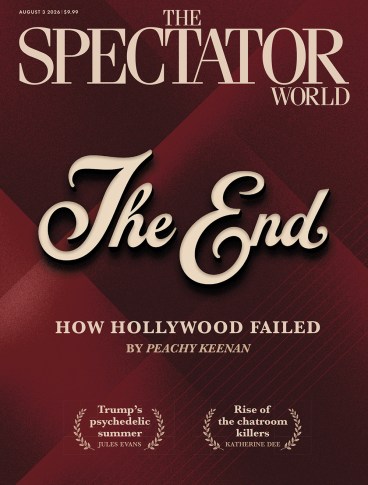
How Hollywood failed

Browse past issues

Features

Features

The ADHD administration

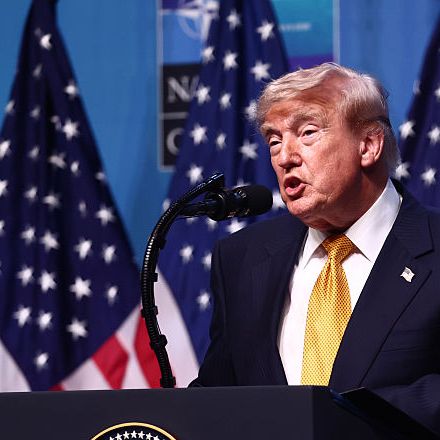
At the start of the second Trump administration, the words on everyone’s lips were “breakneck speed.” On the day of his inauguration, Donald Trump declared a border emergency, designated drug cartels as terrorist organizations and challenged birthright citizenship. He withdrew from international climate agreements and ditched Joe Biden’s mandates on electric vehicles. He rescinded various Diversity, Equity and Inclusion initiatives. On January 20, 2025, he issued pardons for individuals connected to the 2021 riot on Capitol Hill. And he established the Department of Government Efficiency (DoGE), which empowered Elon Musk to begin hacking away at federal bureaucratic bloat. Trump signed 143 executive orders in those first 100 days, more than any previous president.


Jeanette Rubio, first lady in waiting?

Marco Rubio proposed to his then-girlfriend, Jeanette Dousdebes, in 1997, at the top of the Empire State Building. After she said yes, he asked for the engagement ring right back, concerned that it might slip off her finger and fall on the way down. Only once the couple got to ground level did he return it. Jeanette entrusts her possessions to Marco to this day. “I just love that she makes her husband hold her phone,” one Washingtonian says. Unlike many of the wives and girlfriends of the Trump administration, Jeanette Rubio has not created an exaggerated version of herself online. “Wife of Secretary Marco Rubio,” her Instagram bio reads. It links to marcorubio.com, which contains a picture of Marco and the words “Thank you!

New York is built on the remnants of its past

When I walk across the Wakefield Avenue Bridge, high above the Bronx River, the Metro-North Railroad tracks and a long-abandoned patch of woods, I always stop to marvel. Fifty feet from the ground, the skeleton of a child’s bicycle hangs, its frame embedded deep in the tree trunk. Once upon a time, some little boy left his bike in the weeds and a seedling tree on its way skyward simply absorbed it. There’s a technical name for this: edaphoecotropism. It turns out the omnivorous tree beneath the Wakefield Bridge is not alone. A website devoted to “Trees Eating Things” – road signs mostly, but junked cars and even a rifle – serves a “community” of people who celebrate this diet. New York, like most cities, is built on the remnants of its past.

hollywood

The movie industry is broken

A massive sinkhole recently opened up on Sunset Boulevard at Holloway Drive, just down the street from the heart of Hollywood itself. It’s a fitting metaphor for the financial and creative sinkhole that’s busy hollowing out the entertainment industry. “There’s sheer panic in the ranks. And it’s only going to get worse,” a longtime representative at a major talent agency told me. “We talk about it on an internal Signal chat at work. We can’t even believe how bad things are.” A lot is going wrong all at once, and a huge transition is not-so-quietly under way “The meteor has hit and the dinosaurs don’t know it yet,” according to a director and producer who has spent two decades making movies in Hollywood.

Inside San Francisco’s shoplifting industry

I went to San Francisco to document the homelessness crisis. What I did not expect was to witness the most blatant shoplifting I have ever seen. I was staying at the Holiday Inn, and just a short walk away was a Whole Foods. One morning around 8 a.m., I walked over to grab a breakfast sandwich. Before I even made it through the store, I noticed four different homeless individuals in different aisles stuffing bags with anything they could grab. It was not subtle. It was not someone slipping a sandwich into a coat pocket because they were starving. It was clear, obvious, brazen theft. Two security guards were stationed at the front of the store. Both were on their phones. They were close enough to see what was happening, but far enough away to make it clear they were not going to stop it.

Trump’s battle for sovereignty

Secretary of State Marco Rubio is on a roll. Docket his consistently robust responses to Hamas, Iran and NATO for future delectation. On July 13, he wrote a brilliant op-ed for the Wall Street Journal titled “Why We’re Dismantling the International Criminal Court.” Then, on July 20, the State Department released “Cuba: The Capital of 21st Century Communism,” a 64-page report detailing Cuba’s 40-year effort to infiltrate susceptible groups in the United States. As a prefatory summary notes, Cuba’s campaign was less about politics or economics than, at bottom, “a revolution against western civilization itself – waged, in part, via the novel and insidious method of persuading the children of the West to turn against their own inheritance.

Big Pharma wants to sell you psychedelic drugs

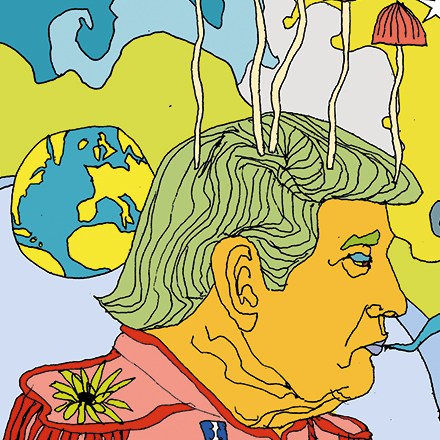
This year is set to be the year of psychedelics – Trump’s trip, you could call it. Since the President signed an executive order supporting the use of psychedelic medicines in April, no fewer than six federal agencies have announced initiatives to help usher the industry along. The agencies, mainly connected to the Department of Health and Human Services, have approved multiple million-dollar initiatives to research, approve and roll out psychedelics. A whole fleet of startups are now circling the Food and Drug Administration. Three of these have Commissioner’s National Priority Vouchers from the FDA, which means that when they submit their new drug applications, the agency will make a decision within two months of filing.

psychedelics
nixonmaxxing nixon

I invented Nixonmaxxing

The kids call it “Nixonmaxxing,” and I invented it 30 years ago. “I think that his historical record is enjoying a bit of a renaissance, but I think deservedly so,” Vice President J.D. Vance says about Richard Nixon, who has become, as a recent Wall Street Journal headline put it, “an unlikely new icon” for young conservatives. Maybe I can’t claim to have been the first teenage Republican to have embraced Nixon chic, but all the way back in 1996 a young Danny, irked by the banality of college application essay questions, decided to make his pitch to higher education by writing about the merits of the president who’d been taken down by Watergate. It was a way of daring colleges and universities to reject me.

The strange death of Islamism

Iranians have adopted a new sport in the past few years: knocking the turban from a passing cleric’s head. There are points for technique and for how high and how far you can get their headgear to go. These are small acts of revenge against a hated religious elite who came to power on a wave of arrests and torture and who, as recently as January, ordered thousands of peaceful protesters to be shot in the streets. It’s also a symptom of something larger. Political Islam is in retreat across the Middle East and the wider Muslim world. “The strange death of political Islam” is an idea that’s in the air at the moment. Rule by clerics, and by others who claim to speak in the name of God, is going out of fashion in the Islamic world.

The rise of Japan’s organic right

Sanseitō is a new right-wing Japanese party. The name means the “Party of Participatory Politics” or “Do-It-Yourself.” It was founded in 2020 by some disgruntled political YouTubers and gained national fame in 2022 when its founder, Sohei Kamiya, won a seat in the House of Councillors. Sanseitō now has 30 seats in the Diet. The party is nationalistic, proposing much stricter immigration controls under the slogan “Japan First.” It is broadly anti-vaxx. It opposes same-sex marriage and supports nuclear-weapon sharing with the United States, while Kamiya has repeatedly promised the party “would not sell out Japan to Jewish capital.

Meet the political donors lining up to influence AI policy

Most Americans have yet to work out quite what they think about artificial intelligence, but already the AI game is under way: the buying and placing of political pawns in readiness for America’s first comprehensive federal AI law. Voters have yet to elect their senators and representatives, but the power brokers – political donors – are spending, primary by primary, to help ensure their chosen candidates survive to write that all-important legislation. Two rival networks with differing views about what this law should entail have raised more than $200 million for this year’s midterm elections.

Do deals get done at Sun Valley anymore?

Silicon Valley is really just a few hundred people connected by favors and money. Most of us rely on this network, but few know how it really functions. This new column reveals the inner wiring of the American tech world. Traditionally, the Valley’s message to Washington has been: keep out. Now Sam Altman is offering the government 5 percent of OpenAI – worth some $43 billion – as a gift. Quite a conversion. The Valley that once worshipped Ronald Reagan now warms to Donald Trump’s economics. The state already owns a slice of Intel and a cut of Nvidia’s chip sales to China. Bernie Sanders, meanwhile, has introduced a bill that would take half the equity of the biggest AI firms in a one-off tax; so for Altman, 5 percent seems a cheap insurance policy.

The rise of mediated murder

A few months ago I stumbled across a TikTok series. A distraught older sister. A younger brother who’d committed suicide. And an online girlfriend who had allegedly coerced him – and several others – into taking their own lives. According to the video creator, this was the girl’s modus operandi: target vulnerable people on Roblox, form relationships with them over Discord and find ways to convince them to kill themselves, often on camera. I can’t verify the videos’ claims, but it was a story I felt I’d heard many times before. A young person falls into an intense, online relationship. That person commits suicide. Someone close to the youngster becomes convinced that the other party’s sole goal is to drive people to suicide.

Data centres

The grid cannot cope with the rise in data centers

As June gave way to July, with a heat dome over the Eastern Seaboard, the US Department of Energy signed an order few people understood. It gave the region’s grid operator permission to do something that would have sounded simply deranged a decade ago. If the system came under enough strain, PJM – the body that keeps the lights on for 67 million Americans from Chicago to Washington – could order the great data centers of Virginia and Maryland to disconnect from the grid and run on diesel instead, so that everyone else could keep their A/C on. Any facility drawing 50 megawatts or more would have 15 minutes to comply. It was, said the order, a last resort before rolling blackouts. Secretary of Energy Chris Wright said keeping the power on was “non-negotiable.

Andy Burnham’s centrist act isn’t fooling anyone

When Ed Miliband and Shabana Mahmood arrived in Downing Street on July 20, the image of political rivals arm in arm symbolized a new government of differing views taking shape. It might have been more awkward. As they neared the door of No. 10 and the waiting television cameras, Miliband turned to Mahmood and asked: “Should we turn around for a photo together?” Mahmood gave the idea short shrift: “We’re not getting married, Ed!” But in a sense, Labour is seeking a new relationship with the British public – and everyone around Andy Burnham is alive to the importance of images, symbols and vibes. As Wes Streeting, the new Defense Secretary, put it in cabinet the next day: “We have a second chance to make a first impression with the voters.

burnham

The wrong lessons from a politician’s murder

Reason, David Hume noted, is a slave of the passions. Arguments, especially political crusades, are often rooted in emotional responses, with the evidence assembled to justify a position which is heartfelt but often wrongheaded. So it is with the cry, from politicians, for more steps to be taken to safeguard the personal security of politicians. The killing of the former Member of Parliament Ann Widdecombe, like the deaths of Jo Cox and David Amess, has generated new demands for action, and legislation, to protect those in public life from risk and danger. The transparent nobility of Ann’s life and the grotesque tragedy of her death make it emotionally difficult to resist the call for strengthened perimeters around our politicians.

Burnham’s solutions must not lie in the 1970s

Andy Burnham is right. The cost of living is foremost in people’s minds just now. Naturally his electricity bill VAT holiday and freeze of bus fares find agreement in television news vox pops and focus groups. But he offers no explanation for the causes and concentrates only on the symptoms. Obviously, the removal of the 5 percent VAT will be nice for consumers. But underlying inflation today relates to government debauchery of money and disruptions of supply caused by Donald Trump’s tariffs and his short war, by Vladimir Putin’s long war and Ed Miliband’s net-zero trap, which makes us pay expensive green levies and bans new domestic fossil-fuel production. The remedy does not lie in the 1970s-style pretense that things can be made cheaper by fiat.

The radical left-wing takeover of the Democrats is nearly complete

Tuesday August 4 could prove to be a turning point in American political history. If Democratic primary voters in Michigan choose Haley Stevens, a moderate, as their Senate nominee, the party establishment should stagger on, perhaps up to and beyond the presidential election of 2028. It’s more likely, however, that the Democrats will elect Dr. Abdul el-Sayed, a pro-Palestine radical who supports Medicare for All and the abolition of Immigration and Customs Enforcement. El-Sayed’s victory would confirm that the hard left is the coming force in national politics, and suggest that the long-anticipated socialist takeover of the oldest party in the US – the party of Andrew Jackson, Harry Truman and Bill Clinton – is finally under way.

Mr. Burnham, put on a suit and tie

A brass fanfare; a wide establishing shot of five men in three-piece suits, seated in a library of leather-bound tomes – this is Harold Macmillan doing informal. The scene is from a 1959 party political broadcast, which purports to show a “relaxed chat” between Macmillan and four of his ministers, all of whom he refers to by their cabinet titles. Almost everything about it is artificial (including quite possibly the claim that it took place the day after the parliamentary recess). Watching it now is a reminder of two things, perhaps contradictory. First, that prime ministers have always played a clever and not entirely authentic game when it comes to informality; second, how far we’ve fallen. Can you imagine the equivalent today?

suit andy burnham

Who believes the latest version of the Nord Stream saga?

If you want to start a myth, make it a good one. Look at Odysseus. Imagine if the old liar had come home stony broke, a decade late, and told his wife: "Sorry, Penny, I got drunk, the ship was repossessed and the crew deserted, I gambled away all my money and I’ve spent the last ten years working in bars to pay my passage home." The tale would not have endured. Penelope would probably have kicked him out and married one of the suitors. It’s more or less the same with the unmysterious sabotage of Russia’s Nord Stream pipeline in September 2022. There’s a perfectly good, prosaic, obvious explanation. The giant undersea tube was able to supply cheap Russian gas to Germany, something the US government has disliked for decades.

The problem with the Ann Widdecombe suspect’s ‘fair trial’

It’s hard to hold anyone responsible for anything today in British politics. That’s because no sooner have the facts emerged than everybody in Westminster has played another game of musical chairs. If the word “amusing” can be used in the same paragraph as “attempted beheading” allow me one amusing example. In June, a 30-year-old asylum seeker from Sudan allegedly attempted to behead a local man on the streets of Belfast. It was apparently caught on video. Everyone was geared up to make their points. The left was preparing to argue “So you’re saying all asylum seekers are beheaders, are you?” while the right was gearing up to say: “We must hold people accountable.

ann widdecombe

Turtle doves and the myth of rewilding

In the latest success story for reintroducing species to the British countryside, turtle doves, reared in captivity and released at three locations in Somerset and Devon last year, have returned to breed. Turtle doves have steeply declined in numbers, hanging on in the south and east of the country, but this scheme opens a new front in the battle to save the species as a British summer visitor. In May 2025, 244 captive-bred turtle doves were set free across three sites. Like others of their species, they spent the winter in Africa but a handful found their way back to southwest England this summer. Reintroductions like this are now all the rage among conservationists because it is a policy that can have spectacular results.

The Welsh government’s mad decolonization plans

A teenager in Wales might want to play video games, hang out with friends or even, dare I suggest it, read a book. The Welsh government, however, would prefer they put on a headset and confront their “unconscious bias.” It has created a £1.2 million metaverse, the “world’s first anti-racist virtual world,” to teach Welsh teens about their “white privilege.” But this is only one element of an official commitment to end racism by 2030. Not today, not yesterday, but a specific year in the future. The idea for an Anti-racist Wales Action Plan – ArWAP – was born following fervor around the Black Lives Matter movement, and an official plan followed in 2022.

arwap