Previous magazine Next magazine

Latest issue

How Hollywood failed

Browse past issues

Books & Arts

Books and Arts

Why do political elites insist on posing as outsiders?

The American political elite have developed a peculiar habit of styling themselves as outsiders. The closer they stand to power, the less likely they are to claim it as their own. In fact, power always seems to be in the hands of someone else, someone located just out of sight. So where exactly does it reside in this late-stage republic? Nobody seems quite certain. Two new political memoirs, one seeking to clarify the past, the other aimed implicitly toward the future, share this bewilderment. Surprisingly, they also share a good deal else. There is a common obsession with European heritage, Jill Biden through her Italian roots, and J.D. Vance through his love of Great Britain and his adopted Roman Catholicism.

outsiders
sam neill

The greatness of Sam Neill

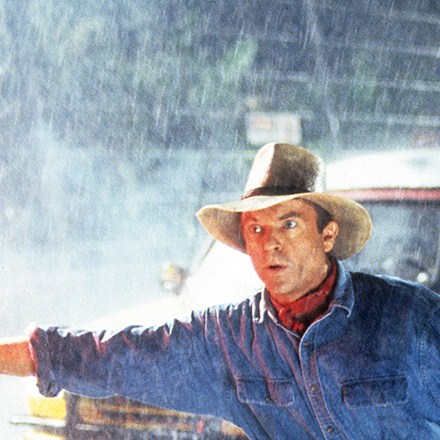
The recent death of the actor Sam Neill, at the age of 78, was greeted with a mixture of surprise, sorrow and, in many quarters, unexpected grief. It is likely that Neill would have regarded the lavish tributes paid to him by actors, filmmakers and politicians with a mixture of embarrassment and quiet pride, because although he was a brilliantly versatile actor who managed to make a deep impression in virtually every role that he undertook over his five-decade-long career, he was also someone instinctively uncomfortable with the limelight.

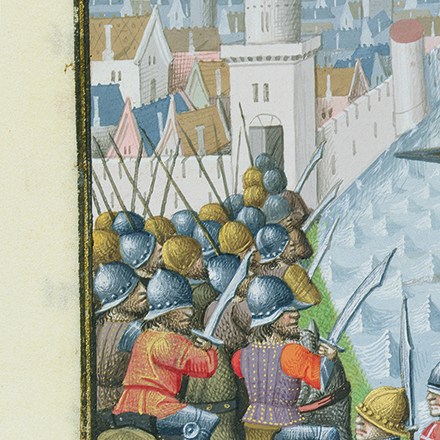
Christian soldiers in retreat – the disastrous Fifth Crusade

The Fifth Crusade, which was fought between 1217 and 1221, marked a new direction for the crusading movement of the Middle Ages. Instead of invading Palestine, as the first three crusades had done, and the Fourth Crusade might have done, the crusaders decided to attack Egypt. That was not the original idea. The formidable Pope Innocent III, who launched the Fifth Crusade, had envisaged a repeat of the old strategy of marching on Jerusalem from the sea. The invasion of Egypt was decided on the initial wave of forces after they had reached the Levant. There was a sort of logic behind the decision. The crusading kingdom of Jerusalem had been destroyed in 1187, when its army had suffered a crushing defeat at the hands of Saladin at the Horns of Hattin above the Sea of Galilee.

contrapposto

The appeal of asymmetry: Contrapposto, by Dave Eggers, reviewed

There are novelists who seem to spend their entire careers either apologizing for being themselves or trying to become someone else entirely. And then there’s Dave Eggers, who has spent much of the last quarter century trying – and, it has to be said, as far as one can tell, very happily succeeding – to become Dave Eggers. Ever since A Heartbreaking Work of Staggering Genius appeared in 2000, fulfilling almost entirely the audacious promise of its title, Eggers has occupied that peculiarly American position of being not simply Yet Another Novelist, but the Guy, the Man, the yardstick by which all others might be judged and found wanting. He’s a publisher, campaigner, literacy activist, editor, artist, children’s author, philanthropist and impresario.

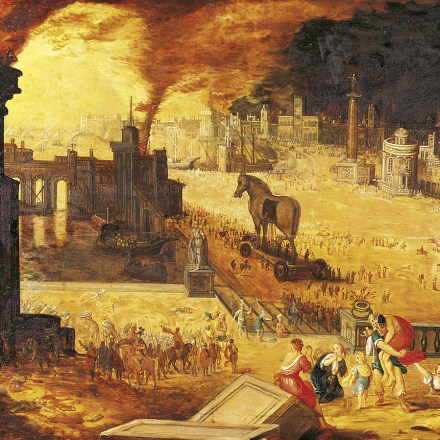
Bringing Homer into the home: how the Iliad and Odyssey became widely available

Homer’s ghost is particularly busy, popping up in the dreams of pretty much every poet going. In fact if you are a poet and haven’t been visited by Homer, you may find yourself wondering why you’ve been left out. The cultural reach of the two major poems that appear under Homer’s name – the Iliad and the Odyssey – is undeniable. I teach my creative writing students that there are only two stories: the siege and the journey, and there they are, right at the beginning of literary history. They’ve been read continuously for centuries. On my shelves is an edition of Alexander Pope’s Iliad which belonged to my great-great-great-grandfather, in which are still bits of paper put in by subsequent family members.

homer
ballet

Three cheers for Britain’s most unabashedly elitist school

As we ponder the ups and downs of the UK’s sporting record this summer, it might be worth noting their unquestioned prowess when it comes to the demands of classically based dancing. The Royal Ballet is consistently more than a match for any comparable company in the world, and its chief feeder, the Royal Ballet School, currently celebrating its centenary, is similarly and solidly rated as one of the two or three best of its kind anywhere. Both these institutions are deeply beholden to tradition, and the RBS might well be the most unabashedly elitist educational establishment in the country. It receives globally more than 2,500 applications a year. All these will lead to an audition, the number finally whittled down to 30-odd offers of a full-time place.

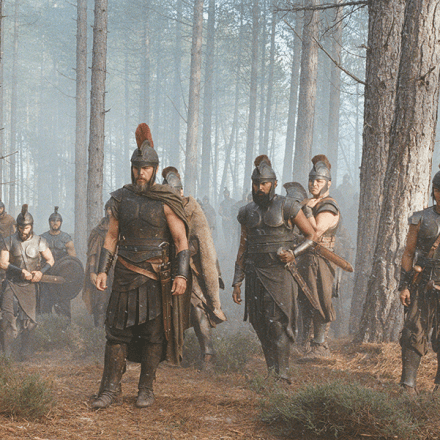
The Odyssey is shallow and tiring

The Odyssey is Christopher Nolan’s relentless, deafening three-hour take on Homer’s epic poem, and while it is technically impressive filmmaking – IMAX cameras; massive mechanical puppets, minimally pimped up by CGI; thousands of extras – it is set piece after set piece which becomes rather tiring. Even if weariness is part of the point of the Odyssey, it’s no excuse for the film being tiring. Even if weariness is part of the point of the Odyssey, it’s no excuse for the film being tiring What we get is an action blockbuster, without significant depth, although there is some heft to the final act – everybody’s favorite act, surely. Who doesn’t love it when Odysseus finally makes it back to Ithaca disguised as a beggar and no one recognizes him?

In defense of Little House on the Prairie

You can tell things have started to get really bad by the fact that they’re bringing back Little House on the Prairie. When a society is in serious crisis – or so I’ve read – it no longer needs edgy, transgressive, exciting art to push boundaries and challenge assumptions. Rather, it needs to be soothed and cosseted with bland, undemanding and familiar comfort food. Nothing, not even The Waltons, does that quite like Prairie. People griping about the remake have clearly forgotten how dire the original was I may well have gawped uncritically at quite a few of the original series’ 200-odd episodes, the first of which aired in 1974.

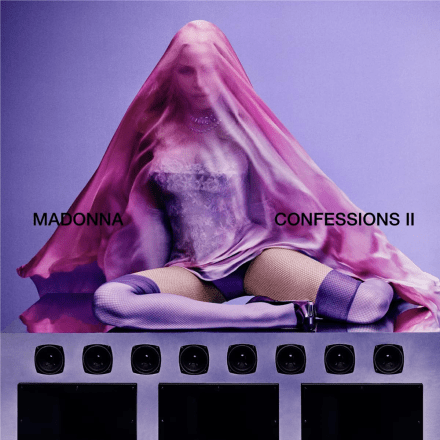
Confessions II gets thrillingly close to vintage Madonna

There comes a point in the career of any established artist when looking backward seems to be the only possible way to move forward. Madonna was a great pop star until she wasn’t. Confessions on a Dance Floor, released in 2005, was her last really successful record; “Hung Up,” from that album, her last truly unforgettable single. Ever since she has been chasing musical trends with increasingly diminishing returns, the heavy-handed concepts and contrived personae – Madame X, anyone? – no longer supported by anything approaching a properly decent song. Ms Ciccone seems to have belatedly remembered that Madonna is, and always has been, the concept So Confessions II is an act of both commercial and creative necessity. Its reclamation of the past is twofold.