Sanseitō is a new right-wing Japanese party. The name means the “Party of Participatory Politics” or “Do-It-Yourself.” It was founded in 2020 by some disgruntled political YouTubers and gained national fame in 2022 when its founder, Sohei Kamiya, won a seat in the House of Councillors. Sanseitō now has 30 seats in the Diet.
The party is nationalistic, proposing much stricter immigration controls under the slogan “Japan First.” It is broadly anti-vaxx. It opposes same-sex marriage and supports nuclear-weapon sharing with the United States, while Kamiya has repeatedly promised the party “would not sell out Japan to Jewish capital.” It has claimed on YouTube that the Nanjing Massacre was greatly exaggerated and that the sex-slavery of Korean “comfort women” was merely an organized brothel system. It is also in favor of organic farming, something that would have seemed strange just a few years ago.
Sanseitō is part of a growing international movement sometimes called the “organic right.” Thanks to the emergence of Robert F. Kennedy Jr.’s Make America Healthy Again movement, its tenets are becoming better known: industrial agriculture is controlled by multinational corporations; pesticides and herbicides come along for the ride, whether you want them or not. In order for a nation to be truly independent in dangerous times, a country must produce its own food, and the food must be pure, just as its people are pure.

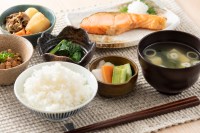
In Japan’s case, the food must be rice, the soul of the nation. The word for cooked rice, gohan, is also the word for “meal.” Sanseitō says that if you eat organically, you build up a natural immunity that acts as a bulwark against pandemics. Food is medicine. The party calls for Japan to produce 100 percent of its own food by 2050, compared with less than 40 percent today.
It insists that natural ecological cycles should be observed, genetically engineered crops should be anathema, processed foods should be reduced and school lunches should be organic-only.
The party is also vehemently anti-wheat. “There is no need to protect the food culture created in America,” Kamiya has said. Wheat consumption in Japan, the party argued, stems from policies imposed during the postwar Allied occupation. Gum-chewing GIs brought hamburgers and hotdogs with their wheat buns. Wheat was alien to the Japanese gut and, according to party co-chair Toshiaki Yoshino, might even cause cancer. Kamiya also referred to the “Jewish international finance capital” involved in promoting wheat imports.
The only problem is that wheat has been cultivated in Japan for hundreds of years. Various types of noodles, including udon and somen, are made of wheat. Dumplings and buns such as gyoza and manju are wheat-based. Tempura batter is made of wheat. So is okonomiyaki, a sort of very wheaty wheat-and-cabbage pancake eaten by wheat-lovers in Osaka. Octopus balls are wheaten. Roughly half of soy sauce is made from wheat. It is nonsense and the party has since downplayed the policy.
Like Sanseitō’s organic right, MAHA is skeptical of parts of the childhood vaccination system; distrusts pharmaceutical and food companies; disparages agrochemicals; links diet to chronic disease; and opposes vaccine mandates imposed during public-health emergencies. But MAHA’s criticism of ultra-processed food, regulatory capture and the deterioration of public health is not in itself nationalistic. Sanseitō shows how a politics of health can become a politics of national purity. Suspicion of corporate food production shades into suspicion of foreign food, which leads to suspicion of foreigners themselves. In Japan, an argument about additives and seed oils has led to questions about who belongs to the nation.
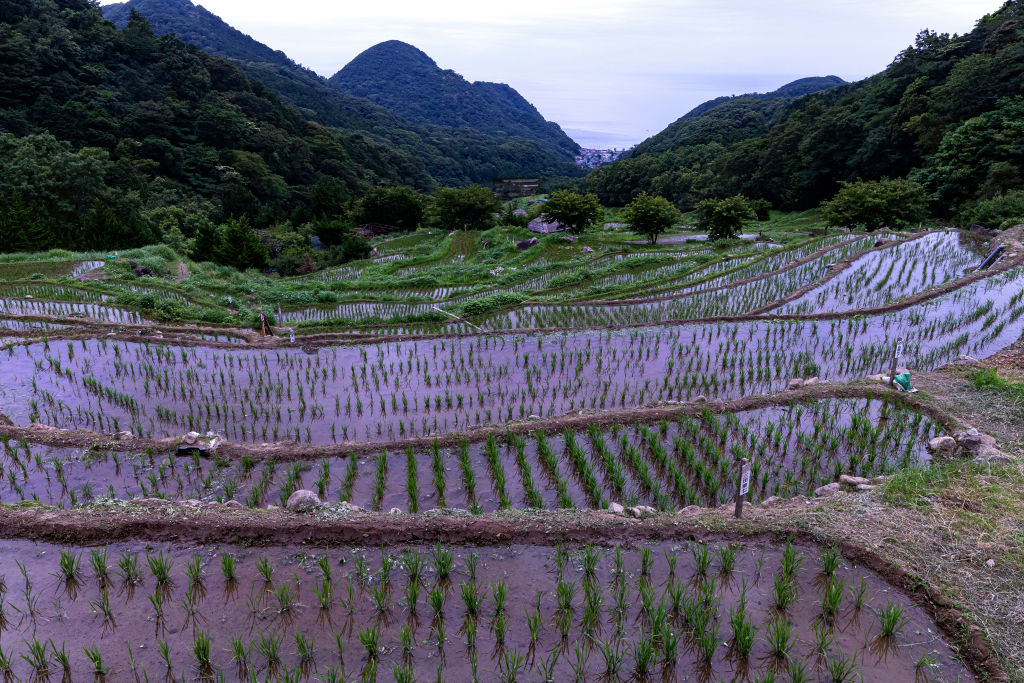
Sanseitō’s promise of 100 percent food self-sufficiency by 2050 is perhaps its most eye-popping policy. It amounts to a maximalist vision of absolute security in a world full of enemies, particularly China, North Korea and Russia, with which Japan has never signed a formal peace treaty ending World War Two. How could this target possibly be achieved? “We must restore and cultivate idle and abandoned farmland,” says the party manifesto. There is certainly a great deal of it: population decline in rural Japan is catastrophic. But who is going to work the land? Senior citizens?
I live in Japan and feel rather nervous whenever I encounter a Sanseitō election poster, since I am an immigrant. But I wanted to ask the party about its food promise, which appears impossible. “This is a matter of supporting small farmers,” a spokesman told me. “You will have seen small rice cultivation even in towns and cities.” I have. Householders often maintain plots in residential areas. “We want to encourage young people into farming and revitalize depopulated areas.”
There are more McDonald’s restaurants in Japan than anywhere except the United States and China
What about wheat? “Wheat is included in many processed foods. We don’t say that no one should eat wheat, just that traditional crops should be prioritized and grown organically.” How can organic farming provide for everyone in the country? “We are against food that is adulterated with agrochemicals. Japan’s system of small local rice-farming makes it completely possible if that’s what we wish to do as a nation.”
It all sounds rather admirable. But practically, one wonders. The Japanese are addicted to processed and frozen foods; domestic fridges are stuffed with them. They consume large amounts of a strange, ultra-processed, cake-like substance called shokupan. It is technically bread but without a crust and is sold in packages of six, five or two slices.
There are more McDonald’s restaurants in Japan than anywhere except the United States and China. Ditto KFC. Ditto Starbucks. Pizza Hut is not far behind. Japanese people know that much of this is junk food – it is called jankufuudo, after all – and they are lovin’ it. Japan is not remotely food-independent. It is globalized to the eyeballs.
The Do-It-Yourself party promises national renewal and good health for all. But it may discover that feeding 122 million people, who crave wheaty, salty, sugary and fatty western food, requires more than a few extra rice fields.





Comments