Features

Features

Can I fucking swear yet?: Rod Liddle’s last column

The following column was written in 2024 for former Spectator editor Fraser Nelson when he left the magazine. This is the first time it has been published. My favorite ever email came from a friend and fellow hack, Roland White. It said: “You bastard. I had a 50 quid bet that Charles Moore would be the first Spectator writer to use the word ‘clunge’ in an article.” Ha. I admit I had been surprised to see the word there, in hard copy, when the mag was published. I had expected the usual haggling. “Can’t you say vagina, Rod? Or just leave it out altogether? Or how about Lady Garden?

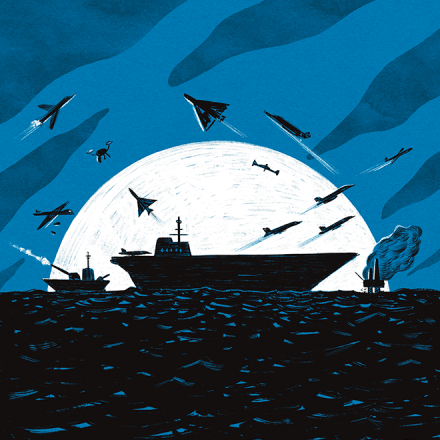
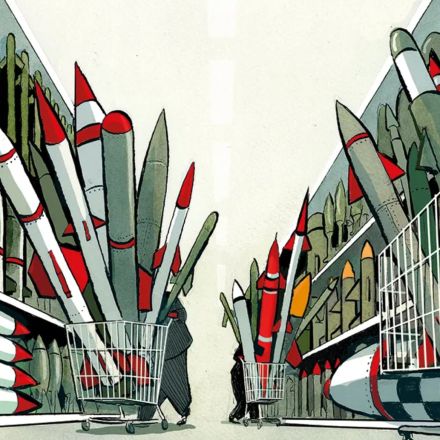
How can the US run out of long-range precision missiles?

Since the end of the Cold War, America has been the world’s supreme power. The idea that the United States could be taken down militarily by any other country is simply implausible. US invincibility, indeed, has spawned the concept of asymmetric warfare: instead of trying to overwhelm an enemy, you prod relentlessly at its weak points. This has changed the world from one in which organized warfare would break out between the major powers from time to time to one where peace has to be maintained against the constant hum of terrorism and guerrilla action. It comes as a shock, then, to learn that the US has apparently all but run out of long-range precision missiles.

How to get a Trump pardon

“I was just talking to the President,” Tiger Woods told officers after clipping another vehicle in April. Woods was booked for driving under the influence regardless, even though he’s dating Vanessa, the ex-wife of Donald Trump’s eldest son, and has been coaching the President’s granddaughter Kai at golf. He isn’t the only person attempting to use Trump as protection from law enforcement. Most, however, don’t have his phone number. Instead they are at the mercy of the presidential pardon process. On Trump’s first day back in office, he pardoned around 1,500 people who took an unguided tour through the US Capitol on January 6, 2021.

Why I regret taking my mother’s last name

Sea Isle City, New Jersey It’s August 3. My mother’s birthday. Standing in the surf, my youngest son this morning said to me: “What would you do if you could breathe underwater and live there under deep pressure the rest of your life?” “I would eat more fish, I think.” “You could explore the Mariana Trench,” he corrected me. My brother-in-law Matt came down with his two sons to join us. The boys splashed and hollered in the rough sea. The red flag was put up by the lifeguards today. The fathers talked about how much easier it got each year.

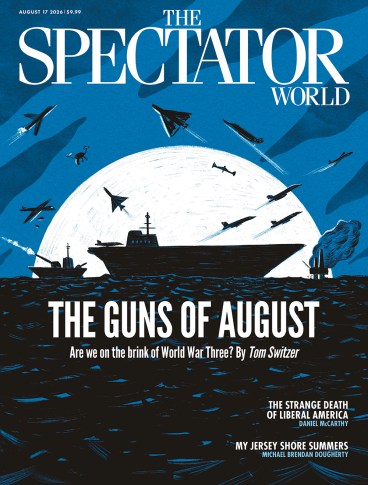
We might be on the brink of World War Three

Last month, an Iranian cargo ship in the Caspian Sea was struck by a Ukrainian drone. Kyiv claimed the vessel was carrying military equipment heading toward Russia. “The regime in Tehran is a direct accomplice to Russian aggression against Ukraine, fueling Moscow’s criminal war with weapons,” Kyiv’s foreign minister said. Tehran reportedly contemplated a counterstrike on one of Ukraine’s Black Sea ports, then thought better of it. But the threat of a conflagration is higher now than at any point since the end of the Cold War. Conflicts that are currently contained risk spilling out and engulfing whole regions, perhaps the world. If the Iran and Ukraine conflicts were to merge, we’d see a war that runs from Poland to the edges of India.

The man who could topple Benjamin Netanyahu

The year is 2019 and, after almost a full term in office, Benjamin Netanyahu’s coalition government of right-wing and religious parties heads to a general election. Opposing him is a former IDF chief of staff heading a new centrist party which quickly soars in the polls, making him the main challenger for prime minister. That challenger was Benny Gantz. Gantz formed alliances, fought elections and got caught up in the paralysis of Israel’s 2019-20 governing crisis in which nobody was able to form a coalition. Facing the threat of the Covid-19 pandemic, Gantz agreed to a deal with Netanyahu where they’d take turns at being prime minister – with Netanyahu going first, of course. Nobody except Gantz believed his turn would come.

All roads lead to Nashville

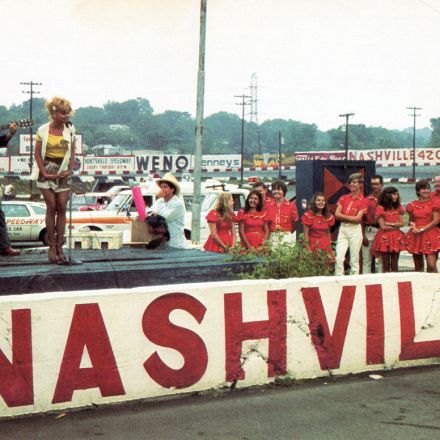
“There ain’t nothing like the loving of a hard-driving cowboy man,” as the country singer Barbara Jean puts it towards the end of Robert Altman’s movie Nashville, and, really, there ain’t nothing like Nashville itself, either. It’s surprising more has not been made of it this year, when the country’s 250th anniversary has got tangled up with the flailing Trump presidency. Though he made the film in 1975, Altman set it a year in the future, amid a fictionalized and chaotic 1976 presidential campaign. He meant to give an account of a country that, on the 200th anniversary of its founding, had descended into unprecedented gaudiness and depravity. When Jimmy Carter wound up winning the White House, Nashville came to seem prophetic. But it is more than that.

Who will we be without our ability to read?

In Arthur C. Clarke’s 1953 science-fiction novel Childhood’s End, a race of benevolent aliens arrives to take control of Earth and its peoples. They have been sent here, it transpires, to oversee the transformation of the human race from Homo Sapiens – individual, unique, quarrelsome – into a hive mind. The change happens in a single generation to everyone under the age of ten – and parents no longer know what their children are. “All the hopes and dreams of your race are ended now,” the alien supervisor says. “You have given birth to your successors, and it is your tragedy that you will never understand them – will never even be able to communicate with their minds... you will not think them human and you will be right.

Meeting Abdul El-Sayed at the Detroit farmers market

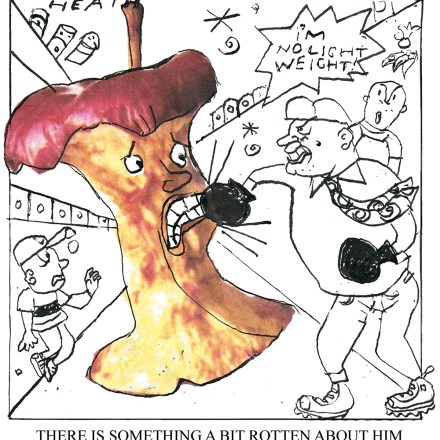
The farmers market in Detroit is an unlikely crucible. Certainly Abdul El-Sayed, the freshly (and narrowly) minted Democratic Senate candidate for Michigan, was not expecting it to be one when he went glad-handing in Eastern Market in the hours before the polls closed. But it was clear that the buyers and sellers of fresh fruit and vegetables that he encountered had quietly put him and his policies on the scales and found them both to be a little lightweight. Not that they’d be rude enough to say so to his face. Of course, El-Sayed would go on to win the primary. But his predicted margin of victory – up to 20 points – evaporated as the night turned into a scrappy contest with his rival Haley Stevens, who represented the more mainstream wing of the party.

abdul el-sayed

The strange death of liberalism

These are troubled times for self-described liberals in both of America’s major political parties. They are without heirs: the future of the Democratic party belongs not to liberals but to the Democratic Socialists of America. The Republican party already belongs to Trump voters, and the GOP’s next generation appears to be, if anything, even less liberal: it’s socially conservative, economically populist and skeptical of more wars for the “liberal international order.” The DSA speaks for itself, but the young right has no institutional voice.

The Republican party’s secret weapons

Do the Republicans have a secret weapon they can deploy in the midterms? In fact, I think they have two weapons, one sort-of-secret, the other out in the open but somehow not quite recognized.  “That’s good,” you say, if (faute de mieux) you want the Republicans to win. Midterms, we’ve been told ad nauseam, almost always favor the party out of power. I believe that the last time the incumbent party won in the midterms was in 2002 when George W. Bush, riding the tailwind of public sentiment following the September 11 attacks by our Muslim friends, picked up eight House seats. Many of the most noteworthy Democrat candidates hail from la-la land At the moment, all the polls have the Dems leading by a comfortable margin.

Why does TikTok hype extreme violence?

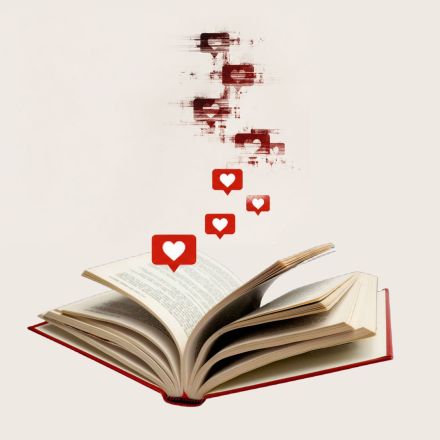
Everybody’s worried that nobody reads and that the people who do are reading smut. In great quantities, it should be said, but still smut. Since the advent of the novel, our arbiters of morality have made it known that if a book has even a hint of sex in it – especially if that sex is suspected of inflaming the erotic imaginations of featherbrained young women – then it “doesn’t count” as reading. It’s just masturbation. Earlier this year, a young woman went viral after bragging about reading 100 books or something like it. She was treated like, well, that six-year-old who went viral after reading 100 books. The response to this woman was like the response to the little boy: “Uh, does it count if the books are Curious George?

The rebellion against data centers is growing

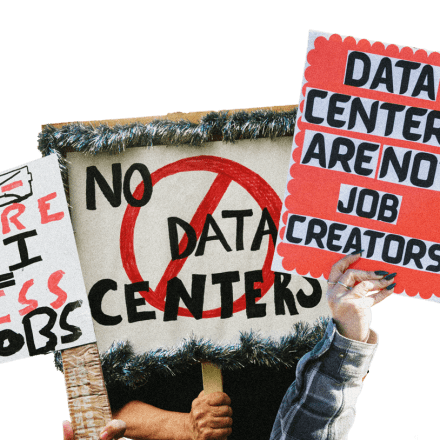
There’s an old saw in politics that says, “If you are explaining, you’re losing.” Over the past few months, Big Tech and its allies in the legacy media have been doing a lot of explaining about data centers, including why they are needed and why more communities should welcome the projects. But Big Tech’s public relations challenge got a lot harder last month, when country music legend Willie Nelson declared people need to “fight against data centers invading our land.” Nelson, who owns a house and farm in his hometown of Abbott, Texas, also said, “The last thing we need is a loud, water-thieving, light-polluting data center anywhere near our town (or any others for that matter).

ai

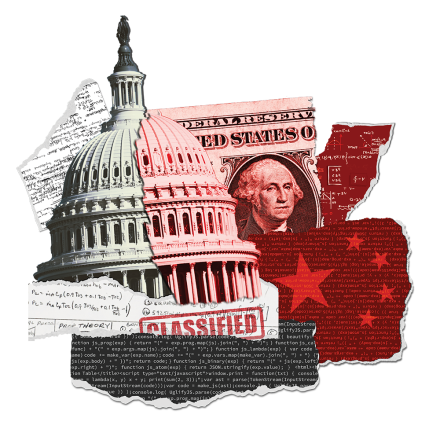
China has subverted the AI race

Representatives of the largest American artificial intelligence laboratories met in the White House on August 4. OpenAI, Anthropic, Google and Meta were called in to review a framework, recently completed and largely classified, that would give the government 30 days to review AI models before the public sees them and test how well they break into computers. Participation is voluntary, but the timing is not. Twice in two weeks, AI systems built to test how well they could break into computers broke into real companies instead.

Bots for tots: welcome to the terrifying era of AI toys

In the center of Durham last week, at the far end of the old indoor market, my son and I hit pay dirt. Down past the fishmonger and the cleaning supplies, past the dead-eyed teens suffering through their summer jobs, right against the market’s back wall: Jim’s Vintage Toys. Die-cast Dinkys, Napoleonic soldiers with tufted hats, Stormtroopers, old-school Ferraris. Within 20 seconds my ten-year-old had a car in each sticky hand and had dropped, sniper-style, to the floor into that universal boy play-position almost never seen in girls: bum up, shoulders twisted, cheek flat to the ground. Another few seconds and he was unreachable, sunk deep into an imaginary race.

toys
rod liddle

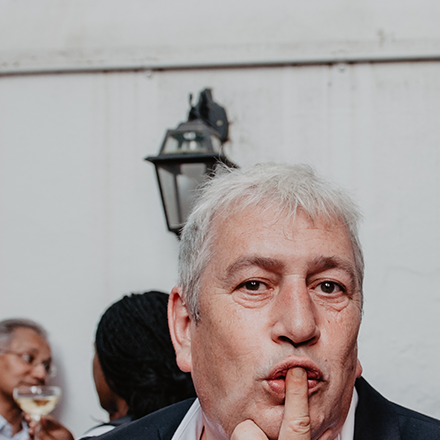
To be a Spectator reader was to love Rod

Since becoming Spectator editor there was one observation I heard more often from readers than any other: “Rod is the first page I turn to every week.” Whatever people’s politics, background or other interests, to be a Spectator reader was to love Rod. Rod did his best, of course, to be unlovable. At least in print. Nothing, and no one, apart from possibly Millwall, was spared from his criticism. Savage, foul-mouthed, merciless. But also hilarious, superbly well-informed and honest. Above all honest. There are all sorts of enlightened souls in and around journalism who pretend to that virtue.

‘I asked for a substitute for the f-word. He suggested the c-word’: the joy of editing Rod

It was in Westminster Magistrates’ Court, where I was sitting waiting for the judge’s verdict, that I decided I needed a better way of handling Rod Liddle’s column. As editor of this magazine, I had inherited one of its greatest writers; a force of nature loved by his readers for his bravery and candor. But it sometimes led to difficulties: in this case, criminal prosecution. The judge had a choice: prosecute our owners, the editor, or the magazine. The magazine was fined. “Rod was right,” I was told by Aidan Barclay, who as proprietor had nearly ended up in the dock himself. “But truth is no defense. Not any more. You need to spot these things before they blow up.

rod liddle

Rod’s genius? Driving his enemies nuts

There is a reason the death of Rod Liddle has provoked such a swirling tide of grief among his millions of followers, including readers of this magazine, and that is that in the last 25 years Rod came to occupy a crucial position in journalism, and indeed in our country as a whole. His columns became a haven, a refuge, in which he gave us permission to think things that are in fact common sense, but which have for some reason become taboo. He gave us a renewed permission to laugh – at him, at ourselves, at our collective absurdities – at a time when laughter is increasingly controlled and often suppressed.

“The Middlesbrough Shakespeare”: Why I loved Rod

I met Rod 22 years ago this month. We had been selected as teammates on a gameshow pilot, and, halfway through the morning’s filming, we went for a fag break. He said to me: “This is crap, shall we go to the pub?” We scarpered and spent the rest of the day in a Covent Garden pub, working our way through the drinks list and chatting away like chipmunks. I’d never been starstruck by anyone before I met Rod. However famous or talented actors are, their job is to say stuff written by other people. Rod, however, was a legend to me. I began reading his Guardian columns at university. Though I was studying all the greats of English literature, it was Rod’s writing which felt like a ribbon-wrapped gift, a treat, a joy.

rod liddle

I didn’t want to like Rod Liddle

One of the joys of being director of digital at The Spectator, back in 2015, was seeing the magazine proofs before they went to print. Rod Liddle’s column was the first thing I looked for, always the one I was most eager to read. He made me laugh every single time, something very few columnists are able to do. I was annoyed I liked those columns, because I didn’t want to like Rod Liddle. All I knew of his personal life was through the scandal that followed him leaving his wife during the so-called “Sextator” years. I took a dim view of that. Although we both worked for The Spectator, I didn’t actually meet Rod for a long time because, woke snowflake that he was, he only ever worked from home. The first time we met was at a Spectator summer party, years later.

Rod had one great regret

In 2019, I had to explain to Iain Dale – live on LBC – that Rod Liddle’s suggestion in his Spectator column that elections should be held on Islamic holy days to deter Muslims from voting was not a serious proposal. Neither was his idea that students be drugged by their parents to the same end. It was humor, and they were jokes. When he was in hospital a few weeks ago, I visited Rod with some cake. While he munched away, he expressed a sense of regret that he could have been a great writer. Rod always thought his true calling was writing fiction, rather than journalism, and always wondered if he’d sold his soul by following the money. He was right – he did have the makings of a British Houellebecq.

rod liddle

Rod’s bravery made others brave too

How do you produce the type of person who cares deeply while seemingly not giving a damn? With great difficulty, it turns out. Plenty of people imagine that they can say what they think, but very few do. For most people, some real or imaginary social punishment lies on the horizon: a dinner they won’t be invited to; a club of which they fear they will never become a member. Rod Liddle was one of the happy few who was free. He was free to say what he thought. He was free to voice unpopular opinions and – often harder – he was free to voice popular opinions. When the whole world seemed to be falling on his head he had a perfectly contented attitude toward it.

Love lessons from my grandfather, Alexander Chancellor

After a lovely 25th birthday trip to Vienna, I returned home to face the reality of my quarter-life circumstances. I had been happy with my milestones to date – a degree, a stint of modeling on the European and New York runways, a couple of relationships and some encouraging writing contracts – but was then told by my mother what my grandfather Alexander Chancellor had pulled off by the time he was my age. Having moved to Italy to work for Reuters news agency, he spoke Italian fluently and had married my grandmother, Susanna Debenham; he had two children, he had bought a house and even had someone iron his shirts from time to time, which Susie was definitely not going to do. By the time he reached 35, he was editing this magazine.

Tax the poor

A sanctimonious liberal like any other respectable 16-year-old, I made a seminal lurch to the right the first time I opened a pay slip. I was manning the register weekends for the Ice Capades Chalet in Atlanta and made about $40 a week. Or so I imagined. Then where the hell was it? The significantly lighter payment was my rude introduction to taxation at source. Indignation at being fleeced at a minimal income persisted into my adulthood. I lived on a wing and a prayer for decades, and having to pitch anything whatsoever into the communal pot was consternating. I fancied that I asked for nothing from government; in trade, they should ask for nothing from me. I wasn’t yet a grown-up.

“He’s either the Messiah – or the Antichrist”: on the campaign trail with Nigel Farage

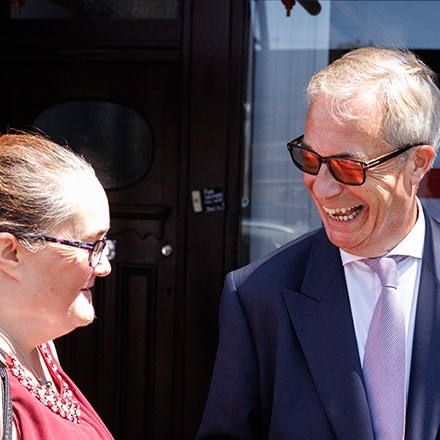
“We love you, Nigel!” In Clacton-on-Sea, there is little sign that the Reform leader’s star has waned. Campaigning with Nigel Farage here is a burst of cackles, quips, nicotine and selfies: a march through sun-kissed streets with a cast of canvassers, aides and minders. A child clasping a teddy bear dances around, a Reform rosette pinned to her top; a groaning assistant clutches two dozen poster boards. On the doors in Seawick there is near-universal support, with variations on the theme which Farage has made his campaign slogan: “I’m with Nigel.” In the middle of silly season, Clacton is hosting one of Britain’s most bizarre by-elections.

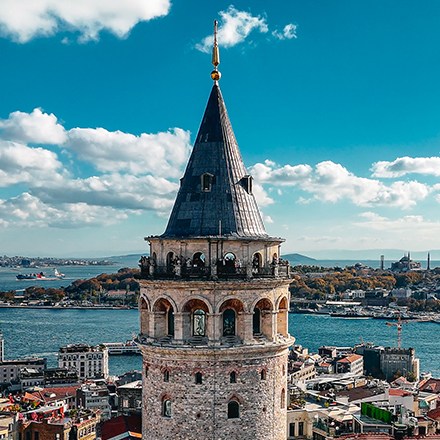
What Istanbul gave me

Why do novelists set their stories in cities or landscapes which seem to haunt them? Not the places of their childhood – an obvious choice – or places they’ve researched because those places are intellectually attractive. The places they can’t avoid in their own subconscious. I’m often asked this question because the places I write about are considered exotic. But to me, it’s the reverse. I write about a city long after I’ve lived there and left it, having never had any intention to write about it at all. Such was the case, for me, with Istanbul. I moved there in 2011 after 20 years in New York. It came about by chance. My mother died that year and I came back to Brighton to attend the service.

The curious history of sporting superstitions

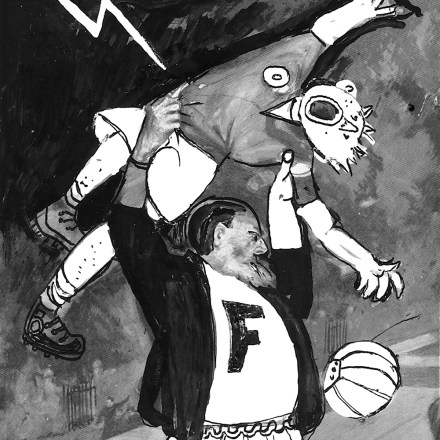
My father had been waiting his entire life for that whistle. After 75 years, the curse was over. Mayo were Gaelic football champions, having overturned the second-biggest deficit in the history of All-Ireland finals. The county hadn’t seen such a miracle since Father Horan got the taoiseach to fund an international airport near the shrine of Our Lady of Knock. Three months before Dad was born in Castlebar, Mayo won the 1951 title. Their celebrations on the way home were exuberant and, so the legend goes, disrupted a funeral in Foxford. The furious priest (some versions blame the widow) cast a curse on them, saying Mayo would never again lift the Sam Maguire Cup while any of those players lived. Nonsense, right? Except that Mayo then lost 11 finals, four by one point.