Peter Hitchens

Peter Hitchens lived in Moscow from June 1990 to October 1992. He is a columnist for The Mail on Sunday.

Why is antisemitism rising in Britain? – with Andrew Roberts & Peter Hitchens

From our UK edition

46 min listen

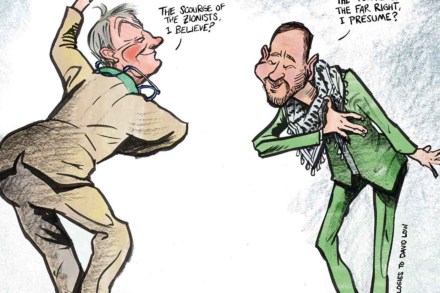
For this week’s Edition, Lara Prendergast is joined by the Spectator’s commissioning editor Tali Fraser, Mail on Sunday columnist Peter Hitchens and the historian and Conservative peer Andrew Roberts. This week: why is antisemitism rising on both the left and right of British politics? On the third anniversary of 7 October, Tali writes in this week’s cover story about what she sees as a growing antisemitic convergence between Zack Polanski's Green Party and Rupert Lowe's Restore Britain. The panel discuss the Green Party’s ‘Zionism is racism’ motion – passed this week at their conference in Brighton – and the increasingly blurred line between anti-Zionism and antisemitism.
Why is antisemitism rising in Britain? – with Andrew Roberts & Peter Hitchens

Don’t take Britain’s cathedrals for granted

From our UK edition

Everywhere I hear voices complaining about charges being imposed on those who wish to visit our great cathedrals. Everywhere, I reply to them: ‘Stop moaning and pay up!’ In fact, you should give more than you are asked. Who else is going to provide the money to save these astounding, irreplaceable buildings for a future in which they may one day be full of worshippers again? Wouldn’t you spend more on a good meal or a good bottle of wine, or a trip to the cinema? https://www.youtube.com/watch?v=2KJJ4FFVjGA Yes, of course, there should be concessions and exemptions if you are a child or disabled or have no job or are living on a tiny pension.

Elon Musk to Clavicular: should we fear the manosphere? with Peter Hitchens & Toby Young

From our UK edition

40 min listen

For this week’s Edition, William Moore is joined by the Spectator’s associate editor and director of the Free Speech Union Toby Young, journalist and author Esther Walker, and Mail on Sunday columnist Peter Hitchens. This week: the men on the spectrum who rule the world. Charles Steel writes in the magazine about the wealthy, obsessive and often unconventional figures who increasingly shape politics and technology – from Elon Musk to the crypto billionaire Ben Delo. Is autism a useful way of understanding these men or has society become too obsessed with diagnosing people?

Elon Musk to Clavicular: should we fear the manosphere? with Peter Hitchens & Toby Young

How I became a Canadian nationalist

This is how I became a Canadian nationalist. I did it on the rebound. I never wanted to, and it is a strange experience to find myself pounding the arm of my chair when Mark Carney, of all people, defies the Almighty Trump. But it is so. Once, like that poor man who speaks the first lines in The Godfather, I believed in America, arsenal of liberty, land of the free, inheritor of Magna Carta and so on. Then, after a couple of years in Moscow I went to live in Washington, D.C. And it was there that I was gently wooed and eventually seduced by the land of maple syrup. To begin with, it was the discovery that soppy British sentiment about the USA was not in practice returned. It wasn’t so much that they didn’t like us as that they had barely heard of us.

How Prague cured me of my communism

Proust can keep his soggy madeleine. For me the word ‘Prague’ is a trigger of memory like no other. It stirs me up like some plaintive half-heard tune, or the faint scent of lavender in sheets left folded for years. Evil news from Prague, in another stuffy August long ago, turned my world over completely. This was 1968, a year of wonders, none of them very nice, which will not easily leave my recollection. It was the year I joined a Trotskyist sect. It was the year I punched a man (in self defence). It was the year I attended my first violent raucous demonstration, against the war in Vietnam, with the police horses thundering through the March mud in Grosvenor Square. A few weeks later Paris was full of tear gas and flying cobblestones, and how I wished I was there.

The great whataboutery delusion

If you live near the frontiers of acceptable opinion, as any thinking person must surely do, you quickly find that these badlands are policed mainly with insults and innuendos. And so you learn one morning, to your surprise, that you are an apologist for some repulsive regime which you strongly dislike. If you have been especially daring, you may be a ‘war crimes denier’ as well. Or you are charged with ‘whataboutery’, a word its users think will magically erase your case. Or, in many ways best of all, you are a conspiracy theorist. There is a myth that this phrase was invented by the CIA to try to discredit protestors against the Vietnam war, but the expression is far older than that.

Burnham’s chaotic takeover | with Peter Hitchens & Camilla Tominey

From our UK edition

37 min listen

This week: has Andy Burnham really brought change to Downing Street – or merely repackaged Labour’s old guard? Has Ed Miliband been sidelined by being sent to the Foreign Office, a ‘non-job’ in which he can do little harm? The panel also asks whether Burnham is prepared to make the difficult decisions required of a prime minister – and why the Conservatives have been so reluctant to demand a general election. Also: is America’s socialist left taking over the Democratic party? Candidates backed by the Democratic Socialists of America are gaining ground, Alexandria Ocasio-Cortez may be underestimated as a future presidential nominee and parts of the radical left are beginning to embrace gun ownership.

Burnham’s chaotic takeover – ‘it’s easier to understand North Korea!'

Who believes the latest version of the Nord Stream saga?

If you want to start a myth, make it a good one. Look at Odysseus. Imagine if the old liar had come home stony broke, a decade late, and told his wife: "Sorry, Penny, I got drunk, the ship was repossessed and the crew deserted, I gambled away all my money and I’ve spent the last ten years working in bars to pay my passage home." The tale would not have endured. Penelope would probably have kicked him out and married one of the suitors. It’s more or less the same with the unmysterious sabotage of Russia’s Nord Stream pipeline in September 2022. There’s a perfectly good, prosaic, obvious explanation. The giant undersea tube was able to supply cheap Russian gas to Germany, something the US government has disliked for decades.

Why I believe Lucy Letby’s trial was unfair

From our UK edition

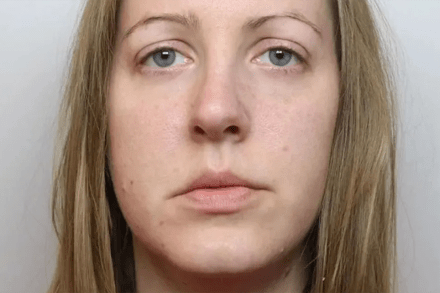
Even Horace Rumpole could not have secured an acquittal for Lucy Letby. The more I look at this case, the more I suspect that there could never have been any other outcome than a conviction. I think a great cloud of emotion hung over that courtroom during the whole trial. I think that cloud spread outwards into the public mind before and during the long months of the trial. In my view, the actual prosecution of Ms Letby began on Thursday 5 July 2018, two days after she was arrested for the first time, and more than four years before she finally sat in the dock. The prosecution knew throughout that they had no objective proof of their case, large or small On that day, police officers dug up her tiny garden in a Chester suburb.

Tried and tested by the Common Entrance Exam

From our UK edition

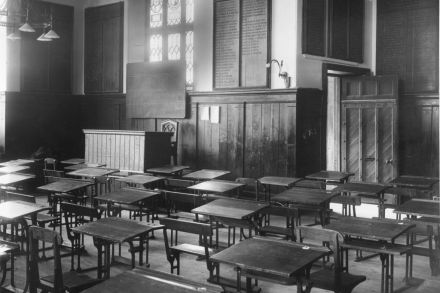
This is about something that did not happen to me at school, an exam I dreaded, but never had to take. It was the only examination that ever really worried me, and it was called Common Entrance. Do not confuse it with modern imitations bearing the same name. In those days, preparing for it involved (for me, anyway) translating English into Latin and French (a proper knowledge of irregular verbs and a wide vocabulary in both those languages was required). It also demanded thorny and tricky types of mathematics, an astounding grasp of largely Imperial geography – and a full knowledge of English history since the Conquest. I actually understood the jokes in 1066 and All That, for which modern children would need a decoder.

Peter Hitchens, Lionel Shriver, Mary Wellesley and more

From our UK edition

31 min listen

On this week's episode, Peter Hitchens remembers a Christmas in Bucharest, Lionel Shriver says people don't care about Ukraine anymore, Ed West wonders if you can ‘meme’ yourself into believing in God, Mary Wellesley reads her ‘Notes On’ St Nicholas, and Melissa Kite says she had to move to Ireland to escape the EU‘s rules.

My Christmas in Bucharest as Ceausescu fell

From our UK edition

I never intended to spend Christmas 1989 on a short break in Bucharest. I had enjoyed a long, thrilling autumn in dark, sad cities in eastern Europe, running and marching with ecstatic crowds as they overthrew communism. But this had all been in the calmer, less exotic regions of the Warsaw Pact, where dumplings were on the menu, passions were equally stodgy, and both rebels and governments would rather hold press conferences than open fire on each other. I was in lovely but dreary Dresden when news came that Nicolae Ceausescu’s baroque dictatorship was tottering, and my foreign desk urged me to head to Hungary and on into Romania as soon as the border opened, if it did. Air travel was impossible. It had to be by land.

What prison taught me

From our UK edition

I confess I never expected to see myself going to the lavatory on prime-time national TV. In fact, the expedition was a failure. Sharing a cell, especially with a young man with a record for GBH, is a very constipating experience. But when I accepted Shine TV’s proposal that I should submit to living alongside a large number of former prisoners, in a real but decommissioned jail, I had agreed to almost anything that might happen. Including that. Dozens of cameras covered us the whole time from every angle. We wore microphones around our necks. It is impossible to guard your tongue the whole time, and so my exclamation of ‘at last!’ slipped out. And I can see why they used it.

You should read Simon Raven

From our UK edition

It is high summer but in the early mornings you can already sense the first thrilling signs of autumn, the perfect reading season. What a good moment to revisit the enjoyably cruel England of Simon Raven, as described in his matchless series of novels Alms for Oblivion. It is pagan, unjust, beautiful, funny and evocative. It encompasses the melancholy era of national decline, from the last trumpets of empire to the seedy, garish concrete and glass squalor of Ted Heath’s fevered age. It is funny, bitter and full of a surprisingly uninhibited love of this country. It is interested in history, patriotism, courage, money, food, drink and sex, not necessarily in that order. Much (though not all) of the sex takes the form of unadorned lust.

Katy Balls, Peter Hitchens and Anthony Horowitz

From our UK edition

25 min listen

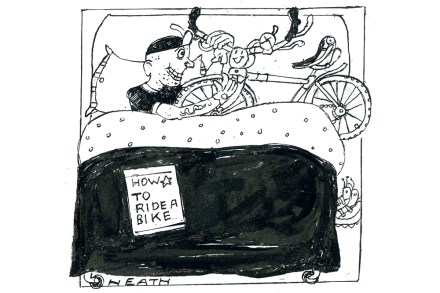
This episode of Spectator Out Loud features Katy Balls on the new divisions within the Labour Party and what Jeremy Corbyn might run for next (01:08); Peter Hitchens describes the joys of cycling and his dislike of e-bikes and scooters (07:40); and Anthony Horowitz joins us from Crete where he ponders the end of the world, becoming a grandfather and travel limitations after Brexit (13:11) Produced and presented by Linden Kemkaran.

Real cyclists don’t use e-bikes

From our UK edition

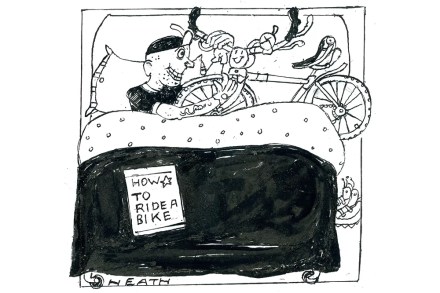
An impossible 45 years ago, I decided the moment had come to get back on my pushbike. I had long hated the way the motor car was taking over the world and wanted to play my part in changing this. I also had a more selfish reason. After two years on the Fleet Street diet of lunchtime excess, I could already see my first heart attack was not far off. I was in my late twenties and getting almost no exercise. I knew of people in the newspaper business who did so little walking that the uppers of their shoes wore out before the soles did. Something had to be done. In those days, bikes had not moved on since my childhood days, pedalling my heavy green Hercules over the Sussex Downs on summer afternoons. The brakes were as feeble, especially in the wet.

Is it time to stop changing the clocks?

From our UK edition

15 min listen

On this special Saturday edition of Coffee House Shots, The Spectator's James Heale, journalist Peter Hitchens and the IEA's Christopher Snowdon argue the cases for and against daylight saving time. Are we all being needlessly robbed of an hour in bed? Or should we lighten up and embrace the longer days?  Produced by Natasha Feroze and Oscar Edmondson.

Christmas Special

From our UK edition

65 min listen

Welcome to the special Christmas episode of The Edition! Up first: What a year in politics it has been. 2022 has seen five education secretaries, four chancellors, three prime ministers and two monarchs. But there is only one political team that can make sense of it all. The Spectator's editor Fraser Nelson, deputy political editor Katy Balls and assistant editor Isabel Hardman discuss what has surely been one of the most dramatic years in British political history (01:13). Then: Christmas is a time to spare a thought for our neighbours. While in the UK we have our own hardships, families in Ukraine are facing a Christmas under siege.

The conspiracy against grammar schools

From our UK edition

I love a good hard debate, especially at a university. I can’t recall how many such clashes I have had, on God, free speech, marijuana, and Russia. But on the subject I really want to talk about, the destruction of the grammar schools, I find it harder and harder to get anyone to debate against me. Your guess is as good as mine about why the comprehensive school enthusiasts won’t argue with me anymore (they used to). It is certainly not that nobody cares about this ancient controversy. They do. A few years ago one university society tried for months to find me an opponent, and couldn’t – yet hundreds still turned up to the one-sided meeting we eventually decided to hold.