Features

Features

America at 250 remains an exceptional country

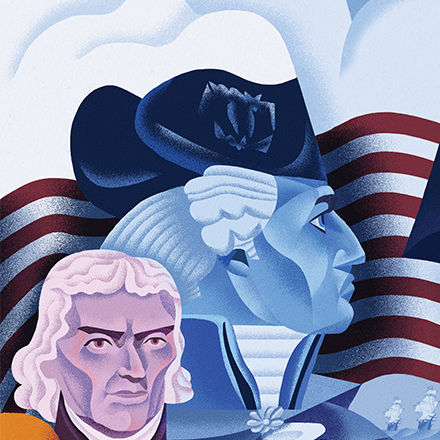
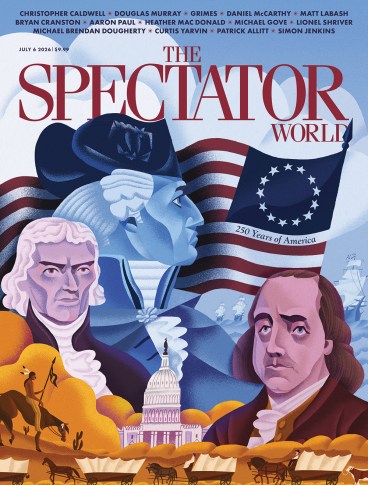
Who could ever have imagined what was being unleashed on the world when Thomas Gage ordered 700 Redcoats to march out from Boston and seize supplies in the town of Concord? Who could have dreamed, 250 years ago, what would be built by the descendants of those 56 men who put their names to the Declaration of Independence while gathered in the Pennsylvania State House? The United States of America turns 250 having enjoyed a near-uninterrupted run of success unmatched in world history. By her 100th birthday, the US was already master of an entire continent. By her 200th, she had won two world wars, invented the airplane, the atomic bomb and the transistor; created the motion picture and rock ’n’ roll; become the first automobile nation and put a man on the Moon.

america 250th

Who can save America’s 250th birthday?

"They’re taking that down,” says Keith Krach when I ask if the White House’s UFC stage will still be up on July 4, as Donald Trump had suggested. “I think they’re disassembling it right now.” Krach is chief executive of Freedom 250 and responsible for planning events to mark America’s 250th birthday. Well, partially responsible. The story of America’s birthday party is a complicated one, involving multiple “bipartisan” planning organizations with similar names, canceled acts and branding disputes. Ten years ago, Congress set up the United States Semiquincentennial Commission to plan for the 250th. George W. Bush, Barack Obama and their spouses have honorary leadership positions. Joe Biden appointed Rosie Rios, a former US treasurer, to chair the commission.

Ambition is in America’s DNA

Rome Last month, I found myself sitting on a panel discussing the European Union’s digital asset strategy. The conversation revolved around the digital euro, tokenization, stablecoins, financial regulation and the future of capital markets. Outside the conference hall stood one of the great cities of human civilization. Rome encourages long thoughts. Every stone seems to remind visitors that history is not a straight line. Great nations rise, stagnate and sometimes disappear altogether. Walking through Rome after the conference, I started thinking less about digital currencies and more about something else entirely. America turns 250 this year. For any nation, two and a half centuries is a respectable run. For a republic, it is extraordinary.

england

America is still an English country

Americans have been enjoined, as we approach our country’s 250th anniversary, to be a bit more grateful. Good advice. It is not just the freedom of speech and the purple mountains’ majesties we should be taking stock of. It is also our knack, in recent decades, for miseducating ourselves, failing to read the signs of the times, making wrong choices – and then profiting from the fallout. In the global financial crisis that ran for a decade after 2008, blunders in American financial engineering, from complex derivatives to mortgage-backed securities, bankrupted debtor countries and cost several others their sovereignty, most notoriously Greece.

Who’s the most underrated American?

Bill Kauffman Luther Martin: a voluble and drunken Maryland attorney who walked out of the Constitutional Convention of 1787 after warning his fellow delegates that their handiwork provided the framework for a centralized and militaristic empire that would efface regional distinctions and erode the liberties for which American patriots had fought and bled a decade earlier. An unheeded prophet who breathed the Spirit of ’76. Lionel Shriver Edith Wharton. Hardly unrecognized, but under-taught and too little familiar to the international literary readership (e.g., in Britain). A spectacular stylist, she wrote novels that still sound modern and perfectly accessible 100 years later – and she was a real feminist before the days the word meant humorless pill.

American

Why socialism will fail

The philosopher David Hume warned us not to mistake “constant conjunction” for causation. It’s good advice, though it is not the sort of universal disturbance in the force that some philosophers, eager to jettison old certitudes, believe it to be. Hume himself eventually rejected that “pretended skepticism” as a juvenile affectation. Like the rest of us, he recognized that reasoning from induction, from observed realities, introduces us to that great guide in the cognitive adventure of life – probability. Don’t let the appearance of a black swan down under disturb you: good mental hygiene and faith in the soundness of inductive reasoning go together. I indulge in this preliminary expectoration (apologies to Søren Kierkegaard) because I arrived in London on June 22.

The Spectator’s role in the birth of America

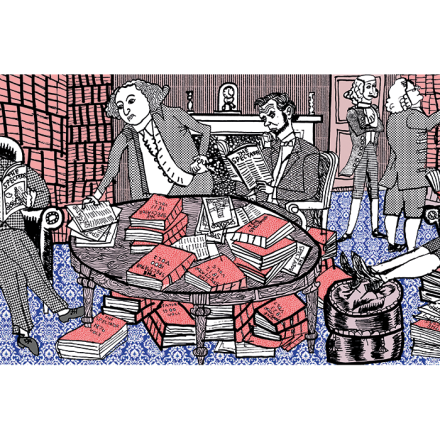
The Spectator was there at the founding of America. George Washington had six copies of the original, 18th-century Spectator at his Mount Vernon estate and read them often. He shared with Joseph Addison, The Spectator’s co-publisher, an interest in how to educate ideal citizens: men and women with wit and grit. Young Washington read The Spectator in the hope of bettering himself, too. Both of his older half-brothers had been educated in England and he wished also for the manners and polish of an English gentleman. For the pioneering, self-improving men who would go on to create an independent America, the 18th-century Spectator was both an education and a guide. “I bought it, read it over and over, and was much delighted with it,” wrote Benjamin Franklin in his Autobiography.

What Britain taught us

Being in Britain around the Fourth of July is always an odd experience for an American. It was especially awkward to be at the Alliance for Responsible Citizenship in London a week before the 250th anniversary of US independence. ARC is a British organization whose massive annual conference – about 4,000 people this year – is styled as a kind of counter-Davos, an international gathering of center-right types including a heavy representation of Americans. Given the timing, various speeches by gracious British hosts praising their American guests’ homeland – and by Americans themselves praising the principles of their revolution against the British two and a half centuries ago – were to be expected. But that didn’t diminish the cognitive dissonance.

What George Washington learned from Brooklyn Heights

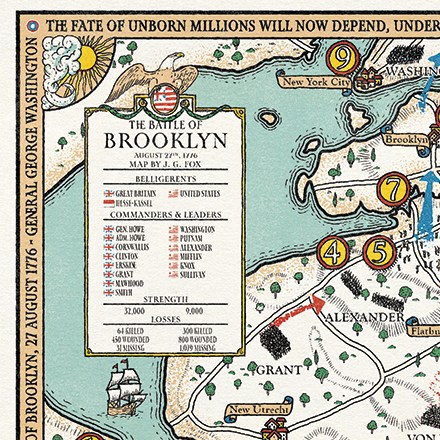
The biggest battle of the American Revolutionary War was fought in Brooklyn, just after the signing of the Declaration of Independence, in the summer of 1776. The Americans were outnumbered two to one, lost badly and were lucky to be able to extricate themselves from what could have been a war-ending disaster. George Washington, in command, learned that his troops must be better armed, better led and better disciplined to take on the Redcoats and that, whenever possible, he should avoid European-style pitched battles. Acting on these lessons for the next seven years, he found a way to survive and, eventually, to prevail.

brooklyn

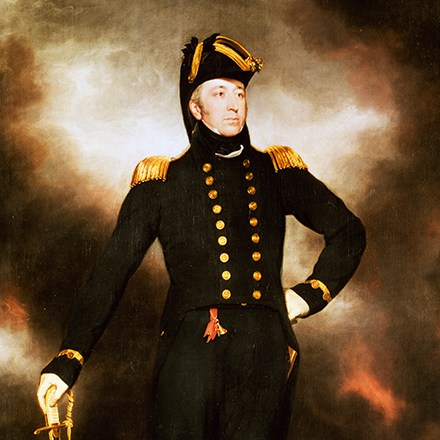
Sir George Cockburn, the great emancipator

Whatever shape the 250th anniversary celebrations take, two things are certain. First, they will very prominently feature our 47th President and, second, there will be fervent renditions of “The Star-Spangled Banner” at every opportunity. Whereas Donald Trump will not face any time limits on his oration during his headline slot at the promised rally on the National Mall – he has two and a half centuries to cover, after all – the anthem-singing will be cut short, as usual, after one verse, and will certainly not extend to the third, which expresses the fervent hope that, “no refuge could save the hireling and slave; From the terror of flight, or the gloom of the grave.” For me, the words always evoke a glow of family pride.

The Founding Fathers of AI

In the spring of 1722, a 16-year-old apprentice in a Boston print shop began slipping letters under the door at night, signed by a middle-aged widow named Silence Dogood, who did not exist. The apprentice was Benjamin Franklin. His brother James, who owned the paper, had no intention of printing his kid brother, so Franklin invented a woman and let her say the things he couldn’t. Readers wrote in guessing at the author. No one suspected the boy sweeping the floor. Franklin would go on to be a printer, a postmaster, a scientist famous across Europe for his electrical experiments and a founder of libraries, fire companies and, in time, of the United States itself.

burnham

Can Burnham resist the siren call of the left?

Power, when it is gained and lost, is transferred in stages: the actual, the visual and the constitutional. The latter took place on June 23 when the prime minister presumptive sent a letter to Antonia Romeo, the Cabinet Secretary, requesting that she commence access talks with his team. Keir Starmer had already given permission for them to proceed, but the propriety and ethics team in the Cabinet Office had told Romeo she could not initiate proceedings. Andy Burnham had to ask first. To all intents and purposes, he is already the vessel from which power flows. At the same time, it became clear that James Purnell, the former Blairite cabinet minister, will lead the transition team and stay on to become chief of staff in 10 Downing Street.

Would the ancients have appreciated David Hockney?

David Hockney has died, and there has died with him an artist whose work has given those of us who are not artists a very great deal of pleasure, in striking contrast to most art that wins prizes these days. The ancient Greeks did not have a word for “art.” The closest they got to it was tekhnê (cf. “technical”), brilliantly defined by Aristotle as “the trained ability to produce something under the guidance of rational thought,” always difficult to discern in the work of most modern artists. So in the ancient world, the artist was on the same level as (say) a dentist – someone whose purpose it was to serve the ordinary public to the best of his technical capacity.

artist
andy burnham

Even Andy Burnham doesn’t know what Andy Burnham stands for

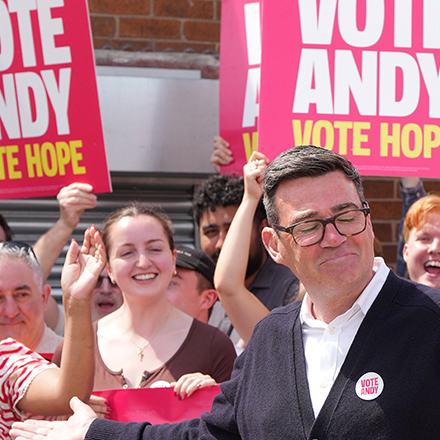
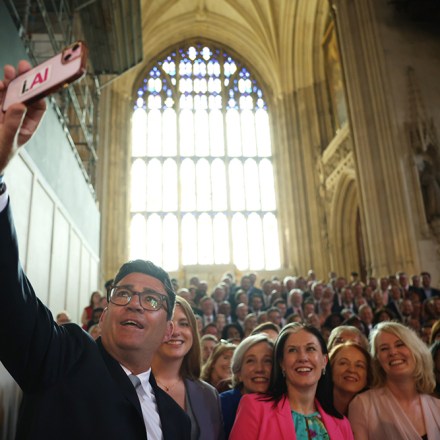
The British constitution is an admirably flexible thing, so I would not claim that Andy Burnham’s leadership campaign, and the coverage thereof, is unconstitutional, but it is certainly unseemly. Why did a BBC helicopter follow his train from Manchester to London (which arrived, of course, late) as if he were Lenin heading for the Finland Station? And why was he allowed to preempt his result with a mass selfie with about 200 of his supporting MPs in Westminster Hall? He is merely a new Member of Parliament, until he isn’t. Turning the place into his stage set is a way of intimidating possible challengers. If he is challenged, he will surely still become leader, but the point of a challenge is to force him to say what he means to do.

The Brexit decade: was it worth it?

It may not feel or sound like it but Keir Starmer is a born-again Brexiteer. His achievements in office may be nugatory, his search for a legacy tragicomic, but there are countless actions this government boasts of which simply would not have been possible if we had stayed in the EU. Earlier this year, Labour moved to protect our steel industry with a tariff package possible only because we have an independent trade policy. I was delighted this month when the minister in the Lords made it clear this was a Brexit benefit. Those same Brexit freedoms allowed the Chancellor last month to cut tariffs on more than 100 foodstuffs to ease the cost-of-living crisis.

brexit

The New York Times’s twisted reporting of Henry Nowak’s murder

Last month’s headline in the New York Times was obfuscating: “In the UK, a Violent Cycle: Hateful Attacks, Right-Wing Agitation and Riots.” Because hatred is now irrevocably associated with the “right-wing,” innocent American newspaper readers will have presumed that these agitating, rioting reactionaries were also the authors of the “hateful attacks.” The New York Times and the PBS News Hour delivered such twisted, incomplete and minimized versions of recent incendiary events in the UK that I was obliged to tell the stories of Henry Nowak and Stephen Ogilvie to more than one ordinarily up-to-date American friend, because the salient details had been omitted from left-leaning reports.

Why do men think it’s acceptable to wear a hat in church?

There’s often a traffic jam in front of the Battle of Britain window in Westminster Abbey and I recently found myself jockeying for position with a man wearing a baseball cap. A hat, in church! I thought I ought to say something, but as I was with an official guide, I decided it perhaps wasn’t my place. A very English cop-out, I confess. Then I saw a second man in a cap and, hat-radar activated, I started counting. And stopped at seven. Clearly, it was impossible that seven male hat wearers had all slipped unnoticed past the Abbey’s considerable security and, equally clearly, there must be a new attitude to hats in church and I hadn’t received the memo. I thought I’d check with the Very Reverend Dean.

hat

Andy Burnham’s worryingly vague vision for Britain

Once again the question occurs: “Why do they want it?” Keir Starmer held a very important role in the legal profession before entering parliament, but for some reason he desperately wanted to be even more political. As soon as he became an MP it was plain that he was so keen to get the top job that he was even willing to go through the Jeremy Corbyn period – immiserating his reputation and presumably himself by spending years having to pretend that Corbyn was a suitable candidate for prime minister. Serving in Corbyn’s shadow cabinet was not something that any decent person would do – leading some of us to conclude either that Starmer was not a decent person or that he had such a surfeit of ambition it didn’t matter because it was a means to an end.

Long holidays are the worst

“Is there ever a holiday so heavenly that one is not counting down the days?” a friend texted me last summer, homesick in the Loire Valley. Another French friend messaged me from Montreal on day five of a holiday which, she was now regretting, she’d booked to last for nine days. She too was counting down. Having recently returned from a fortnight in Cambodia with four extra days in Hanoi tacked on at the end, I counted down in sympathy. Those final four days, from Saturday morning till her flight back home on Tuesday night, seemed to drag on for ever, over a desolate weekend – and I wasn’t even there in the characterless Airbnb flat among the skyscrapers and crack addicts. “I’m longing to see that tray of food in the plane,” she texted.

politics

The death of British two-party politics has been greatly exaggerated

Every twist in the winding road of Britain's politics brings a latest thing to say. These wisdoms usually survive a season or two before succumbing to the new thing to say, which often asserts the opposite. This summer we have “Britain is moving into an era of multiparty politics.” Allow me, therefore, to leap ahead with my candidate for its successor: “Reports of the death of two-party politics are greatly exaggerated.” I don’t say our current governing party and principal opposition must always be the two parties in question. Labour may be dying. The Tories may be showing signs of life. In both cases I fervently hope so. But whether or not these remain our two options in elections to come, the tendency will always be for the choice to boil down to two.

The secret to dressing exceptionally well

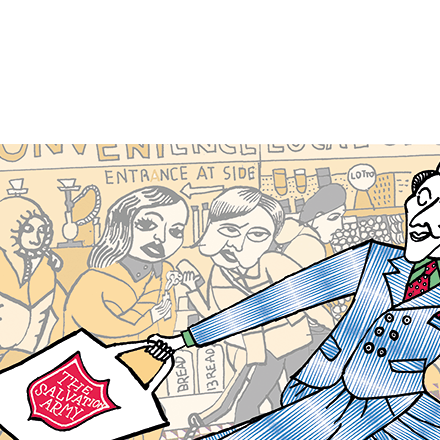
As I scribble these words on a train to London, I’m wearing a lightweight Italian wool suit, a shirt from Gieves & Hawkes, a silk spotty tie and a pair of Church’s suede brogues. You might mistake me for a prosperous Neapolitan gentleman of a certain age. But in fact, I’m a charity-shop dandy – my outfit came to less than £60. That’s less than a pair of new trainers for my teenage daughter. I’m particularly pleased with the shoes, which I picked up locally for £30. A new pair would set you back £700. If you’re not too grand to buy secondhand, it’s actually far easier and cheaper for men to dress smartly than to be slovenly. I learned this important fact in my early twenties.

dressing