Spectator Life

Spectator Life

An intelligent mix of culture, style, travel, food and property, as well as where to go and what to see.

Is God a Thatcherite?

Autumn: surely one of the most beautiful words in the language. All the other seasons are expressive, almost even onomatopoeic, worthy of being serenaded by Vivaldi, but autumn has a gentle resonance. Mists and mellow fruitfulness, not to mention the grouse season. School and university accustomed most of us to think of the year beginning at the Michaelmas term rather than in January. This is reinforced now that parliament is back – though with Sir Stumbler in charge, it is more a matter of fogs and sour fruitlessness. That brings up memories of a different era, one which was immensely fruitful though never mellow. The 100th anniversary of Margaret Thatcher’s birth is approaching. I was having dinner with my old friend John O’Sullivan and of course we talked of the Lady.

Whatever happened to chicken à la king?

As sure as eggs is eggs, what was once comfort food will be reinvented as fine dining. Lancashire hotpots will be turned fancy, served with teapots of lamb jus. Fish and chips will become canapés, spritzed with atomisers filled with malt vinegar. French onion soup will be served in teeny-tiny shots; Scotch eggs gussied beyond recognition. I once ate a (large and unwieldy) single bite of shepherd’s pie from a Chinese soup spoon at a posh party. Chefs just can’t resist the joke. Chicken à la king – chicken braised in a cream sauce with onions, mushroom and peppers – has gone in the opposite direction, from fine dining to comfort food.

Why is French hospital food so bad?

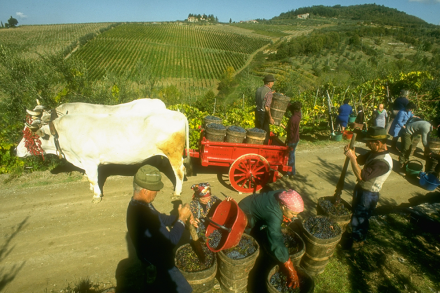
This summer has been the hottest on record where I live in Burgundy. It could have been disastrous for the grapes as temperatures reached nearly 40°C. Luckily, most of the vineyards in the Côte d’Or were able to move les vendanges to mid-August instead of early September, when they were expecting to harvest. Apparently, it will be a good year nevertheless. I moved to the little village of Meursault eight years ago in October, to help with grandchildren. My daughter Annabelle works for Domaine Roulot and her husband is winemaker for Domaine de Montille. They were busy harvesting the grapes that autumn. Not any more – most vignerons here, and probably elsewhere in France, think cooler summers will never return.

My gastronomic tour de France

On holiday in the Dordogne, I face an annual dilemma. My weekly Any Other Business column ruminates on the financial world with occasional restaurant tips to lighten the tone – and many readers tell me they frankly prefer the menus du jour to the boardroom dramas. My difficulty is that in a single page of The Spectator there’s never space to do justice to both. Last week, I ended up cramming seven restaurants into one short paragraph, a paltry snack where I’d like to have offered a banquet. So here’s my 2025 tour de France, as I called it, at somewhat fuller length, perhaps one of these days to be super-sized into an entire guidebook. This set of recommendations, I should explain, come mostly from British readers and friends in other parts of France.

A fictional Edwardian waif’s hungry fantasy: Fortnum & Mason’s food hall reviewed

I like a picnic weighted with history and class terror, which means Fortnum & Mason on Piccadilly, which is historical re-enactment with dreaming. I have written about this for years or tried to: food is never just food, only fools say that. You can learn almost everything about people from the food they want. And here is St Narcissus in the form of a department store that works more powerfully as an idea than a mere shop, though it is a very effective shop. Fortnum’s sells a Great Britain that never was, designed for people who no longer exist, if they ever did. It has much to say to Brexiteers and worse, though in biscuit.

With Ben Lippett

28 min listen

Ben Lippett is a chef and food influencer whose recipes and cooking tips are hugely popular online. His new book How I Cook: A Chef's Guide To Really Good Home Cooking is out on the 2nd September. On the podcast, Ben tells Lara and Olivia about how he went about writing his debut cookbook, what makes really good online food content, and his grandma’s birthday cakes.

The deculturalisation of Britain

It has been a disastrous summer for France’s restaurants. On average, visits have dropped by 20 per cent on previous years, but at many coastal resorts they’re down by 35 per cent. ‘Consumption is well below previous years,’ says Laurent Barthélémy, president of a hospitality union. ‘Restaurant owners see customers passing by, but they don't come in to eat.’ Various reasons have been propounded to account for this decline. Barthélémy points to the cost-of-living crisis as a leading factor, as does Thierry Marx, one of France’s top chefs and president of the restaurant owners’ association.

Vodka that makes an excellent aperitif

Jack Gervaise-Brazier is a restless romantic. He was brought up on Guernsey, which filled him with a love of islands, but also a desire for wider horizons. As Jack was a head boy and a good historian and classicist, his schoolmasters assumed that he would move on to university and he was offered a place at Durham. Had he visited, he might have fallen under the seduction of its cathedral and other glories. As it was, he headed for a different City to pursue stockbroking and trading. Although he turned out to be a more than useful performer, he always intended to use this as a ladder, enabling him to start up his own ventures. These included a brewery on Guernsey and a rum company. But the restlessness persisted. This was all an interim.

What to do with the last of the summer’s apples

The double-edged sword of eating with the seasons is the glut. A blunt, un-pretty word, which is a joy in theory and delicious in result, but which can feel daunting when you’re facing down a bench full of berries to be picked over, or countless apples to be processed. My husband and I were once given an apple tree as a present. It’s a multi-graft, meaning each of the three branches produces a different type of apple: russets, for storing, bramleys, for cooking, and tart eating apples. This is the first year that it’s thrown up more than three measly apples. Well, it’s made up for lost time; we are, to put it mildly, drowning in apples.

It’s last orders for craft beer

The best pint you’ll ever have is whatever you can find at 5 p.m. on a Friday. But close behind, and available wherever there’s a willing bartender, is whatever your local brewery has a fresh keg of. That, at least, is what I’ll tell anyone who can’t make a speedy exit. I am a craft beer bore. Dismissed as an early cause of the male midlife crisis, craft breweries have revolutionised beers. Where once you were trapped between mass-produced European lager and lukewarm old man ale, British craft beer has proved more flavourful than anything that came before it – and only occasionally in a bad way. You can imagine my sadness, then, in reporting the decline of the Gipsy Hill Brewing Company, my own local.

‘Italian that just works’: Broadwick Soho reviewed

This column sometimes shrieks the death of central London, and this is unfair. (I think this because others are now doing it.) It is not the city we mourn but our younger selves. Even so, the current aesthetic in restaurants is awful and needs to be suppressed: beiges and leathers, fish tanks and stupid lighting, all are nauseating. But I hated Dubai. You say Atlantis, The Palm, I say enslaved maid crying for her dreams. But there is refuge, at least from the aesthetic, and it is as ever the child of imagination and nostalgia. Broadwick Soho, the newish hotel in the street where typhus was chased down to a water pump, is a rebuke to desperate minimalism.

With Brett Graham

30 min listen

Brett Graham is the man behind the Michelin-starred The Ledbury in Notting Hill, which is celebrating 20 years this year. He’s also the director of The Harwood Arms in Fulham, London’s only pub with a Michelin star. On the podcast, Brett tells hosts Lara Prendergast and Olivia Potts about why being in the kitchen is like being in the army, what it was like for The Ledbury to receive its third Michelin star and the trials and tribulations of learning food production – including ending up with 127 piglets.

I’ve finally come round to honey

Honey enjoys almost superpower status. It is credited with healing viral infections, cuts, hay fever and insomnia, to name but a few of honey-curing maladies. On a regular basis, a particular honey is discovered that bodybuilders swear by, or religious leaders have considered akin to holiness. I had never been keen, considering it an overly sweet inconvenience of a food: however fancy the spoon used to dispense it, it somehow always ends up on my hands (and my hair) before it reaches the yoghurt. I have tended to stick with a very good quality dark brown sugar when in need of something to take the bitter edge off English strawberries.

North Uist’s whisky is one to watch

There are at least two Long Islands. One of them, eternally famous for The Great Gatsby, is a fascinating blend of glamour and meretriciousness. It is separated from the other one by 3,000 miles of ocean and a totally different culture. In this Long Island – actually about 70 islands of various sizes, also known as the Outer Hebrides – Sabbatarianism is frequent, but glamour and meretriciousness are as wholly absent as anywhere in Europe. Over many centuries, the Hebridean Long Island was often beset by conflict. Viking raiders, Scottish kings, great clan chiefs: all fought for supremacy. The Scottish Crown eventually won, though the clan chiefs exercised subsidiary kingships, until the old Highland order was broken after the defeat of Bonny Prince Charlie.

The glorious richness of rillettes

I admit to feeling a little intimidated by charcuterie. I have a clutch of books on my shelf all laying out in step-by-step detail how to craft your own salami or whip up a perfect pancetta. They’re well-thumbed, but not a single one has a cooking stain on it. I’m just too nervous when it comes to the scary stuff. I’m talking about the drying-sausages-hanging-from-the-rafters kind of charcuterie. I’m talking about jerry-rigging anti-pest guards to protect your hams. I can’t quite get past the fact that charcuterie requires hanging meat somewhere in my house, which feels at best frightening and at worst like I’m actively inviting botulism into my home. I’ll say it: I’m a charcuterie coward.

My shopping list for the apocalypse

So far this summer we’ve had the blackouts in Portugal and Spain, that rather astonishing Heathrow fire, yet more sabre-rattling between Russia and America and the former head of the Army warning that Britain must be ready for the ‘realistic possibility’ of war within five years. Then there was an old general on the radio telling civilians to prepare themselves for the struggle both mentally and practically – by stocking up on foodstuffs, loo roll, an FM radio and cash. Normally I don’t do what the radio tells me, but he got me thinking. And it turned out my wife – who is an actuary and is to risk what the Wicked Witch of the West is to tap water – had been pondering something similar. So we’ve begun ‘prepping’.

Why truck stop cafés trump motorway service stations

There’s something about motorway service stations that seems to encourage the very worst in human behaviour. They’re places where no doubt usually responsible members of society have long decided that it’s permissible to drop semi-industrial amounts of litter on to the verges, urinate all over the toilet floor and belch with impunity while queuing up for a Whopper at Burger King. For me, it was the full-to-the-brim child’s nappy that someone had left on a chair in the revolting ‘sit down café’ at a services near Preston that made me decide that I would never set foot in a Welcome Break, Moto or Roadchef ever again. I’m lucky; I have a bladder that can tolerate journeys of four or five hours by car. My fiancée, however, is not equipped with such sturdiness.

There’s nothing extreme about veganism

At a time when Britain feels increasingly unstitched – with families queuing at food banks and sewage drifting from rivers to seas – it’s almost impressive that anyone has the emotional energy to be annoyed by vegans. Yet we continue to provoke strong feelings, and Katie Glass gave strong voice to them in these pages last week. So allow me to be annoying again, and disagree. Katie says veganism is becoming an ‘extremist’ lifestyle. But to be vegan is, quite simply, to opt out. We choose, as consistently as possible, not to hurt, kill or exploit animals – nor to induce others to do it on our behalf. That’s it. What’s truly extreme is the cruelty that vegans refuse to be part of. More than 92 billion land animals are slaughtered for food each year.

Admit it: no one really likes eating fish

As I sit under the sole tree on a Spanish beach, watching my fellow Brits shudder at the writhing horror show contained in the restaurant’s seafood display, it strikes me the middle classes don’t actually much like the dead-eyed edibles under the waves – we’re just conditioned to pretend to because eating them is supposedly chic. Sure, we extol fish as a sustainable and sophisticated source of high-quality protein, vitamin D and what sounds like K-pop’s next girlband, omega-3. It’s the well-informed, thinking man’s dinner, akin to choosing a Tesla before Elon Musk’s meltdown phase. But let’s be honest: the glassy stare (I’m still talking about the fish), the slimy skin (still fish) and the teeth that could make a dentist cry (fish) do not scream yum.

The chef does not understand sandwiches: Raffles London at the OWO reviewed

I am mesmerised by the restaurants of Raffles London at the OWO (Old War Office) because war approaches and the Old War Office is now a stage set for food, floristry and linen. If this is civilisation – it isn’t really, but it thinks it is – who will protect it now? Will we even know if war has started – or care? It was a fine building when I first came – I have reviewed its chilly Mediterranean food, its manic Italian and its tepid French – and it still is. Grand hotels exist to suppress time. It is a preening Edwardian palace with crazed plinths, over-pliant staff and ever sillier restaurants, today’s being the Drawing Room. It looks like how people who are not posh imagine posh country houses to be.

Could you stomach being a food awards judge?

Rummage through any middle-class pantry or browse the shelves of an artisanal deli and you’ll spot a constellation of stars. One star denotes ‘simply delicious’. Two suggests ‘outstanding’. Three? ‘Exquisite.’ The stars are handed out by the Great Taste Awards, run by the Guild of Fine Food, which was founded by Bob Farrand in 1992. This year’s 14,340 hopefuls will hear how they fared today, with judging having closed earlier this month after 110 days of tasting across seven locations. Only 787 products currently hold the top rating.

The remote Spanish wine region that rivals Rioja

A.E. Housman once wrote that the English villages of Clunton and Clunbury, Clungunford and Clun ‘are the quietest places under the sun’. He’s almost right. I grew up in Clunton and the only place I’ve felt a deeper sense of quiet is Escaladei, a village high up in the mountainous Priorat region of Spain, which is home to the Cellers de Scala Dei vineyard. Getting there from Barcelona isn’t for the faint of heart, as the roads weave erratically along the hillsides. Driving there, I gripped the steering wheel tightly and drowned out my fears with music from a local reggaeton station. Once safely at the vineyard, Roger, our guide, impressed on us the importance of two things in Priorat: Garnacha and monks.

Veganism is becoming an extremist lifestyle

This week Billie Eilish served up a reminder of the irritations of veganism. She forced the O2 to go fully plant-based during her six-night run of shows – and the Daily Mail reported that fans, who’d paid £70+ for a ticket to see her, were not happy about the food on offer at the arena. One said: ‘Punters were less than impressed with the vegan options – a mixture of pizzas, cauliflower bits and loaded fries – with more than one asking “Did they run out of meat or something?”.’ But I expect their real irritation had little to do with the food itself – and everything to do with having vegan-only options shoved down their throats. So, what exactly is it that’s so annoying about veganism? In part, perhaps it’s how fashionable it’s become.

The English pinot noir that rivals Burgundy

England is now and history. The other day, in the Weald of Kent, now was England and pleasure. We were visiting the Balfour Winery, near Staplehurst, on an enticing midsummer day. This was a quintessential English landscape. To the left, a wood with classically English trees. To the right, a country house. In the distance, an oast house. We were viewing all this from a balcony, after an excellent lunch based on local ingredients, with wine pairings, that I reckon was worth a Michelin star. The scallops were as good as I have ever tasted. The locals are aware of the neighbouring asset: the previous Saturday, the restaurant had served 750 guests. But the kitchen has a problem. Jake Goodsell, the chef, is only 25. A splendid fellow, he is full of ambition.

The magic of Danish dream cake

I am, for the most part, a rule follower and a people pleaser. It’s one of the reasons I love baking, which essentially amounts to a set of instructions designed to make something to be shared and bring joy. But if someone recommends something to me, I can be resistant to it for ages. The farcical element is that once I capitulate and try out the novel, TV show, restaurant or biscuit recipe, I inevitably discover that my tastes are extremely mainstream, and I love whatever it is. It took me years to listen to Taylor Swift before immediately accepting her greatness and becoming her no. 1 fan. There’s no good reason for this.

Bring back the milkman!

Even if you couldn’t care a fig for sustainability, it’s hard not to be impressed with the Nostradamus-esque foresight of the milk float. In an era when Old King Coal ruled the roost and recycling meant pedalling backwards on your Raleigh Grifter, the pre-dawn hour across the UK was the stage for a phalanx of electric vehicles trundling along our streets and lanes delivering our order of gold or silver top in reusable, pint-sized bottles. The decline of the milkman in percentage figures would cause palpitations to the most hardened of economic wonks. In the 1970s, 94 per cent of Britons had their milk delivered to their doorstep via an electric float – while in 2016 just 3 per cent of milk was delivered by milkmen, according to Defra. What happened?

Dogs have no place at my table

I love dogs. I love lunching. I love seeing dogs in restaurants where I’m lunching. But one thing I don’t love one bit is a dog being brought to a luncheon which I’m participating in – and, most likely, paying for. Luncheons are for humans – not for our furry friends. Let’s face it, it’s not like they’re particularly thrilled to be indoors while their owners indulge in a little light character assassination. They’d be having far more fun running around outside eating vomit and sniffing each other’s bums. They can be big dogs, like the one belonging to my friend K. His gentle nature is swamped by the physical reality of him being the size of a small horse and taking up enough room for two people in a snug bistro.

Picture perfect: Locatelli at the National Gallery reviewed

I feel for Locatelli, the new Italian restaurant inside the National Gallery, whose opening coincides with the 200th anniversary of the gallery and a rehang which I can’t see the point of because I want to watch Van Eyck in the dark. Locatelli must compete with the Caravaggio chicken, which is really called ‘Supper at Emmaus’ if you are an art historian or an adult. In the publicity photographs the chef Giorgio Locatelli is actually standing in front of the Caravaggio chicken. It looks as if Jesus is waving at Giorgio Locatelli but the chicken is unmoved. It stole all the gravitas.

Do we really need state-funded restaurants?

Two British cities, Dundee and Nottingham, have been chosen as trial sites for a new government scheme to be piloted next year: state-subsidised restaurants. The Department for Science, Innovation and Technology has put up £1.5 million for the 12-month trial, initiated by the campaign group Nourish Scotland. If the restaurants are successful, they’ll be rolled out across Britain – nourishing us all – with a subsidised meal for £3. Inspired by second world war state-funded canteens, they’re going to be called ‘Public Diners’ – clever branding, with its quasi-American vibe.