Spectator Life

Spectator Life

An intelligent mix of culture, style, travel, food and property, as well as where to go and what to see.

‘This is generous food’: The Salt Pig Too, reviewed

Swanage is a town torn from a picture book on the Isle of Purbeck: loveliness and vulgarity both. It is famous for fossils, Purbeck marble, a dangerous-looking small theme park, and Punch and Judy. My husband is very attached to Swanage, because it exists in a state of 1952 – in homage to this, it has a branch line with a station from The Railway Children. In the summer, on the beach, you see fat sunburnt people with handkerchiefs on their heads. I didn’t think they existed anymore: I thought they were all dead. Some parts of Dorset have gentrified, though this doesn’t really describe what has happened to Sand-banks, the Bishop’s Avenue of the coast. That is closer to calamity, or invasion by space aliens who love concrete and glass.

With Tara Wigley

32 min listen

Tara Wigley is the in-house writer for the Ottolenghi Test Kitchen, she also has a weekly column in the Guardian and a monthly column in the New York Times which she shares with Yotam Ottolenghi. On the podcast she reminisces about her father's 'egg in the cup', the secret to a great Ottolenghi recipe, and takes Lara and Liv through her new book How to Butter Toast, which is written completely in verse.

What’s wrong with eating dog? 

From my desk, as I write this, in a lofty room in a soaring new hotel in Phnom Penh, I can look down at the bustling streets and see the concrete, mosque-meets-spaceship dome of the Cambodian capital’s famous Central Market. Which also happens to be the place where, 20 years ago, I ate the single most disgusting thing in my life. A dried frog. This thing, this whole dried frog, was so repulsive in taste and texture – like eating a tiny, desiccated alien made of poisonously rancid rubber – that I seldom choose to recall it. But today I am forced to, because of the intriguing news from South Korea that the Seoul government is going to ban the eating of dogs.

The Swiss appetite for wine gives them a good name

A friend was in town, who rebuts two instances of dull conventional wisdom. The first is that although Swiss Germans may have many qualities – they make excellent bankers – they have no joie de vivre. The Calvinist heritage persists. Second, that the Swiss are an implacably martial race. Other armies, especially the British, use humour to palliate the rigours of serving. The Swiss would be appalled by such frivolity, which may explain why no one has been in a hurry to assail their mountains. There was a serious French restaurant across the border, so he borrowed a tank and set off In both respects, Nick Sillich is a triumphant exception. He is also a fellow who puts the trench into trencherman. That explains why he was the last Swiss soldier to invade France.

Britain’s curious pub naming conventions

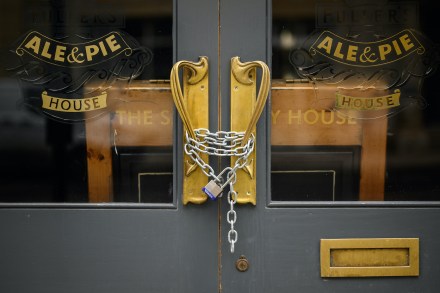
The big London restaurant opening of the autumn has been The Devonshire in Denman Street, Soho, close to Piccadilly Circus. There was a run on bookings as soon as the reviews appeared. Giles Coren in the Times wrote: ‘What a place. What. A. Place.’ Jimi Famurewa's review in the Evening Standard appeared under the headline: ‘Nothing beats a good pub – and this is as good as it gets’. Because – as well as being an exciting new restaurant – The Devonshire is also very much a pub. What must foreign visitors make of all this confusing disconnection between pub name and location? There’s been a pub on the site since 1793.

Admit it, there’s nothing worse than restaurants at Christmas

We’ve all been there, dragged along to the office/company/feminist protest group/a cappella throat-singing-society Christmas meal out. The idea of sitting around a huge table eating bad food with a group of people who either bore you rigid or who you actively dislike doesn’t seem particularly appealing. Why will the food inevitably be terrible, wherever you go? Because ‘tis the season to be scamming – restaurants make a large share of their annual income around Christmas and New Year and the general idea is to part you from as much of your dosh as humanly possible while serving you food that would normally be rejected as staff gruel.

The despair of Deliveroo

Self-pity and Deliveroo go hand in hand. You can’t have the latter without the former. It’s impossible to watch a rain-drenched driver fight with his moped’s side stand – while you sit torpidly in your pants by the window – without the heavy feeling of self-loathing. There’s something shameful about it, something pathetic. If Dante were alive now, he’d add another layer to hell: Deliveroo users. And I’m one of them. If using Deliveroo is a sin, call me Hester Prynne. I too have tasted the nectar. I too have dribbled over a box of tungsten nuggets and a semifluid dipping sauce. I’m not anti-technology. I’m anti-technology that makes us a worse version of ourselves We know it’s not a good idea.

Why Russell Norman was a restaurant genius

Polpo, Russell Norman’s celebrated and original Italian restaurant in Soho, was in full flow when I visited for the first time: busy, loud, glasses full and meatballs rolling. I had returned to London after some years away in my early twenties, and had little money. Polpo welcomed diners with its buoyancy and affordability. It was a good restaurant for everyone. Importantly, it was one that we could afford. There is much to say about Norman, a pioneering and visionary restaurateur who died suddenly at the age of 57 on Thursday. I’ll leave the more personal and intimate conversation to those who knew him well. What I want to say is that it is a rare and fine cause to open restaurants that are quite so approachable.

Introducing my manic Christmas tradition

It is a truth universally acknowledged – at least by anyone with a developed frontal lobe – that seasonal enjoyment and growing up are inversely proportional. As the stranglehold of middle age tightens, I am incapable of conjuring the Christmas excitement I felt as a child. And it seems to have been replaced with intense festive angst.  The mood is less holy and more fisticuffs, as it presents an excellent opportunity to ratchet up the festive stress Samuel Johnson was talking about second marriages when hatching his aphorism about hope over experience, rather than what Americans refer to as ‘readying the home’, yet every year I still try to summon those seasonal spirits of childhood.

‘The potential for jeopardy’: Pullman Dining on the Great Western Railway, reviewed

I am lazy and nosy, and so I spend a lot of time on the GWR service from Penzance to London Paddington. Each journey is a play with a unique atmosphere. Some are seething, particularly in summer when an eight-carriage train cannot fit everyone who wants to swim in the ocean but dine in west London that same night. Some are non-committal; some restful. I rage at usual things: luggage in the disabled space, which is almost always occupied by the non-disabled, though they may be fat; videos played without headphones; young people swearing at older people because they grapple with a rage they cannot understand. You can measure the social contract on any long train journey, and I have. It’s broken.

With Celia Walden

17 min listen

Celia Walden is a journalist, novelist and critic whose most recent novel, The Square, is out now. On the podcast she tells Lara and Liv why lentils are her ultimate comfort food, explains the joys of a buttered scotch pancake and discloses her husband Piers' signature dish, 'spaghetti Morganese'.

In praise of the pickle

Have you taken the pickle pill? Pickles and the liquid in which they often come are proliferating across western cuisine. They have been praised for their health qualities, with gut-pleasing, sodium-rich pickle juice becoming a post-workout favourite in Britain and America. It’s even being incorporated into cocktails and beer. ‘Putting a pickle in cheap beer makes it taste better’ claims one food website in what may or may not be a prank on its readership. If your friend is organised and generous, you may find a jar of pickled peppers or pickled mushrooms A fad? To some extent, I’m sure. But in Poland, where I live, the qualities of pickles will come as no surprise. They could hardly come into fashion in a country where they’ve never been out of style.

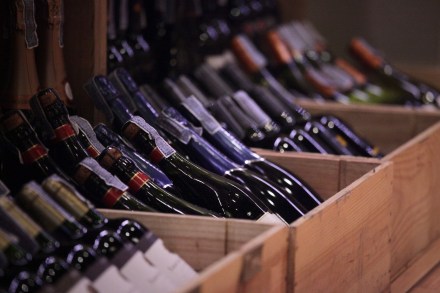
I hope David Cameron will find time to drink the odd good bottle

Back in 1989, a most unsatisfactory fellow called General Aoun started a civil war around Beirut in the hope of seizing control of the Maronite Christian portions of Lebanon. He ended up with political wreckage, which has endured. Château Berliquet 2015 is a fruity St Emilion that deserves to be better known During the fighting, I spent a few days cut off in the British ambassador’s summer residence, watching the battle going on below. We felt safer than we probably were, partly because Pauline Ramsay, the ambassador’s enchanting wife, tried to turn the crisis into a house party. So British: so best of British. We watched, helpless, as one block of flats was regularly hit by shells.

Would you drink fermented horse milk?

To my great disappointment, I was never (knowingly) fed qarta – a popular dish of boiled and pan-fried horse anus served without sauce or spices. I did, however, get to try the next best thing – kymyz, mares’ milk fermented in a goatskin. It was the second day of a horse trek in Kyrgyzstan and it had begun to hail. Not exactly golf ball-sized, but close enough to the golf ball sweets you bite into to find bubble gum. The horses coped, perhaps because getting pelted with hail is a fair trade for not being on a Kyrgyz menu. We stopped under a tree and our guide’s blank stares gave no indication of whether the weather was normal or not. The following two hailstorms suggested it was.

‘The food is as good as you will find in London’: Saison at Raffles London, reviewed

The Old War Office (bad acronym OWO) on Whitehall is now a Raffles hotel: you can stay in Winston Churchill’s office if that helps you sleep at night. I’m not sure I could, but this is the rational endgame of privatisation: you can sleep inside British history, which is quite close to sleeping through it. War isn’t the jolly marketing riff it was five weeks ago, and the atmosphere in the OWO reflects this. Even so, you need the money of a (fleeing) Tory donor to stay here, and perhaps they won’t notice that pre-war is outside their door in the form of children setting off fireworks and picking fights with the police during marches ‘for’ Palestine.

The Welsh Marches: England’s foodie frontier

I’m in a car embarking on a road trip through one of the great foodie regions of the world, charged with the onerous task of scoffing and boozing my way through five days of epicurean heaven. But where am I? Trundling along the Rhone valley from Lyon to Provence? Barrelling down the autostrada to Bologna? No, I’m on the A458 just outside Shrewsbury. Because this is a tour of the Welsh Marches, England’s foodie frontier, from Shropshire through Herefordshire to Gloucestershire, where a food and drink revival over the last three decades has turned this lush, fertile, famously green corner of Britain into a gastro-destination as good as any in Europe. My first stop is the Haughmond, a hotel/gastropub with a cute attached bakery, in the village of Upton Magna.

Ignore the food bores 

I like the Art Deco apartment block where I live; the building is beautiful and the neighbours are nice. Just one thing; they keep having their old kitchens torn out and new ones installed – two of the three nearest flats to me have done this in the space of six months.  I don’t complain about the noise as I’ve been a very noisy neighbour in my time, but this architectural fetish has made me realise how out of step I am with the national psyche. For I would no sooner have a new kitchen installed than have a minaret erected atop of my building. My flat has its original tiny galley kitchen; like many of the swanky 1930s apartment buildings in Brighton & Hove, it once had a restaurant in the basement – Marine Gate along the seafront even had its own off-licence.

Forget grim British cider, and go to Spain for some ‘sidra’

I always thought drinking cider was a bit lame. But then I did a Camino pilgrimage that took me through Spain’s northern Asturias region. I now think cider is cool.  Cider is a phenomenon in Asturias, where the art of imbibing sidra, as it is called, is elevated to a ceremonial form. We have the Trooping the Colour; they have sidra pouring.  When the barman pours the sidra bottle from above his head, the glass down at knee level, while looking dead ahead with the subsequent mini waterfall hitting the glass through dead reckoning: that’s not lame. The pourer even tilts the glass away from him, dramatically shrinking the ‘aperture’ available at the top of the glass.

How Vegemite took over the world

Vegemite is 100 years old. The first yeast paste, Marmite, was introduced in the UK in 1902, named after the French cooking pot; New Zealand Marmite, currently a quite different product, emerged in 1919. The mite suffix had nothing to do with might, but the association was irresistible, and Vegemite was created in Australia in 1923, to take up an apparently indelible, salty place in its nation’s dreams. The economic logic of producing and selling yeast pastes was compelling. The German chemist Justus von Liebig had discovered that waste yeast from brewing could be turned into an edible paste. If people could be made to like it – strange to say, some people still don’t – a by-product could be utilised and fortunes could be made.

The world is a mess. Why not find escapism through wine? 

In most children’s stories, the good characters live happily ever after. Works suitable for older readers tend to greater realism. Even ‘Gaudeamus Igitur’, that most joyous of drinking songs, presses the case for carpe diem. ‘Get stuck in to your pleasures laddie,’ it seems to be saying, ‘before it is too late.’ With the world in such a mess – less carpe diem than dies irae – the case for a vinous route to escapism might seen persuasive. Housman seemed to think so. ‘Could man be drunk for ever,’ starts one poem, then all would be well. Not for long. ‘But men at whiles are sober/ And think by fits and starts/ And if they think they fasten/ Their hands upon their hearts.

Life behind bars: so long to Westminster’s favourite landlord

If you work in politics, chances are you have drunk in the Westminster Arms. Located just off Parliament Square, every night it hosts the collection of hacks, wonks and mandarins that comprise the SW1 bubble. For 30 years, Gerry Dolan has run the pub with his mix of Irish humour and no-nonsense determination. When we meet, three days before his retirement, his roving eyes still flick up every time to scan each new patron that enters his beloved bar. ‘I have loved the Westminster Arms. It's been a great mistress’ he says. ‘My wife ran the wine bar downstairs, and she probably worked harder than I did. I was like a Redcoat, really.’ Dolan is one of a dying breed of lifelong landlords in the capital, tied to one establishment.

How to make Irish barm brack

Those of us who grew up with a traditional Halloween, that is to say, in Ireland, don’t have much truck with the contemporary version. The pumpkin-coloured, gore and chocolate fest that has come to Britain via the US is gross by comparison; we had a simple version. We dressed up, but in masks and any old clothes we could lay our hands on. We had nuts and apples for bobbing, not chocolate in the shape of severed fingers. We went from house to house looking for a penny for the bobbin’, not trick or treating. And the thing you really looked forward to was barm brack. Halloween was a time for ghosts, not chainsaw massacres It’s actually a fruited, not too sweet yeast loaf, which is really good buttered, and if a bit stale, toasted and buttered.

Dark, bold and perfect for autumn: how to make the perfect honey cake

I did not plan to cook a loaf cake when I embarked on concocting a traditional honey cake recipe. The original plan was to explore the Russian honey cake, or medovik, which dates back to the 19th century, and has a rich history. It is the War and Peace of the cake world: thick and a real undertaking. A long, careful assembly process, with up to a dozen layers of thin sponge – flavoured with honey and baked ever so briefly – interleaved with honey-flavoured buttercream, followed by a long chill, and then covered in more buttercream and cake crumbs. It is what we cookery writers like to euphemistically call ‘a project bake’.

‘They do better spaghetti bolognese in Hampstead for a tenner’: The Lobby at The Peninsula, reviewed

The Peninsula is a new hotel at Hyde Park Corner. It is part of the trend for absurd expense: rooms start at £1,400 a night and express the kind of preening mono-chrome blandness that will be the London of the future. It is a building of great ugliness – I would type the names of planners who allowed it, but on these pages it is incitement to violence. It sits on its six-lane round-about between the Lanesborough hotel and a long peeling red-brick late Victorian terrace that once appeared in a Stephen Poliakoff film about how things always fall apart. This food knows nothing of beauty, delicacy or comfort: it’s a grift It isn’t really a hotel, I think, staring: it doesn’t have that much identity.

It’s time to ban balsamic

Balsamic vinegar, according to a recent poll, is now considered an essential store cupboard ingredient by a quarter of all Brits. I detest it. This dark, syrupy fermented grape juice is like Marmite – you love it or hate it. Partly because it is overused, and also the numerous versions produced, I find myself flinching when I see it on a kitchen or dining room table. The Italians still behave, at least on the culinary front, as though they are a series of different countries When I first started travelling to Italy in the 1980s, I was given invaluable lessons in food crime: one, never, ever, under any circumstances, order a cappuccino after 10 a.m.

Save our unmessed-with pubs!

From the outside, it appeared derelict – not an uncommon thing to find when visiting an unknown establishment based solely on a listing in an old copy of ‘The Good Pub Guide’. But a chap walking past with his labrador reassured us: ‘She usually opens at noon.’ When we returned an hour later it was immediately plain that the pub was still in use – you could hear music coming from inside. This turned out to be from a five-piece acoustic string band who were seated by the fire, playing ‘I’ve Just Seen a Face’.

It’s time to take Italian wine seriously 

Tuscany: earth has not anything to show more fair. The landscape is charming. The gentle hills seem to smile down upon humanity. The inhabitants give the impression that they were already civilised when we British barely had enough woad to paint our backsides blue. There are also the grapes. From early on, Tuscany sent its vinous plenitude to Rome. Today, it still does, and to Orbi as well as Urbi. There was a time when Italian wine was not taken seriously in the world, and Italians themselves seemed to concur with this patronising assessment. That is no longer the case. One of the most interesting intellectual disputes in vinous matters now concerns Italian wine. There was a time when Italian wine was not taken seriously.

‘Well-priced and skilful’: Masala Zone, reviewed

There are cursed restaurants and cursed women, and this makes them no less interesting. One is Maxim’s in Paris, which knows it – it gaily sells ties in a charnel house decorated for the Masque of the Red Death – and another is the Criterion at Piccadilly Circus, which doesn’t. One day it might meet its destiny, which is to be an Angus Steakhouse (this might lift the curse, the Angus Steakhouse has its own magic) but it isn’t there yet. Restaurant after restaurant favours hope over experience here: Marco Pierre White (Mark White) passed through, spilling acronyms about. I suppose it serves it right for being in the neo-Byzantine style. Don’t restaurant developers watch horror films?

Glorious and nostalgic: how to make corned beef pie

A few weeks ago I was at the super-market juggling a toddler, several heavy bags and, it transpired, no pound coin to insert into a trolley. A kind employee came to my rescue: on her key ring was one of those little keys you use to open tins of corned beef, which she deftly inserted and released, and lo, the trolley was mine. What a nifty trick! I immediately resolved to add one to my own key ring, and then almost as quickly forgot. But also, what a peculiar thing: we’ve very much accepted ring pulls, or even just using tin openers, as the standard way to open tin cans. As a system it works very well.